


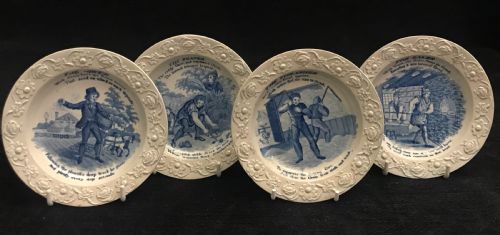

Blue Transfer Printed China
Blue transfer printed china pieces are tablewares and serving vessels decorated with printed cobalt designs, offering collectors rich historical scenes.
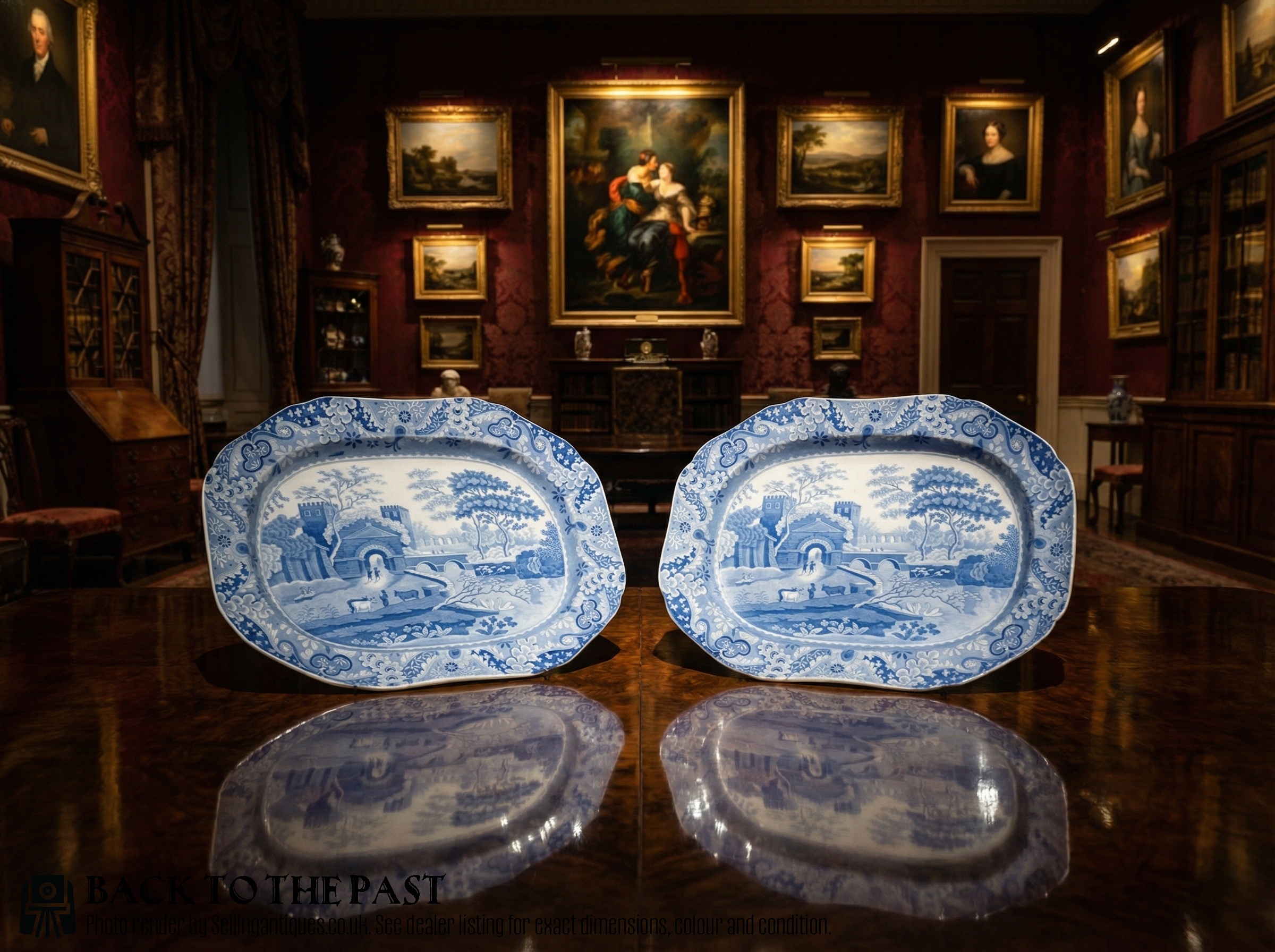
Blue Transfer Printed China
When you search for blue transfer printed china, you encounter earthenware, pearlware, and soft-paste porcelain items spanning the Georgian, Regency, and Victorian eras. These range from early English pickle dishes and child's plates to meat platters and sauce tureens.
The objects appearing on this page include decorative plates, serving platters, and tablewares featuring named patterns such as London Bridge, Lovick’s Pattern, Returning Woodman, and Rural Scenery. Most examples belong to the nineteenth century, reflecting robust domestic production.
Functional serving pieces like vegetable tureens with covers and elephant design sauce tureens with lion head covers sit alongside flatware sets. Collectors find both individual plates and matched sets originating from English makers.
How they were made
Potters formed these items from earthenware, pearlware, and soft-paste porcelain before applying cobalt designs using copperplate transfer printing techniques. This method allowed intricate pictorial scenes to be transferred onto curved and flat ceramic surfaces with remarkable consistency.
A protective glaze covered the printed surface prior to kiln firing, which bonded the cobalt pigment beneath the glassy layer. This glazing technique gave the blue transfer printed china its durable finish and deep gloss.
An elephant design sauce tureen comes complete with a matching lion head cover, proving nineteenth-century potters possessed wonderfully imaginative zoology.
What varies in quality
The clarity of the transfer print distinguishes finer examples from simpler output, as blurred lines indicate worn copperplates or rushed printing. Crisp definition in complex patterns like Rural Scenery or Returning Woodman shows greater workshop skill.
The base ceramic body also dictates standard, moving from refined soft-paste porcelain and early pearlware to standard nineteenth-century earthenware. Complete sets with matching covers, such as vegetable tureens and sauce tureens, command particular attention for their survival intact.
Brameld and Co·James Wallace and Co·Rogers
The Blue Transfer Printed China Glossary
- Pearlware
- A refined earthenware body developed in the late eighteenth century featuring a subtle bluish glaze that pooled in recesses. It bridges the gap between creamware and later white earthenwares.
- Transfer printing
- A decoration technique where an engraved copperplate applied ink to tissue paper, which was then pressed onto the ceramic biscuit. This transferred intricate pictorial designs before glazing.
- Soft-paste porcelain
- A ceramic composition fired at lower temperatures than true hard-paste porcelain, common in eighteenth-century English factories. It yields a warm, slightly translucent body.
- Sauce tureen
- A covered serving vessel specifically designed for holding and pouring table sauces or gravies. These often included matching bases and decorative handles.
- Pickle dish
- A small, specialised tableware item used at dining tables for holding relishes, pickles, or small condiments. Eighteenth-century versions often featured distinct shaped rims.
Blue Transfer Printed China: Frequently Asked Questions
What periods do these pieces span?
The inventory covers items produced from the late eighteenth century through the nineteenth century, encompassing Georgian, Regency, and Victorian styles.
Most pieces date between seventeen-eighty and eighteen-sixty, reflecting the peak era of English transfer-printed pottery production.
How do I identify transfer prints?
Transfer prints display fine, repetitive stippling or engraved lines that form pictorial scenes too precise for hand painting.
Examining the surface closely under a magnifying glass reveals the characteristic grid or line patterns inherent in copperplate engraving.
Were these items used daily?
Many pieces served practical dining functions in nineteenth-century households, including meat platters, vegetable tureens, and tableware plates.
Pickle dishes and child's plates indicate specialised dining uses across different social settings during the period.
How should I clean my china?
Wash these ceramic items gently by hand using lukewarm water and mild soap to protect the historic glaze and earthenware bodies.
Avoid dishwashers and harsh abrasives, which can damage nineteenth-century glazes and fade the underlying cobalt decoration.