


Antique Blue Serving Dishes
These antique blue serving dishes span earthenware, porcelain, and pottery, offering practical service and decorative display for the table.
Antique Blue Serving Dishes
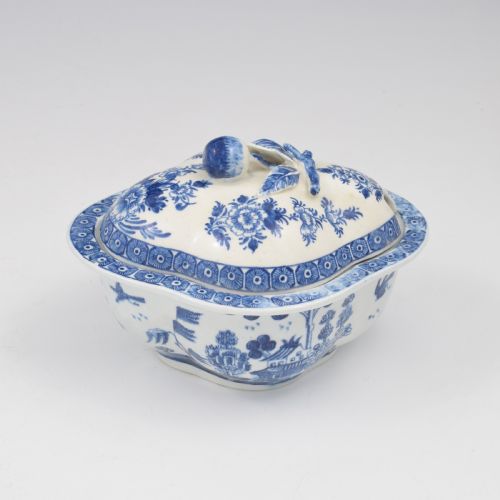
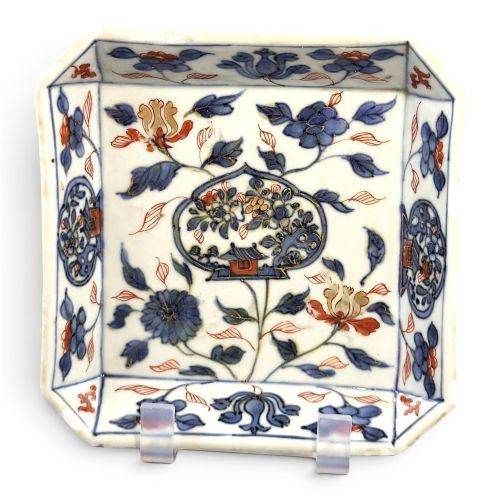
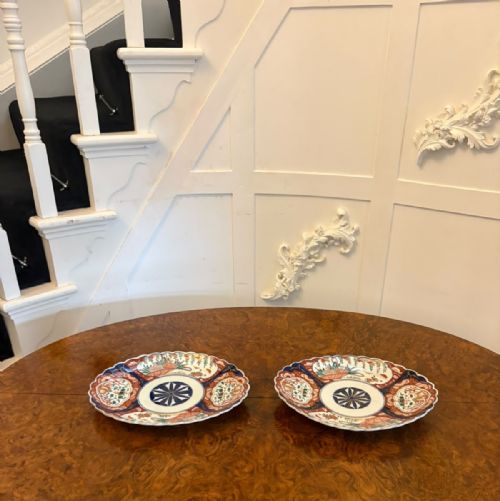
When you search for antique blue serving dishes, you encounter platters, tureens, bowls, and chargers designed for presenting food across centuries. The pieces on this page emerge primarily from the Georgian, Victorian, and 18th-century periods, alongside international examples including Japanese Imari and Chinese Export wares.
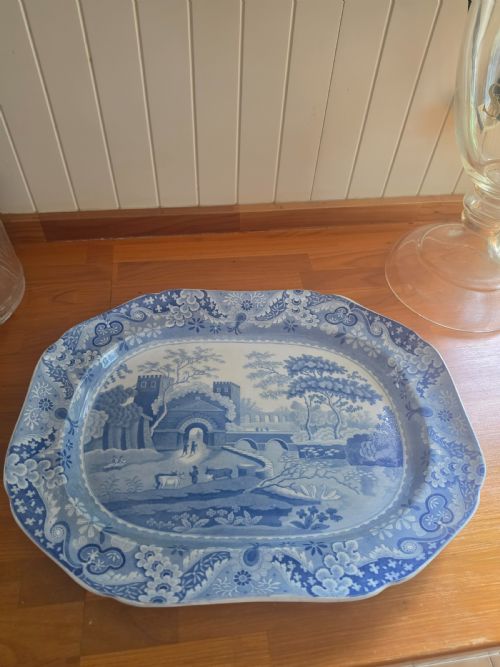
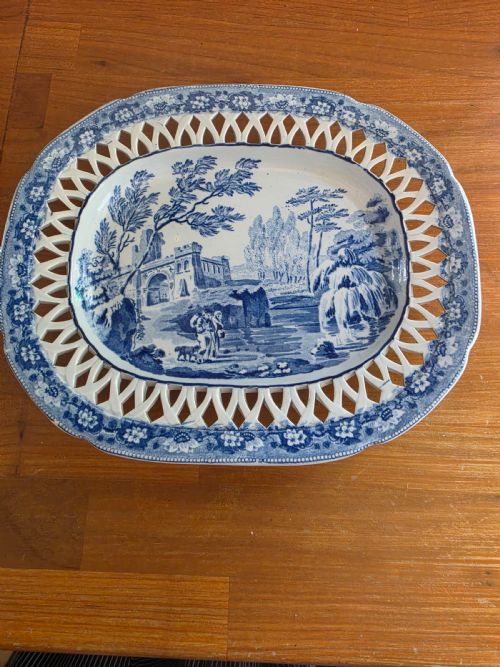
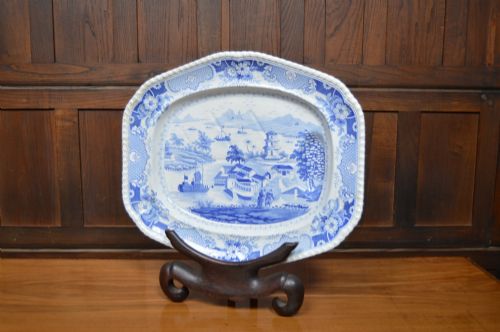
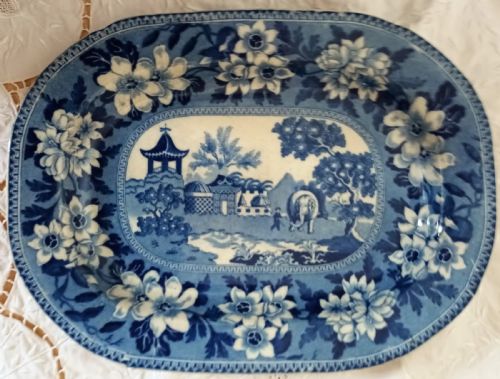
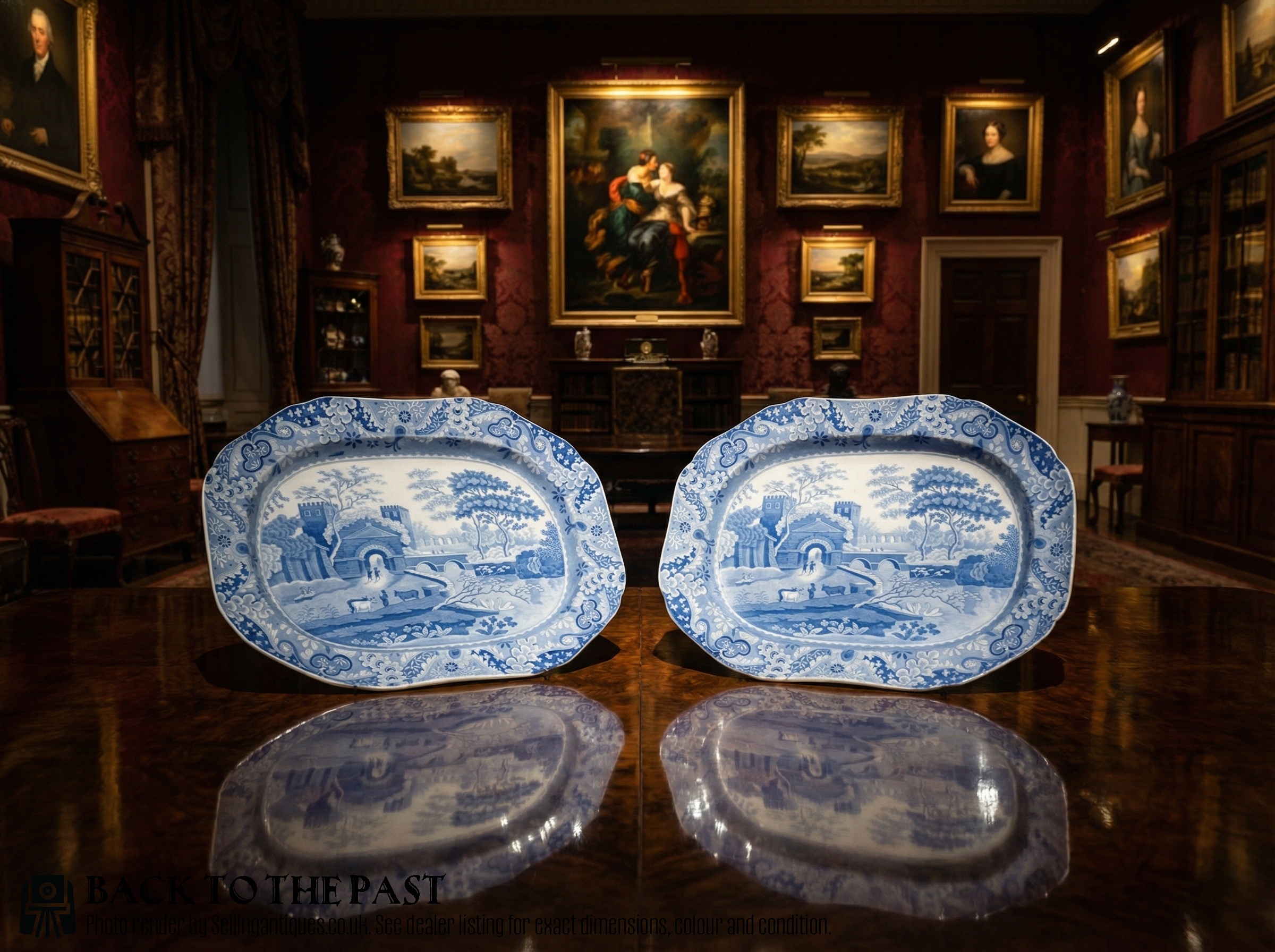
Makers shaped these items for utility and presentation, ranging from large meat platters with transfer-printed transferware scenes to delicate porcelain sauce tureens and handled cheese dishes. Blue pigment dominates the surfaces, applied either through cobalt underglaze, transfer printing, or hand-painted botanical and architectural motifs.
English potteries such as Spode, Davenport, Coalport, and various Staffordshire works feature prominently alongside Japanese Meiji period porcelain. Buyers find both individual chargers suitable for wall hanging and matched pairs of vegetable tureens meant for dining tables.
How they were made
Potters shaped earthenware, ironstone, and porcelain on wheels or pressed them into moulds before applying cobalt pigment and glaze. Transfer printing allowed factories to transfer complex engraved copperplate designs onto ceramic surfaces prior to firing.
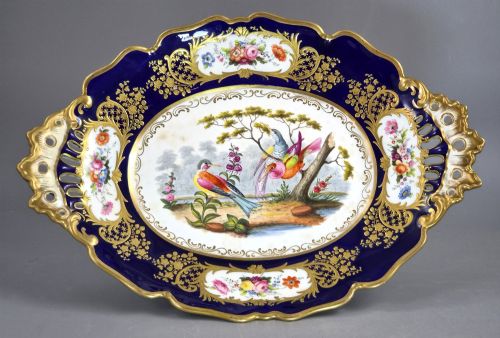
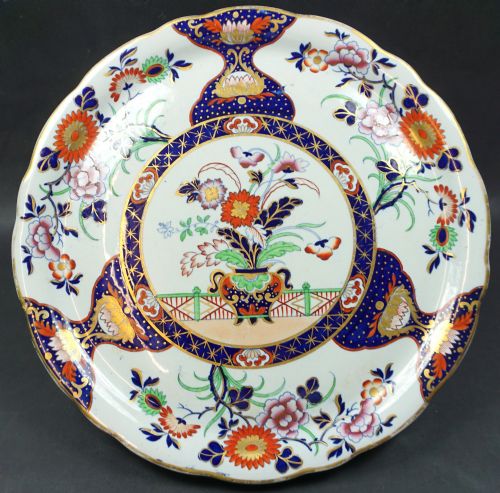
Hand-painting often complemented these underglaze prints, adding polychrome highlights, gilding, or enamel details over the glaze. Firing in kilns vitrified the ceramic bodies and set the deep blue tones characteristic of the period.
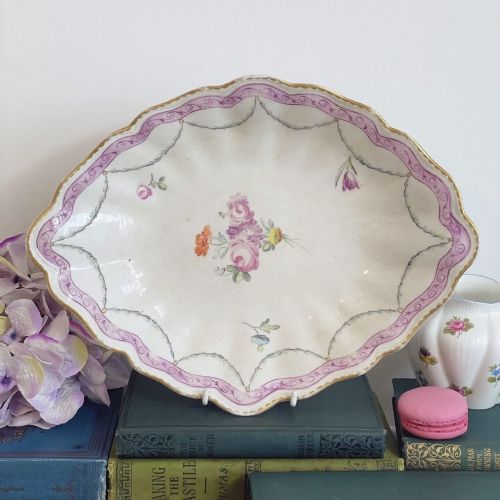
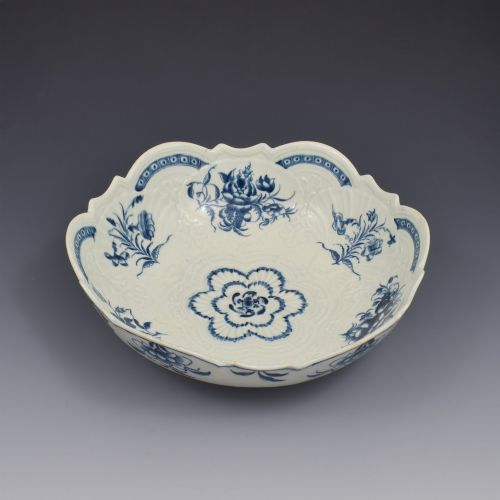
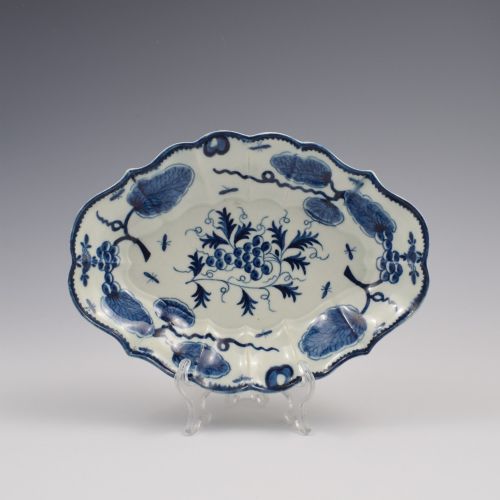
Blue pigment appears across diverse forms, including platters, soup tureens, bowls, and scalloped dishes.
What varies in quality
Quality rests upon the crispness of the transfer print, the depth and stability of the cobalt pigment, and the delicacy of the ceramic body. Early porcelain bodies from factories like Worcester show translucency and careful hand-painting, whereas robust ironstone prioritises durability for daily service.
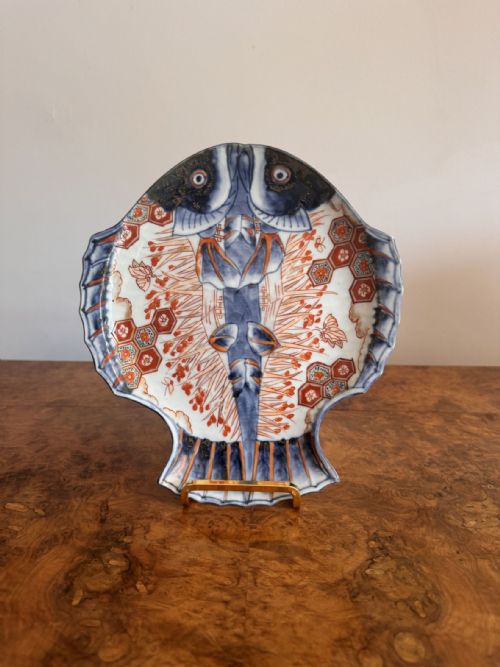
The precision of moulding, the symmetry of scalloped edges, and the presence of makers' marks or impressed ciphers separate ordinary utility wares from notable collector pieces. Intricate hand-painted details or unusual forms, such as fish-shaped dishes, elevate a piece above standard production runs.
Coalport·Spode·Davenport·Hicks and Meigh·John Rogers and Son·James Wallace and Company·J and R Riley·Mason·J and R Clews·John and Richard Riley·Minton
The Antique Blue Serving Dishes Glossary
- Transferware
- Ceramic pottery decorated by applying a printed paper design from an engraved copper plate to the biscuit surface. This technique enabled factories to produce consistent, detailed pictorial scenes in blue.
- Imari
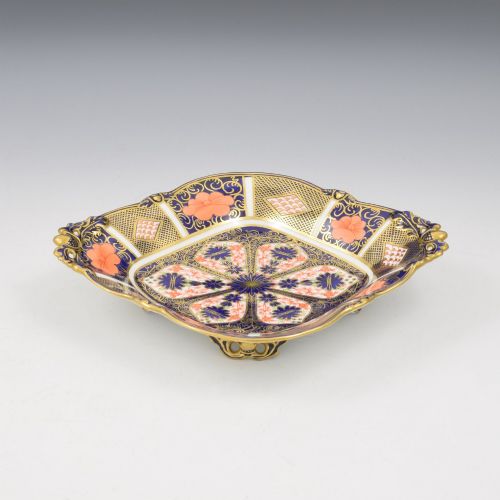
- Japanese porcelain decorated in underglaze blue, iron red, and gold, typically featuring floral and panelled designs. The style was widely exported to Europe and subsequently copied by Western factories.
- Charger
- A large decorative plate or platter used traditionally for ceremonial service or displayed upright on a sideboard. These pieces often feature elaborate painted or transfer-printed scenes.
- Tureen
- A deep covered serving vessel used for soups, sauces, or vegetables at the dining table. They frequently rest on matched stands and include applied side handles.
- Ironstone
- A heavy, durable type of earthenware patented in the 19th century to imitate porcelain. It resists chipping and served as a sturdy medium for large platters and dinner services.
Antique Blue Serving Dishes: Frequently Asked Questions
Can I use these antique dishes for serving food?
Most of these ceramic and porcelain pieces remain structurally sound for serving dry foods or presentation at the table. Historic glazes and crazing, however, mean many owners prefer them for display.
Hand-washing is essential for protecting the historic glaze, cobalt pigment, and any delicate gilding from modern detergents.
How do I identify transferware patterns?
Makers often named their patterns after scenic views, literary themes, or exotic locations like rural scenery or eastern street scenes. Transfer-printed marks on the reverse frequently name the factory or supply a cipher.
Reference books catalogue these distinct border designs and central motifs to match patterns to specific 19th-century potteries.
What is the difference between earthenware and porcelain?
Earthenware and ironstone are opaque, thicker ceramics fired at lower temperatures, designed for heavy daily service. Porcelain is dense, vitrified, and often translucent when held to the light.
Early porcelain bodies, such as those from Worcester, command attention for their delicate walls and fine hand-painted cobalt detailing.
How should I display large chargers safely?
Large chargers and platters require secure wall hangers designed to distribute weight evenly across the rim. Alternatively, heavy ironstone platters sit safely upright in dedicated plate grooves on dressers.
Avoid hanging pieces in direct sunlight or areas subject to extreme temperature fluctuations to protect the glaze.