
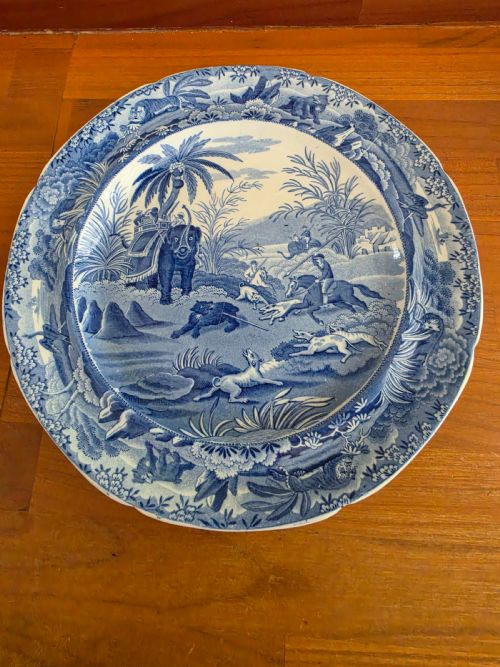


Blue White Spode Plates
Blue white spode plates are transfer-printed earthenware and pearlware vessels that bring enduring Regency and Georgian domestic charm to a modern interior.
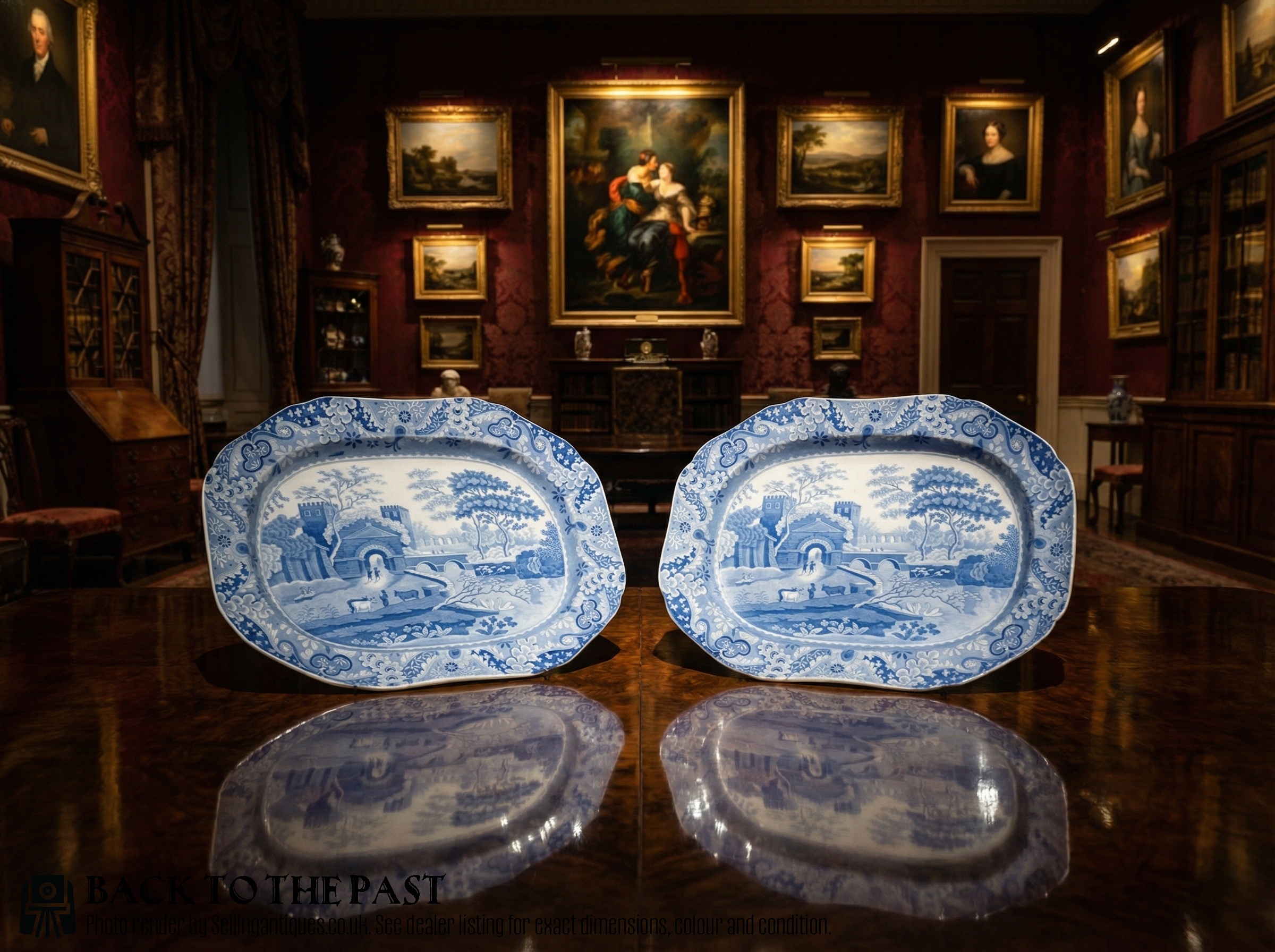
Blue White Spode Plates
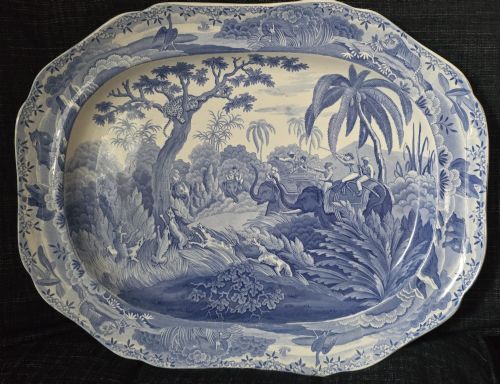
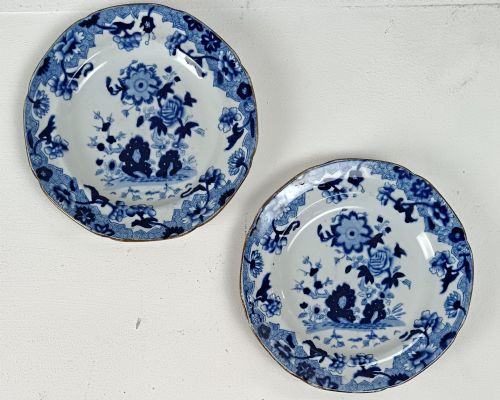
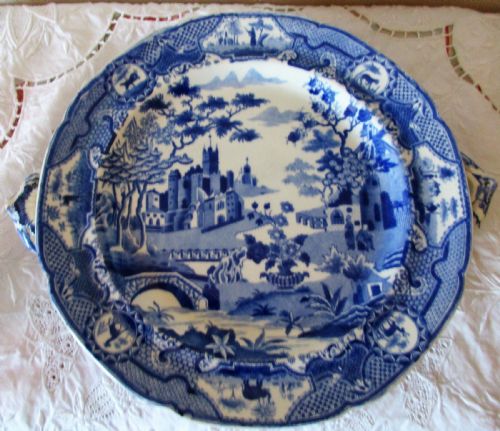
When you search for blue white spode plates, you encounter an array of earthenwares and pearlwares produced across the Georgian, Regency, and 19th-century periods. The forms range from small tea plates and decorative dishes to large serving platters, tazza stands, and sauce tureen bases. These pieces showcase pictorial transfer-printed scenes transferred onto a glazed ceramic surface using deep cobalt ink.
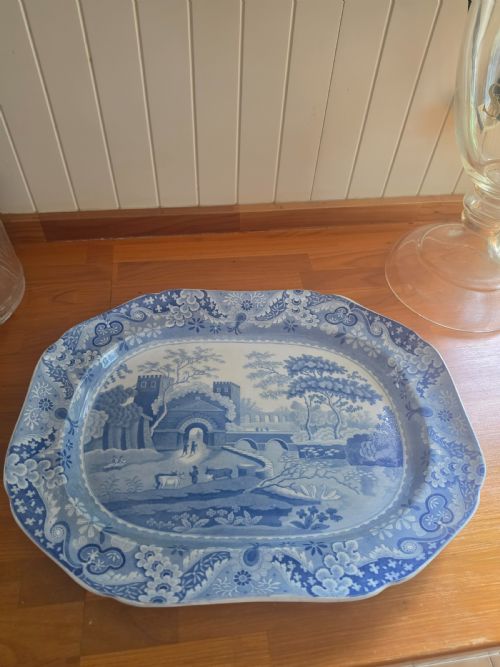
On this page, you are most likely to meet pieces decorated with classic named patterns such as Italian, Tower, Lanje Lijsen, Gothic Castle, Bridge of Lucano, and Death of the Bear. Many items date from the early decades of the 19th century, reflecting the peak of Regency Chinoiserie and scenic landscape designs. Tea plates and large meat plates dominate the selection, offering versatile service and display options.
How they were made
Potters shaped these vessels using earthenware and pearlware bodies, which were then biscuit-fired to create a stable ceramic base. Artisans applied the design from engraved copper plates onto tissue paper, which transferred the cobalt ink onto the ceramic surface. A transparent glaze sealed the pigment before a final gloss firing locked in the rich blue tone.
The use of specialised bodies like New Stone allowed makers to produce robust ironstone-type plates suitable for heavy dining use. Cobalt ink interacted with the fluid glaze during firing, creating subtle variations in depth and hue across every transfer-printed landscape or architectural motif.
Bears met dramatic fates on these ceramic surfaces long before television.
What varies in quality
Quality in these ceramics rests upon the crispness of the transfer print and the clarity of the cobalt ink against the white ceramic ground. Finer examples display sharp architectural lines and deep, even colour without blurring or smudging in the printed transfer. The application of the glaze also matters, as a smoother, more uniform surface preserves the fidelity of the underlying design.
The sophistication of the pattern influences the desirability of the piece, with pictorial scenes like Zeus in his Chariot or Death of the Bear demanding greater artistic execution than standard geometric borders. Early 19th-century pieces often exhibit finer potting techniques and more carefully refined pearlware bodies than later mass-produced iterations.
Spode·Copeland Spode
The Blue White Spode Plates Glossary
- Pearlware
- A refined earthenware body developed in the late 18th century featuring a subtle bluish glaze that pooled in recesses to mimic Chinese porcelain.
- Transfer printing
- A decoration technique where an engraved copper plate applied ink to tissue paper, which was pressed onto the ceramic biscuit.
- Cobalt ink
- The deep blue metallic oxide pigment used beneath the glaze to create the characteristic monochrome patterns on these ceramics.
- New Stone
- A durable, dense ceramic body introduced in the early 19th century that bridged the gap between earthenware and true porcelain.
- Tazza
- A shallow ornamental dish or plate raised upon a central foot or pedestal, used historically for serving small portions.
Blue White Spode Plates: Frequently Asked Questions
How do I date an early Spode plate?
Dating relies on body composition, glaze characteristics, and specific transfer patterns recorded in production ledgers from the Georgian and Regency periods. Pearlware bodies and specific backstamps often point to manufacture during the early 19th century.
Comparison with documented archive pieces helps narrow the decade of creation. Stylistic cues like Chinoiserie borders provide further temporal context.
Were these plates used for daily dining?
Many examples, particularly larger meat plates and tea plates, saw active service in Georgian and Regency households. Robust earthenware and New Stone bodies were chosen precisely to withstand regular domestic use.
Serving platters and tazza stands functioned during formal dinners and tea ceremonies. Their durable glaze protected the ceramic body from staining during meals.
What is the Italian pattern?
The Italian pattern is a famous scenic design featuring classical ruins, figures, and a characteristic Imari-inspired border. Introduced in the early 19th century, it became one of the most enduringly popular blue and white motifs.
Its complex landscape composition draws heavily on picturesque ideals of the period. Plates and services bearing this design remained in production across multiple generations.
How should I display transferware plates?
Transferware plates suit wall mounting using appropriate coated wire hangers or placement on sturdy plate stands within cabinets. Keeping them away from direct, harsh sunlight preserves the vibrancy of the cobalt ink.
Grouping platters and tea plates by pattern creates a cohesive visual impact in a dining room or kitchen. Mixing shapes, from tazza stands to meat plates, adds textural depth to a display.