
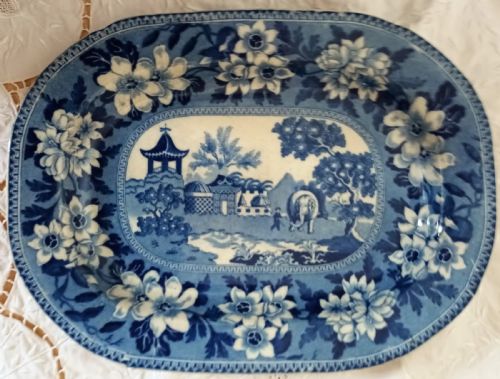
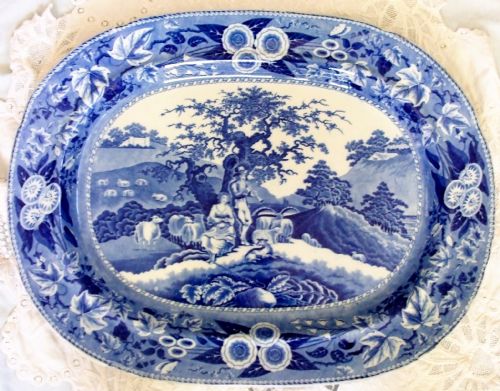


Antique Blue Willow Platter
An antique blue willow platter brings the timeless story of Chinese-inspired landscape design straight to the dining table in durable earthenware.
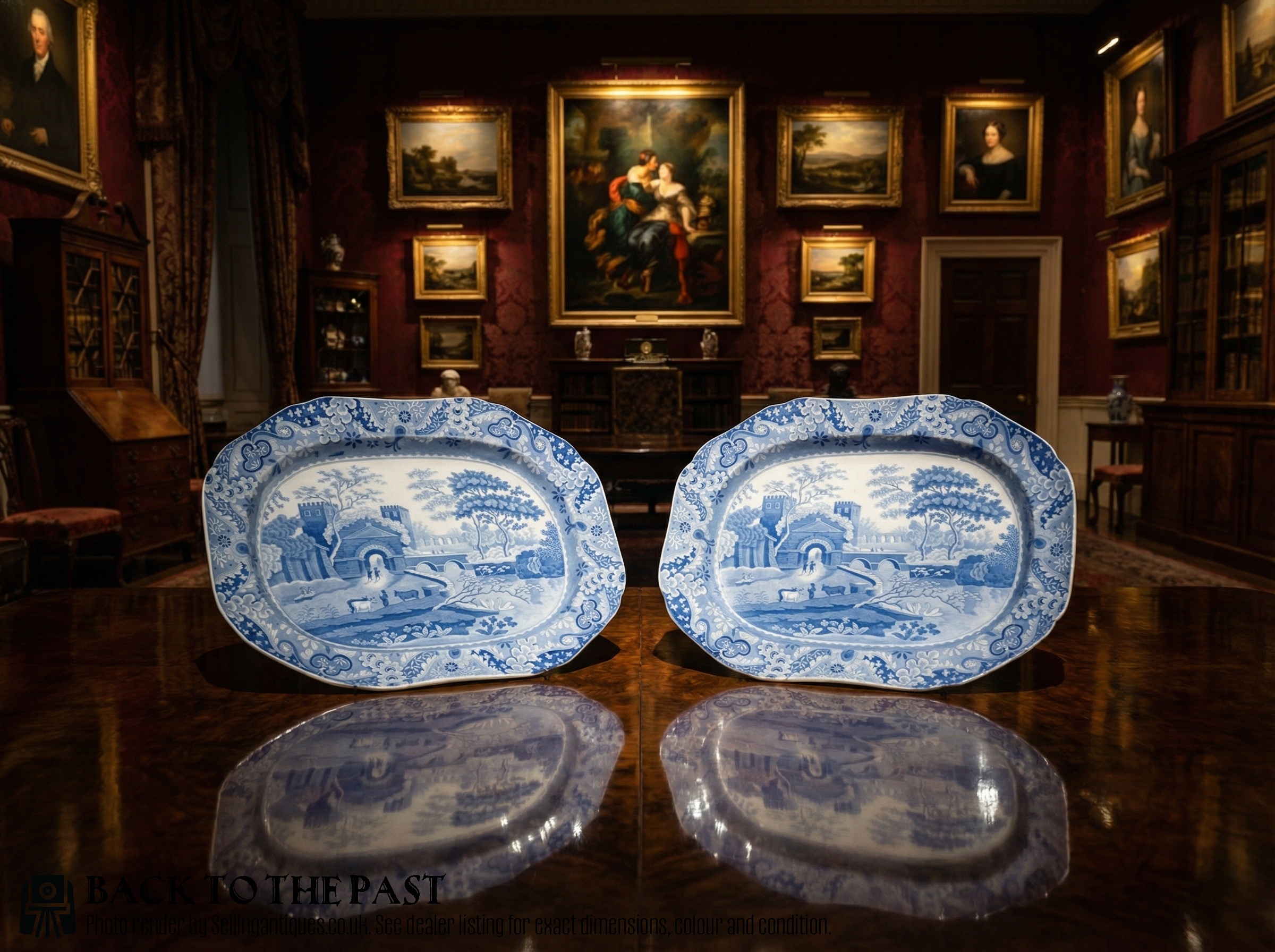
Antique Blue Willow Platter
When you search for an antique blue willow platter, you are looking at large ceramic serving vessels decorated in blue pigment depicting traditional scenes, often originating from Georgian and nineteenth century workshops. These pieces were made to serve meat and large courses at the table, taking the form of platters, serving dishes, and meat plates.
The versions you are most likely to meet on this page span the eighteenth and nineteenth centuries, including pearlware, earthenware, and tin glazed ceramics. They range from large chargers to smaller serving dishes, carrying transfer printed or hand painted motifs such as elephants, piping shepherds, zebras, and bridge scenes.
How they were made
Potters shaped earthenware and pearlware bodies before applying cobalt pigment to create the distinct blue decoration underneath a clear ceramic glaze. Many pieces utilised transfer printing techniques to transfer intricate patterns like the willow design onto the curved surfaces of serving platters.
Fired in kilns, these glazed ceramic pieces achieved a hard-wearing finish designed for regular domestic use. The interaction between the cobalt pigment and the glaze during firing produced the characteristic depth of blue colour found across Georgian and Victorian wares.
Listings feature items from the eighteenth and nineteenth centuries, including Georgian and Victorian eras.
What varies in quality
Quality rests in the crispness of the transfer print and the clarity of the cobalt pigment against the ceramic glaze. Early pearlware bodies and fine tin glazed chargers show superior refinement in their potting compared to later utilitarian wares.
The complexity of the moulded form, such as pierced rims or deep serving wells, distinguishes standard meat plates from exceptional presentation platters. A well-balanced composition and steady glaze application mark out the better pieces in this range.
John Rogers and Son·Spode·Caughley
The Antique Blue Willow Platter Glossary
- Pearlware
- A refined earthenware developed in the late eighteenth century featuring a subtle bluish glaze that pooled in recesses, designed to mimic Chinese porcelain.
- Tin Glaze
- An opaque white glaze containing tin oxide, used on early ceramics to provide a smooth white surface for painted decoration.
- Cobalt Pigment
- A metallic oxide used under the glaze to produce a stable blue colour that withstood high kiln temperatures without fading.
- Transfer Printing
- A technique where an engraved copper plate applied the design to tissue paper, which was then stamped onto the unglazed ceramic body.
- Charger
- A large decorative plate or serving dish intended for grand table service or display rather than everyday dining.
Antique Blue Willow Platter: Frequently Asked Questions
What is an antique blue willow platter?
An antique blue willow platter is a ceramic serving dish decorated with blue pigment, produced primarily during the eighteenth and nineteenth centuries for table service.
These pieces feature scenic designs transferred onto earthenware, pearlware, or tin glazed bodies, combining practical dining use with decorative landscape artistry.
How were these platters used?
These platters were utilised at dining tables to serve large joints of meat, fowl, and substantial courses during family meals or formal gatherings.
Due to their generous size and durable glazed ceramic construction, they stood up well to heavy daily use in busy nineteenth-century kitchens.
How do I identify a Georgian platter?
Georgian platters often display pearlware bodies, deep cobalt blue transfer prints, and characteristic landscape patterns influenced by Chinoiserie styles of the period.
Examining the weight of the ceramic, the tone of the blue pigment, and the style of the border helps place the piece within the eighteenth or early nineteenth century.
Can I use an antique platter for food?
While these platters were designed for serving food, nineteenth-century ceramic glazes can contain historical materials that require careful consideration before modern culinary use.
Many collectors prefer to display them on walls or dressers to preserve the glaze and protect the surface from modern dishwasher detergents.