
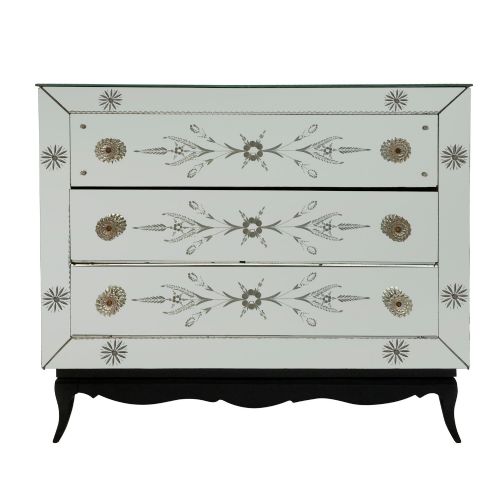
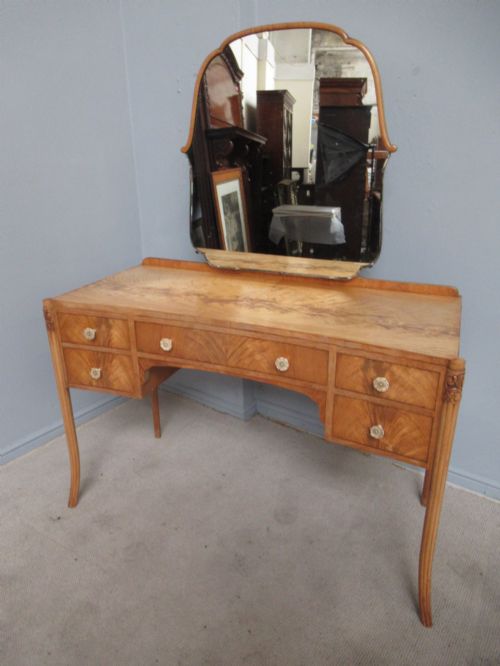
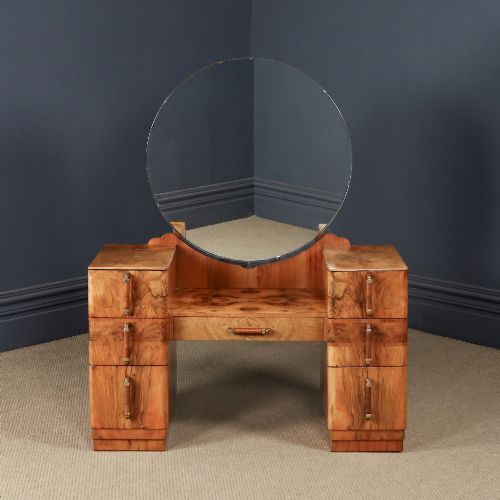
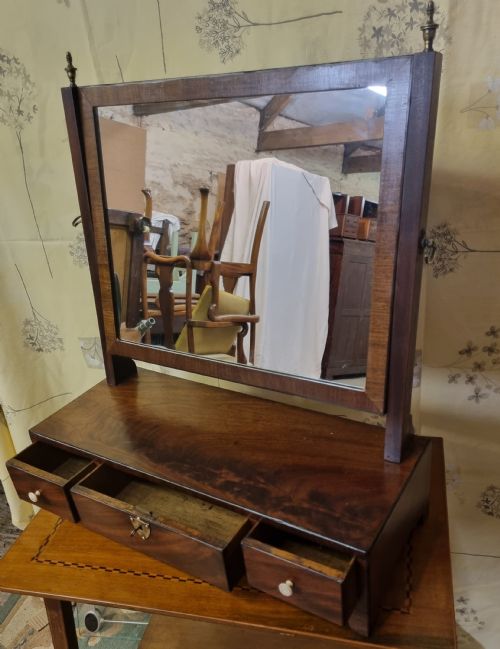

Vintage Bedroom Vanity
These vintage bedroom vanity pieces are dressing tables that bring practical elegance and period charm to a morning routine.
What They Are
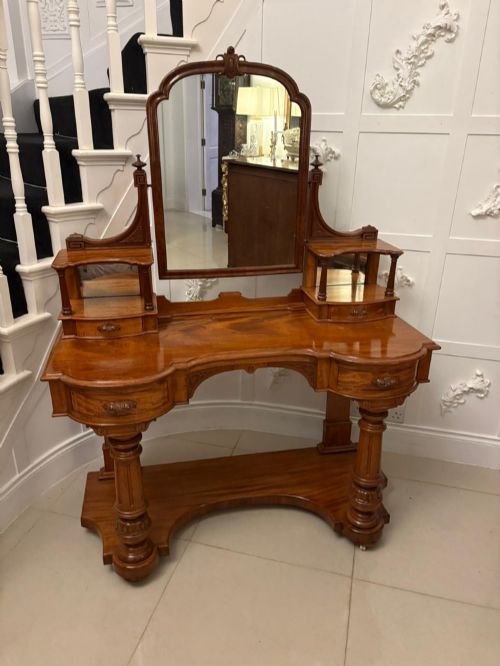
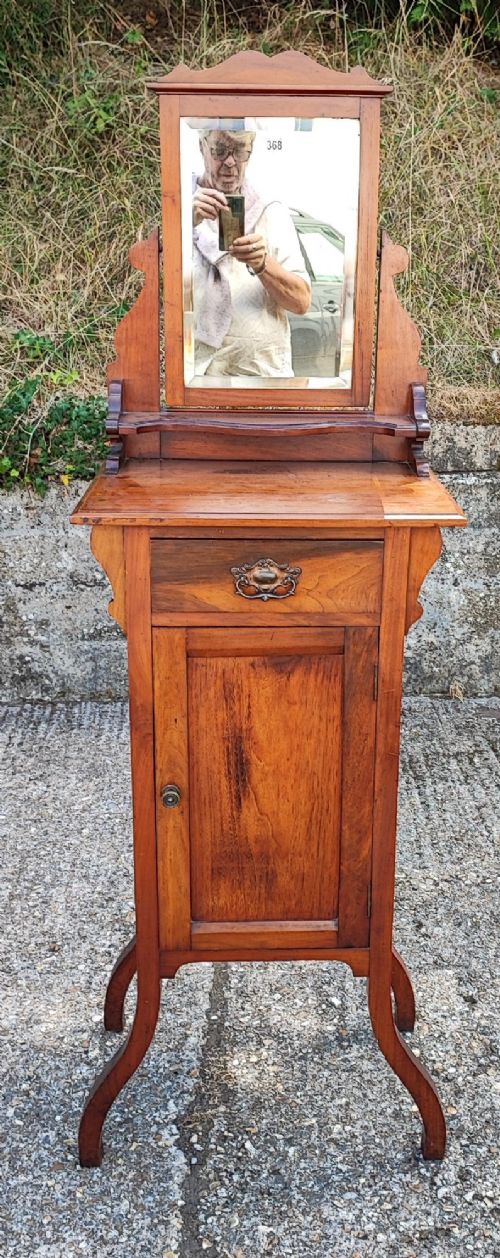
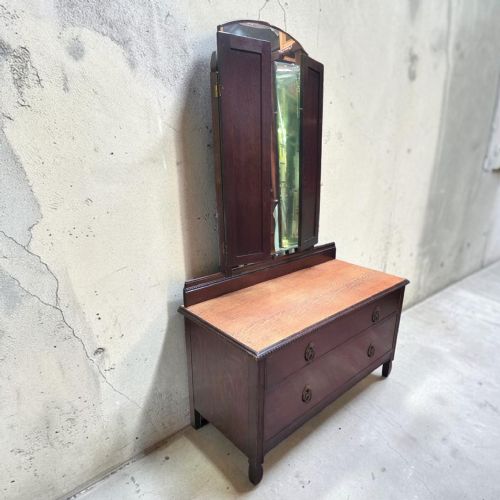
A vintage bedroom vanity spans pieces from the Victorian era through the Edwardian period and into the 1920s and 1930s. These dressing tables serve as personal grooming stations equipped with surface space and mirrors.
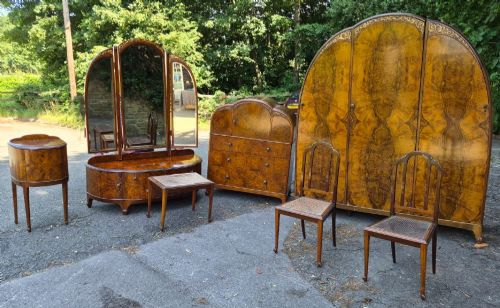
The most common examples on this page are Edwardian and Victorian forms, alongside later interpretations from the Art Deco period. Each piece reflects the domestic habits of its time through surface drawers and mirror placement.
Makers and retailers of the period ranged from large department stores like Harrods to specialist cabinet makers such as Heals. Their output defined the bedroom furniture of the late nineteenth and early twentieth centuries.
How They Were Made
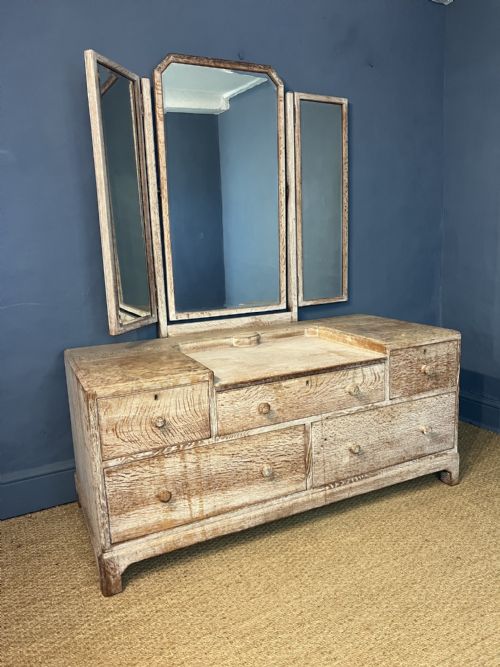
Cabinet makers utilised a variety of timbers including mahogany, oak, limed oak, satinwood, birds eye maple and satin walnut. These woods were chosen for their grain patterns and structural durability.
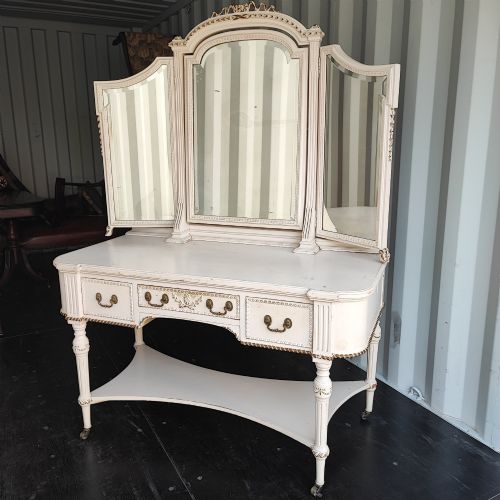
Construction techniques combined solid timber frames with decorative veneers, complemented by brass hardware and fitted glass mirrors. Finishes ranged from polished mahogany to the lighter tones of limed oak.
Retail Price Guide 2026
Typical UK retail prices for vintage bedroom vanity, calculated from the Sellingantiques database of over a million retail prices indexed since 2003. This retail price guide relies exclusively on Sellingantiques data; no external sources or auction records are used, so the figures do not describe the wider market.
Trinket drawers hide secret compartments once used for storing morning letters and hairpins.
What Varies in Quality
The distinction between standard production and finer work rests on the selection of timber veneers and the subtlety of the hardware. Pieces retailed by notable houses display a higher standard of internal drawer construction.
Design ambition separates simple utility from sophisticated styling, particularly in how mirrors and upright supports integrate with the main chest. Well-proportioned examples maintain visual balance across both timber and glass elements.
Harrods·Heals
The Vintage Bedroom Vanity Glossary
- Dressing chest
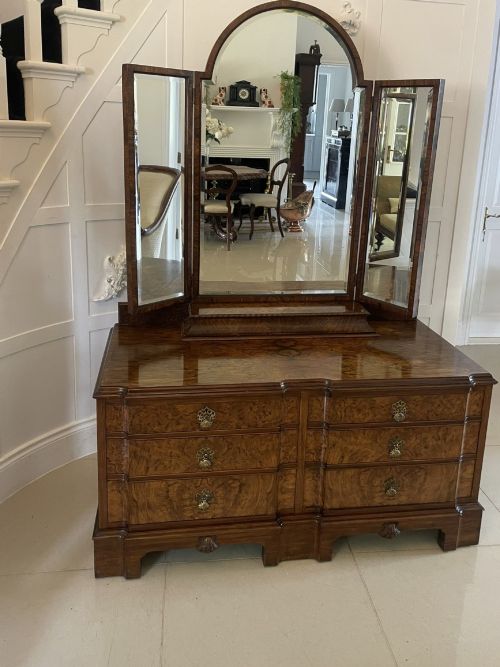
- A lower form of dressing table incorporating chest of drawers beneath the mirror. It provides compact storage for personal items.
- Limed oak
- A finish applied to oak timber that leaves a whitish residue in the grain. This treatment became popular during the interwar period.
- Birds eye maple
- A figured timber showing small circular markings resembling bird eyes. Cabinet makers prized this wood for decorative drawer fronts and panel inserts.
- Triple mirror
- An arrangement featuring a large central looking glass flanked by two adjustable smaller mirrors. This configuration allowed users to view themselves from multiple angles.
Frequently Asked Questions
What is a vintage bedroom vanity?
A vintage bedroom vanity is a dressing table designed for personal grooming, typically featuring integrated drawers and mirrors.
These pieces date from the Victorian, Edwardian, and Art Deco eras, constructed in various timbers to suit the period's interior style.
How do I identify an Edwardian dressing table?
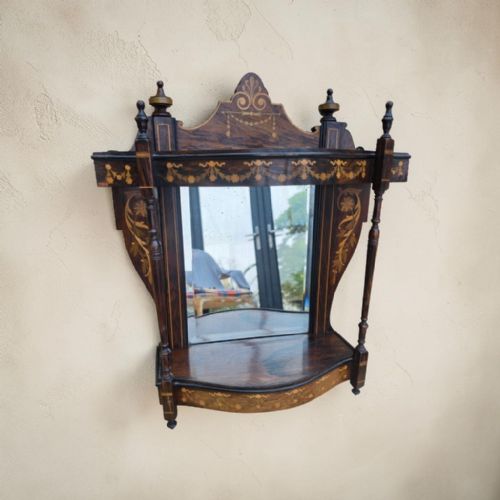
Edwardian dressing tables often feature lighter timbers such as satinwood, mahogany, or satin walnut with delicate inlay work.
They frequently include tilting mirrors supported by turned or shaped arms above a set of small trinket drawers.
Are these dressing tables practical for daily use?
These dressing tables offer useful surface area and drawer storage that functions well in contemporary bedrooms.
The fitted mirrors and compartments provide the same organizational benefits today as they did a century ago.