

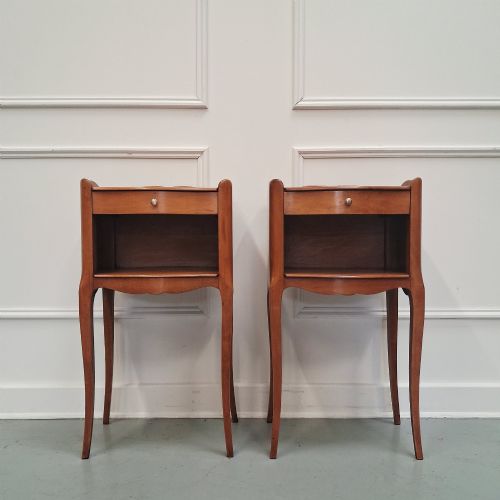
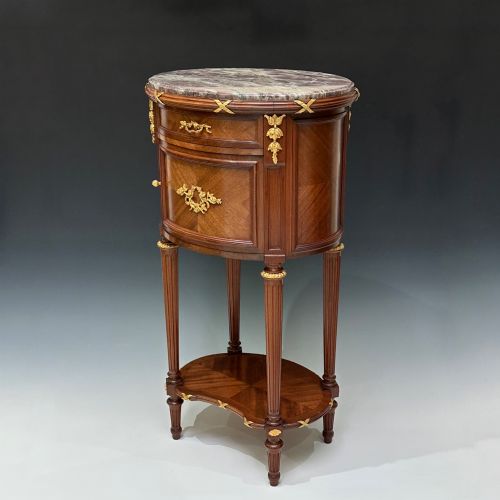
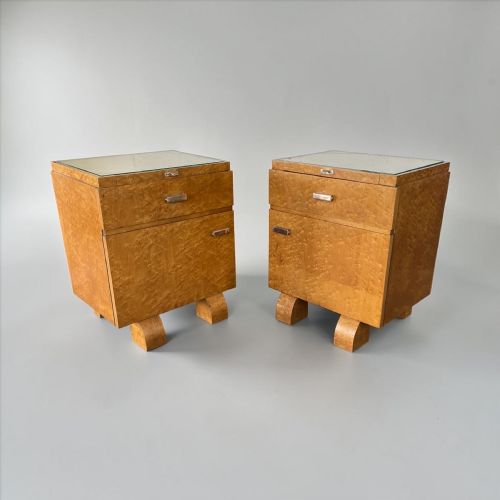
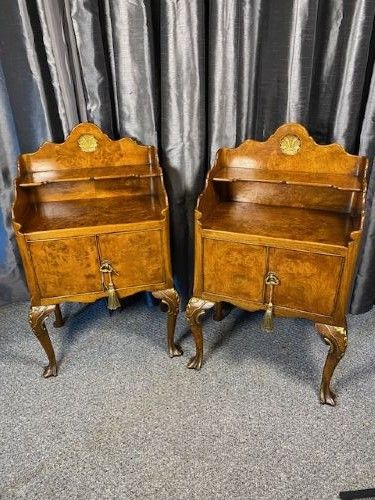
Vintage Bedroom Nightstand
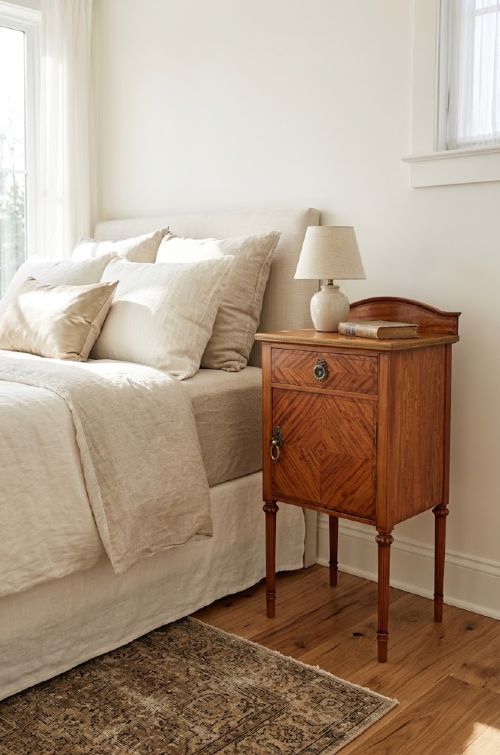
A vintage bedroom nightstand brings useful surface space and period character directly to the bedside, spanning Edwardian, Art Deco and earlier designs.
Vintage Bedroom Nightstand
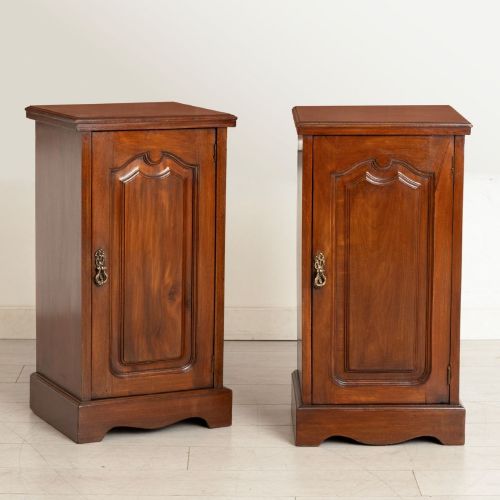
A vintage bedroom nightstand encompasses bedside tables, cabinets, cupboards and small chests designed to sit beside a bed. When searching this phrase, buyers frequently encounter matched pairs alongside single pieces originating from the nineteenth and twentieth centuries.
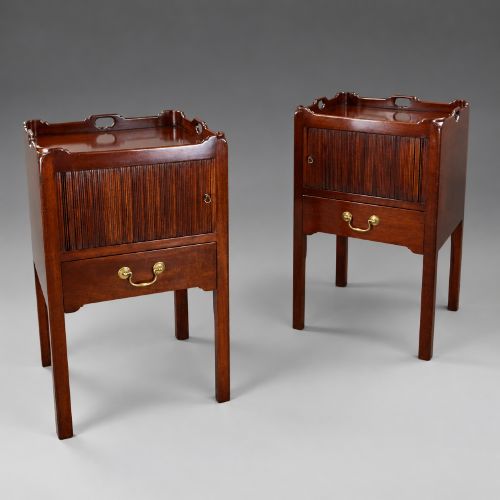
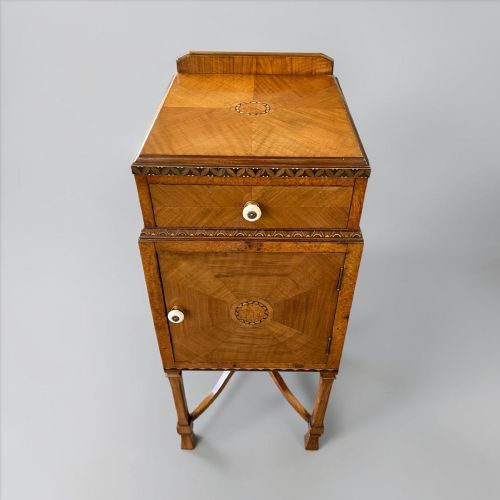
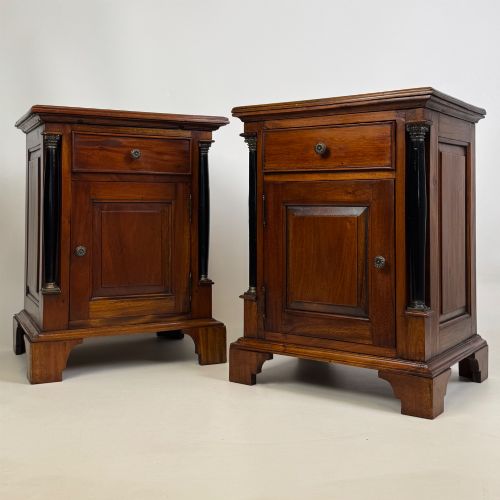
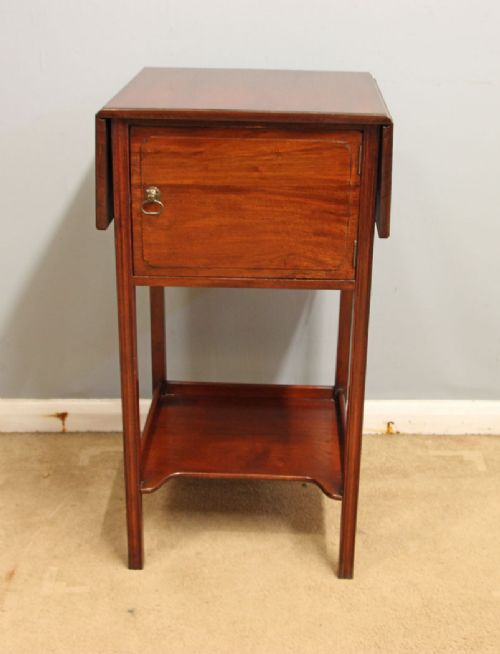
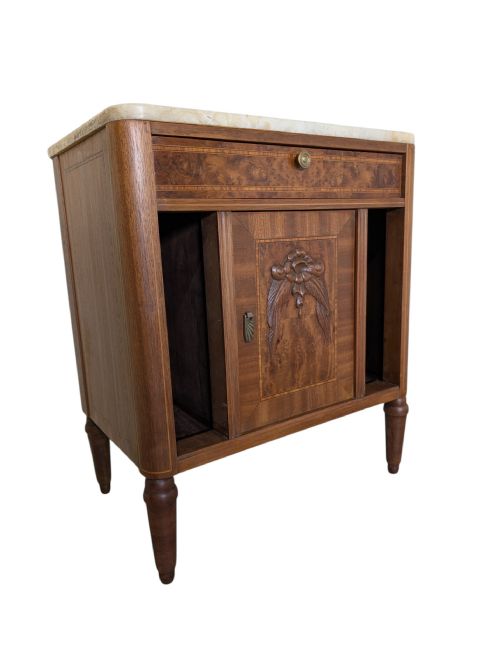
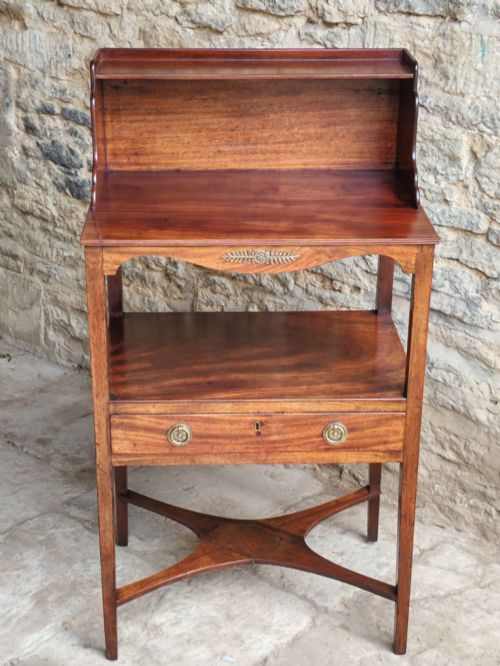
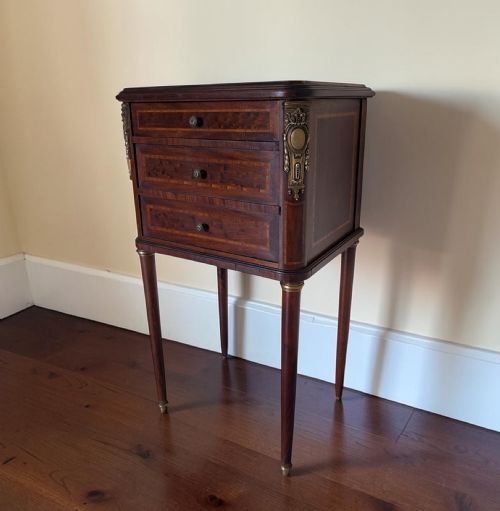
The selection ranges from Georgian style mahogany cupboards and Edwardian inlaid satinwood cabinets to geometric Art Deco walnut pieces. Forms vary from open lamp tables to enclosed bedside chests with doors and drawers.
Origins stretch across English, French and Scandinavian workshops, reflecting diverse regional tastes in domestic furniture. Buyers will find both traditional timber constructions and streamlined twentieth-century interpretations.
Materials and construction
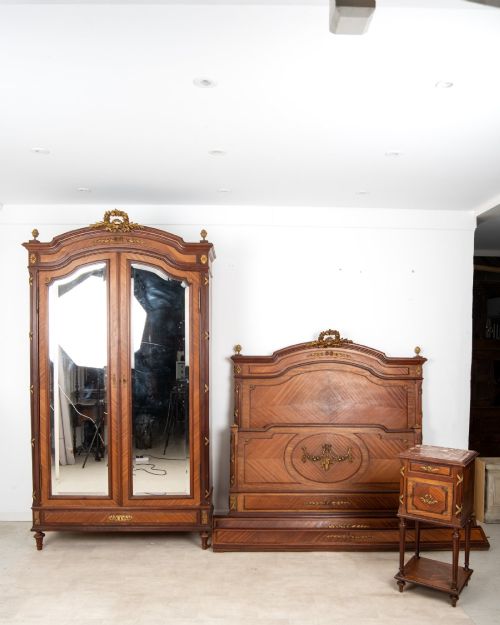
Cabinet makers utilised dense hardwoods such as mahogany, walnut and burr walnut, often pairing them with lighter decorative timbers like satinwood and oak. Selected pieces incorporate marble tops or brass hardware to provide functional durability and visual contrast.
Construction techniques combine traditional joinery with decorative surface treatments, including marquetry inlay and matched wood veneers. Timber selection dictates the grain pattern and overall tone of each individual nightstand.
Current listings span periods from the eighteenth century through to Art Deco designs in walnut, mahogany, satinwood and oak.
Judging the range
Quality rests upon the choice of timber and the precision of its application, particularly in veneered burr walnut or inlaid satinwood surfaces. Finer examples display harmonious grain matching across drawers and doors, coupled with well-executed proportions.
Construction integrity distinguishes workshop output, seen in the stability of joints, the smooth movement of small drawers and the original state of brass handles or marble surfaces.
François Linke·Walter Carter Harrods
The Vintage Bedroom Nightstand Glossary
- Bedside cabinet
- A small enclosed piece of furniture featuring a door or drawers designed to hold night-time essentials. These cabinets keep personal items neatly stored away from view.
- Burr walnut
- A highly figured timber veneer taken from the growth growths of walnut trees. It exhibits swirling patterns prized for decorative cabinet fronts.
- Inlay
- A technique where contrasting woods or materials are set into the surface of a piece to create decorative patterns. Edwardian examples often feature delicate line inlay.
- Lamp table
- An open occasional table utilised to support a bedside light rather than offering enclosed storage. These pieces provide a lighter visual presence next to the bed.
- Satinwood
- A pale, lustrous hardwood native to India and Ceylon utilised extensively in fine Edwardian cabinet making. It yields a golden yellow finish.
Vintage Bedroom Nightstand: Frequently Asked Questions
What is the difference between a nightstand and a bedside cabinet?
A nightstand typically provides an open surface or shelf structure for lamps and books. A bedside cabinet incorporates doors or drawers to conceal storage.
Both serve the same primary bedside function, but cabinets offer a tidier profile by keeping personal items enclosed.
Are vintage nightstands usually sold as pairs?
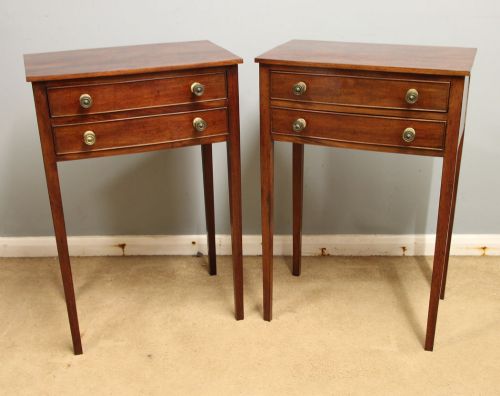
Many listings feature matched pairs to accommodate beds with symmetrical bedside arrangements. Single pieces also appear frequently for distinct interior layouts.
Matching pairs from the Edwardian and Art Deco periods are particularly sought after for balanced bedroom styling.
How do I identify an Art Deco nightstand?
Art Deco pieces display streamlined geometric forms, rounded corners and symmetrical veneers such as burr walnut. They originate predominantly from the interwar period.
Ornamentation is minimal compared to earlier revival styles, focusing instead on the natural grain of the wood.
What wood types are most common?
Mahogany and walnut predominate across nineteenth and twentieth-century examples. Lighter timbers like satinwood and bleached oak appear frequently in Edwardian and later modernist designs.
Marble tops and brass fittings also feature on specific Continental and domestic pieces.