
Vintage Bedroom Armoire
A vintage bedroom armoire brings monumental presence and practical hanging space to a room, drawing on decades of skilled cabinet-making.
Vintage Bedroom Armoire
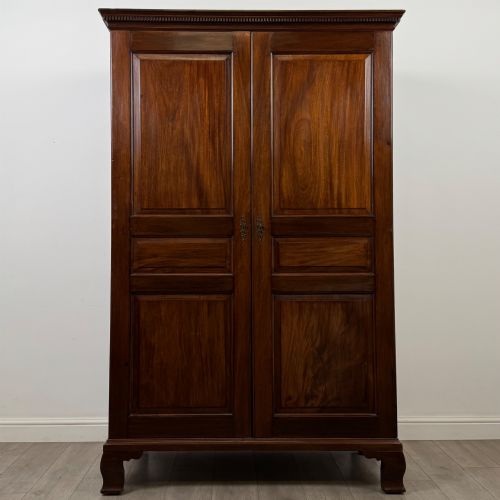
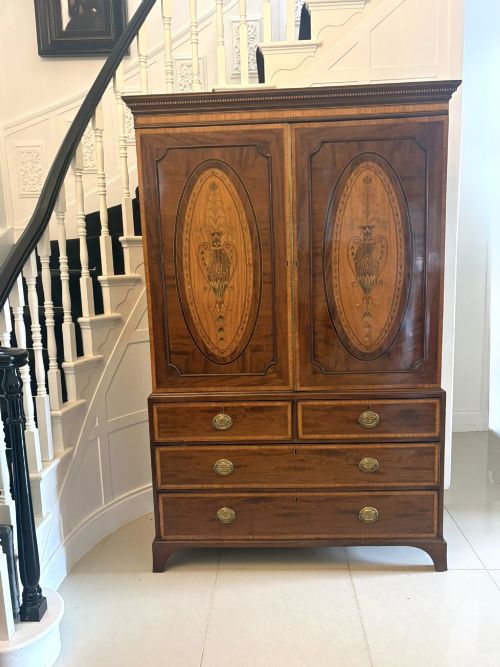
When you search for a vintage bedroom armoire, you encounter substantial freestanding storage furniture designed to hold garments and linens. The examples gathered here span from the nineteenth century through the Art Deco era, including compactums, linen presses, and multi-door configurations.
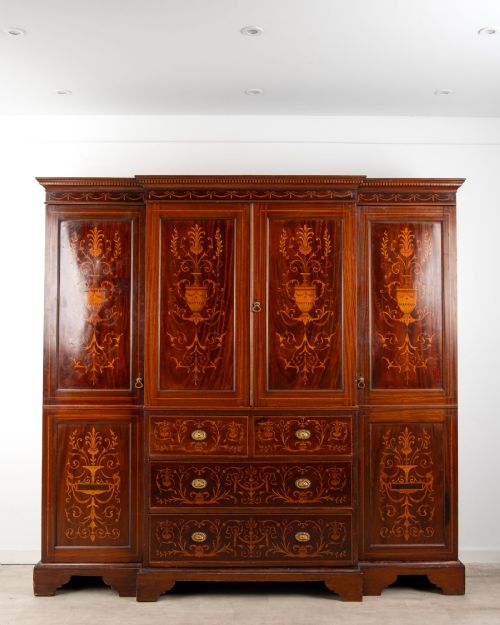
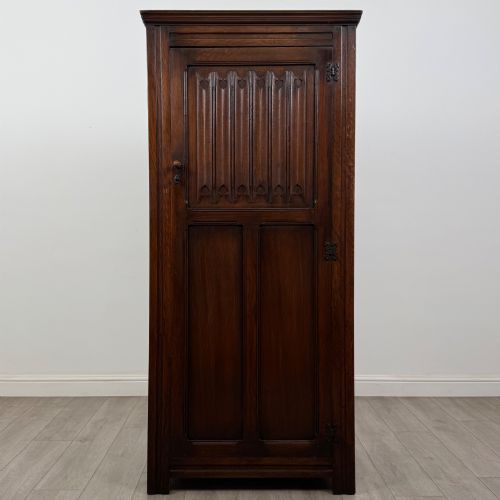
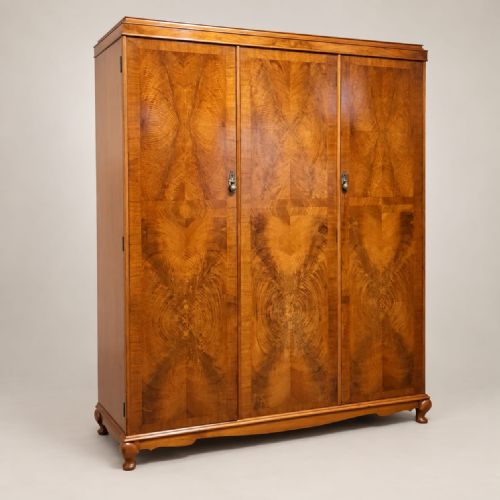
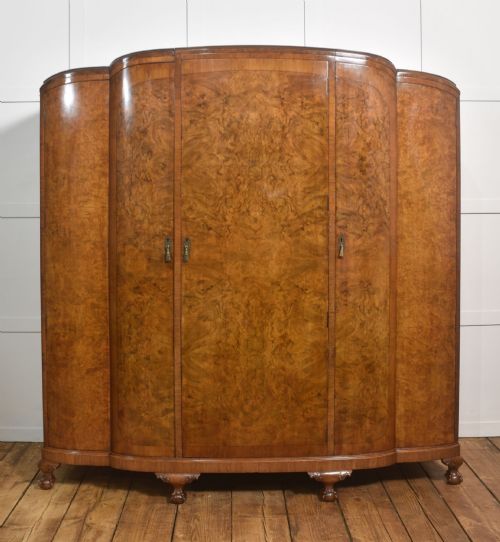
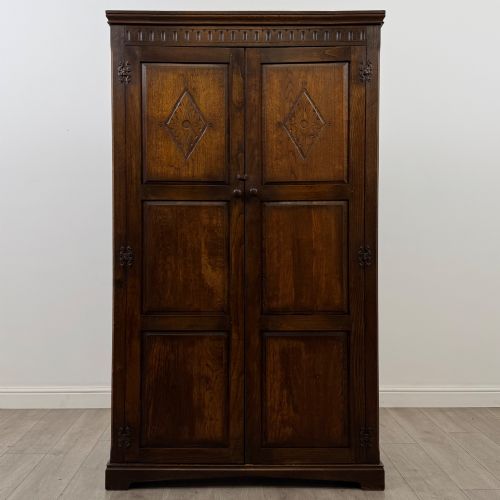
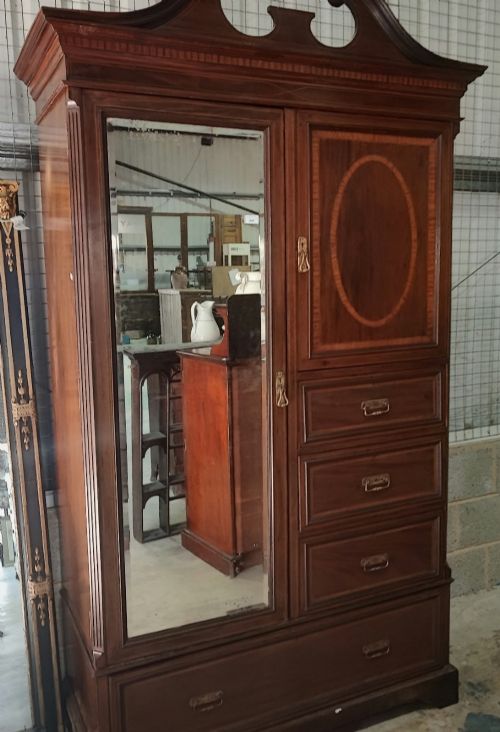
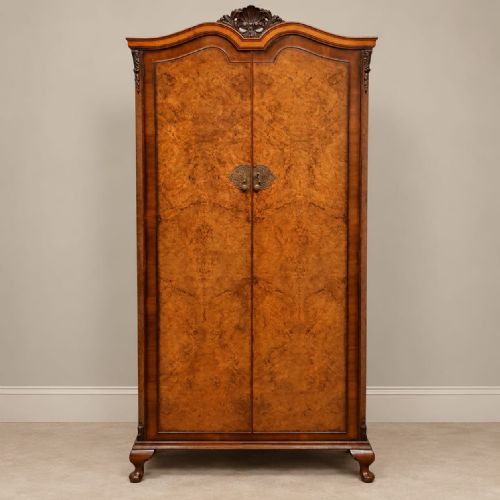
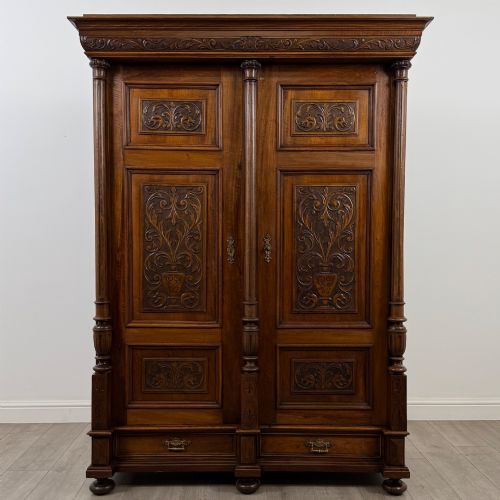
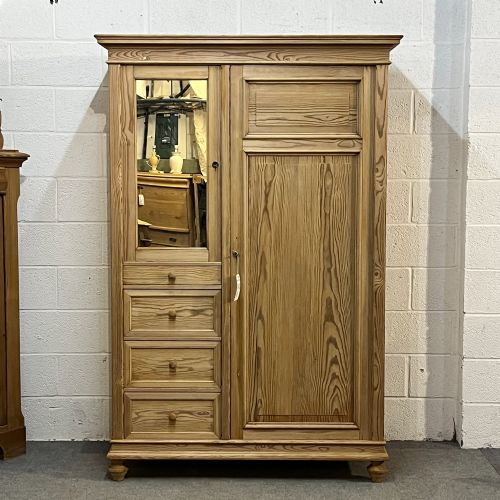
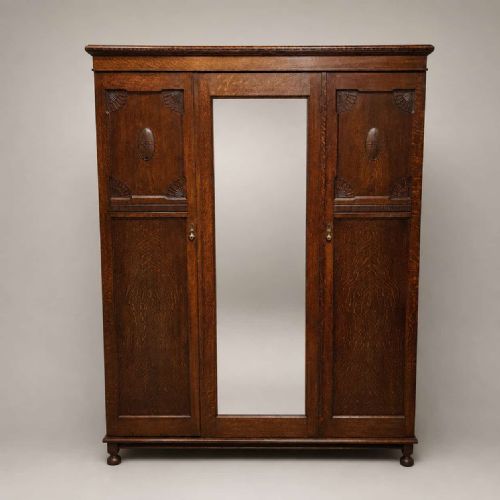
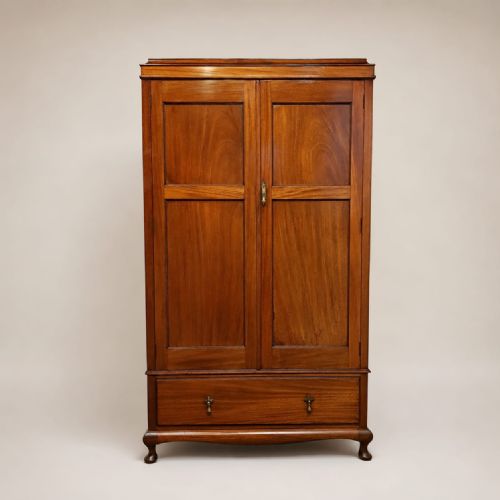
The Edwardian period contributes heavily to the available selection, often taking the form of inlaid mahogany or carved oak double and triple wardrobes. Alongside these, Victorian pieces in burr walnut and pine sit beside geometric Art Deco designs from the nineteen-thirties.
Makers and workshops of the past constructed these cabinets to serve as the architectural centrepiece of a bedroom suite. They range from modest single-door corner robes to massive breakfront triple wardrobes fitted with internal drawers and hanging rails.
Materials and Joinery
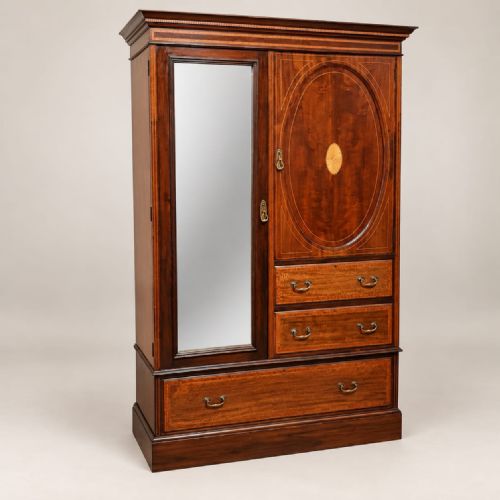
Cabinet-makers relied upon solid timbers such as mahogany, oak, and walnut, frequently selecting burr or figured veneers to cover wide panel surfaces. Inlay work in satinwood and contrasting woods added linear detail to drawer fronts and cornices.
Structural integrity relied on traditional joinery methods, allowing large carcasses to distribute weight evenly across plinths and bracket feet. Glass mirrors appeared frequently on central doors during the Edwardian period, secured by carved wooden frames.
The listings span from the early nineteenth century to the nineteen-thirties, incorporating Edwardian, Victorian, and Art Deco design periods.
Distinctions in Execution
The division between standard utility pieces and superior examples lies in the selection of timber and the depth of carving. Master workshops employed symmetrical burr walnut veneers and crisp, hand-cut mouldings that elevate a functional cabinet into a decorative work.
Internal configuration also separates basic wardrobes from finer compactums. The inclusion of original sliding linen trays, solid brass hanging hooks, and coordinated drawer divisions demonstrates a higher standard of original commissioning.
Maples & Co·Edwards and Roberts·Harris Lebus
The Vintage Bedroom Armoire Glossary
- Compactum
- A multi-functional wardrobe combining hanging space, linen shelves, and internal drawers within a single carcass. This layout provides comprehensive storage for an entire bedroom.
- Linen Press
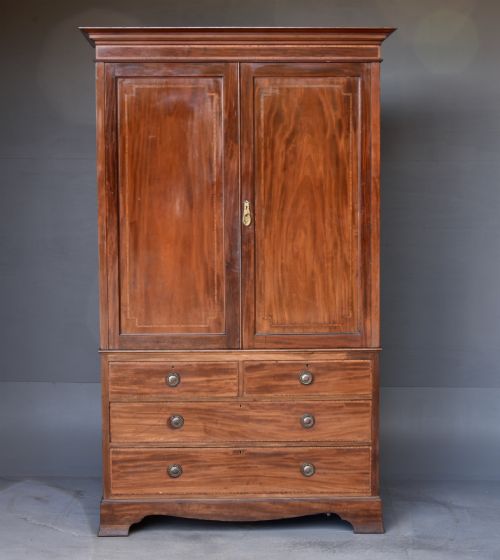
- A tall storage piece featuring upper panelled doors enclosing sliding trays, placed above a chest of base drawers. They originated for storing folded household textiles before modern wardrobes became standard.
- Burr Walnut
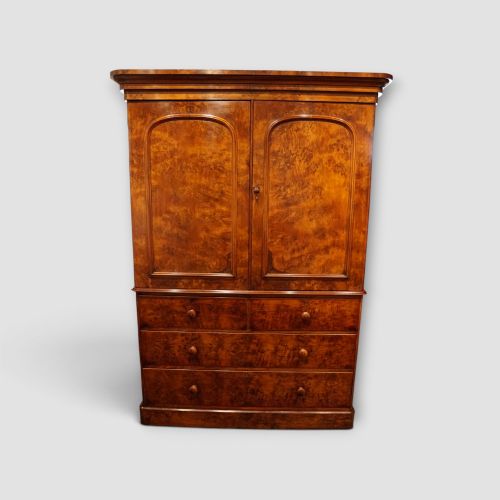
- Timber taken from the gnarled growth of a walnut tree, yielding dense and swirling grain patterns. Cabinet-makers sliced this wood into thin veneers for decorative door panels.
- Breakfront
- A cabinet design where the central section projects forward from the flanking outer sections. This architectural arrangement creates depth and shadow across the front elevation.
Vintage Bedroom Armoire: Frequently Asked Questions
How do I dismantle a large armoire?
Many period wardrobes were constructed as knockdown units to allow transport up staircases and through doorways. They utilise internal bolts or tongue-and-groove peg systems that dismantle into a cornice, base, and separate side panels.
When reassembling, ensure the base sits level on the floor before securing the sides and back panels to maintain proper door alignment.
What is the difference between an armoire and a wardrobe?
While modern usage often treats the terms interchangeably, traditional armoires evolved from cupboards designed primarily for storing armour or folded textiles, whereas wardrobes were built specifically for hanging garments.
On this page, both terms describe large timber storage cabinets, though pieces designated as linen presses retain internal sliding trays rather than hanging space.
How do I fit modern hangers inside?
Older wardrobes frequently feature shallow internal depths or front-to-back hanging pegs rather than modern side-to-side rails. Measuring the internal depth before purchase ensures standard coat hangers will fit inside when the doors close.
If necessary, brass hanging rails can be retrofitted parallel to the back panel or adapted to slide outward for easier garment access.
How do I distinguish Edwardian from Victorian styles?
Victorian wardrobes often feature darker, heavier proportions in solid mahogany or burr walnut with deep carved mouldings and arched panel doors. They reflect a preference for dense, imposing wood tones.
Edwardian pieces tend to display lighter mahogany or satinwood inlays, brighter glass mirror panels, and occasionally painted surfaces influenced by Arts and Crafts or Sheraton revival tastes.