

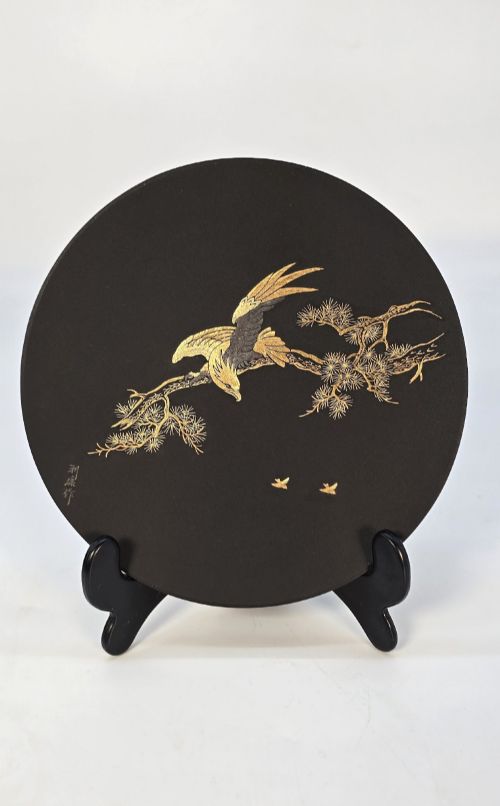


Vintage Asian Decorative Plate
These vintage asian decorative plate examples span nineteenth and early twentieth century Japanese and Chinese craftsmanship, offering striking hand-painted porcelain, cloisonne enamel, and metalwork for display.
Vintage Asian Decorative Plate
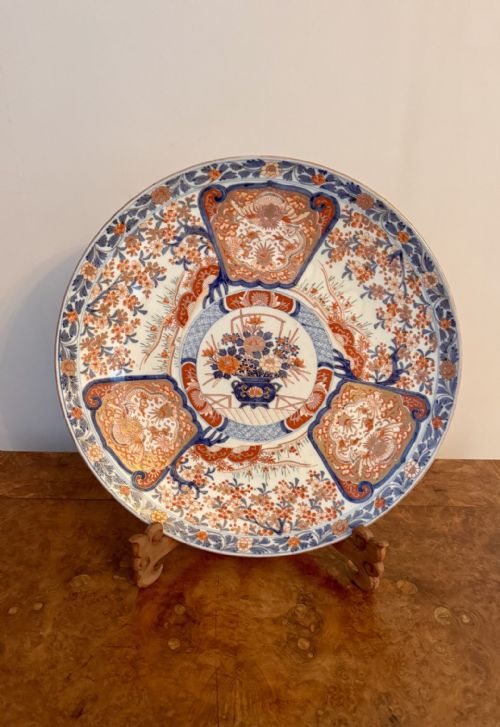
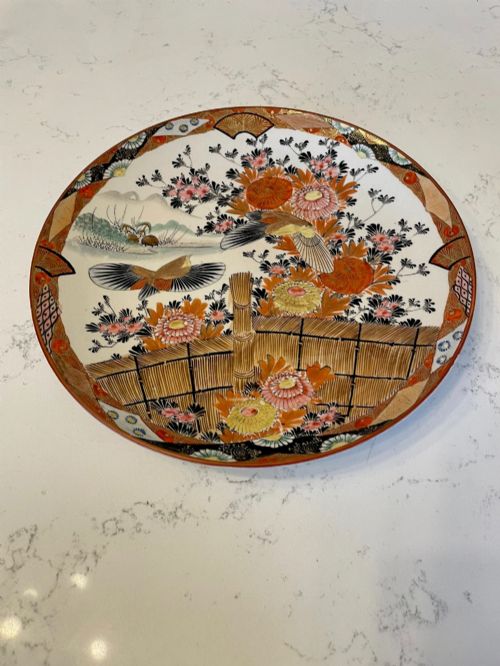
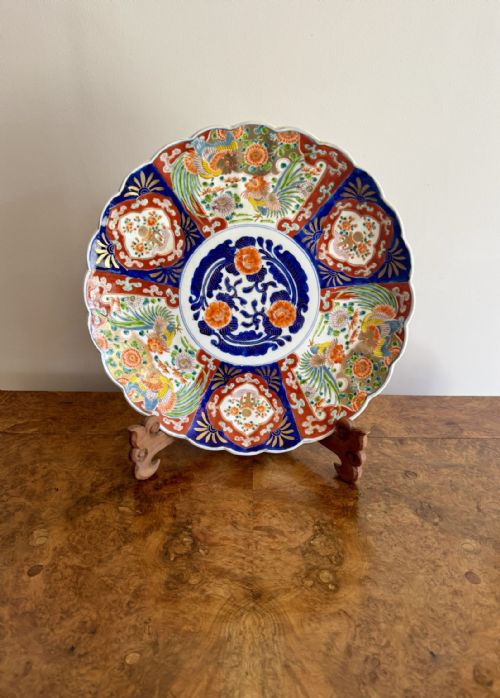
A vintage asian decorative plate search brings together substantial chargers, shallow bowls, trays, and plaques originating primarily from Japanese Meiji workshops and Chinese export traditions. The items appearing here most frequently are nineteenth-century and early twentieth-century Japanese Imari chargers alongside detailed cloisonne enamel plates depicting birds, dragons, and landscapes.
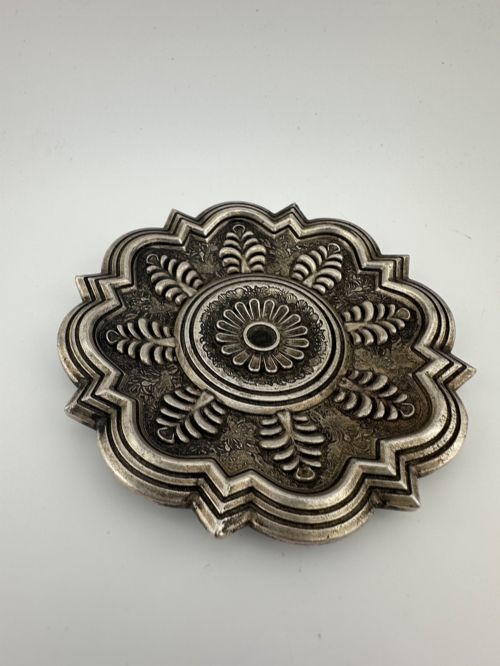
The assortment ranges from domestic cabinet porcelain to large bronze and brass dishes, incorporating Edo period influences and nineteenth-century manufacturing. Buyers encounter both delicate porcelain painted with the Seven Lucky Gods and robust metal plaques featuring patinated iron or white metal.
These items were created primarily for display rather than utility, often utilising stands or wall mounts within European and British interiors. The forms include scalloped rims, clam shell dishes, and wide chargers designed to showcase complex narrative scenes.
Assessing Quality
Quality rests upon the precision of the hand-painting, the intricacy of the metal inlay, and the complexity of the enamel cells. Superior cloisonne displays microscopic wirework and flawless enamel surfaces without pitting or shrinkage.
On porcelain pieces, the clarity of the cobalt underglaze, the richness of the gilding, and the artistic confidence of figurative scenes distinguish finer studio output from standard export wares. The weight of the metal and the depth of the patination also indicate superior workshop standards.
The material selection across these listings ranges from traditional porcelain and glaze to copper, bronze, brass, and patinated iron.
Koshida·Kinkozan
The Vintage Asian Decorative Plate Glossary
- Imari
- A style of Japanese porcelain featuring a distinct palette of cobalt blue, iron red, and gold, named after the port from which it was shipped to the West.
- Cloisonne Enamel
- A decorative metalwork technique where flat metal wires are soldered to a base to form compartments filled with enamel paste and fired.
- Charger
- A large decorative plate traditionally used for formal display or serving, measuring significantly larger than standard dining plates.
- Meiji Period
- The era of Japanese history spanning from 1868 to 1912, characterised by opening trade with the West and exceptional decorative arts production.
- Patination
- The natural or chemically induced surface ageing on metal objects, creating colour variations that enhance the visual texture.
Vintage Asian Decorative Plate: Frequently Asked Questions
How were these decorative plates displayed historically?
These items were primarily exhibited in drawing rooms and parlours on wooden easels, hung on walls using specialist wire brackets, or laid flat on sideboards and cabinets.
Their substantial size and intricate surface designs meant they functioned as conversation pieces rather than practical tableware.
What is the difference between an Imari plate and a charger?
The main distinction lies in scale and intended use, with chargers measuring considerably wider than standard plates, often exceeding thirty centimetres across.
While both share the characteristic blue, red, and gold palette associated with Imari wares, larger chargers were designed as centrepieces for prominent display.
How do I care for antique cloisonne and porcelain?
Maintenance requires gentle dusting with a soft, dry brush and avoiding liquid cleaners or harsh chemicals that can damage delicate metal inlays and overglaze enamels.
Keeping them away from direct sunlight and sudden temperature changes protects the structural integrity of the glaze and metal bases.
How can I tell the Meiji period from earlier eras?
Meiji period items typically reflect the artistic freedom gained after 1868, often featuring highly naturalistic depictions of flora, fauna, and mythological figures combined with advanced manufacturing techniques.
Earlier Edo period pieces tend toward more restrained traditional compositions and distinct potting characteristics.