






Vintage Armenian Rug
A vintage armenian rug brings rich Caucasian geometry and storied regional weaving traditions directly to the floor.
Vintage Armenian Rug
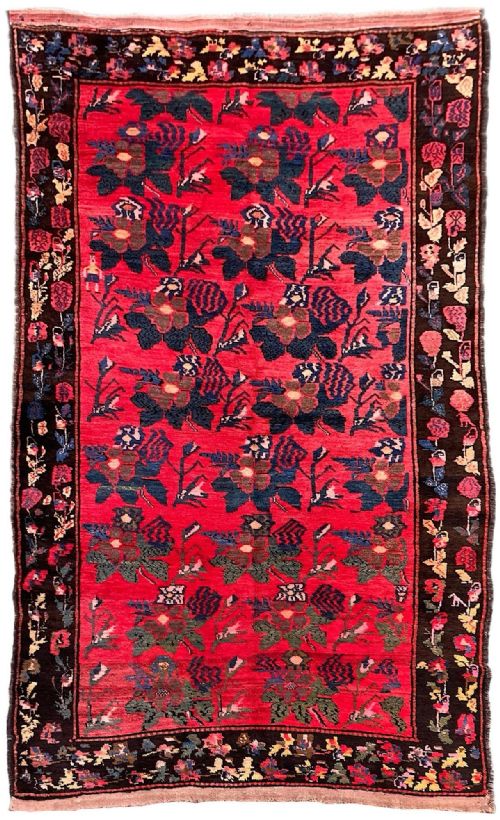
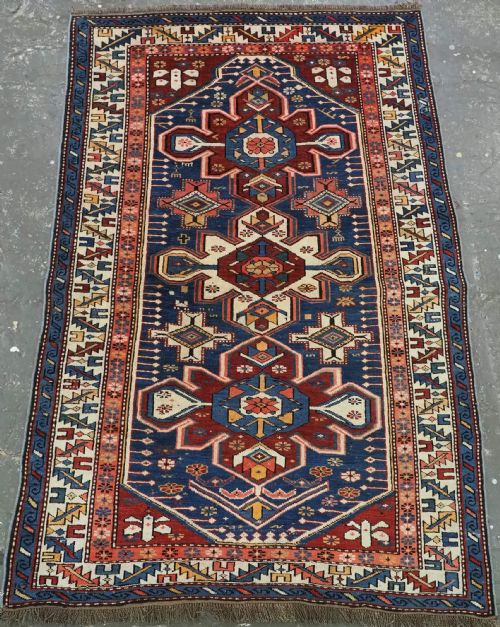
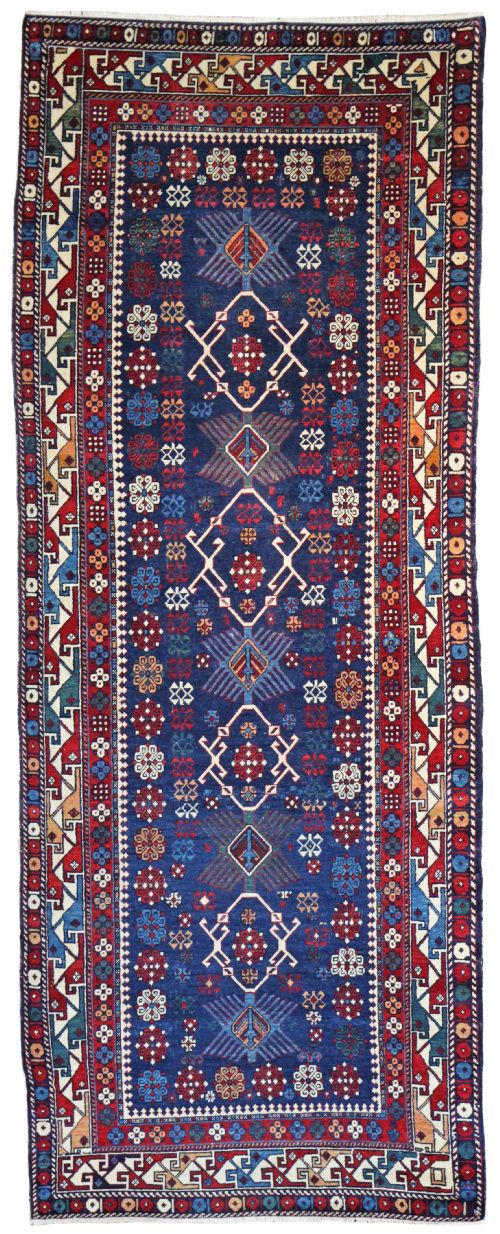
When you search for a vintage armenian rug, you encounter hand-knotted floor coverings hailing from the Caucasus and Armenia, spanning from the late nineteenth century into the early decades of the twentieth century. These pieces encompass various formats including area rugs, runners, and kilims, each displaying the distinct regional aesthetics of towns and weaving centres such as Erivan and Karabagh.
The items found here frequently showcase traditional regional motifs, ranging from classic triple lobbed medallions and geometric patterns to pictorial designs featuring people and animals. The Karabagh and Erivan examples illustrate the diverse palette and structural conventions typical of Caucasian weaving traditions from the eighteen-seventies through the nineteen-thirties.
How they were made
Every vintage armenian rug relies on traditional hand-knotted wool construction, utilising techniques passed down through generations of regional weavers. The reliance on wool for both the pile and the foundation provides the dense, durable structure characteristic of these antique floor coverings.
Weavers employed hand-knotting methods to build complex geometric and pictorial layouts, creating durable textiles designed to withstand generations of domestic use. The careful manipulation of dyed wool yarns yields the characteristic colour grounds, from traditional dark fields to scarce yellow ground examples.
The selection spans from eighteen-seventy to nineteen-thirty, focusing primarily on wool and hand-knotted wool construction.
What varies in quality
The distinction between standard examples and finer pieces rests primarily on the crispness of the wool knotting, the complexity of the medallion or pictorial design, and the vibrancy of the palette. Pieces featuring unusual compositions, such as animal figures or scarce yellow grounds, demonstrate a higher degree of artistic ambition.
Structural integrity and the preservation of the original borders and formats also dictate the standing of an individual rug. The precision in executing traditional Caucasian motifs reflects the skill of the original weaver and the overall calibre of the workshop.
The Vintage Armenian Rug Glossary
- Kilim
- A flat-woven carpet or rug produced without a pile, often featuring large medallion designs and geometric patterns.
- Medallion
- A central ornamental motif set within the field of a rug, frequently rendered in a triple lobbed format in Caucasian weaving.
- Runner
- A long, narrow carpet format traditionally utilised for hallways, corridors, or stairs.
- Pile
- The upright yarn loops that form the usable surface of a hand-knotted rug, distinct from the flat foundation structure.
Vintage Armenian Rug: Frequently Asked Questions
Where were these rugs made?
These textiles originate from the Caucasus and Armenia, encompassing historical weaving centres such as Erivan and Karabagh.
The regional traditions of these areas heavily influenced the specific geometric motifs, colour palettes, and knotting techniques seen in the pieces.
How do I clean a wool rug?
Maintenance requires gentle vacuuming without a beater bar and prompt professional attention for any spills to protect the wool fibres.
Avoiding excessive moisture and direct sunlight helps preserve the natural dyes and structural integrity of antique floor coverings.
Can I use runners in hallways?
Runner formats suit narrow spaces like corridors, entryways, and galleys perfectly, adding warmth and traditional pattern to transition areas.
Appropriate underlays provide stability and protect the antique wool foundation from excessive friction against hard flooring.
What motifs appear on these rugs?
Designs frequently incorporate Caucasian geometry, classic triple lobbed medallions, and pictorial elements featuring people and animals.
Specific regional styles such as Karabagh and Erivan define the distinct visual vocabulary present across these antique textiles.