
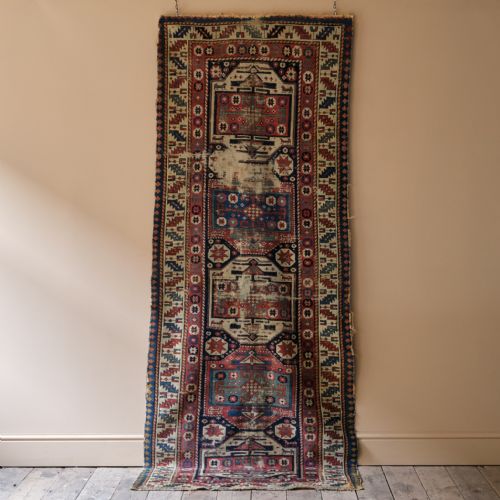


Distressed Caucasian Carpet
These distressed caucasian carpet examples are hand-knotted tribal and village floor coverings valued for their weathered patinas and geometric designs.
Distressed Caucasian Carpet
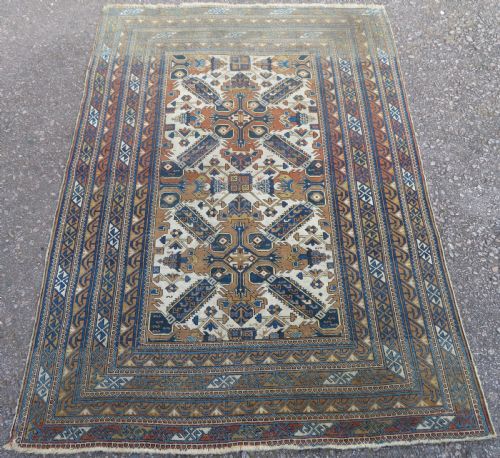
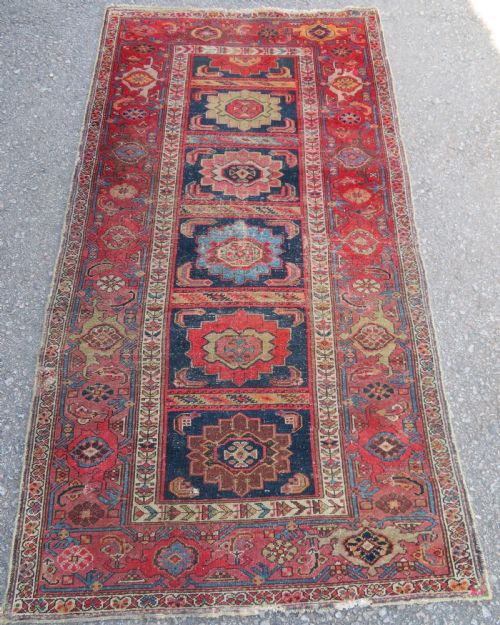
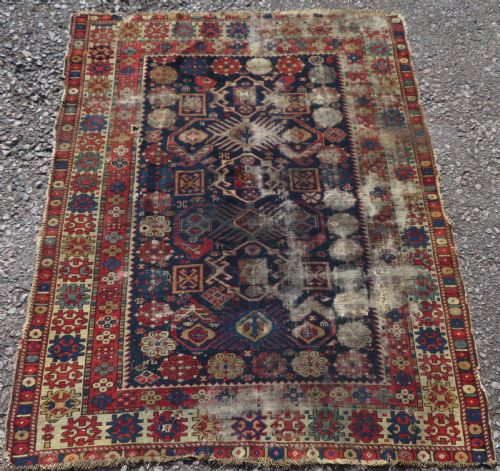
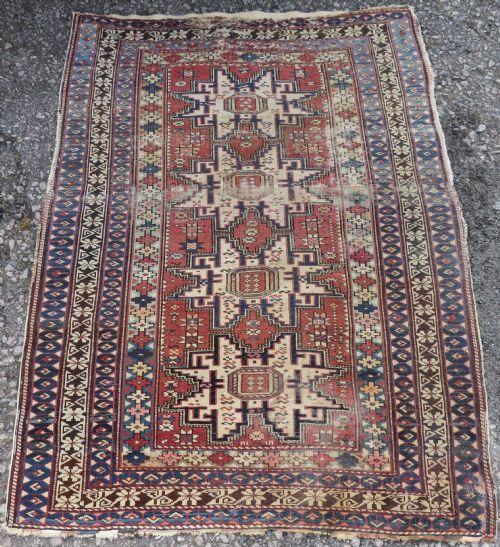
A distressed caucasian carpet search reveals antique village and tribal rug formats originating from the Caucasus region and north-west Persia. These pieces span the nineteenth and early twentieth centuries, including specific regional styles such as Daghestan, Lesghi, Kazak, Erivan Armenian Perepedil, and Sarab.
Buyers encounter formats ranging from square rugs and long runners to larger area carpets. The designs showcase traditional tribal motifs woven across various dimensions, reflecting the distinct heritage of their makers.
Most items on offer present distinct signs of age and wear across the pile, which defines the distressed character that collectors seek out for historic interiors.
Materials and Construction
These floor coverings utilise hand-spun wool and standard wool pile knotted onto cotton or wool foundations. The application of hand-spun materials gives the wool a varied texture and allows it to age with a characteristic patina.
Weavers employed traditional techniques native to Caucasian and Persian tribal workshops to construct these durable long rugs and runners. The structural weave supports the heavy use that creates the natural distressing seen in older specimens.
Listings span from eighteen-eighty to nineteen-twenty, featuring wool, cotton, and hand-spun wool across Daghestan, Kazak, Lesghi, and Sarab styles.
Assessing Quality
Quality rests in the integrity of the remaining foundation and the balance of the wool pile against structural wear. Finer examples maintain structural stability despite significant age and heavy weathering.
The precision of tribal geometric patterns and the richness of the underlying wool quality separate superior rugs from more basic village work. Original dimensions and authentic regional coloration further elevate an individual piece.
The Distressed Caucasian Carpet Glossary
- Daghestan rug
- A knotted floor covering originating from the eastern Caucasus mountains, typically featuring crisp geometric medallions and narrow borders. These pieces are known for their structured designs.
- Kazak rug
- A bold tribal weaving produced in the southern Caucasus, recognised by large primary medallions and vibrant primary colours. Kazak runners often display a crooked or charmingly irregular geometry.
- Lesghi rug
- A specific Caucasian type traditionally associated with the Lesgin people, notable for distinct star motifs repeated across the field. The wool used in these pieces yields a sturdy texture.
- Sarab rug
- A north-west Persian carpet variety characterised by camel-hair tones and repeated herati or geometric field patterns. They function well as long rugs in narrow spaces.
- Pile
- The surface of the carpet formed by the cut ends of knotted yarn. Wear to this layer creates the distressed finish.
Distressed Caucasian Carpet: Frequently Asked Questions
What is a distressed caucasian carpet?
A distressed caucasian carpet is an antique tribal or village rug from the Caucasus region or north-west Persia that shows visible age and wear to the wool pile.
These pieces feature traditional geometric patterns and hand-spun materials developed over a century or more of existence.
How do I style an antique runner?
Antique runners work effectively in hallways, entryways, or kitchens where their long formats can guide movement through a space.
Their faded patinas and tribal motifs complement both rustic and contemporary interior schemes without overwhelming the room.
How old are these carpets?
The inventory spans the nineteenth century and the early decades of the twentieth century, with dates reaching from the eighteen-eighties to nineteen-twenty.
Each piece reflects the specific weaving traditions of its period of origin.
Are these rugs durable?
Constructed with hand-spun wool and sturdy foundations, these traditional carpets were built to withstand generations of daily use.
Even with a distressed surface, the underlying structure often remains robust enough for modern floor placement.