


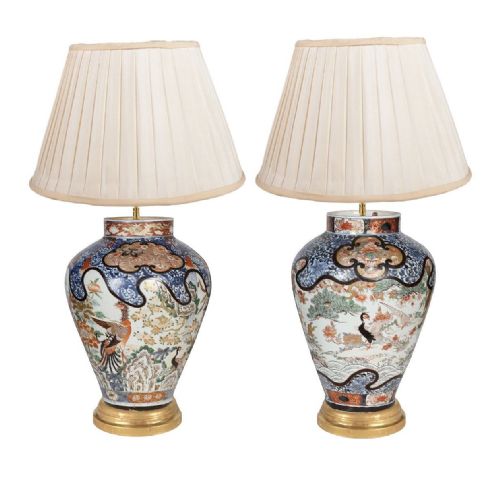


Vintage Arita Porcelain Vases
These vintage arita porcelain vases bring centuries of Japanese kiln artistry into a room, offering striking decorative presence and rich historic character.
Vintage Arita Porcelain Vases
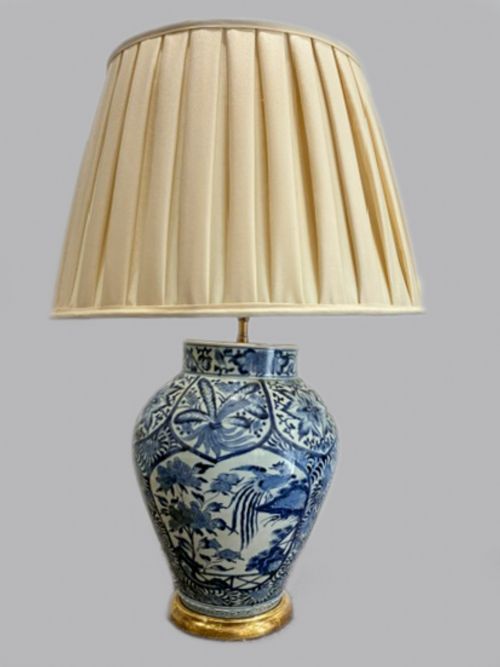
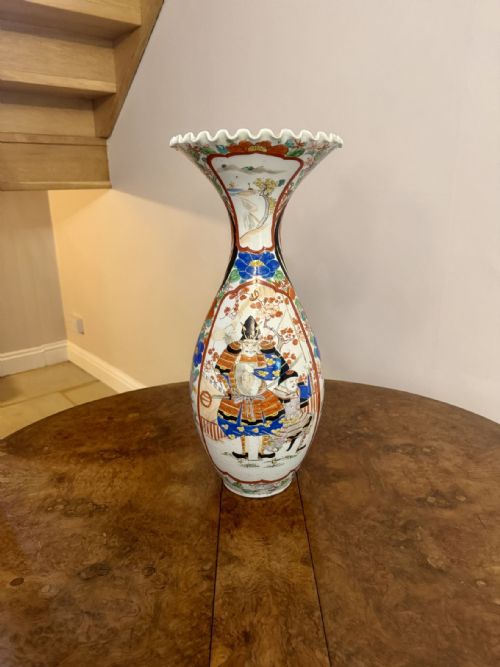
When you search for vintage arita porcelain vases, you encounter ceramics spanning several centuries of Japanese production, from the seventeenth century through the Meiji period. The pieces on this page range from wine bottles and ginger jars to large decorative vases and garnitures, occasionally adapted into table lamps.
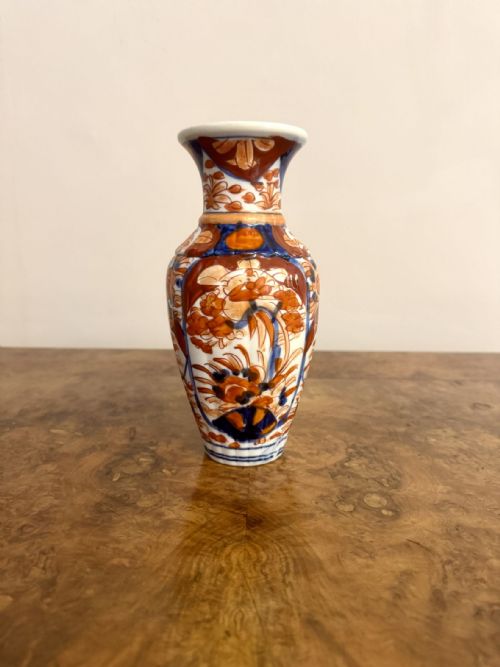
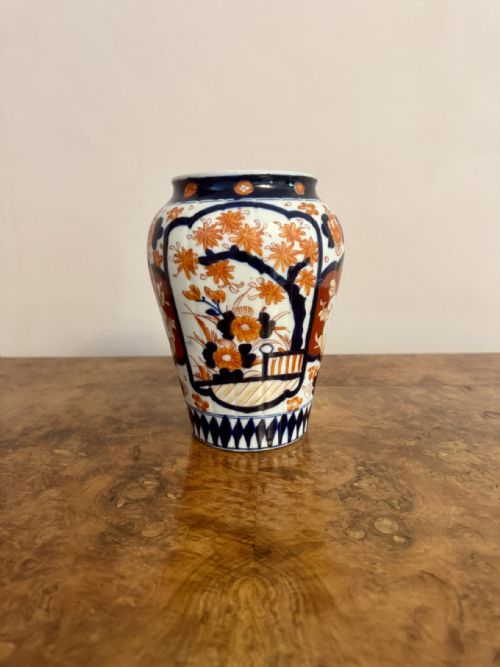
You are most likely to meet Japanese Imari examples produced during the Meiji period or around nineteen hundred, alongside earlier eighteenth century pieces. These vessels display distinctive forms, including shaped vases and lidded jars, rooted in the traditions of Arita.
The selection reflects both utilitarian origins and high decorative ambition, capturing the evolution of shapes from early wine bottles to monumental nineteenth century display pieces. Each vessel demonstrates the enduring reach of Arita kilns across diverse historical eras.
How they were made
The foundation of these pieces is porcelain, shaped by hand and fired in kilns before receiving detailed decoration in enamel and sometimes gold leaf. Many of the works incorporate traditional Japanese Imari palettes, applying mineral pigments directly onto the glazed ceramic body.
Some vessels are enhanced with metal mounts such as brass, or paired with silk, fabric, and wood components, particularly when converted into lamps. The combination of durable porcelain with meticulous surface painting defines the technical standard of the tradition.
Historic potters occasionally recycled sturdy wine bottles into lamps, proving that good porcelain refuses to retire.
What varies in quality
The distinction between tiers of work rests upon the precision of the brushwork and the complexity of the enamel and gold leaf application. Finer vessels display sharper control in their traditional Japanese Imari patterns, with crisp lines and balanced composition across the surface.
Scale and ambition also divide the range, separating modest domestic jars from outstanding garnitures of multiple shaped vases. The integrity of the porcelain body and the preservation of the painted surface dictate the standing of each piece.
The Vintage Arita Porcelain Vases Glossary
- Arita
- The Japanese town and surrounding region famous as the birthplace of Japanese porcelain production. Kilns here supplied domestic and export markets for centuries.
- Imari
- A style of Japanese porcelain exported through the port of Imari, typically characterised by a palette of underglaze blue, iron red, and gilt. It remains a defining look for vintage arita porcelain vases.
- Meiji period
- The era in Japanese history lasting from eighteen sixty-eight to nineteen twelve, marked by extensive international trade and high output of decorative ceramics. Many pieces on this page originate from this time.
- Garniture
- A set of matching vases or jars designed to be displayed together on a mantelpiece or cabinet. These groupings form symmetrical arrangements.
- Ginger jar
- A ceramic vessel originally made for storing spices, featuring a wide body and a fitted lid. Later examples are prized purely for their decorative forms.
Vintage Arita Porcelain Vases: Frequently Asked Questions
How do I date an arita vase?
Dating relies on stylistic markers, such as the palette used in Japanese Imari decoration, and the characteristics of the porcelain body itself. Earlier pieces from the seventeenth and eighteenth centuries often show different potting techniques compared to Meiji period work.
Examining the foot ring and glaze helps establish the period of manufacture. Comparing the piece against documented examples from the same kiln tradition clarifies its age.
Were these vases made for export?
Many arita pieces were destined for European markets, where demand for Japanese porcelain shaped kiln production. This international trade influenced the shapes and decorative motifs found on the vessels.
Consequently, export pieces often blend traditional Japanese aesthetics with forms suited to Western interiors. This history explains the presence of converted lamps among surviving examples.
What is an imari pattern?
The Imari style combines underglaze blue with iron red and gold leaf overglaze decoration, creating a rich and colourful surface. This distinct visual language originated in Arita and became widely popular.
Artisans applied intricate floral and geometric motifs that covered much of the porcelain body. This dense ornamentation is a hallmark of vintage arita porcelain vases.
How should I display a lamp conversion?
Vases converted to lamps require placement where the wiring and brass fittings do not detract from the antique porcelain body. Positioning them on stable surfaces allows the decorative motifs to catch the light effectively.
Pairing the lamp with a neutral shade lets the historic patterns remain the focal point of the room. Careful placement ensures the vessel's original character stays prominent.