


Decorative Japanese Mantel Vases
These decorative japanese mantel vases bring striking craftsmanship and rich historic character straight to a room.
Decorative Japanese Mantel Vases
When you search for decorative japanese mantel vases, you encounter a refined selection of vessels spanning the Meiji and Showa periods, alongside Victorian and Edwardian interpretations. These pieces range from substantial bronze baluster and amphora shapes to delicate porcelain and earthenware garnitures.
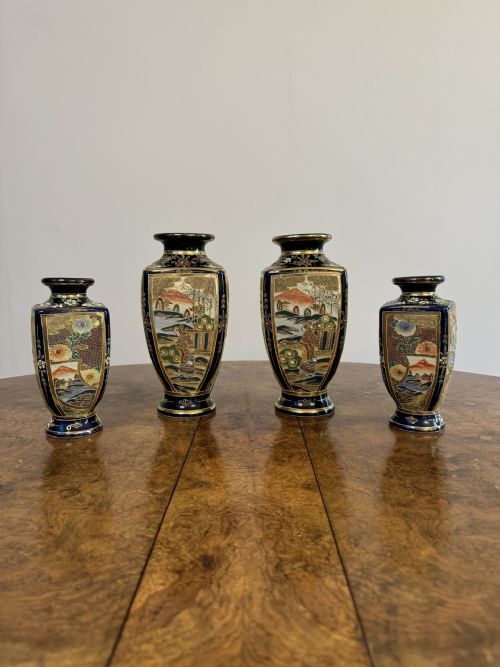
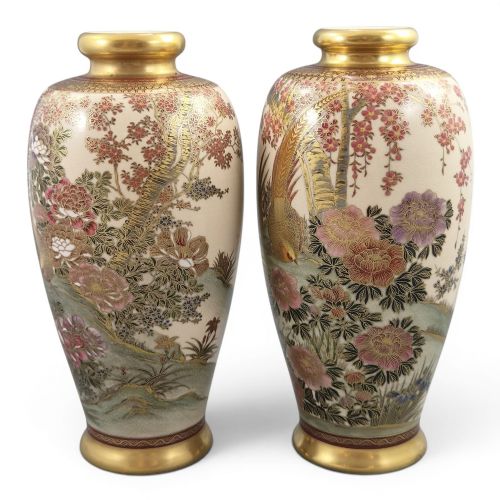
The objects most frequently met on this page include pairs of Satsuma and Kutani vases, often featuring traditional motifs and intricate detailing. They reflect a rich cross-cultural exchange and the high demand for Japanese artistry in British interiors during the nineteenth and early twentieth centuries.
How they were made
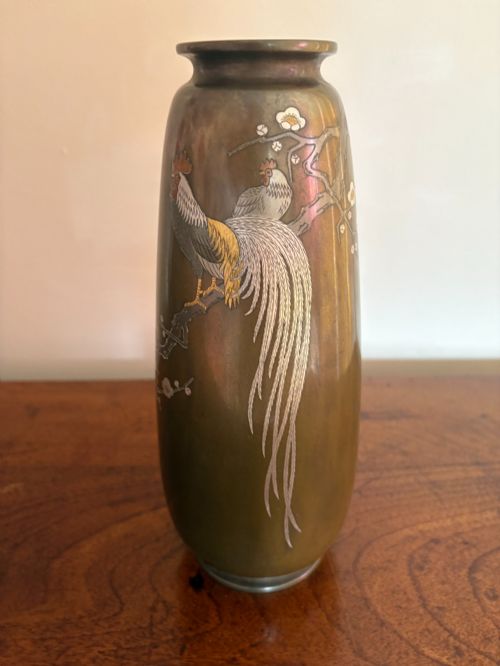
The makers utilised durable bronze, earthenware, and porcelain as foundations for these vessels, applying meticulous techniques in casting, shaping, and firing. Bronze examples frequently incorporate metal inlay work, whilst ceramic pieces rely on expert throwing and glazing.
Surface decoration often involves the application of gold leaf and vibrant enamel work, creating deeply textured finishes. Artisans balanced structural form with intricate painted or inlaid patterns that define each piece.
Some Satsuma vases carry mysterious historic annotations or exhibition labels tucked beneath their bases, hinting at long journeys across the globe.
What varies in quality
Quality rests in the crispness of the casting, the precision of the enamel or gold leaf application, and the overall balance of the form. Finer examples display superior control over detailed surface patterns and richer, more uniform glazes.
The distinction between standard decorative ware and exhibition quality pieces lies in the depth of artisan labour evident in the ornamentation. Finer signed works demonstrate a higher degree of execution in both the structural metalwork or ceramics and the fine surface painting.
KANASAWA·Manpei, Kobe·Hododa
The Decorative Japanese Mantel Vases Glossary
- Satsuma
- A type of Japanese earthenware featuring a pale, ivory-coloured cracked glaze that is heavily decorated with enamel and gold leaf. It became immensely popular in the West during the Meiji period.
- Kutani
- Japanese porcelain or pottery traditionally recognised for its bold, painterly style and rich colour palette, frequently incorporating greens, reds, and golds. Kutani wares often depict intricate figurative or natural scenes.
- Imari
- A style of Japanese export porcelain characterised by a distinctive palette of underglaze blue, iron red, and added gold overglaze. These wares were traditionally produced in Arita and shipped from the port of Imari.
- Garniture
- A set of matching vases or ornamental vessels designed to be displayed together on a mantelpiece, shelf, or cabinet. They typically consist of three or more coordinated pieces.
- Mon
- A traditional Japanese heraldic badge or crest used to identify families, clans, or prominent makers. They often appear on high-quality Satsuma and metalwork pieces.
Decorative Japanese Mantel Vases: Frequently Asked Questions
How were these vases used?
Historically, they served as decorative display items rather than functional vessels for holding cut flowers. Wealthy households placed them on mantelpieces, often as part of matching sets or garnitures.
Their primary purpose was to showcase exotic artistry, status, and an appreciation for international design trends in the home.
How do I live with these vases?
Place them securely on a mantelpiece, sideboard, or sturdy shelf where their detailed surface work and colours can be appreciated in natural light. Because many are delicate earthenware or bronze, keep them away from busy traffic areas.
Pair them with complementary antique furnishings to let their distinct Meiji or Edwardian character anchor the room's decorative scheme.
How do I tell periods apart?
Meiji period pieces often display dense, elaborate ornamentation reflecting the opening of trade and high artistic ambition. Later Showa period or Edwardian examples may show shifts in manufacturing scale and stylistic refinement.
Examining the materials, such as early bronze casting techniques versus later porcelain bodies, helps distinguish the manufacturing era of each individual piece.