



Victorian Writing Bureau Chest
A victorian writing bureau chest is a dual-purpose piece combining drawer storage with a fitted writing surface, offering both a compact desk and a substantial chest for the home.
Victorian Writing Bureau Chest
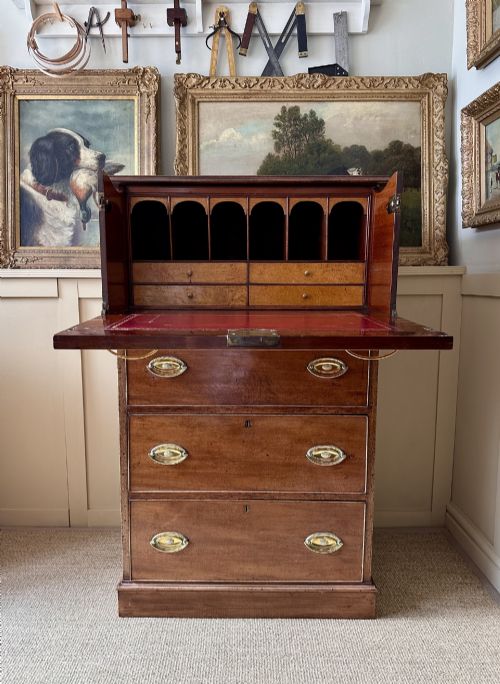
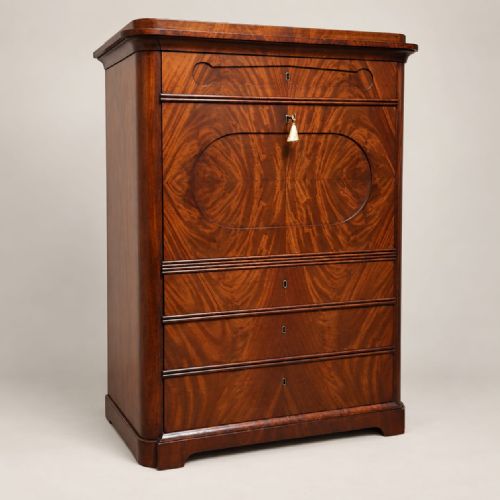
A victorian writing bureau chest spans varied forms from the nineteenth century, most frequently appearing as mahogany secretaire chests, walnut bureaux, and pine versions with writing slopes.
The selections range across styles such as campaign, military colonial, rustic farmhouse, and arts and crafts, encompassing tall upright bodies as well as kneehole desks and bookcases.
Makers and periods reflect the broader nineteenth century alongside related Georgian pieces, featuring fitted interiors with secret drawers and baize or leather writing surfaces.
Materials and construction
Cabinet makers utilised dense hardwoods like mahogany, walnut, burr walnut, rosewood, and teak, frequently pairing them with secondary pine or elm for internal partitions and drawer linings.
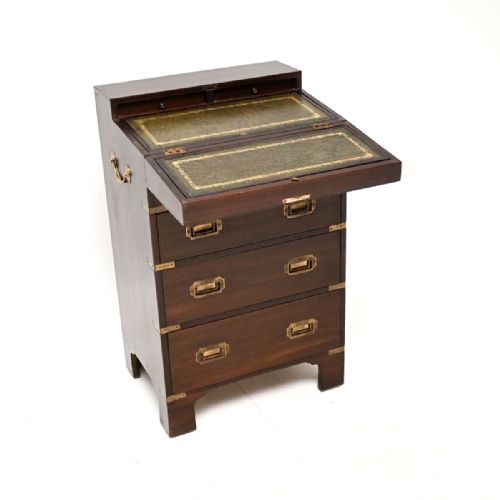
Metal fittings typically involve brass for campaign handles, hinges, and lock escutcheons, while writing surfaces are lined in leather or baize to provide a suitable pad for correspondence.
Victorian Writing Bureau Chest Retail Price Guide 2026
Typical asking prices for victorian writing bureau chest among the pieces listed under this phrase on Sellingantiques today, from the lower quarter to the upper quarter. They describe what is for sale here now, not the wider market.
Listings feature nineteenth-century pieces constructed from mahogany, walnut, teak, and pine, incorporating baize and leather writing inserts.
Quality and construction distinctions
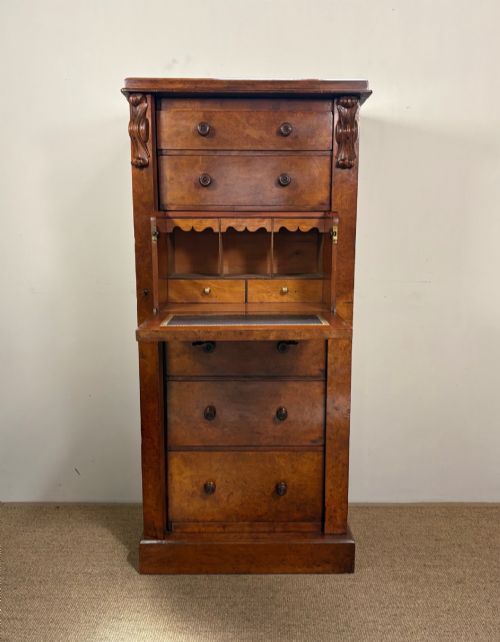
The grade of a victorian writing bureau chest depends upon the selection of timber veneers, such as burr walnut or figured mahogany, and the precision of the joinery within the internal pigeonholes and secret compartments.
Hardware quality distinguishes standard production from superior pieces, particularly the weight of brass inset handles on campaign pieces and the smooth mechanical action of drop-front writing drawers.
Gregory And Co Of London
The Victorian Writing Bureau Chest Glossary
- Secretaire chest
- A chest of drawers where the top drawer pulls out and drops down to reveal a fitted writing desk with small drawers and pigeonholes. This clever design conceals the workspace behind a standard drawer front.
- Wellington chest
- A tall, narrow chest of drawers secured by a locking hinged side pilaster bar that fastens over the drawer edges. It often incorporates a secretaire drawer within its vertical stack.
- Campaign chest
- Portable furniture built in sections with recessed brass handles and corner brackets for transport by military officers. These pieces separate into distinct modular carcases.
- Burr walnut
- Timber taken from the warted growths on walnut trees, yielding highly figured, swirling grain patterns. Cabinet makers prized this wood for decorative drawer fronts and cabinet doors.
- Baize
- A coarse woolen fabric woven to resemble felt, traditionally used to line writing surfaces and gaming tables. It provides a soft, durable pad for pen and paper.
Victorian Writing Bureau Chest: Frequently Asked Questions
What is a secretaire chest?
A secretaire chest combines a conventional chest of drawers with a drop-front writing desk hidden inside the top drawer.
When closed, the piece resembles standard bedroom storage, but opening the top drawer reveals a fitted interior with small compartments for stationery.
How do campaign chests work?
Campaign chests are built in two separate modular sections to facilitate easy transport during military campaigns.
They feature flush brass hardware and recessed handles to prevent snagging while moving.
What woods were used?
Cabinet makers relied primarily on dense hardwoods such as mahogany, walnut, teak, and rosewood.
Secondary woods like pine and elm appear in drawer linings and internal framing.
How do I maintain the leather?
Leather writing surfaces require gentle cleaning with a dry cloth and occasional treatment with appropriate leather dressings.
Avoid excessive moisture to protect the underlying wood and paper linings.