


Edwardian Walnut Bureau Desk
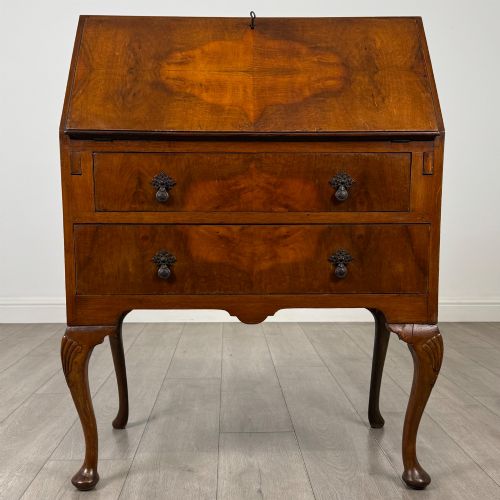
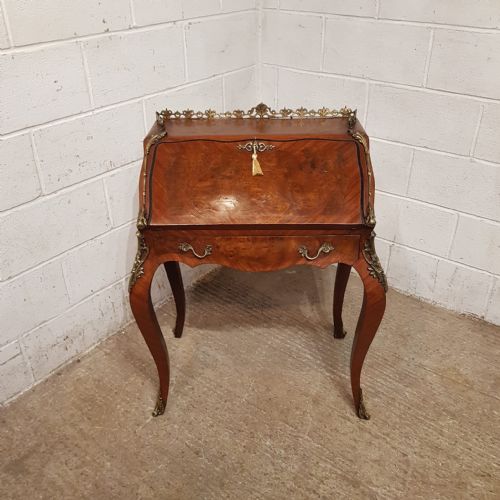
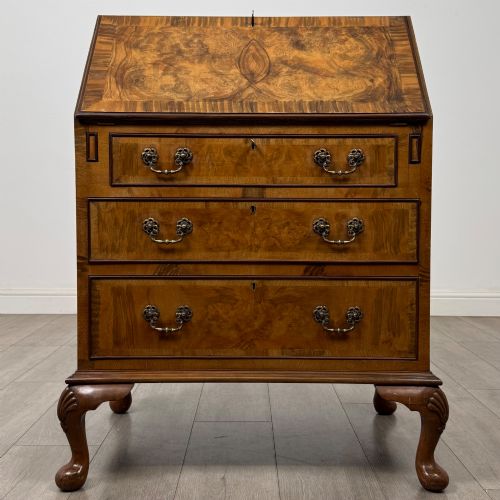
An edwardian walnut bureau desk brings domestic writing and fitted storage together in a compact form using timber grown for its grain.
Edwardian Walnut Bureau Desk
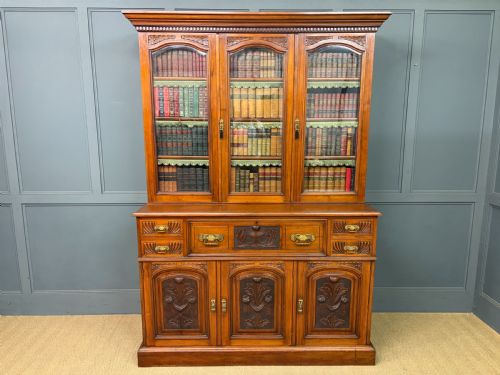
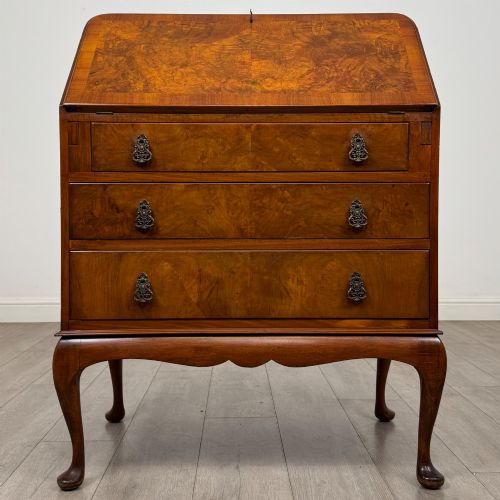
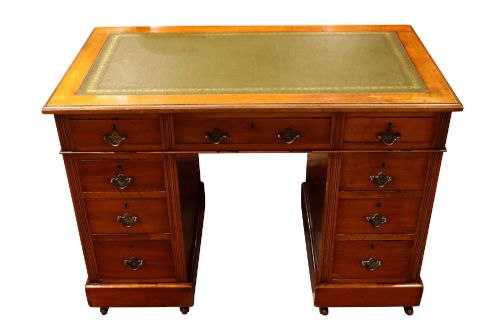
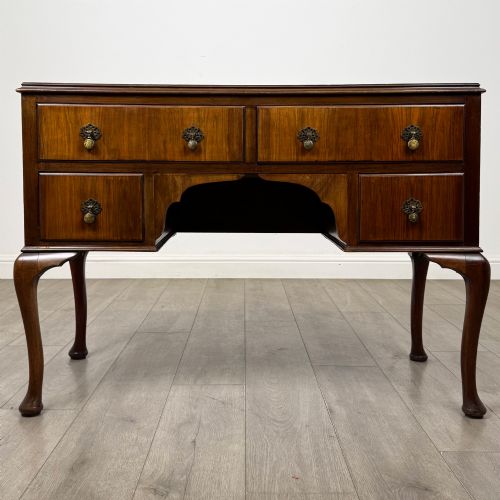
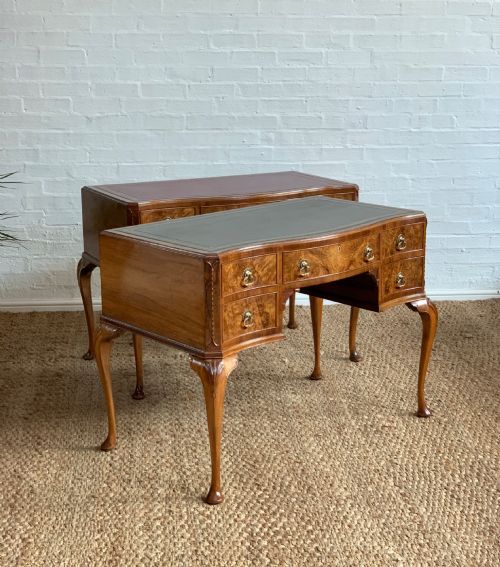
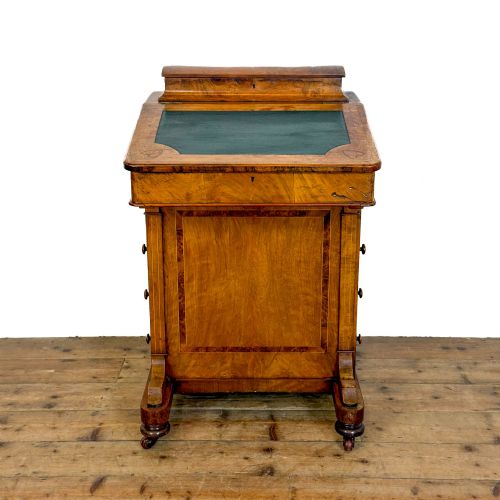
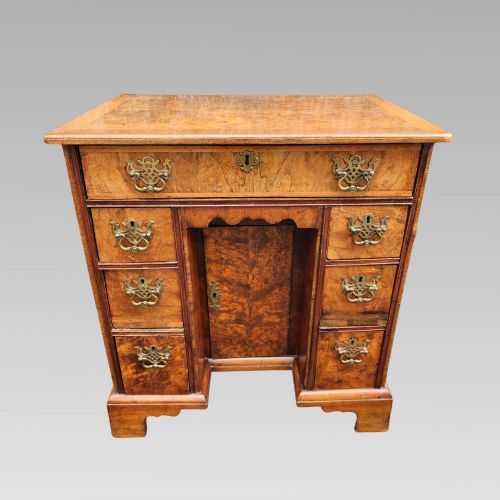
An edwardian walnut bureau desk sits within a lineage that spans Victorian pedestal models and Queen Anne revivals, bringing together writing surfaces and compartmented storage. The pieces meeting this search phrase take several distinct structural shapes, including drop-front writing bureaux, compact Davenport desks, and larger pedestal writing tables.
The Edwardian examples rely on figured timbers, frequently incorporating satinwood or boxwood inlay alongside brass handles and leather inserts. Alongside these specifically Edwardian pieces, the selection includes Victorian and later 20th-century variations that share the same walnut vocabulary and practical writing function.
Materials and construction methods
Makers utilised solid walnut and decorative veneers, particularly burr and figured walnut, applied to secondary timbers to achieve rich surface patterns on writing slopes and drawer fronts. Inlay work in boxwood and satinwood provides linear contrast, while leather inserts define the writing surfaces of pedestal desks and Davenport models.
Structural joints rely on traditional cabinet-making techniques, pairing dovetailed drawer construction with internal partitions for stationery and small compartments. Brass hardware, including drop handles and escutcheons, secures the operational elements of each desk.
Materials appearing across these desks range from brass and leather to boxwood inlay, satinwood, and ormolu mounts.
Distinctions in craftsmanship and design
The selection of timber dictates much of the visual weight of an edwardian walnut bureau desk, with heavily figured burr veneer standing apart from plainer timber surfaces. The complexity of internal stationery fittings and the precision of boxwood or satinwood inlay separate standard utility pieces from finer cabinet work.
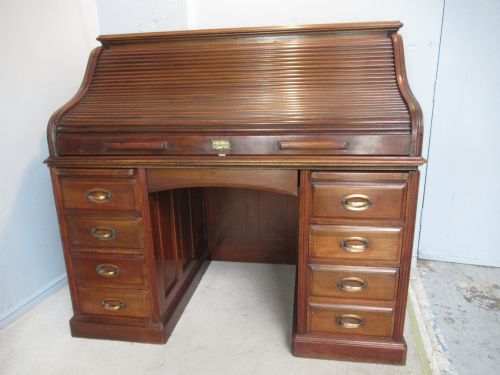
Proportion and structural integrity define the higher tiers of the range, where secondary woods are chosen with care and mechanical elements such as fall-front supports operate with precision. The presence of marquetry and specialised forms like cylinder fronts or metamorphic frames further marks out more ambitious construction.
Wylie & Lochhead Glasgow·Maples of London
The Edwardian Walnut Bureau Desk Glossary
- Burr walnut
- A timber harvested from the growth excrescences on walnut trees, yielding complex, swirling grain patterns highly prized for veneer work.
- Davenport desk
- A compact Victorian form of writing desk featuring a sloping top above a bank of drawers accessed from the side.
- Secretaire
- A piece of furniture containing a pull-down writing flap that conceals a fitted interior of small drawers and pigeonholes.
- Marquetry
- The art of applying pieces of veneer to a structure to form decorative patterns, often utilising contrasting timbers like boxwood and satinwood.
- Bonheur du jour
- A light lady's writing desk originating in the eighteenth century, typically featuring a small cabinet or superstructure above the main writing surface.
Edwardian Walnut Bureau Desk: Frequently Asked Questions
What is an edwardian walnut bureau desk?
It is a compact writing cabinet featuring a sloping fall-front that opens to reveal internal pigeonholes and small drawers above lower storage.
Such pieces date primarily from the early twentieth century and employ walnut veneers on structural carcases.
How do Davenport desks differ from standard bureaux?
Davenports are smaller stationery desks with a sloped writing surface set above a pedestal of drawers opening to the side rather than the front.
Bureaux rely on a hinged fall-front supported by wooden arms to provide a horizontal writing area.
What is burr walnut?
Burr walnut comes from the knotted growth of a walnut tree, producing dense, swirling grain patterns used for decorative cabinet veneers.
It appears frequently on the writing flaps and drawer fronts of Edwardian and Victorian pieces.
How should I care for a walnut desk?
Keep the timber away from direct heat sources and strong sunlight to prevent the walnut veneers from drying and lifting.
Apply traditional wax polish sparingly to maintain the finish without building up heavy residues on the surface.