
Victorian Writing Accessories
Victorian writing accessories are the handsome desk essentials and portable writing equipment that kept nineteenth-century correspondence orderly.
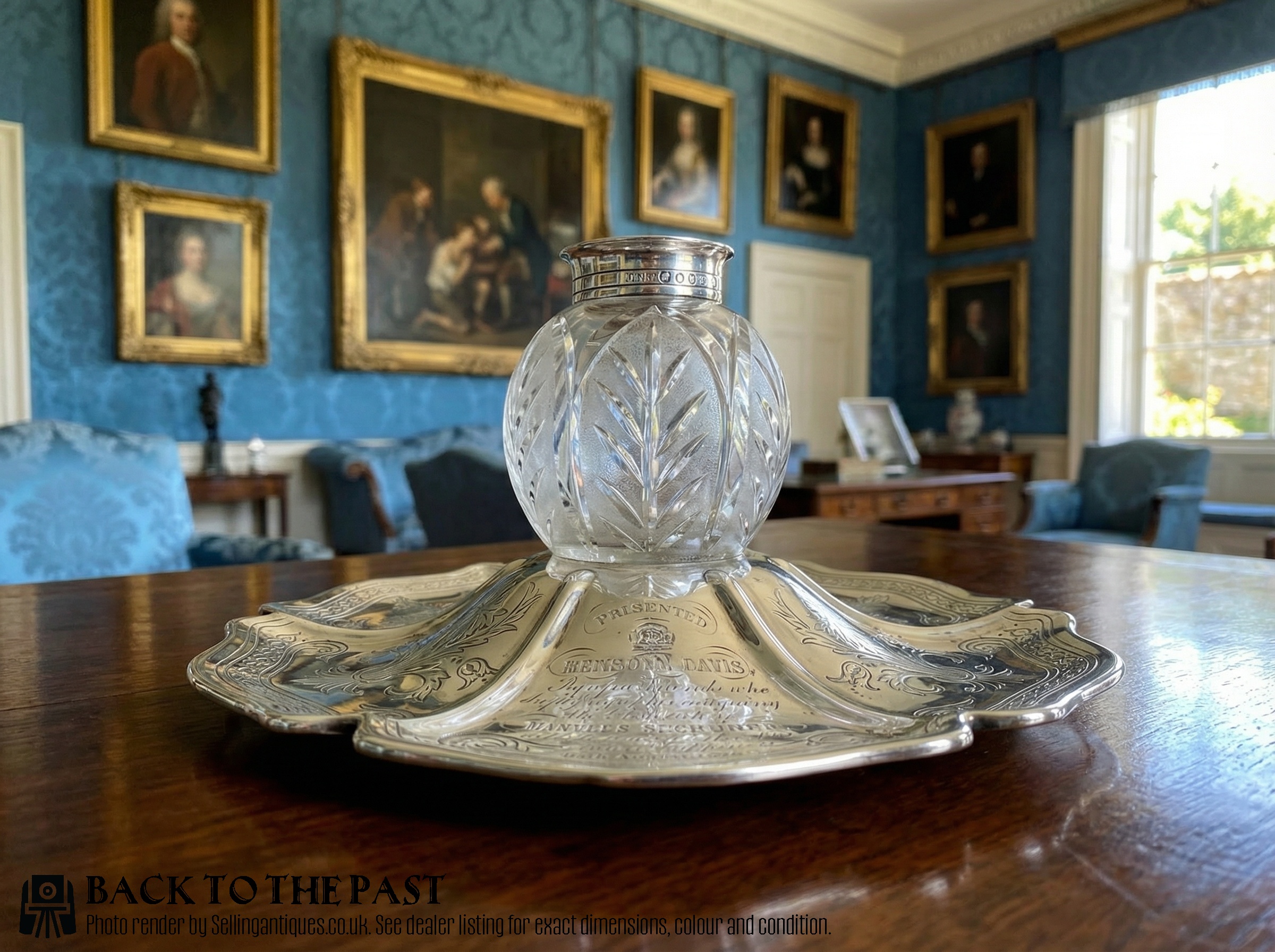
Victorian Writing Accessories
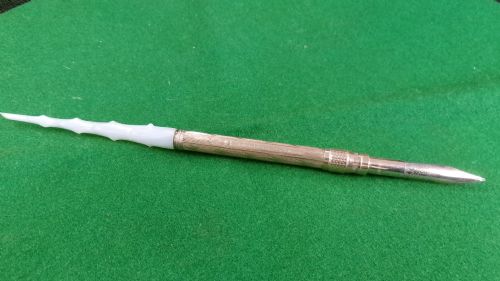
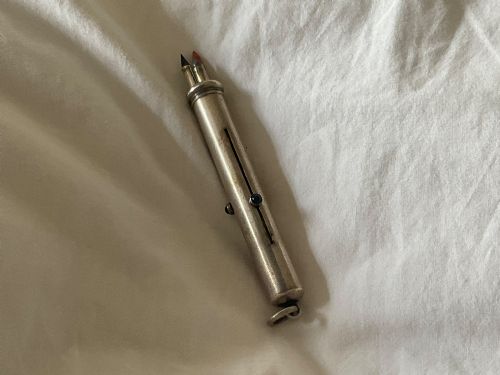
Victorian writing accessories encompass the functional objects placed upon a desk or carried for correspondence during the nineteenth century. These pieces range from inkwells and stationery boxes to complete desk sets, writing slopes, dip pens, and propelling pencils.
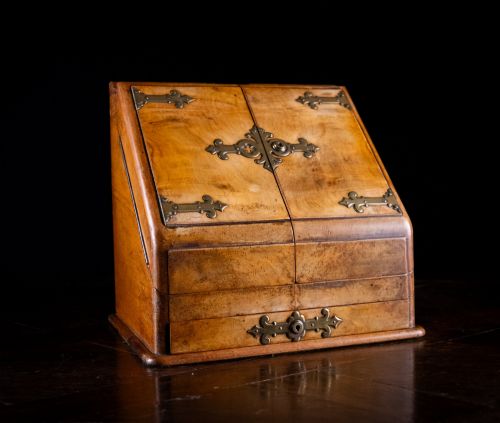
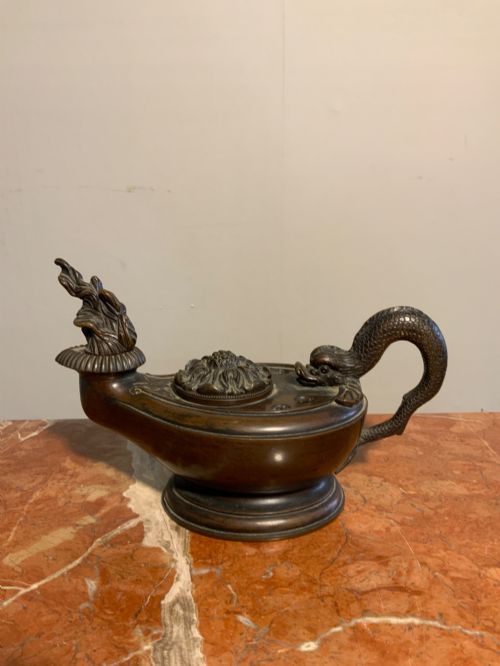
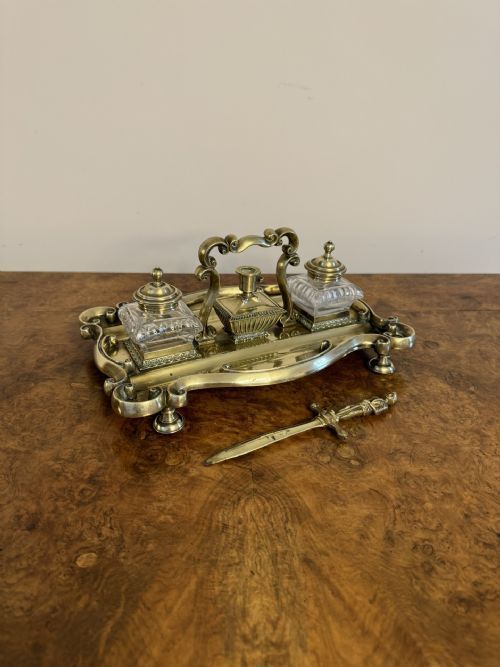
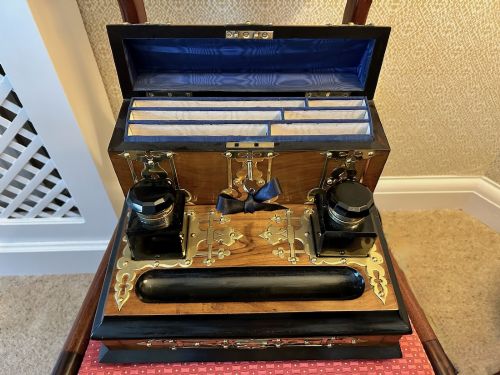
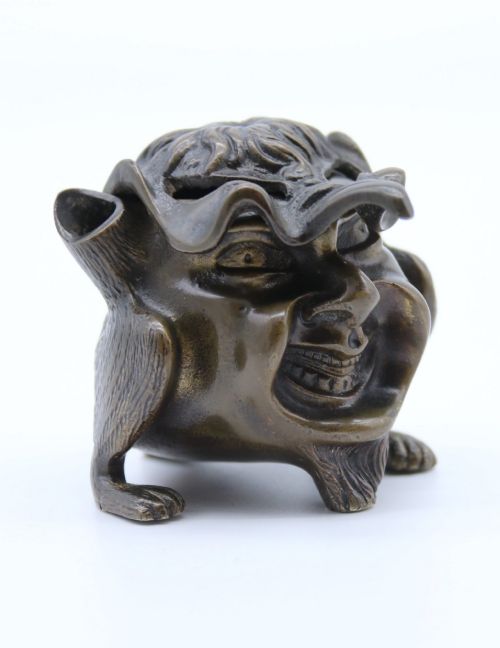
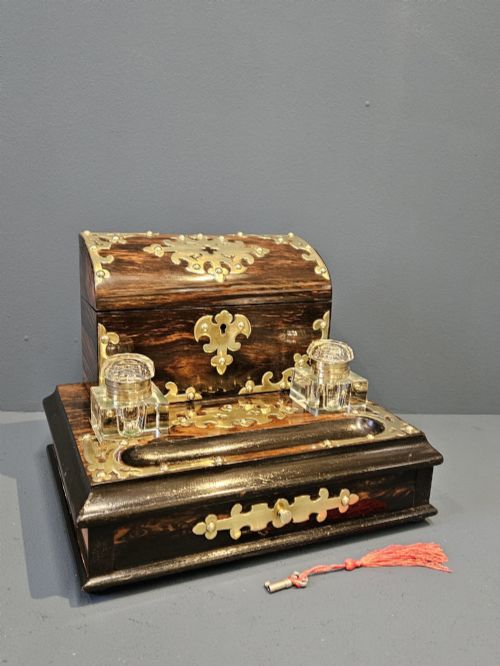
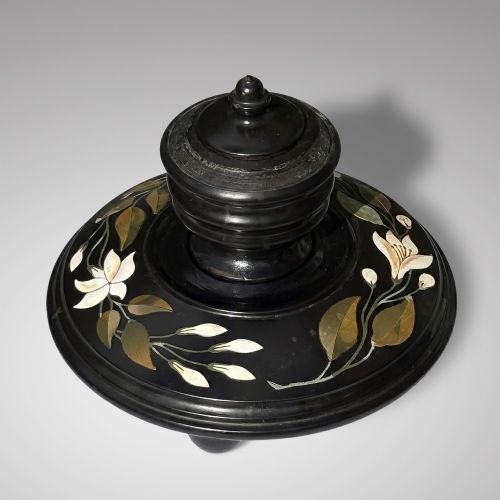
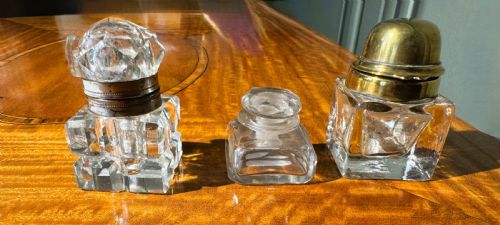
The versions most frequently met on this page include brass and cut-glass inkstands, wooden stationery boxes in burr walnut or coromandel, and travel inkwells housed in silver plate or leather. Elaborate decorative styles such as Gothic Revival, French Napoleon III, and Grand Tour bronzes appear alongside simpler utilitarian forms.
How they were made
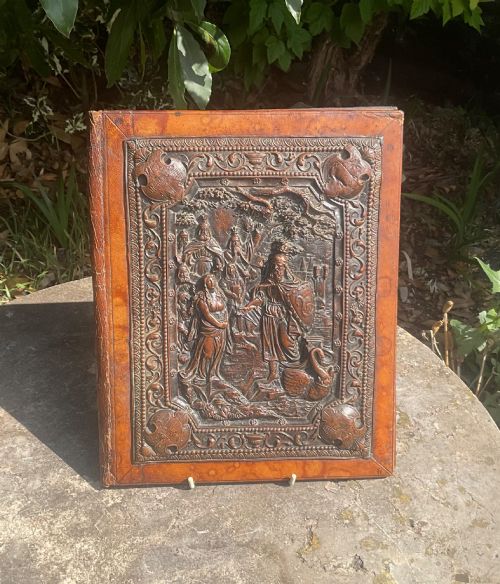
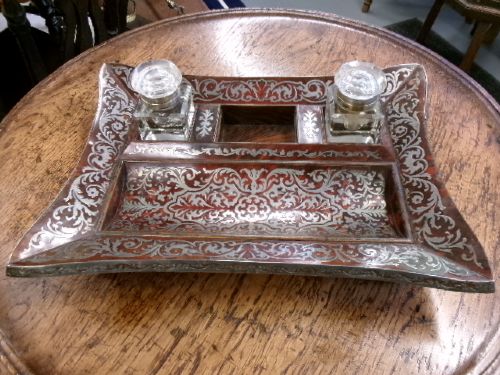
Makers shaped these accessories from heavy woods like walnut and coromandel, often mounting them with brass, ormolu, or inlaid tortoiseshell in Boulle work and Tunbridge ware. Metal items relied on cast bronze, brass, copper, and silver plate over base metals.
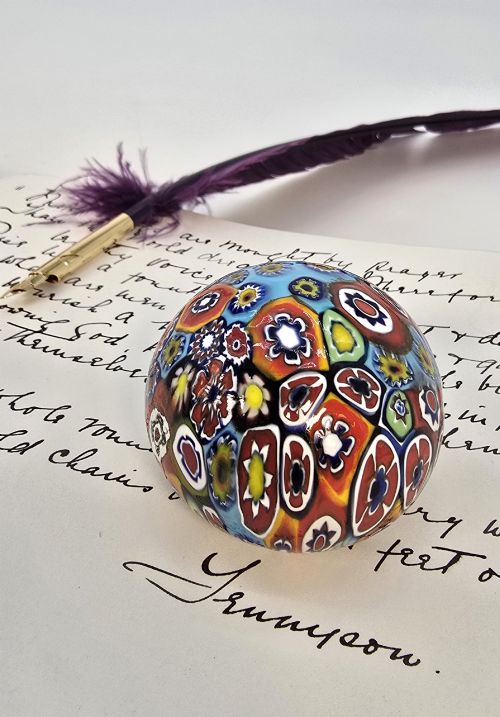
Glass elements, particularly inkwells and paperweights, were heavily cut, moulded, or fashioned into millefiori patterns. Leather and papier-mâché received tooling, painting, or marquetry to create durable and decorative surfaces for daily desk use.
A Victorian silver boot scraper doubles as a novelty pen wipe for an untidy desk.
What varies in quality
Quality in these pieces rests upon the precision of the joinery in wooden boxes and the crispness of casting in brass, bronze, and ormolu mounts. Finer items feature substantial materials such as solid sterling silver, heavy cut glass, and intricate inlay rather than thin veneers or light metal stampings.
Design complexity and the presence of specialist decorative techniques like champlevé enamel, Ashford marble, or hand-carved Black Forest woodwork distinguish standard utilitarian accessories from exceptional workshop productions.
Wilkinson and Co·Sampson Mordan and Co·Mabie Todd and Co·Edward Todd and Co·Walker and Hall·Elkington
The Victorian Writing Accessories Glossary
- Inkstand
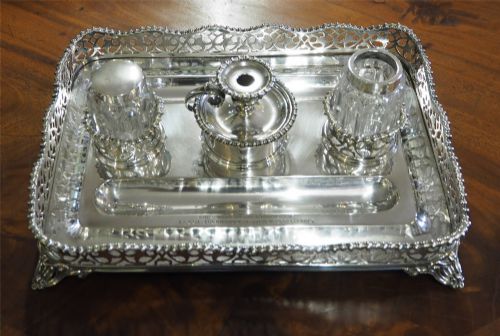
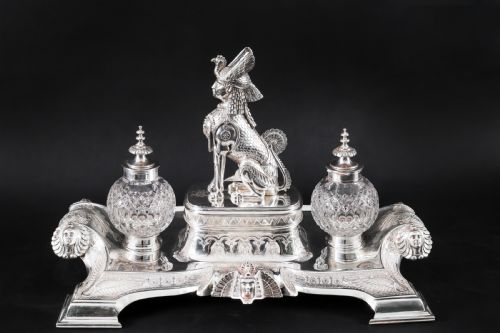
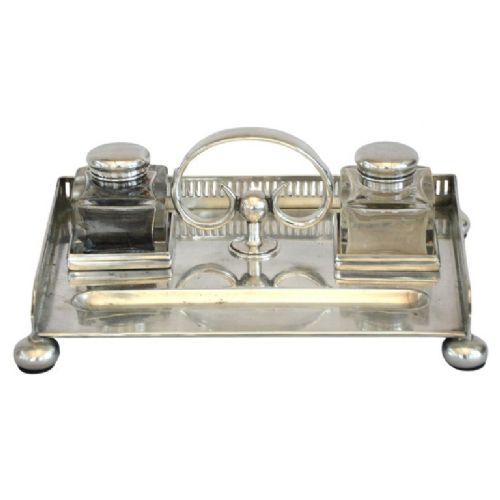
- A fitted tray or stand holding one or more inkwells, pen rests, and sometimes a sander or bell. These desk furniture pieces kept necessary writing liquids collected in one central place.
- Writing slope
- A portable box with a slanted writing surface that opened to reveal storage for paper, pens, and ink. They allowed travellers to write comfortably away from a fixed desk.
- Stationery box
- A desk cabinet designed to hold envelopes and writing paper upright in tiered compartments. They often featured matching brass mounts and locking doors.
- Ormolu
- Gilt bronze ornament applied to furniture and desk sets, popular in French-influenced nineteenth-century designs. The technique involved creating a golden finish through mercury amalgamation or electroplating.
- Boulle work
- A form of marquetry using brass inlaid into tortoiseshell or dark wood, named after the French cabinetmaker. It adorned high-status nineteenth-century desk accessories and boxes.
Victorian Writing Accessories: Frequently Asked Questions
What is an inkstand?
An inkstand is a desk tray or stand that holds inkwells, pen rests, and sometimes a matching taper stick or sander. These pieces kept the desk surface tidy and protected fine wooden furniture from ink spills.
They range from simple wooden bases to elaborate silver-plated or bronze designs equipped with heavy cut-glass inkwells.
How were travel inkwells used?
Travel inkwells were engineered with secure screw lids, inner collars, or hinged seals to prevent ink from leaking during journeys. Owners packed them inside leather cases or fitted travel writing slopes.
Victorian travellers relied on these portable vessels to write letters while moving between hotels and country houses.
What is Tunbridge ware?
Tunbridge ware is a form of decorative woodwork featuring intricate mosaic patterns built from thousands of tiny tinted wood blocks. Artisans assembled these geometric pictures to decorate the lids of stationery boxes and small desk items.
This technique originated in the English town of Tunbridge Wells during the nineteenth century.
How do I date a desk accessory?
Dating relies on stylistic clues, manufacturing materials, and the presence of maker marks or patent stamps. Gothic Revival and heavy brass mounts often point towards the mid-nineteenth century, while sleeker lines or silver plate marks can indicate later periods.
Original hardware, key escutcheons, and glass inserts help confirm the period of manufacture.