


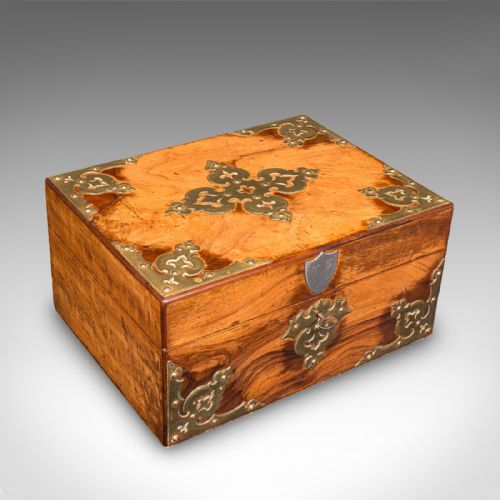
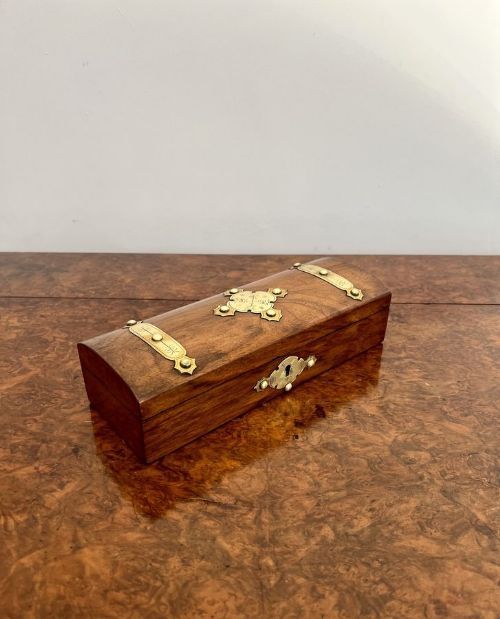


Victorian Brass Mounted Casket
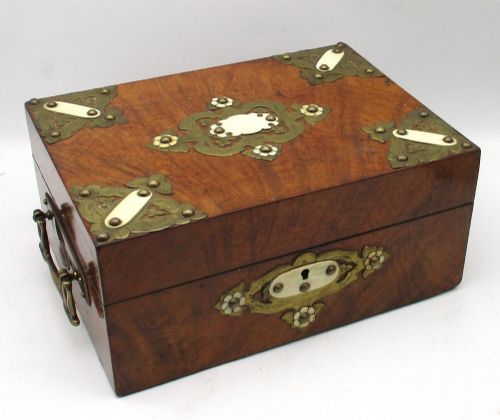
A victorian brass mounted casket stores personal treasures or writing paper while bringing nineteenth-century metalwork and timber into a room.
Victorian Brass Mounted Casket
A victorian brass mounted casket serves as a functional container for letters, jewellery, or games, designed to sit upon a desk, table, or dressing chest. These boxes emerge primarily from the nineteenth century, spanning decades from eighteen fifty to nineteen hundred, and take forms such as stationery boxes, jewellery chests, and games boxes.
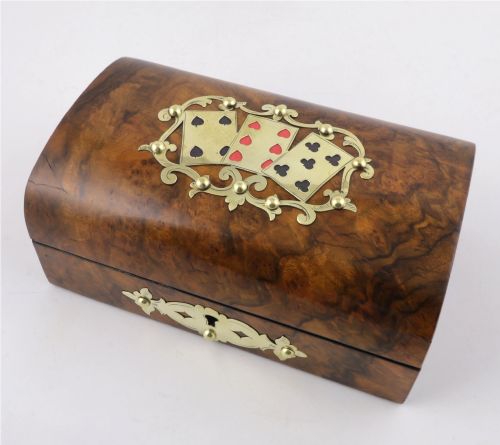
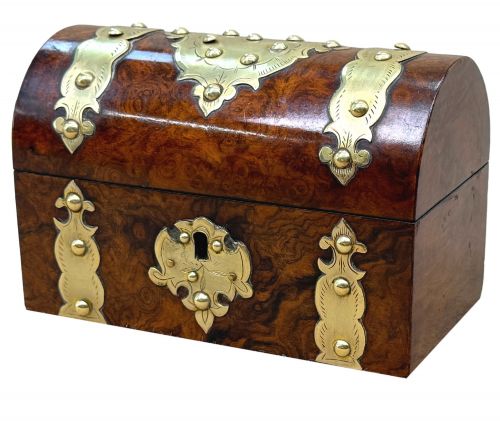
The objects combine sturdy carcases of walnut, burr walnut, oak, and coromandel wood with substantial brass mounts, hinges, and escutcheons. Makers adapted these forms to suit Gothic revival, Arts and Crafts, and Neoclassical tastes, creating receptacles that range from domestic post boxes to elaborate scent caskets.
How They Were Made
Carpenters built the timber carcases using dense hardwoods like walnut, pollard oak, and exotic coromandel, often selecting figured veneers such as burr walnut and amboyna for visible surfaces. These wooden structures were then reinforced and decorated with cast, engraved, or pierced brass mounts, straps, and corner brackets.
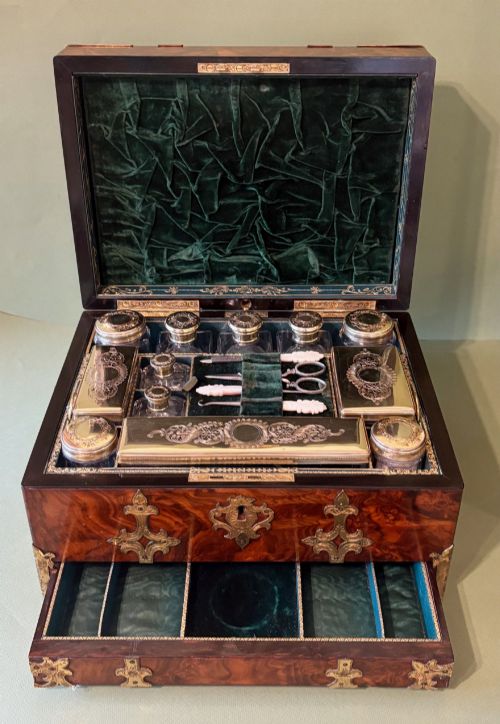
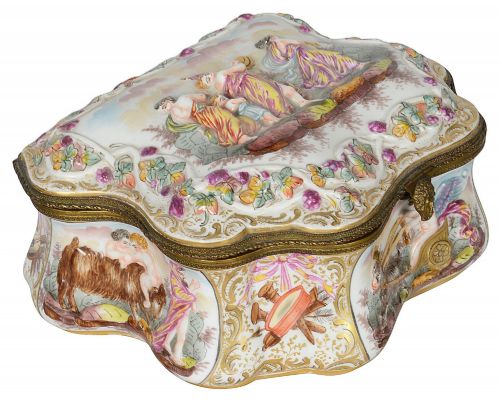
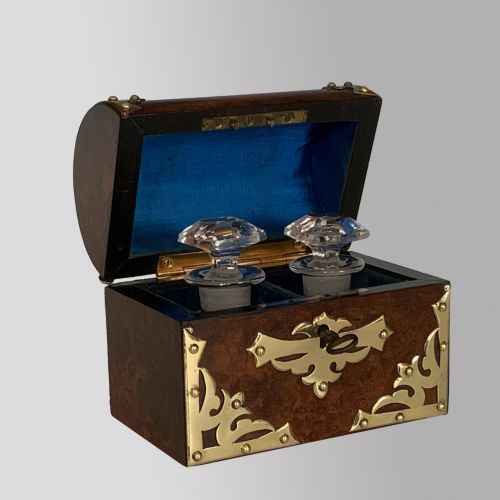
Interests in varied textures led artisans to combine the timber and metal with inserted porcelain plaques, glass panels, agate cabochons, and malachite. Interiors were lined with velvet, leather, or silk, fitted with compartments for writing implements, bottles, cards, or trinkets.
The documented forms span stationery boxes, jewellery chests, games boxes, sewing cases, and desk sets from the Victorian era.
What Varies in Quality
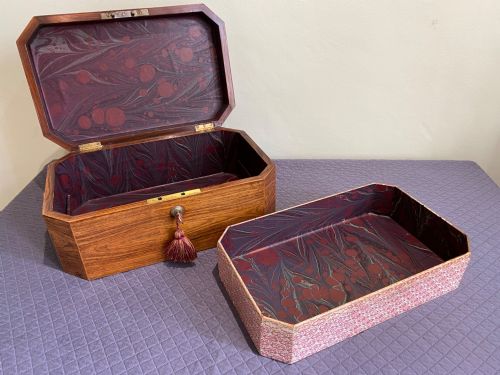
Quality rests upon the selection of timber veneers and the precision with which the brass mounts are fitted into the wood. Superior boxes display carefully matched burr walnut or coromandel grains across the entire lid and sides, whilst lesser examples rely on plain timber or loose joints.
The complexity of the internal fittings and the crispness of the brass engraving separate standard utility boxes from high-status presentation pieces. Finer specimens include working locks with matching keys, bevelled glass panels, and integrated storage for multiple bottles or games.
The Victorian Brass Mounted Casket Glossary
- Coromandel
- A dense, heavily grained southeast Asian timber favoured for luxury nineteenth-century boxes. Its dark brown colour with black stripes provides a dramatic contrast to brass mounts.
- Burr walnut
- A wood harvested from walnut tree growths that produces swirling, organic patterns in the grain. This highly decorative veneer appears frequently on the lids of superior caskets.
- Ormolu
- Gilded bronze or brass applied to furniture and decorative objects for metallic enrichment. It provides a bright golden accent against dark wood carcases.
- Escutcheon
- A protective plate surrounding a keyhole. On these caskets, brass escutcheons often form part of larger strapwork designs.
- Stationery box
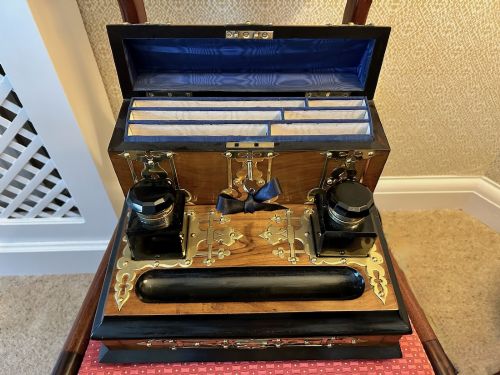
- A desk accessory designed to hold writing paper, envelopes, and letters. Many feature sloping or dome-shaped lids with internal dividers.
Victorian Brass Mounted Casket: Frequently Asked Questions
What did people store inside a victorian brass mounted casket?
Owners kept correspondence, writing paper, stamps, and envelopes inside stationery boxes. Other versions held playing cards, poker dice, perfume bottles, or personal jewellery.
Interior trays and velvet-lined compartments kept these valuable items organised on dressing tables and library desks.
Where were these boxes typically placed in a home?
These caskets rested upon library desks, drawing room tables, and bedroom dressing chests. They served both as decorative objects and practical storage for daily accessories.
Larger stationery boxes sat on writing tables, while smaller jewellery chests and workboxes stayed close to dressing areas.
How do I care for the wood and brass?
Keep wooden surfaces clean with a dry cloth and apply occasional high-quality furniture wax to nourish the antique timber. Avoid placing the boxes in direct sunlight or near heat sources that could dry out the veneer.
Brass mounts can be left with their natural aged patina or gently wiped with a soft cloth to maintain their metallic lustre without using harsh chemical polishes.