




Fitted Wooden Vanity Box
A fitted wooden vanity box is a portable chest for grooming and jewels, offering compartments and mirrors that reveal nineteenth-century luxury.
Fitted Wooden Vanity Box
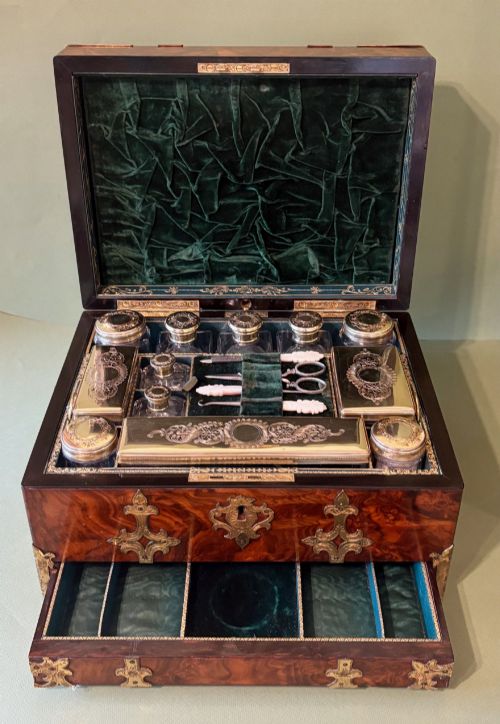
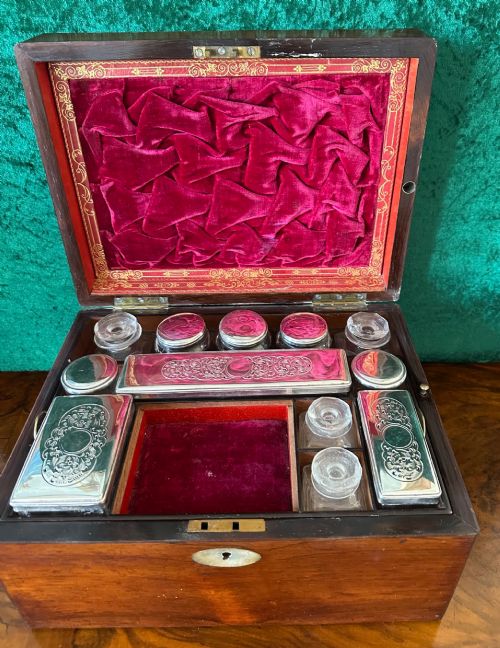
A fitted wooden vanity box serves as a portable container for personal adornment, grooming items, and small treasures. These pieces appear frequently from the Victorian period, alongside examples from the Regency, Georgian, and Art Deco eras.
The objects take several forms, including dressing cases, jewellery boxes, sewing boxes, and travelling boxes. Many incorporate specialised internal compartments, lift-out trays, and fitted mirrors for daily use.
How they were made
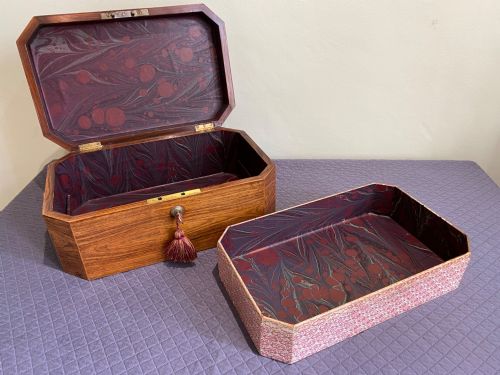
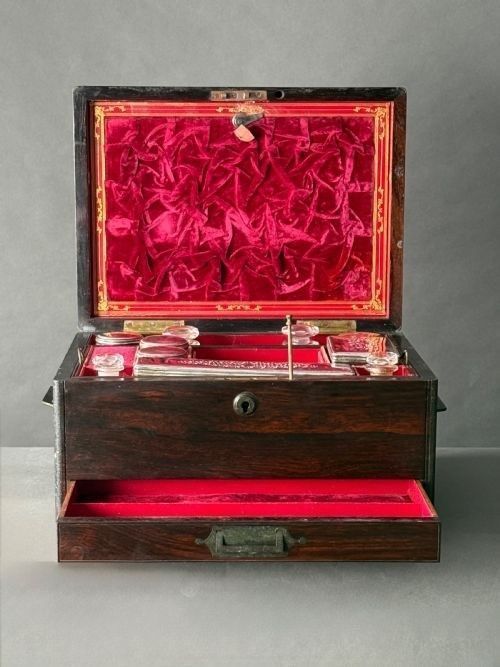
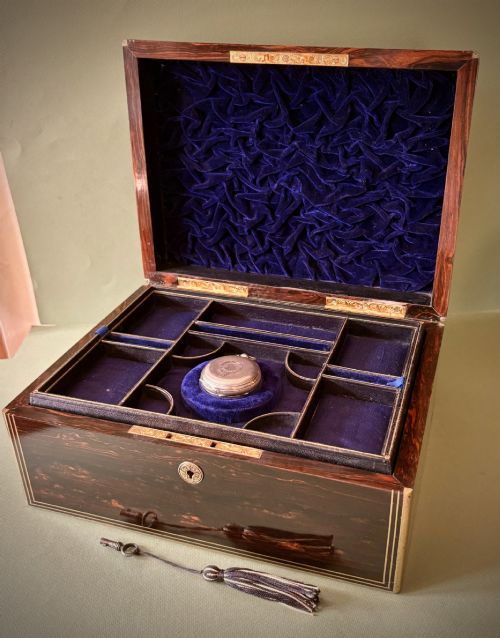
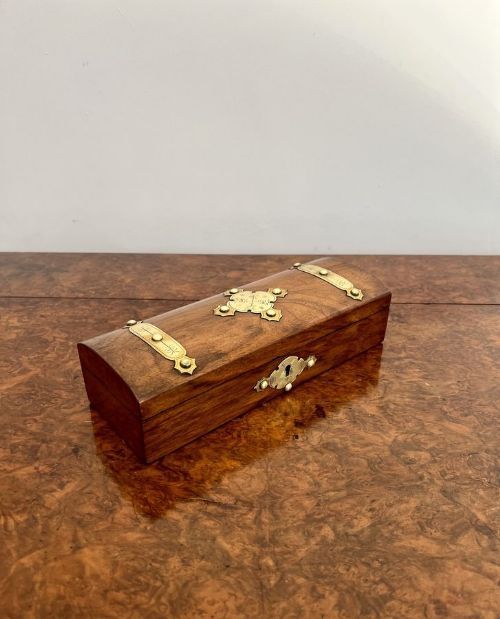
Cabinet makers utilised dense hardwoods such as rosewood, walnut, burr walnut, and coromandel wood to construct the sturdy carcasses. Surfaces often display mother-of-pearl inlay, brass banding, or brass mountings for structural reinforcement and visual contrast.
Interiors feature linings of velvet and leather, housing fitted glass jars, silver items, and specialised implements. Joinery relies on precise timber selection and careful fitting to accommodate the internal trays and secret drawers.
A cleric's swing-out case exists alongside razor sets, proving that victorian grooming was a deeply structured affair.
What varies in quality
The distinction between tiers rests upon the choice of timber figure, the complexity of internal compartments, and the presence of maker signatures. Finer examples display figured burr veneers and substantial brass hardware rather than simple surface decoration.
Maker provenance elevates certain items, particularly those bearing the stamps of established London retailers like Parkins and Gotto, Edwards, or H Mitchell. The sophistication of the internal mechanism, such as swing-out trays and working locks with keys, further separates standard production from superior craftsmanship.
H Mitchell·Parkins and Grotto·Edwards·Parkins & Grotto·JH Browne
The Fitted Wooden Vanity Box Glossary
- Burr walnut
- A timber harvested from the burl growths of walnut trees, yielding swirling, highly figured grain patterns prized for luxury boxes.
- Coromandel wood
- A dense, heavily figured dark timber imported from Asia, often utilised for high-end nineteenth-century dressing cases.
- Dressing box
- A portable container fitted with compartments for cosmetics, grooming tools, mirrors, and jewellery, designed for travel or boudoir use.
- Mother-of-pearl
- An iridescent shell material inlaid into timber surfaces in geometric or floral motifs.
- Fitted interior
- An arrangement of custom compartments, trays, and holders designed to secure specific glass bottles, silver items, or accessories.
Fitted Wooden Vanity Box: Frequently Asked Questions
What is inside a fitted wooden vanity box?
These boxes typically house a velvet or silk-lined interior featuring lift-out trays, smaller partitions for jewellery, and integrated mirrors.
Many examples also contain matched sets of glass bottles with silver or plated lids, alongside dedicated slots for grooming tools.
How do I tell Victorian boxes from Georgian ones?
Georgian and Regency boxes often display simpler, restrained exterior lines with mahogany or rosewood surfaces and understated brass handles.
Victorian variants tend towards heavier ornamentation, utilising burr walnut, coromandel, and extensive brass mounts or mother-of-pearl inlay.
Were these boxes meant for travel?
Many dressing cases and travelling boxes were specifically built for journeys by carriage or rail, featuring robust exterior banding and secure locks.
Some larger examples functioned primarily as stationary dressing table accessories rather than portable luggage.
Can I use a vanity box for modern jewellery?
The internal compartments and velvet linings make these boxes practical for storing modern rings, necklaces, and small accessories.
Their sturdy timber construction allows them to sit securely on dressing tables while keeping contents organised.