


Victorian Wooden Stick Holder
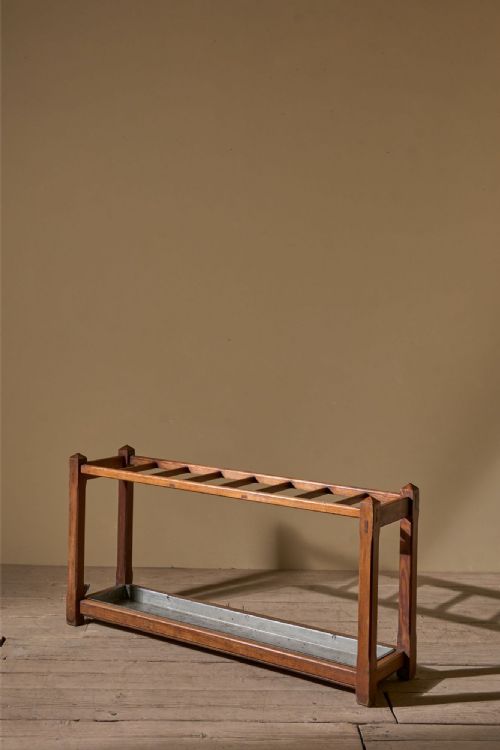
A victorian wooden stick holder organises hallway essentials with timber and metal, offering functional charm for an entranceway.
Victorian Wooden Stick Holder
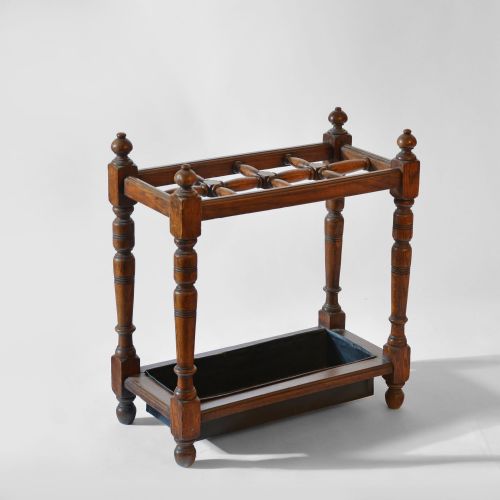
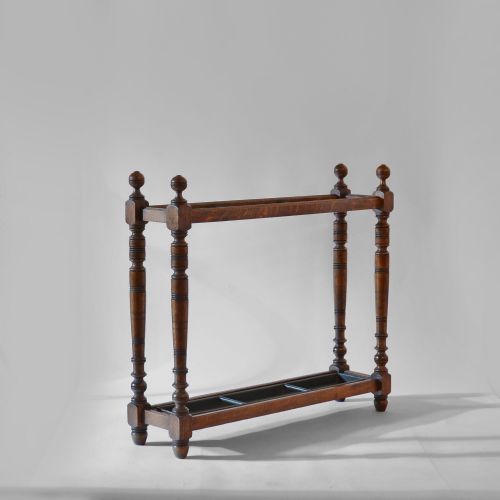
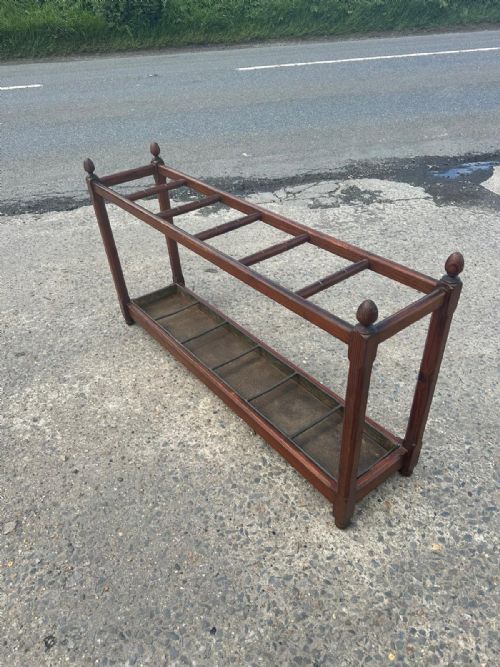
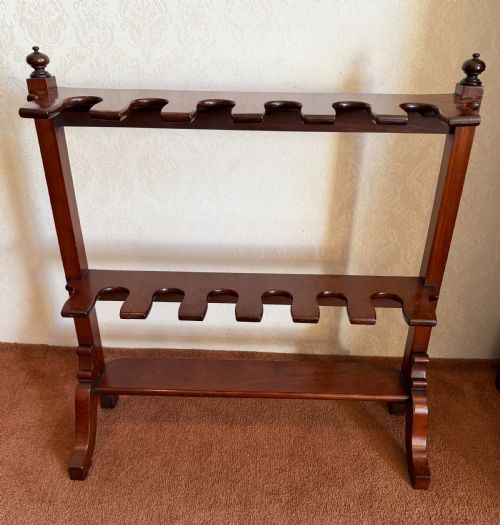
A victorian wooden stick holder stands in a hallway to hold walking sticks, umbrellas and whips. These items appear across the nineteenth century, Victorian, and Edwardian periods.
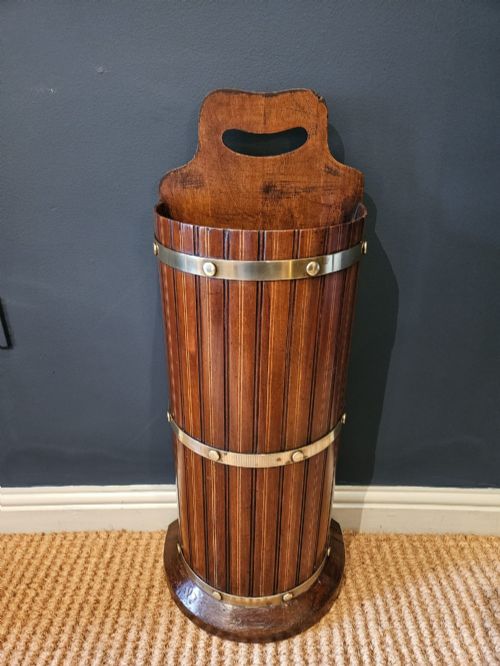
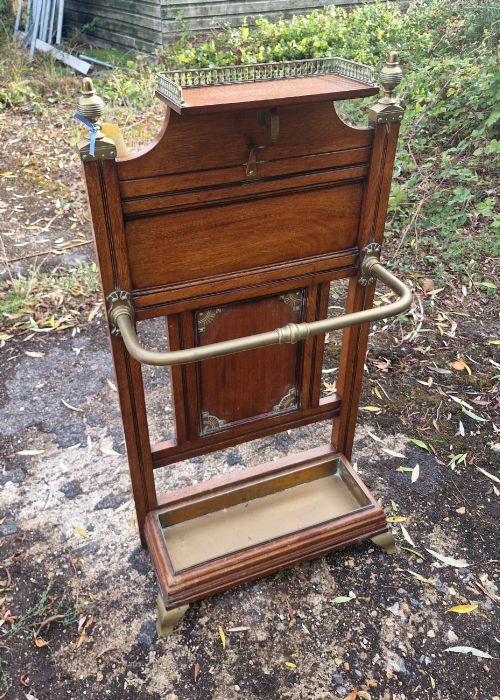
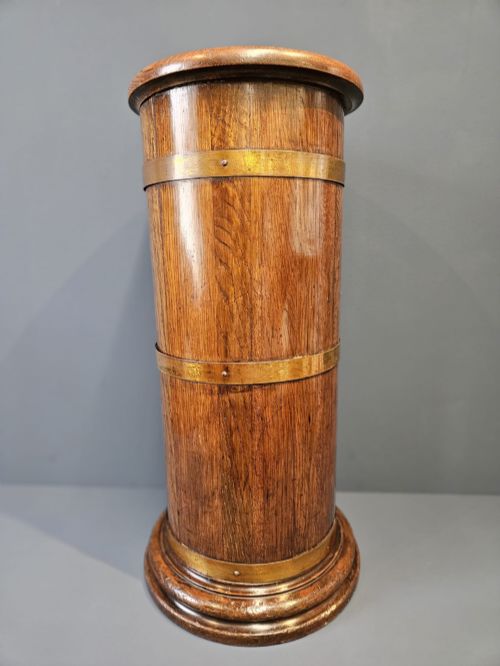
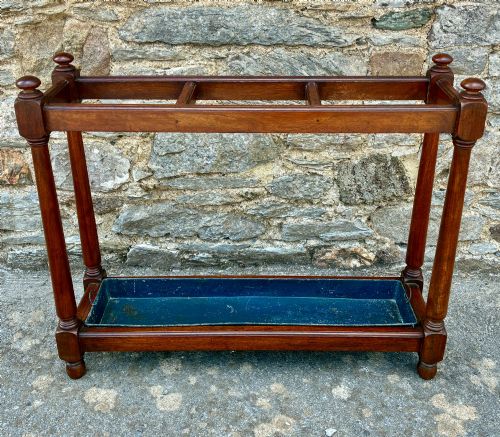
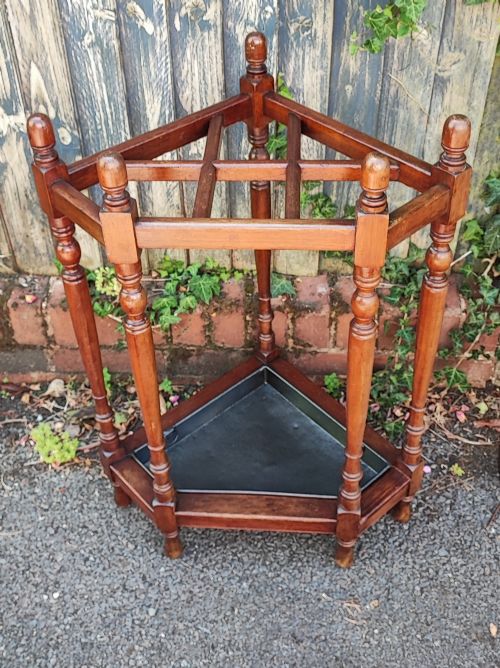
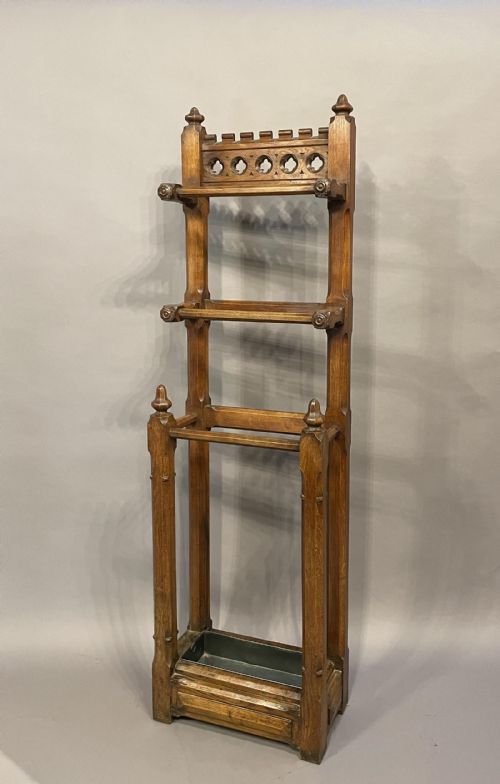
The most common formats on this page include oak and mahogany umbrella stands, coopered barrels with metal bands, and corner designs. Large country house versions sit alongside Black Forest carved bear figures and Gothic Revival hall stands.
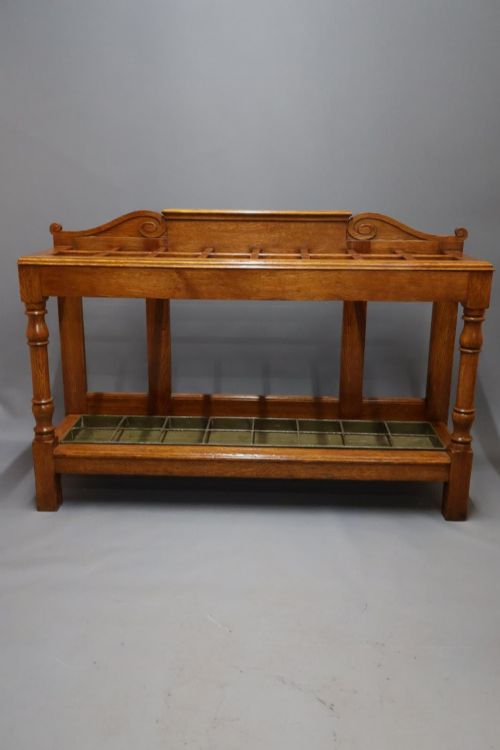
Makers and workshops range from standard country house pieces to specific items attributed to Thonet and James Shoolbred. Forms span simple pine troughs to twenty-four division hall racks with mirrors.
Materials and construction
Makers built these pieces primarily from solid hardwoods like oak, mahogany, walnut, and pitch pine, often pairing timber with metal components. Brass bands, braces, and mountings reinforce coopered barrels and secure upright divisions.
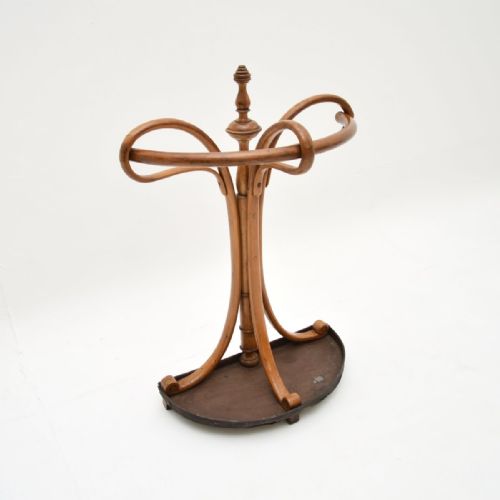
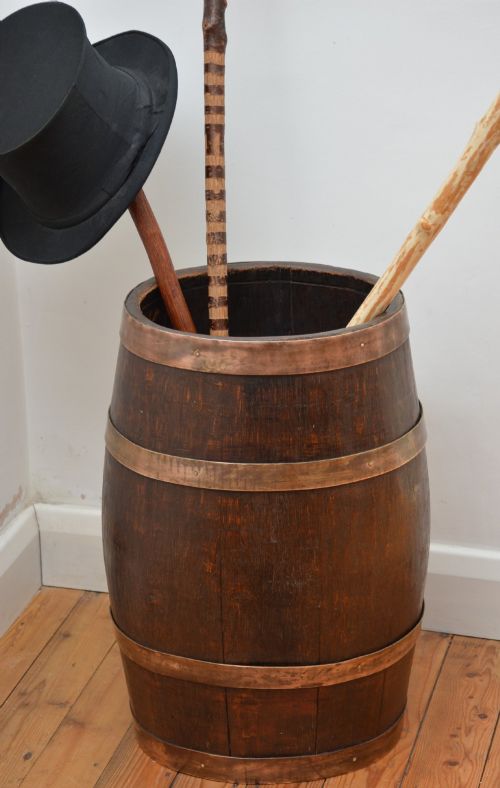
Coopered construction techniques shape staves into circular or oval barrels bound by brass or iron hoops. Carving defines Black Forest bear figures, whilst bentwood methods shape specific bentwood umbrella stands.
Carved bears keep watch over your wet umbrellas.
Judging quality
Quality rests on the selection of timber and the ambition of the joinery, distinguishing sturdy country house oak barrels from simpler utility pieces. Dense walnut, figured mahogany, and heavy pitch pine elevate the presence of a hall stand.
Detailing determines distinction, seen in crisp carving on Black Forest bear stands or precise brass bounding on coopered barrels. Scale also separates large twenty-four division hall racks and pairs of stands from standard single items.
Thonet·James Shoolbred
The Victorian Wooden Stick Holder Glossary
- Coopered
- Constructed from wooden staves bound together with metal hoops, much like a barrel. This method suits cylindrical and oval umbrella stands.
- Bentwood
- Wood heated and bent into curved shapes using steam. This technique appears in specific umbrella and stick stands.
- Black Forest
- Carved wooden items originating from the European region, noted here for detailed bear stick stands. These sculptures combine functional holders with figurative carving.
- Gothic Revival
- A design style inspired by medieval architecture, featuring pointed arches and structural motifs. It surfaces on hall umbrella stands from the nineteenth century.
- Treen
- Small handmade wooden household objects. The category includes items such as candlesticks and treen chamber sticks.
Victorian Wooden Stick Holder: Frequently Asked Questions
Where do victorian wooden stick holders go?
These pieces belong in a hallway, entrance lobby or boot room. They receive wet umbrellas and walking sticks as people enter the house.
Larger versions like twenty-four division hall racks or mirrored hall stands anchor grander spaces. Corner stands fit neatly into domestic passageways without blocking thoroughfares.
What wood types appear most often?
Oak and mahogany dominate the selection, joined by walnut, pitch pine, and occasional pine. Many incorporate zinc liners or metal drip trays at the base.
Brass bands and iron braces reinforce the timber barrels against daily wear from heavy walking sticks and wet umbrella tips.
How do I spot a Black Forest stick stand?
Black Forest examples feature distinct hand-carved wooden bears holding receptacles for sticks and umbrellas. These sculptural pieces often date to the late nineteenth century.
They display detailed fur work and glass eyes, functioning as both hall storage and decorative folk art.
What is a coopered barrel stand?
A coopered barrel stand is built using curved wooden staves held tightly by metal hoops. Craftsmen applied this traditional cask-making method to create durable umbrella holders.
These pieces usually feature oak or pitch pine with polished brass or iron bindings around the middle and base.