




Antique Oak Umbrella Barrel
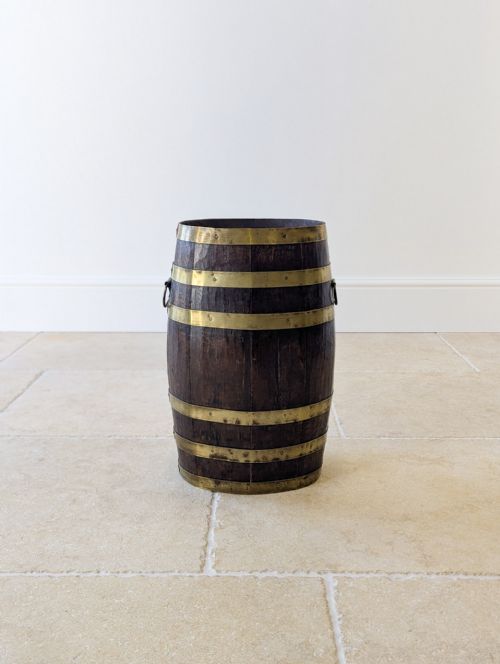
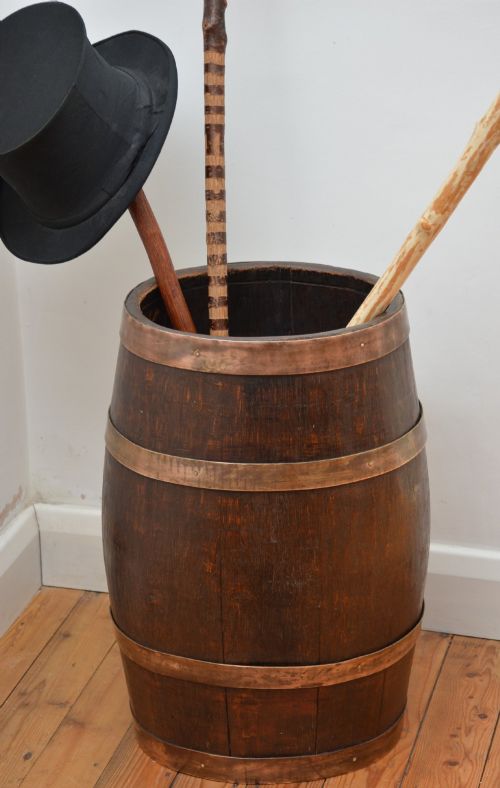
An antique oak umbrella barrel brings solid country house character to a hallway, keeping wet sticks neatly contained.
Antique Oak Umbrella Barrel
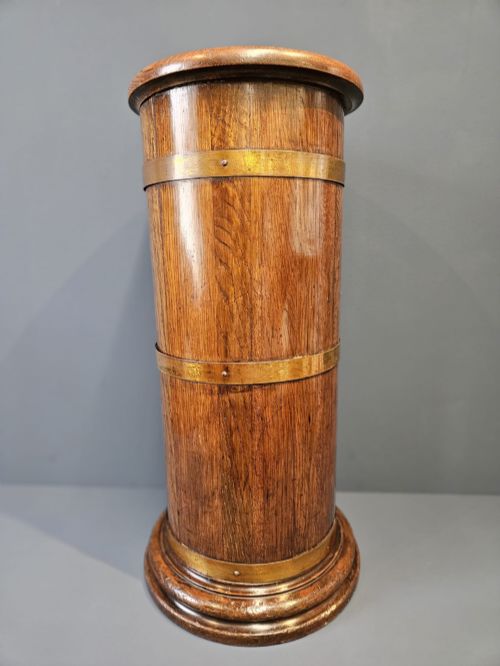
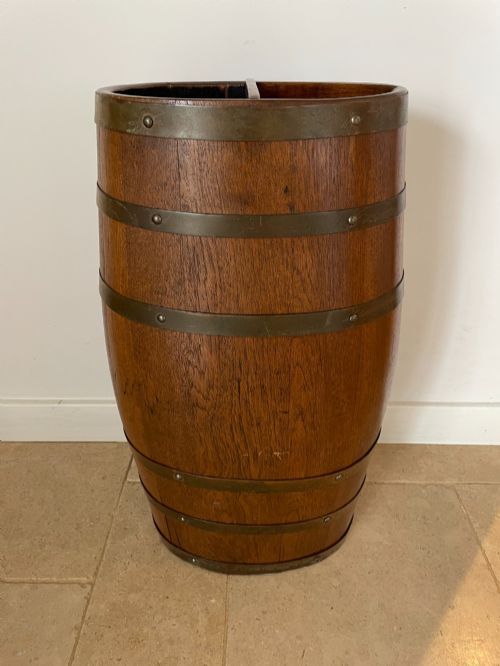
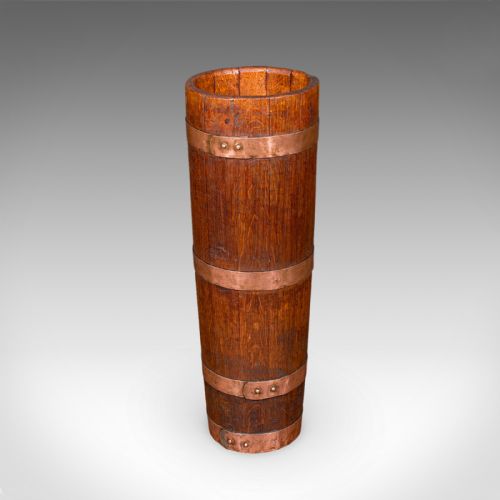
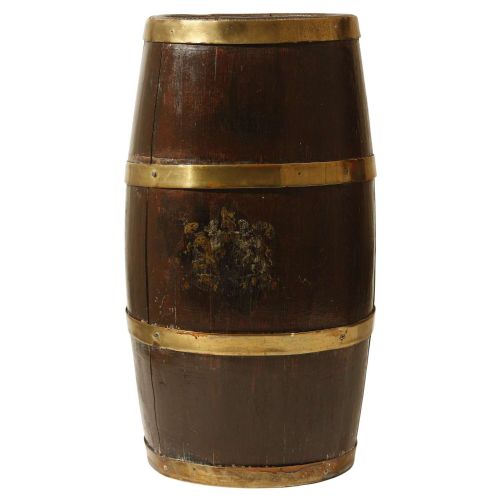
An antique oak umbrella barrel is a coopered vessel designed for holding walking sticks and umbrellas in a hallway or boot room. You will frequently encounter Victorian examples fashioned from staves of timber and secured with metal bands.
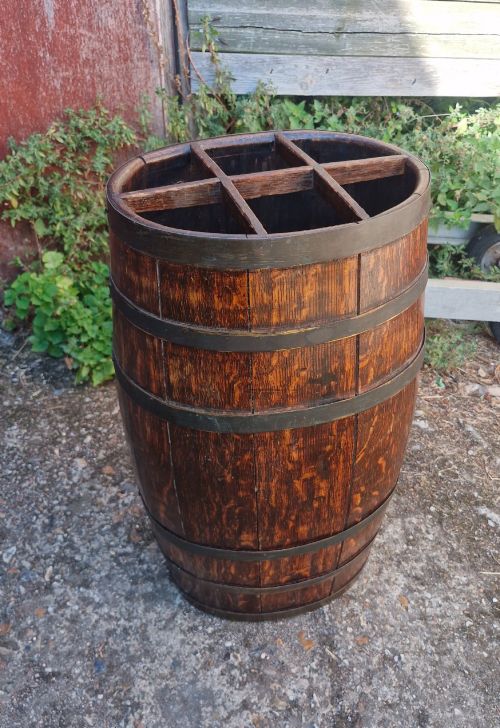
The form ranges from round casks to oval barrels, sometimes featuring interior loops or exterior brass braces. Many pieces reflect an English country house aesthetic spanning the nineteenth and early twentieth centuries.
How they were made
Craftsmen built these barrels using traditional cooperage techniques, shaping individual oak staves to form a watertight or sturdy hollow cylinder. The resulting wooden body is held firmly together by tension using fitted bands of brass, copper, or iron.
Metal components such as handles, umbrella loops, and coats of arms are secured directly to the wood to withstand daily use. Paint is occasionally found on specific elements, though natural oak grain remains the dominant finish.
The listings on this site record oak umbrella barrels spanning the Victorian, Edwardian, and Georgian periods, alongside twentieth-century examples.
What varies in quality
The distinction between standard utility items and finer pieces lies in the precision of the cooperage and the richness of the oak grain. Tight, even staves and heavier gauge brass binding signal superior construction.
R.A. Lister
The Antique Oak Umbrella Barrel Glossary
- Coopered
- Made by a cooper using curved wooden staves bound together with hoops. This technique is traditional for casks, buckets, and barrels.
- Stave
- One of the narrow vertical strips of oak that form the sides of a barrel. Their precise tapering creates the curved profile.
- Brass bound
- Fitted with brass hoops or bands for structural strength and decoration. These bands hold the wooden staves under constant tension.
- Umbrella loop
- A metal divider attached to the top rim or interior to keep walking sticks separated. It prevents wet tips from tangling together at the base.
Antique Oak Umbrella Barrel: Frequently Asked Questions
How do I use an antique barrel safely?
Place a plastic liner or shallow tray inside the base of the barrel to catch moisture from wet umbrellas. This protects the original oak timber and internal metalwork from prolonged water damage.
Position the barrel in a stable hallway spot away from direct heat sources to prevent the dry oak staves from shrinking and loosening their metal bands.
Are these barrels waterproof?
Coopered oak vessels were originally built to hold liquids or withstand damp items, but centuries of age can affect their seals. Many rely on internal liners or metal trays today.
Check the base to see if it remains solid before placing dripping umbrellas directly onto the bare wood.
How do I date an oak umbrella barrel?
Examine the construction details, including the type of metal used for the bands and the methods used to shape the oak staves. Victorian and Edwardian examples often feature specific brass brace designs.
Compare the patina of the wood and the wear patterns on the rim against dated pieces from the nineteenth and early twentieth centuries.
What is the difference between a barrel and a stand?
Barrels are traditionally coopered vessels with solid wooden sides formed from staves, often bound in brass or iron. They enclose the sticks within a deep cylindrical or oval cavity.
Stick stands more commonly feature open frames, slatwork, or cast iron grids rather than enclosed wooden staves.