


Edwardian Coopered Stick Stand
An edwardian coopered stick stand brings honest country house craft into a hallway, offering sturdy storage for wet umbrellas and walking sticks.
Edwardian Coopered Stick Stand
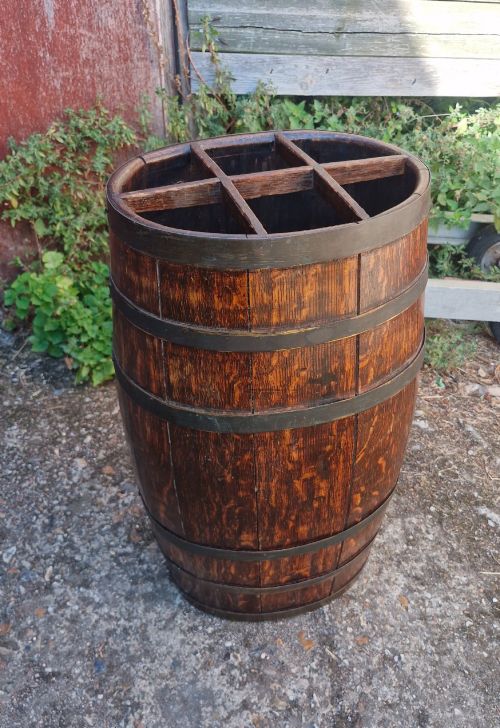
An edwardian coopered stick stand is typically formed as a low wooden vessel designed to hold walking sticks and umbrellas in a hallway or boot room. These pieces borrow their construction directly from traditional cask and bucket making, translating utilitarian workshop methods into domestic furniture.
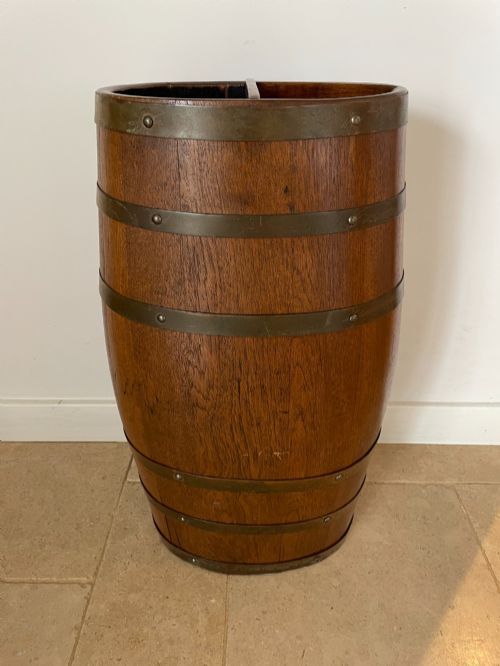
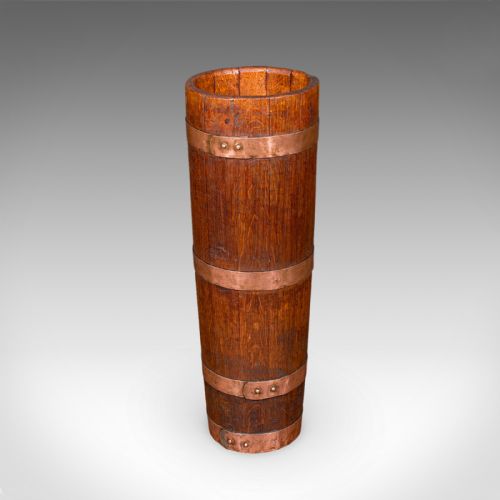
You are most likely to meet oak examples featuring oval or round bodies secured by metal bands, often dating from the early twentieth century or the late Victorian era. The form bridges the gap between purely functional country house equipment and presentable entrance hall furnishing.
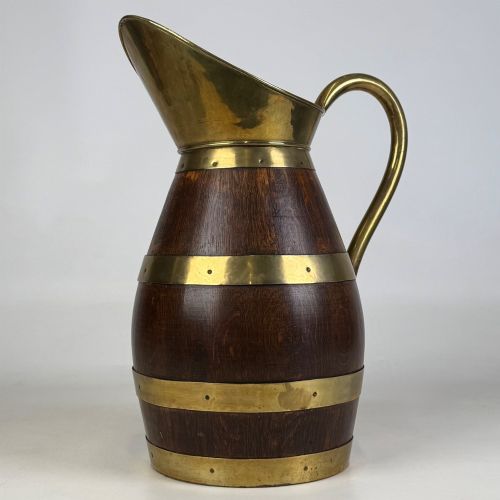
The objects listed under this search phrase span umbrella stands, stick stands, and occasional vessels catalogued as jugs or pitchers. Despite slight variations in naming, each piece serves the same practical purpose of containing wet utility items near a doorway.
How they were made
The construction relies on solid oak staves shaped to form a tight circular or oval barrel body. Cooperage techniques allow the wood staves to fit flush against one another without modern adhesives.
Metal bands, typically formed from brass or copper, are heated and fitted tightly around the oak staves so that as the metal cools it contracts to hold the wooden vessel rigid. This traditional method ensures the timber stays secure despite damp contents and changing hallway temperatures.
Object forms grouped under this search range from traditional umbrella stands and stick barrels to vessels catalogued as jugs.
What varies in quality
Quality in an edwardian coopered stick stand depends upon the precision of the stave joints and the gauge of the metal binding. Tighter wooden joinery and heavier brass or copper bands separate robust workshop output from simpler domestic containers.
The choice of timber grain and the integrity of the original metal fixings dictate the lasting character of the piece. Superior examples retain matching metalwork and well-figured oak that has aged gracefully through decades of hallway use.
R.A. Lister
The Edwardian Coopered Stick Stand Glossary
- Coopered
- Method of construction where wooden staves are joined side by side to form a curved vessel, secured by exterior metal bands. This technique originates from traditional cask and bucket manufacturing.
- Stave
- A narrow strip of oak shaped with bevelled edges to fit tightly into a curved barrel body. The vertical wooden components form the primary wall of the stand.
- Band
- A metal strap made of brass or copper fitted around the wooden body to maintain structural tension. These bands prevent the oak staves from shifting apart over time.
- Country House
- Style descriptor denoting robust, functional furnishings designed for large English domestic estates. Pieces of this type prioritise practical utility alongside traditional materials.
Edwardian Coopered Stick Stand: Frequently Asked Questions
What is an edwardian coopered stick stand?
An edwardian coopered stick stand is a wooden vessel built using traditional barrel-making techniques to hold umbrellas and walking sticks in an entrance hall.
These pieces use fitted oak staves held together by metal bands to create a durable, open-topped container suited for everyday household use.
How do you date an oak stick stand?
Dating relies on observing construction methods, metal types, and the general patina of the oak timber across the body.
Earlier examples often display hand-shaped staves and heavier brass bindings typical of late nineteenth and early twentieth century workshop production.
Where were these stands used?
These vessels were placed in hallways, porches, and boot rooms of country houses and domestic properties to keep wet umbrellas contained.
Their robust construction made them practical for handling damp walking gear immediately upon entering the house from the outdoors.
Are brass and copper bands original?
Metal bands are generally original to the piece, secured tightly around the wooden staves during the initial cooperage process.
Examining how the metal interacts with the oak helps confirm whether the binding has remained undisturbed since manufacture.