





Country House Umbrella Stand
A country house umbrella stand brings practical heritage to an entrance hall, offering sturdy storage for wet days.
Country House Umbrella Stand
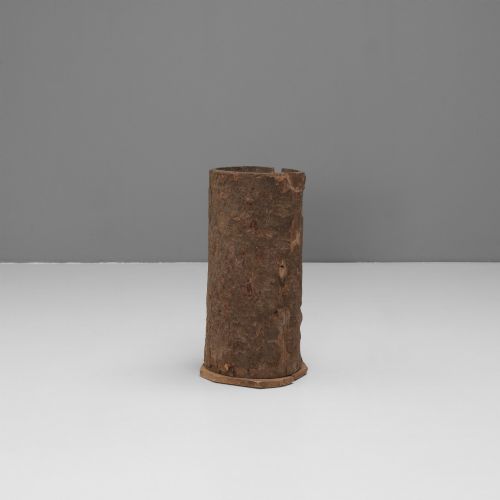
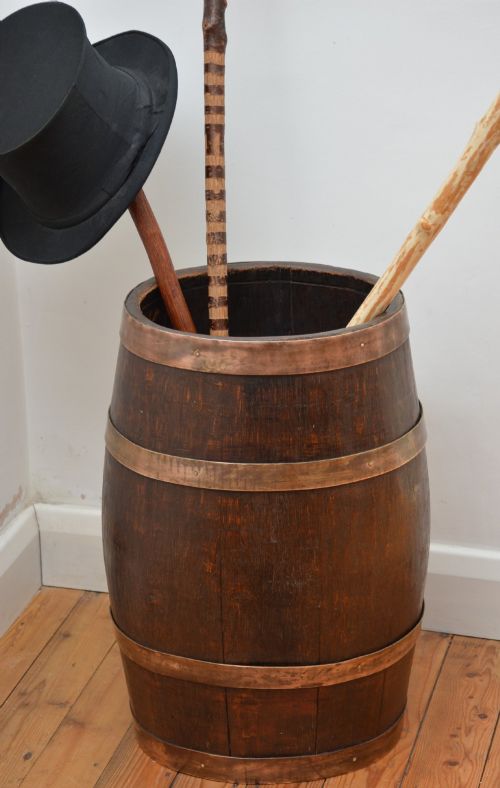
A country house umbrella stand serves as a traditional entrance hall furnishing designed to hold walking sticks and wet umbrellas. When searching for a country house umbrella stand, buyers frequently encounter robust oak or mahogany vessels alongside metal designs.
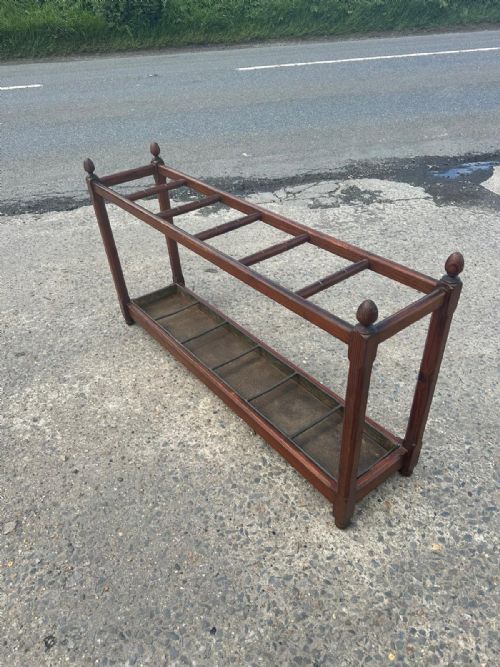
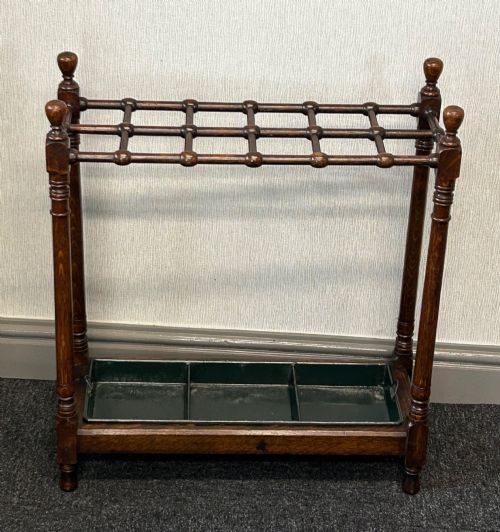
The pieces on this page span the Victorian and Edwardian eras through to the nineteen thirties. Common formats include coopered barrels, hall stands with integrated racks, and heavy metal vessels intended for daily use in large entrance halls.
Makers and workshops range from domestic joinery to notable foundries, reflecting both utilitarian function and decorative ambition. These survivors demonstrate how country houses combined heavy utility with regional craftsmanship.
How They Were Made
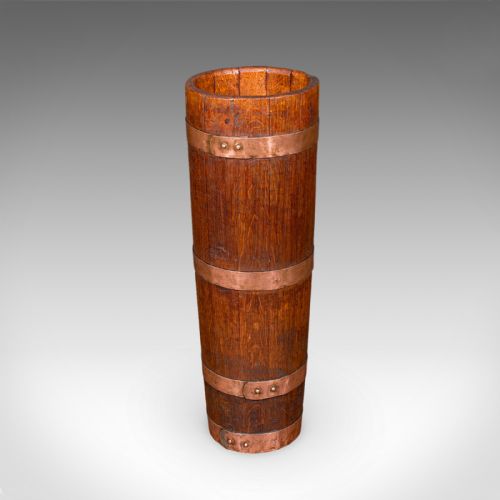
Makers utilised solid timbers such as oak, mahogany, and pitch pine, frequently employing coopered construction with metal bands for barrel forms. These techniques ensured the timber withstood moisture from damp umbrellas without splitting.
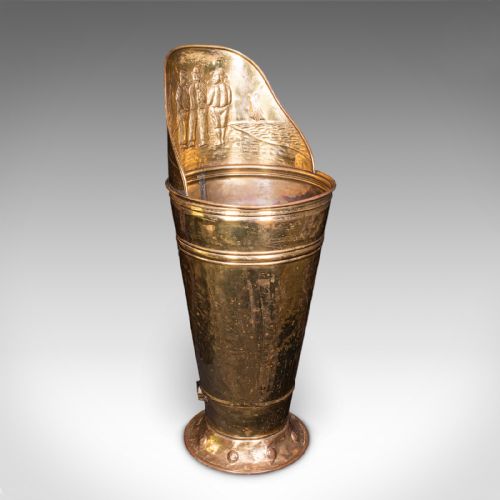
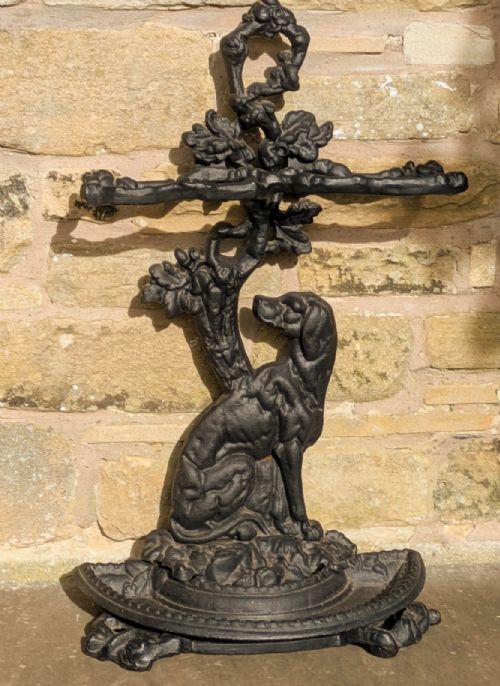
Metal versions relied on cast iron, brass, and zinc, often utilising foundry moulding to produce figural designs or gothic openwork patterns. Copper and painted finishes added decorative durability to vessels subjected to constant moisture.
Details like barley twist turnings, leather upholstery, and brass bound edges required specialist joinery and metalworking skills. Such construction methods ensured that utilitarian hall furniture could also display refined interior style.
Listings feature oak, mahogany, cast iron, brass, and copper across Victorian and Edwardian periods.
What Varies in Quality
The standard of a stand rests in the weight of its materials and the integrity of its joinery or casting. Solid oak barrels with tight coopered staves and heavy brass bindings sit at a different level from lighter decorative pots.
Design ambition separates basic utility pieces from high status hall furniture, with carved details, bergere panels, and cast iron ornamentation elevating the work. Patination on brass and timber shows how well a piece has aged through decades of domestic use.
Heals of London·Coalbrookdale
The Country House Umbrella Stand Glossary
- Coopered
- Constructed from wooden staves bound together with metal hoops, much like a traditional barrel. This method was essential for containers holding damp items.
- Demi lune
- Half moon shape designed to sit flush against a hallway wall. This profile saved valuable floor space in busy corridors.
- Bergere
- Woven cane panel work utilised in furniture sides and backs. It added texture and lightness to heavy timber frames.
- Cast iron
- Iron melted and poured into a mould to create rigid structures. It allowed makers to produce intricate gothic or figural umbrella stands.
Country House Umbrella Stand: Frequently Asked Questions
Where were umbrella stands placed?
These stands stood directly inside the main entrance hall of a large country house. Guests and residents left wet umbrellas and walking sticks there upon arrival.
Positioning them near the front door protected interior carpets and wooden floors from rainwater.
How do I care for wooden stands?
Keep wooden and coopered barrels away from direct radiator heat to prevent timber shrinkage. Use removable metal drip trays inside to catch moisture and protect the base.
Apply traditional beeswax occasionally to nourish the oak or mahogany surfaces.
What is a coopered barrel stand?
A coopered barrel is constructed from vertical wooden staves held tightly by metal bands. This traditional technique originated in container making.
In umbrella stands, this method provided natural resistance to water damage and heavy daily use.
Are metal stands heavier?
Cast iron and brass stands provide substantial weight to prevent tipping when heavy walking sticks or wet umbrellas lean against them. This solidity made them popular for busy household corridors.
Metal also resisted rotting from prolonged contact with standing water.