

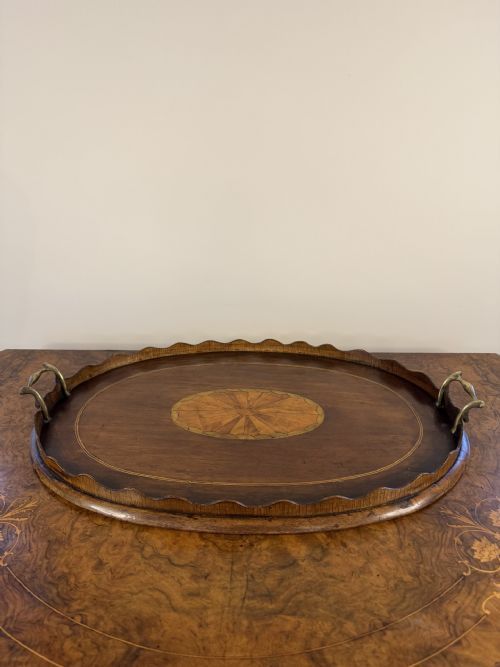


Victorian Wooden Serving Tray
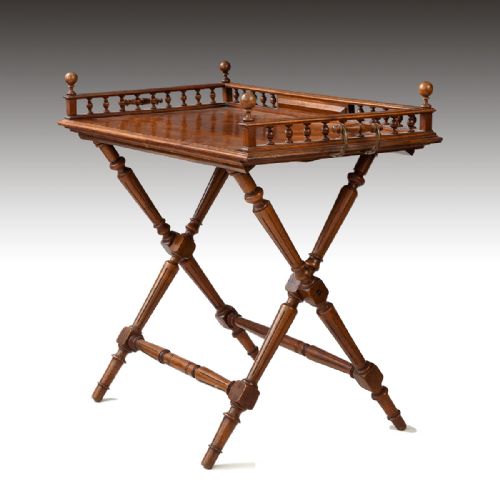
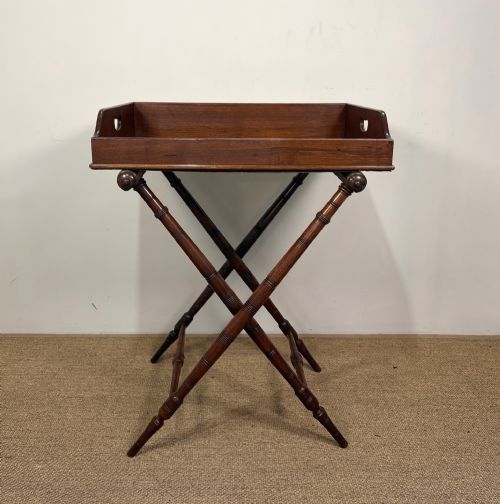
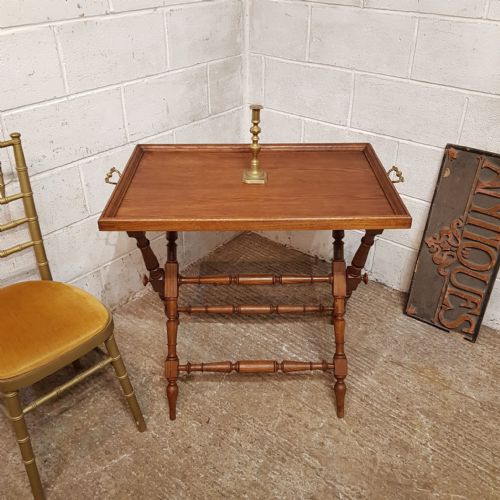
These pieces are a victorian wooden serving tray, built for carrying tea or resting on folding stands, bringing period utility and timber grain to a room.
Victorian Wooden Serving Tray
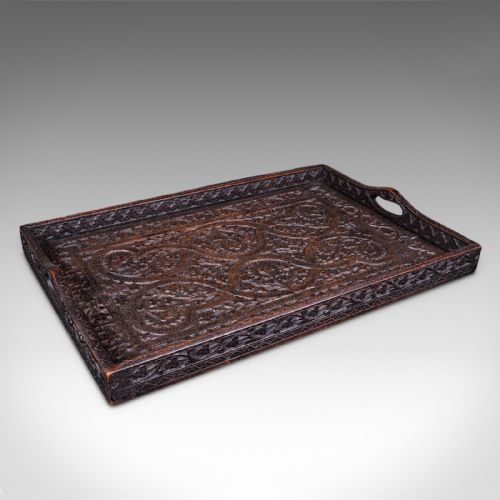
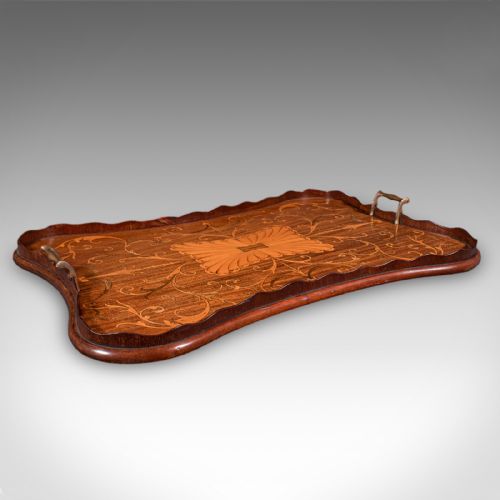
A victorian wooden serving tray combines practical domestic service with the rich timber tones characteristic of the nineteenth century. These objects span simple folding butler trays on stands to oval and kidney-shaped display pieces fashioned for afternoon tea.
The pieces appearing here date from across the Victorian era, including specific decades from the mid-nineteenth century through to the turn of the twentieth. Forms range from portable tea platters to large tray tables and side stands.
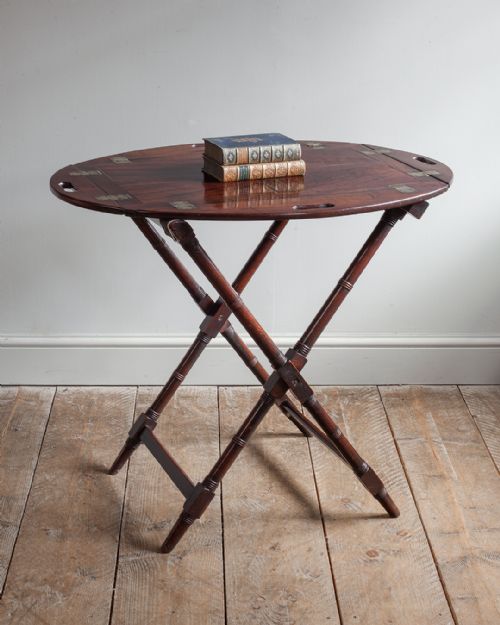
Makers and workshops utilised native and exotic timbers to construct serving wares that doubled as furniture when mounted on folding trestles or wooden stands.
Materials and Construction
Makers relied on dense hardwoods such as mahogany, oak, walnut, teak, and satinwood to form the structural body of a victorian wooden serving tray. These timbers provided the strength needed for daily handling and serving.
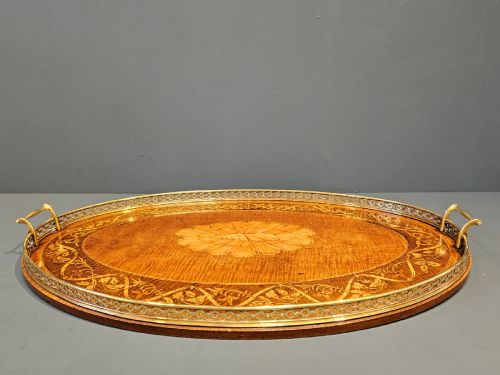
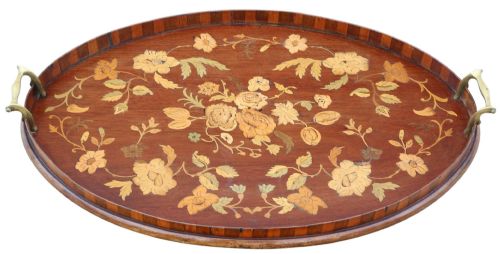
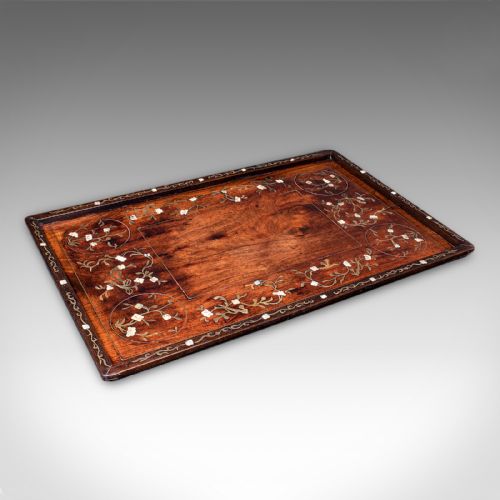
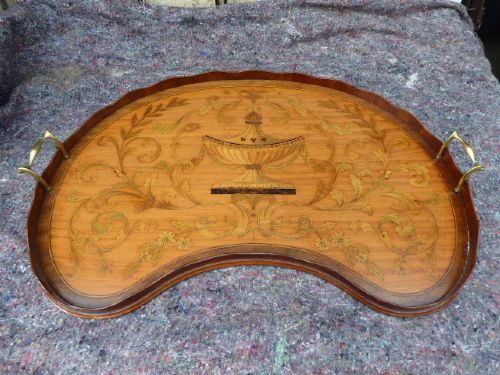
Surface ornamentation involved marquetry inlay, brass handles, and silver plate mounts, adding decorative contrast to the dark wood grounds. Carved details and scalloped edges appeared on select regional and Anglo-Indian variants.
Several trays feature built-in rotating lazy-susan mechanisms, designed to keep afternoon tea moving without awkward reaching across the table.
Quality and Detail
Finer examples of a victorian wooden serving tray demonstrate precise dovetail joints, crisp marquetry patterns, and deeply figured mahogany or satinwood grains. Lesser versions rely on plain timber panels with minimal shaping.
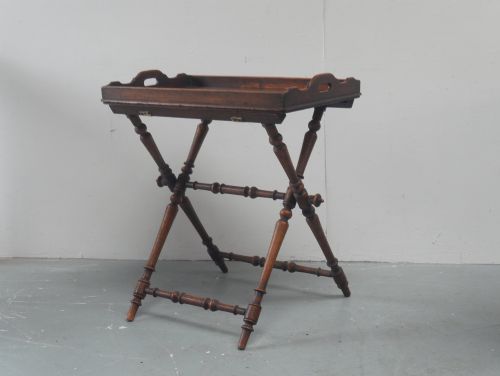
Original stands matching the tray elevate the piece, particularly where folding mechanisms and turned wooden supports remain intact without modern replacement parts.
Edwards and Roberts·Maple and Co
The Victorian Wooden Serving Tray Glossary
- Marquetry inlay
- The art of applying small pieces of veneer to a structure to form decorative patterns. Craftsmen used contrasting woods to create floral or geometric designs.
- Gallery tray
- A tray featuring a raised pierced or solid border around the edge. This rim kept cups and decanters secure during transit.
- Satinwood
- A durable exotic timber with a lustrous yellow or golden sheen. It was frequently used for fine cabinet making and decorative veneer work.
- Dumb waiter
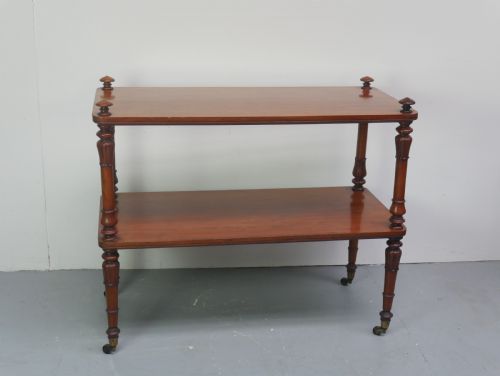
- A tiered freestanding serving unit used to hold dishes and drinks during meals. These pieces often incorporated rotating or multiple shelves.
Victorian Wooden Serving Tray: Frequently Asked Questions
What is a butler tray stand?
A butler tray stand is a folding wooden support designed to hold a removable serving tray at table height.
These stands allow the tray to function as an occasional table or side table when not in transit.
How were serving trays used?
Serving trays carried tea services, drinks, and food from kitchens to parlours or gardens during the nineteenth century.
Many designs converted into portable furniture pieces by resting upon dedicated folding trestles.
What woods appear most often?
Mahogany, oak, and walnut form the primary timber base for nineteenth-century serving wares and stands.
Exotic additions such as satinwood, teak, and marquetry veneer provide decorative contrast on finer examples.
Are stands original to the trays?
Many trays survive alongside their original folding wooden stands, though some pairings occurred later in the piece's history.
Matching timber grain and period wear patterns help confirm the association between tray and base.