




Marquetry Butler Tray
A marquetry butler tray brings refined woodwork and classic utility to any room, offering a decorative surface for serving or display.
Marquetry Butler Tray
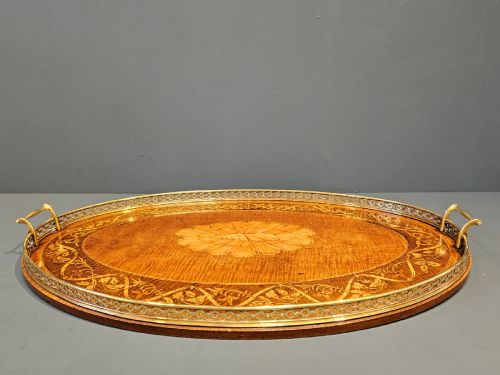
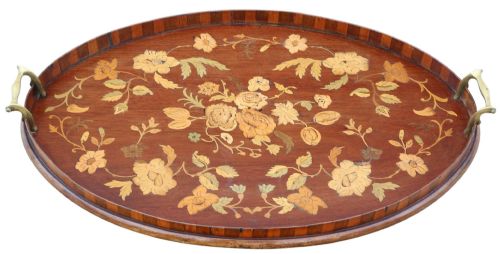
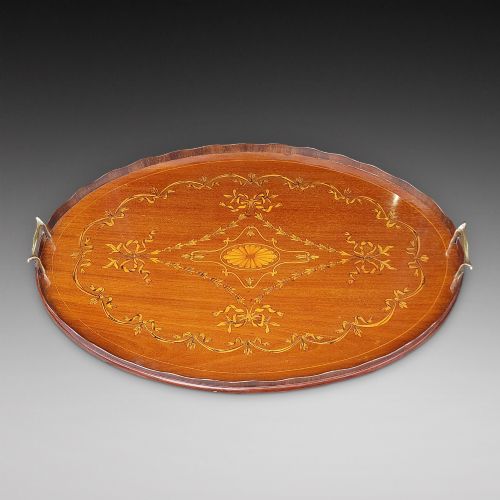
When searching for a marquetry butler tray, collectors encounter serving trays, tray tables, and occasional tables designed for practical use and display. These pieces mostly emerge from the Victorian, Edwardian, and Georgian periods, showcasing detailed inlaid wood designs.
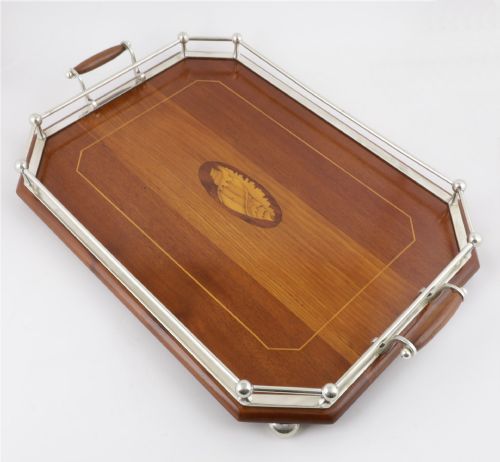
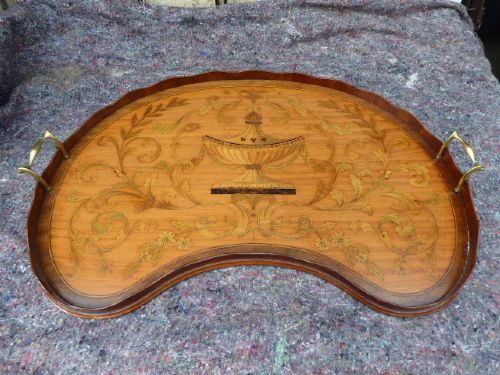
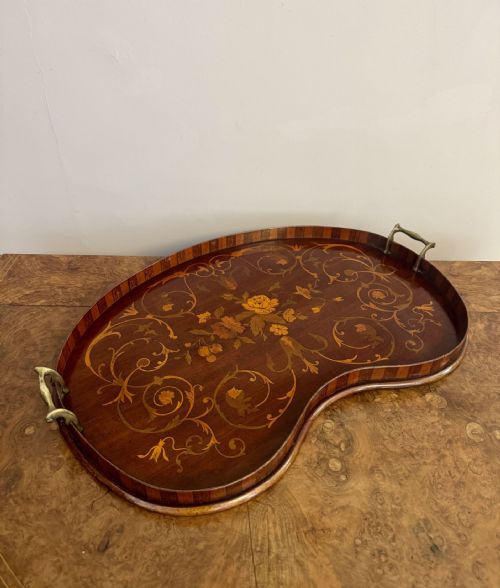
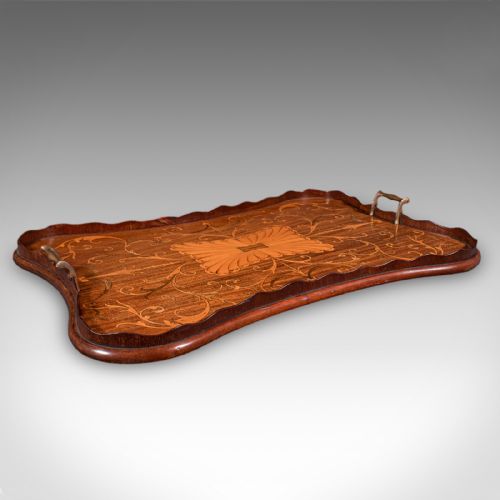
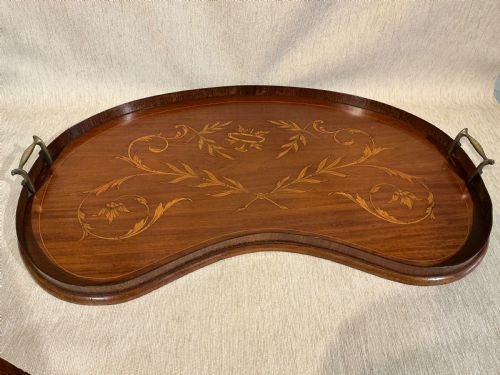
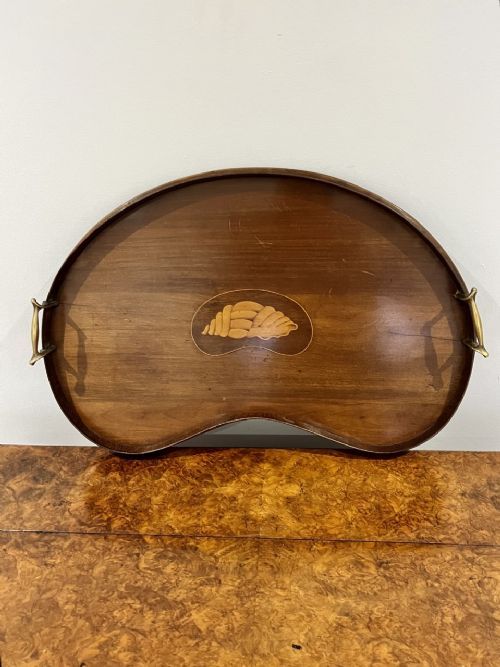
The version most commonly met on this page is the Edwardian or 19th-century mahogany serving tray, often shaped in an oval, octagonal, or kidney form. Many examples combine marquetry inlay with contrasting timbers like satinwood, walnut, and rosewood.
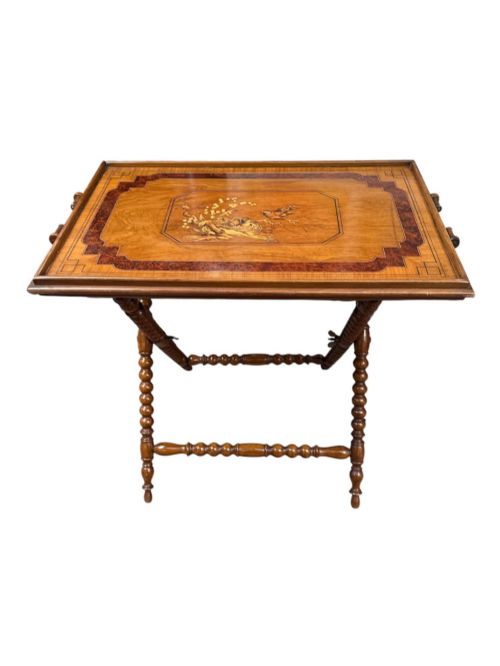
Makers and workshops of the 19th and early 20th centuries produced these trays as afternoon tea platters or drinks trays, occasionally mounting them on stands to function as side tables. Buyers find both standalone platters and complete tray tables across the selection.
How they were made
Cabinetmakers constructed these trays using solid mahogany, satinwood, or walnut as a foundation, applying intricate marquetry and satinwood inlay to the surface to create pictorial or geometric motifs. Artisans utilised contrasting veneer woods such as burr yew and rosewood within the inlay work.
Many trays incorporate brass galleries or silver-plated mounts fastened to the edges to secure glassware and porcelain during service. Sorrento ware examples demonstrate specialised Italian wood-mosaic techniques applied directly to the tray base.
Listings feature mahogany, satinwood, walnut, and olivewood alongside brass and silver plate across Victorian and Edwardian periods.
What varies in quality
The standard of marquetry work determines the distinction between ordinary and superior pieces, particularly in the precision of the veneer fit and the complexity of the inlaid motifs. Finer trays demonstrate tight, seamless joins in the wood inlay without gaps or crude filler.
The choice of secondary timbers and the presence of integral brass galleries or silver plating elevate the execution of the piece. Well-defined kidney shapes, crisp serpentine edges, and balanced proportions mark the upper tier of surviving examples.
Edwards and Roberts
The Marquetry Butler Tray Glossary
- Marquetry Inlay
- Decorative woodwork where pieces of veneer are fitted into a panel to form a design. This technique defines the patterned surfaces seen on Victorian and Edwardian serving trays.
- Satinwood
- A durable, light-yellow timber valued for its lustrous grain and used extensively for stringing and detailed inlay work. Cabinetmakers paired it with darker mahogany to create strong visual contrast.
- Sorrento Ware
- A style of decorative wood-carving and marquetry originating from Italy during the 19th century. These pieces often feature pictorial scenes rendered in multi-coloured woods.
- Gallery
- A raised rim or border, typically made of pierced brass or silver plate, surrounding the edge of a tray. It prevents items from sliding off during service.
Marquetry Butler Tray: Frequently Asked Questions
How do I date a marquetry tray?
Dating relies on the combination of timber choices, prevailing styles such as Sheraton Revival or Edwardian, and construction methods. Pieces from the Georgian era show different framing techniques compared to later Victorian and Edwardian iterations.
Examining the underside, handles, and any gallery fittings provides further clues to the manufacturing decade, aligning with periods like the late 19th century or circa 1900.
Were these trays used on stands originally?
Many trays functioned primarily as portable serving platters for afternoon tea or drinks, handled via cut-out grips or raised rims. Others were paired with folding or fixed wooden stands to serve as occasional tables.
Surviving examples on this page include both standalone platters and trays mounted onto dedicated side table bases from the Edwardian period.
What is the difference between inlay and marquetry?
Inlay typically involves setting pieces of wood into a solid recessed cavity within the base timber. Marquetry covers a broader veneer puzzle assembled on a backing sheet before being applied to the surface.
Both methods appear across Victorian and Edwardian trays to create floral, geometric, or pictorial ornamentation.
How should I clean a vintage tray?
Maintenance requires gentle dusting with a soft, dry cloth to protect the delicate veneer and inlaid sections. Moisture and harsh chemical polishes must be avoided to preserve the original polish on mahogany and satinwood.
Applying a light, appropriate wax periodically helps maintain the sheen of the timber without damaging the historical finish.