


Victorian Wheel Engraved Glass
Victorian wheel engraved glass brings tactile depth to drinking vessels and tablewares through crisp, hand-cut surface detail.
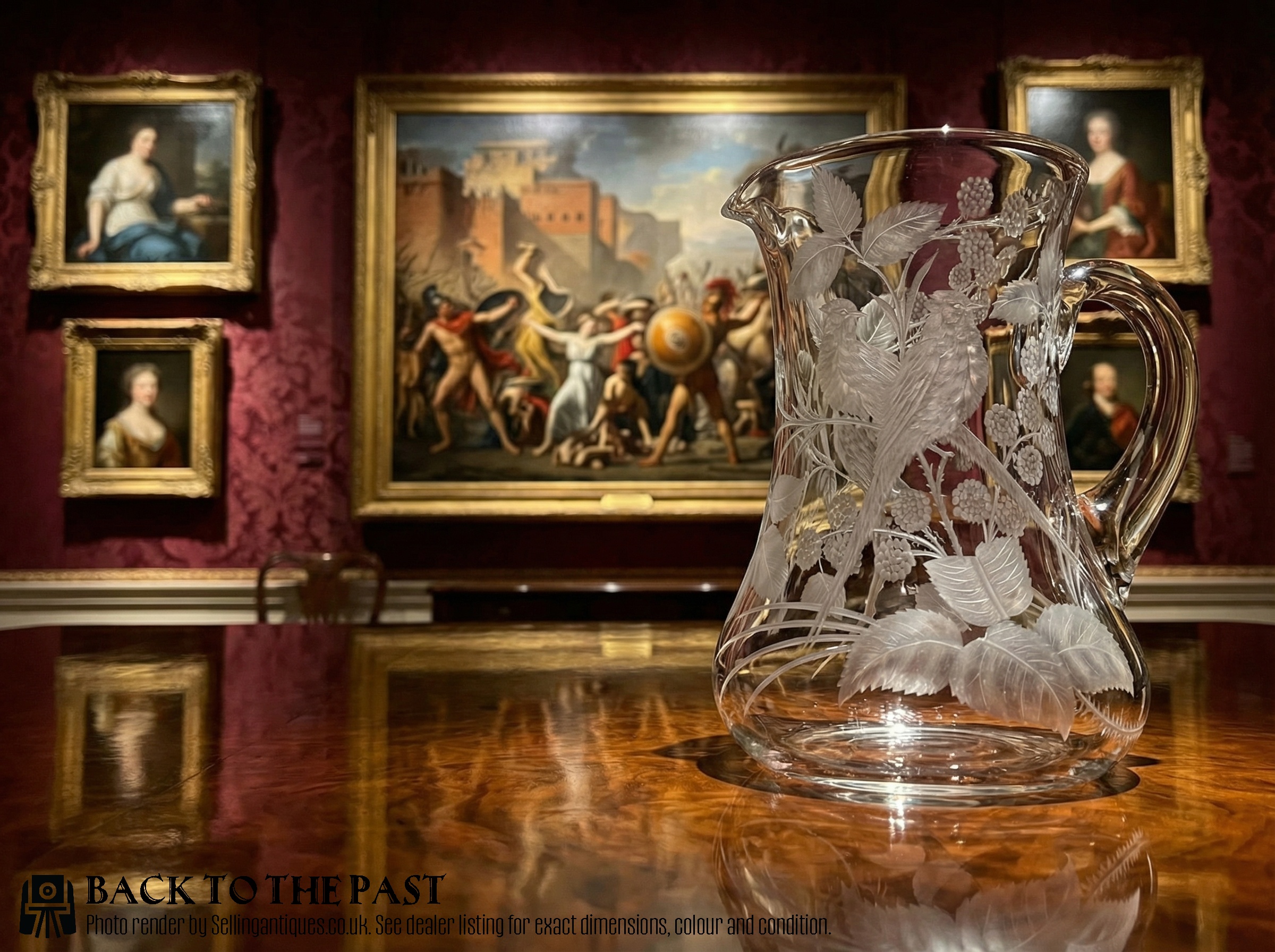
Victorian Wheel Engraved Glass
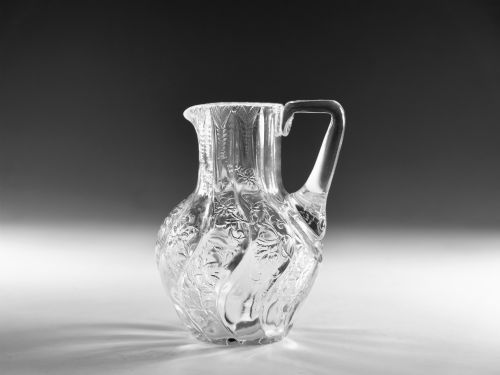
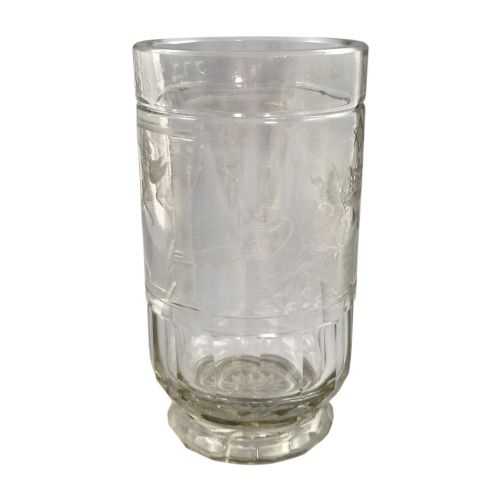
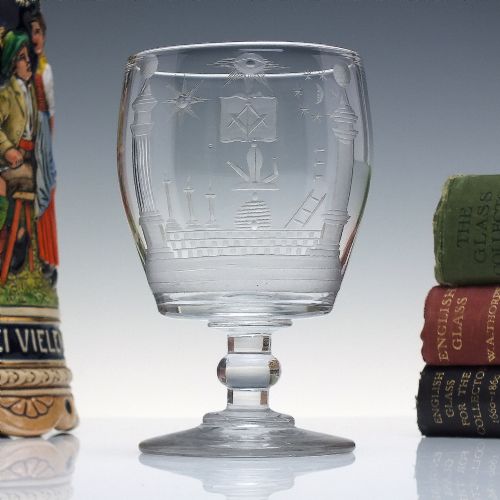
Victorian wheel engraved glass encompasses drinking vessels, jugs, decanters and tablewares produced during the nineteenth century. These objects display intricate decorative motifs cut directly into the surface using small rotating wheels.
The pieces appearing on this page range from modest tumblers and rinsers to substantial ewers, roemers and ceremonial beakers. English and Bohemian production dominates, often crossing paths with styles from Georgian roots through to Edwardian transitions.
Drinking glasses and rummers with etched or intaglio decoration represent the forms most frequently met here. Collectors also encounter specialised items such as ruby and amber glass centrepieces or wine jugs.
How they were made
Craftsmen shaped these items from lead crystal, flint glass, and coloured glass such as ruby and red crystal. The molten material was blown into forms before artisans applied surface decoration.
Engraving was achieved by holding the glass against small, rotating metal or stone wheels fed with an abrasive slurry. This technique allowed for the creation of precise motifs, from fruiting vines and birds to heraldic crests.
Materials documented across the selection include clear flint glass, heavy lead crystal, and richly coloured ruby and amber glass.
What varies in quality
The precision and depth of the wheel cutting govern the standard of execution across these items. Crisp, sharply defined motifs demonstrate greater control by the glass cutter than shallow, hesitant marks.
The clarity and weight of the underlying metal, whether clear crystal or saturated ruby glass, contribute significantly to the presence of the object. Heavier lead crystal bodies with balanced proportions mark out superior workshop output.
Stevens and Williams
The Victorian Wheel Engraved Glass Glossary
- Rummer
- A large, deep-bowled drinking glass common in the nineteenth century. These sturdy vessels were typically used for ale, wine, or punch.
- Roemer
- A traditional German or Bohemian large drinking glass with a patterned spherical stem. They frequently appear in amber or green glass.
- Intaglio
- A technique where the design is carved into the surface of the glass rather than raised above it. This produces a sunken, three-dimensional effect.
- Ewer
- A large jug with a wide spout and handle, used historically for water or wine at the table. Victorian examples often showcase elaborate surface engraving.
- Rinser
- A small bowl designed for washing wine glasses between courses at the dinner table. These pieces often feature fluted or engraved sides.
Victorian Wheel Engraved Glass: Frequently Asked Questions
What is Victorian wheel engraved glass?
These pieces are nineteenth-century drinking vessels and decorative items adorned with patterns cut using small rotating wheels. Artisans worked freehand to carve botanical, heraldic, or geometric scenes into the surface of the glass.
Production spans English workshops and continental centres like Bohemia. The resulting objects range from everyday rummers to large ceremonial beakers.
How do I clean engraved glass?
Wash these items by hand in warm water using a mild detergent. Avoid abrasive sponges or soaking them for extended periods.
Dry them immediately with a lint-free cloth to maintain the clarity of the crystal and protect the engraved recesses.
Are these glasses safe for daily use?
Many nineteenth-century drinking vessels remain structurally sound for occasional use at the table. However, older lead crystal and coloured glass can be fragile and prone to thermal shock.
Hand-washing is mandatory, and collectors often reserve finer decorative pieces for display rather than regular dining.
How do I date these pieces?
Dating relies on stylistic clues, the weight of the metal, and the specific engraving techniques employed. Nineteenth-century items often exhibit characteristics tied to Victorian or transitional Georgian aesthetics.
Makers' marks are uncommon on wheel-engraved glass, so attribution usually depends on comparing form and cutting style with documented examples.