



Antique Glass Water Carafe
An antique glass water carafe brings refined proportion and functional clarity to a dining table or bedside.
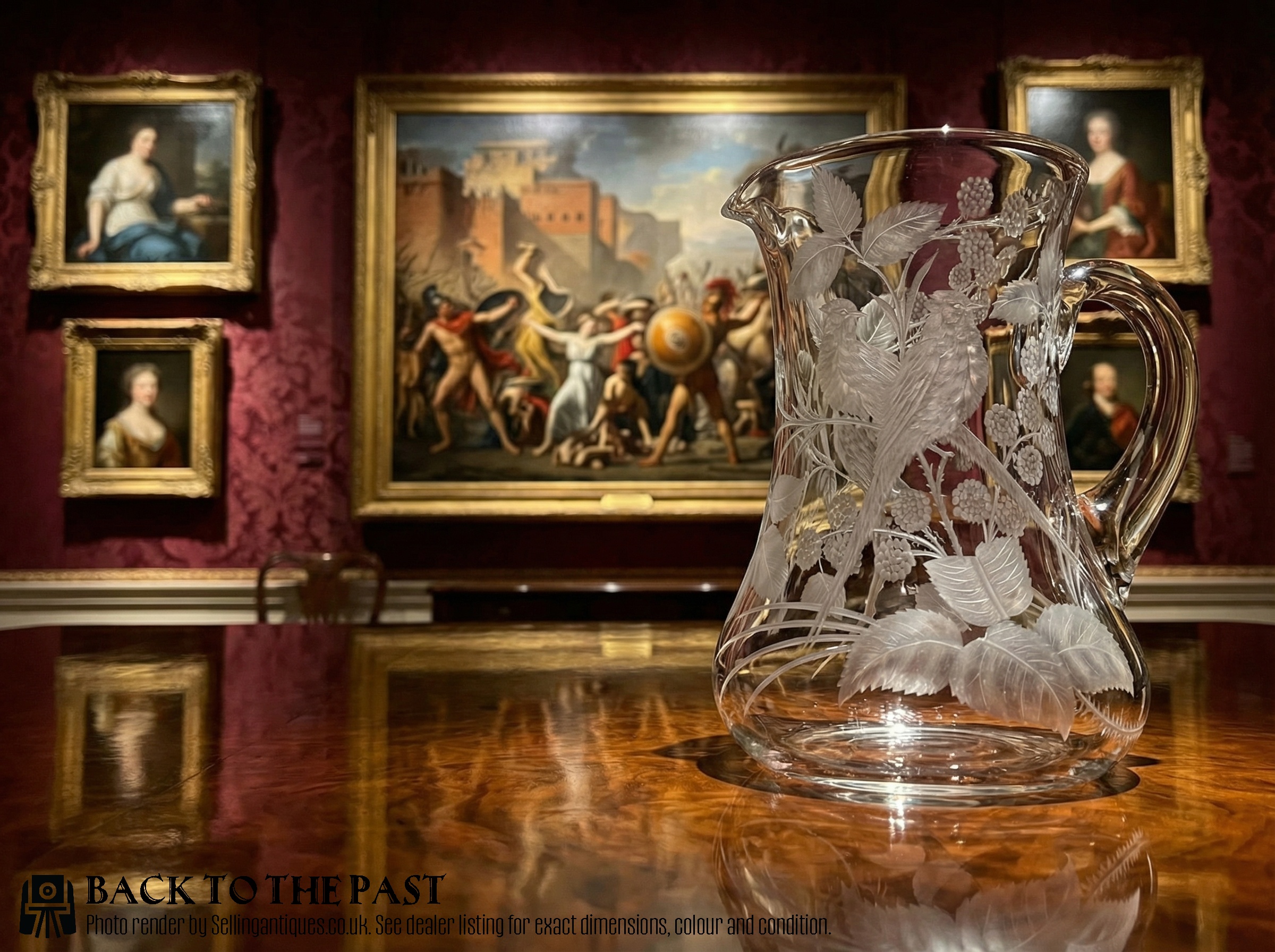
Antique Glass Water Carafe
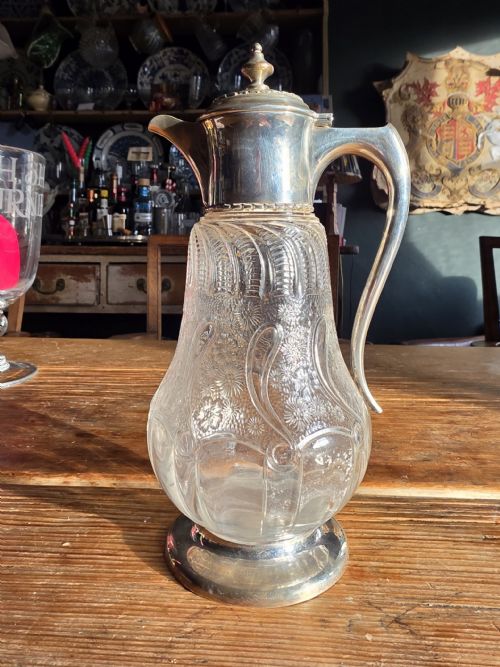
An antique glass water carafe unites practical utility with decorative form, serving as a vessel for liquid refreshments. When examining this selection, buyers encounter pieces primarily shaped during the Victorian, Edwardian, and Georgian periods, alongside later twentieth-century examples.
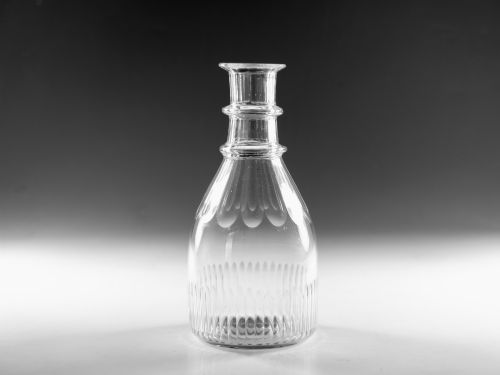
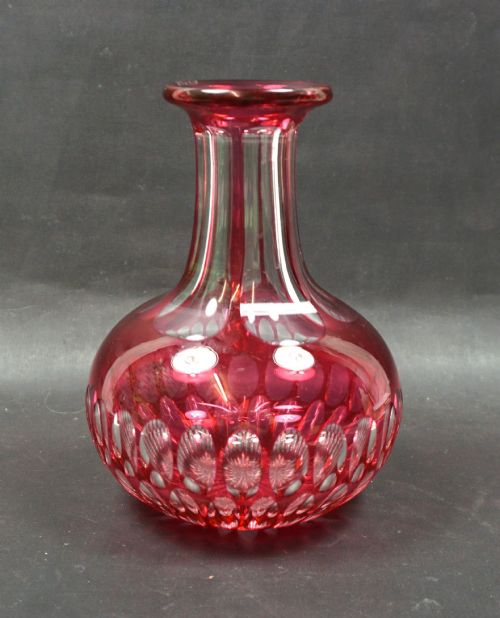
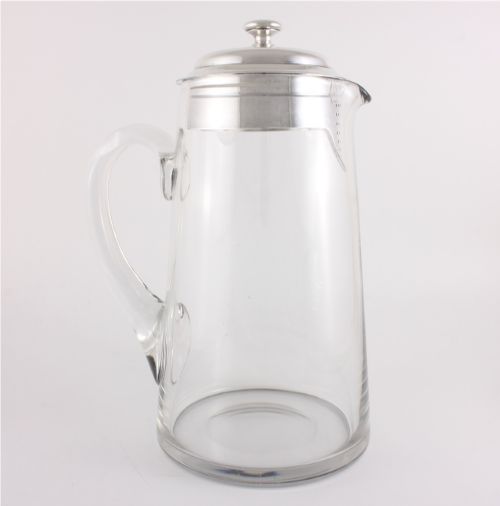
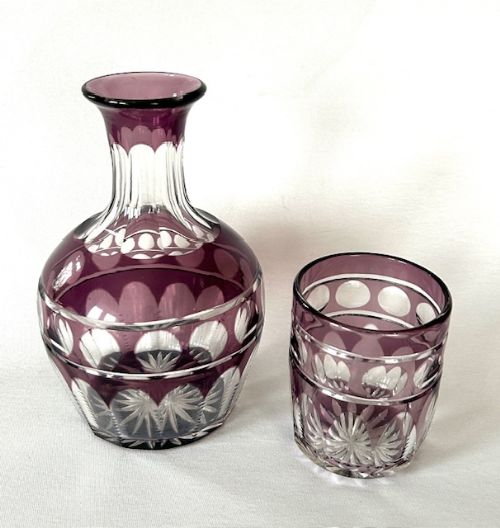
The objects span varied configurations including ewers, pitchers, and traditional three-ring carafes. Many feature mounts of sterling silver or silver plate, while others showcase coloured glass bodies in shades of amethyst, cranberry, green, and teal.
Materials and construction methods
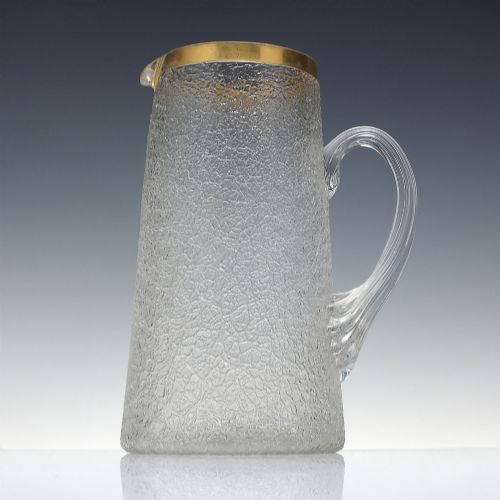
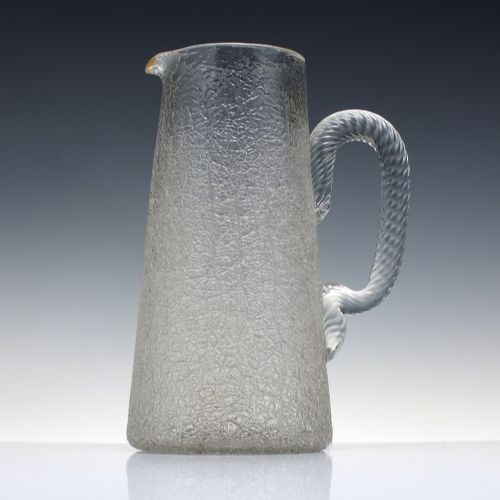
Makers utilised clear glass, cut glass, and heavy lead crystal as foundational materials, frequently employing blowing and moulding techniques to achieve the core body. Surface enrichment involved hand wheel engraving, acid etching, and overshot glass application, sometimes finished with gilded rims or gold leaf.
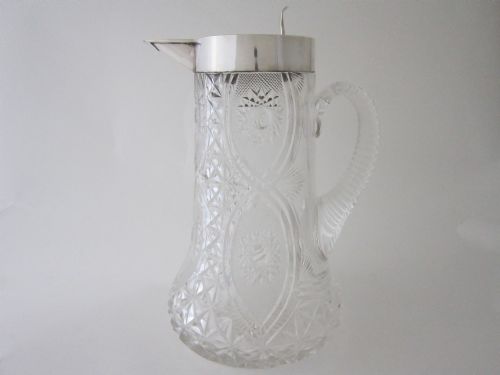
Mounts and embellishments incorporated sterling silver, silver plate, and enamel work. Certain pitchers integrated specialised interior components like ice tubes to keep contents cool during use.
Listings feature items from the Georgian period through the Edwardian era, incorporating clear glass, coloured glass, and sterling silver mounts.
Distinguishing quality across examples
Quality rests upon the clarity of the crystal, the precision and depth of the cut or engraved motifs, and the structural integrity of any precious metal mounts. Pieces featuring detailed wheel engraving or specialised techniques such as Mary Gregory enamel work show superior craftsmanship.
The weight of the lead crystal and the balance of the handle and spout dictate the overall refinement of the vessel. Maker attribution and well-preserved silver mounts further elevate an individual piece.
William Comyns·Mappin & Webb·Richardsons·Tiffany·Lobmeyr
The Antique Glass Water Carafe Glossary
- Carafe
- A glass container used for serving water or wine, typically lacking a handle or featuring a simple neck configuration.
- Ewer
- A large jug with a wide spout and a decorative handle, historically utilised for pouring water.
- Overshot glass
- A technique where fine threads of molten glass are trailed across the surface of a blown vessel to create a textured finish.
- Mary Gregory glass
- Victorian glassware decorated with silhouette enamel painting depicting white children in natural landscapes.
- Lead crystal
- Glass manufactured with a high lead content, providing enhanced weight, refractive brilliance, and clarity.
Antique Glass Water Carafe: Frequently Asked Questions
How do I clean an antique water carafe?
Fill the vessel with warm water and mild detergent, avoiding harsh abrasives that might scratch the exterior cut glass or wear away gilded rims.
Use a soft bottle brush for the interior and dry thoroughly with a lint-free cloth to maintain the clarity of the lead crystal.
Can I use these carafes for daily dining?
Most antique glass water carafes remain structurally sound and suitable for serving water or wine at the modern table.
Hand washing is essential to protect delicate silver mounts, enamel decoration, and delicate handles from thermal shock or impact.
How can I tell a Victorian carafe from a Georgian one?
Georgian carafes often display heavier lead content and simpler three-ring necks designed for practical handling on dining sideboards.
Victorian examples frequently introduce vibrant colours, elaborate cut glass patterns, and silver or silver-plated mounts.
What is the purpose of an ice tube?
An ice tube is a removable metal cylinder that fits inside the jug to chill water without diluting the liquid.
This feature appears on late nineteenth-century lemonade jugs and silver-mounted pitchers designed for formal entertaining.