


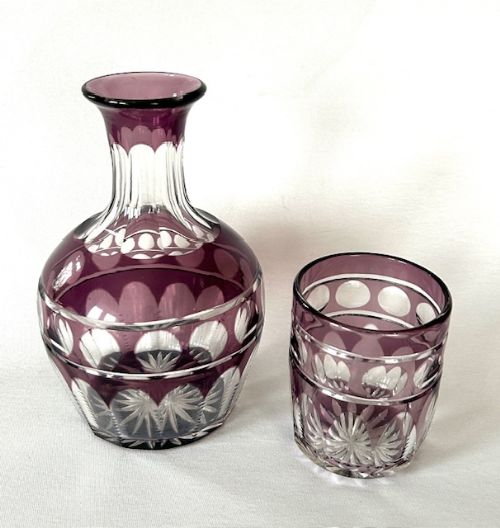


Victorian Glass Water Pitcher
A victorian glass water pitcher brings weight and colour to a table, combining clear or coloured glass with cut or engraved patterns.
Victorian Glass Water Pitcher
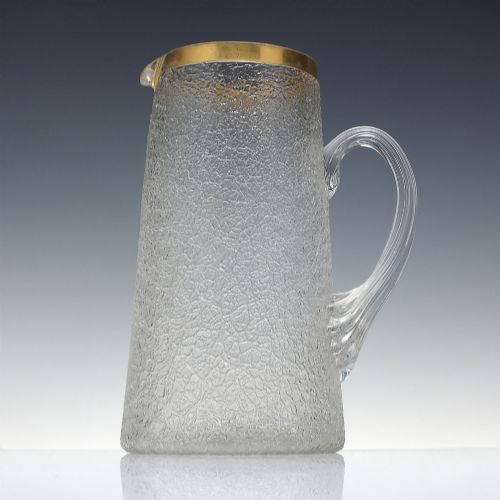
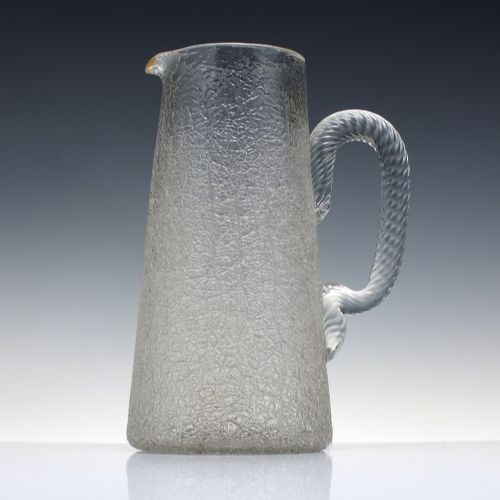
A victorian glass water pitcher is a heavy serving vessel designed for table use during the nineteenth and early twentieth centuries. These pieces appear in forms ranging from tall overshot jugs with gilded rims to vibrant cranberry glass and deep-cut lead crystal.
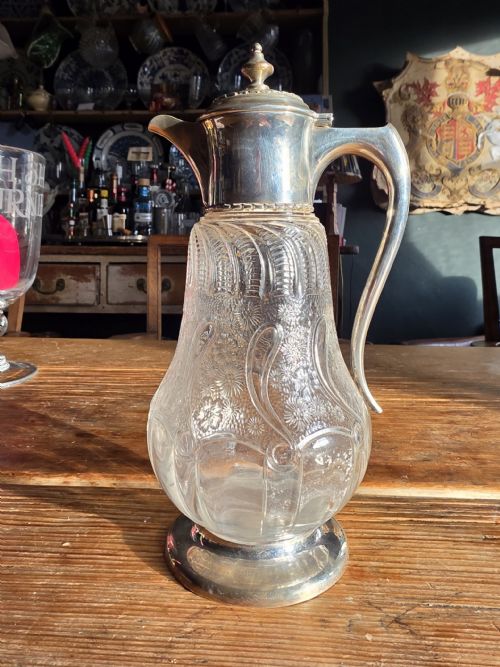
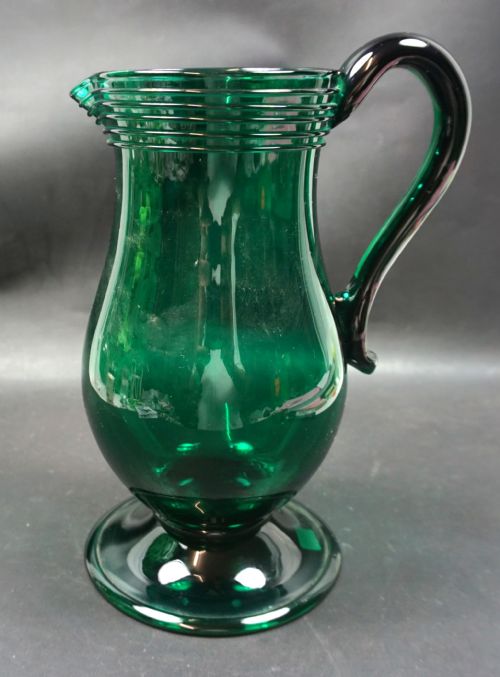
Most examples originate from the Victorian and Edwardian periods, alongside late nineteenth-century Italian and English workshops. Buyers encounter everything from simple green glass jugs with folded feet to elaborate silver-mounted crystal pitchers fitted with ice tubes.
How they were made
Makers shaped these pitchers using free-blowing and mould-blowing techniques in clear, cranberry, amethyst, and green glass. Artisans then applied decorative elements such as enamel paint, gold leaf, and trailed glass rims while the metal was hot.
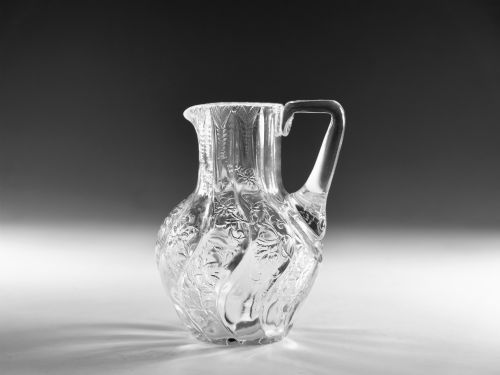
Surface decoration relied on wheel-engraving, etching, and deep cutting into lead crystal to catch the light. Many vessels received functional mounts in sterling silver or silver plate, including lips, handles, and internal ice chambers.
Makers occasionally added internal silver ice tubes to lemonade jugs so guests could enjoy chilled drinks without watery dilution.
What varies in quality
Quality rests upon the crispness of the cutting, the depth of the wheel engraving, and the weight of the metal. Fine pieces show sharp, clean facets and precise motifs like dolphins, birds, or grape vines rather than soft, blurred edges.
The integration of metalwork and glass dictates the standing of a piece. Superior examples unite heavy lead crystal with secure, well-balanced silver mounts that show thoughtful proportion and careful finishing.
William Comyns·Stevens and Williams·Richardsons Birmingham·Mappin and Webb·Elkington and Co·Webb and Son
The Victorian Glass Water Pitcher Glossary
- Cranberry glass
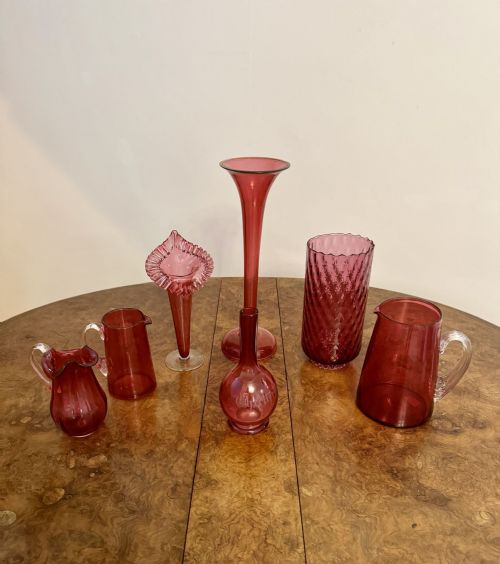
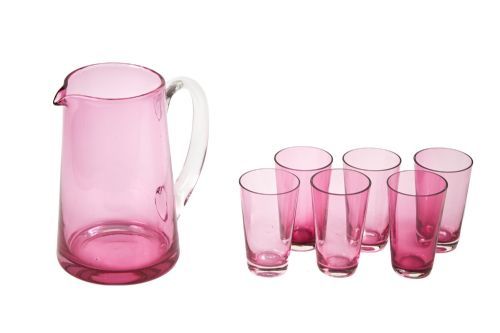
- A transparent red glass coloured with gold chloride during production. It became widely popular in Victorian table services.
- Mary Gregory
- A decorative style featuring white enamel silhouettes of children in natural settings, applied to coloured glass. These scenes typically show woodland or pastoral motifs.
- Latticinio
- An Italian glassblowing technique using opaque white glass threads twisted within clear glass. It creates delicate net or ribbon patterns.
- Ewer
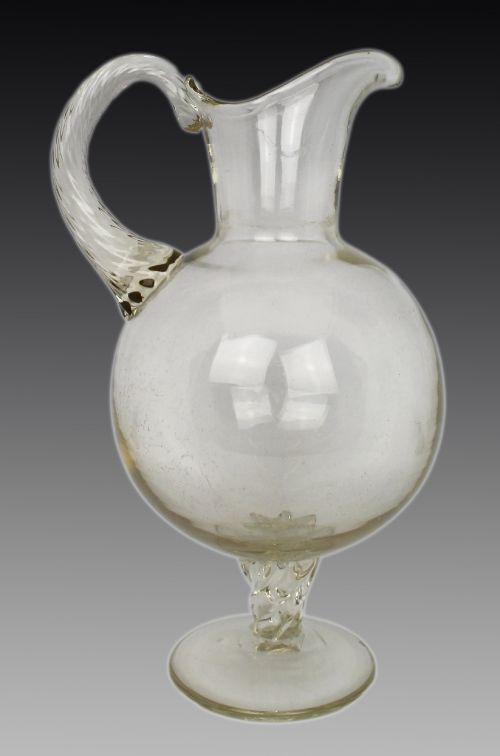
- A large jug with a wide spout and a curved handle, historically used for pouring water. Victorian glass examples often serve as decorative water pitchers.
Victorian Glass Water Pitcher: Frequently Asked Questions
How do I clean a Victorian glass pitcher?
Wash these vessels by hand in warm soapy water using a soft cloth, avoiding harsh abrasives that might damage enamel, gilding, or delicate wheel engraving.
Take care around silver mounts and handles, drying the metal promptly to prevent tarnishing.
Were these pitchers used for water?
Many served water at the dining table, while others functioned as lemonade jugs, claret pitchers, or pimms vessels.
Examples fitted with internal metal ice tubes kept drinks cool without diluting the contents.
How can I tell a Victorian pitcher from a later copy?
Examine the base for signs of wear and pontil marks left by the manufacturing process. Period pieces show characteristic weight, hand-finished detailing, and age-appropriate surface friction.
Note the style of the engraving and the composition of the glass, which align with nineteenth-century production methods.
Can I use an antique pitcher daily?
Daily use is possible with sturdy cut glass pieces, though valuable items with delicate enamel or gilding warrant careful handling.
Hand washing remains essential to preserve the finish and structural integrity of the glass and metal.