





Pair of Glass Jugs
A pair of glass jugs brings matched symmetry to a table, offering clear vessels or coloured glass paired with metal mounts for serving wine, whiskey or water.
Pair of Glass Jugs
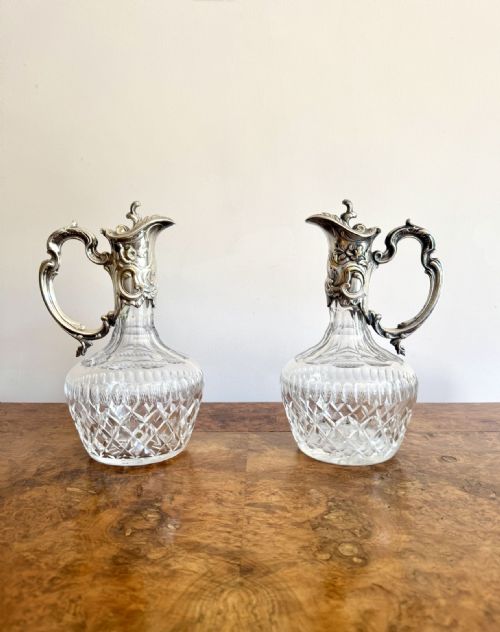
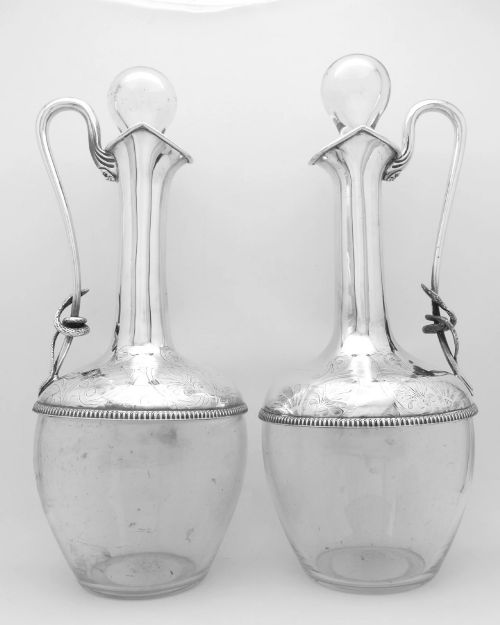
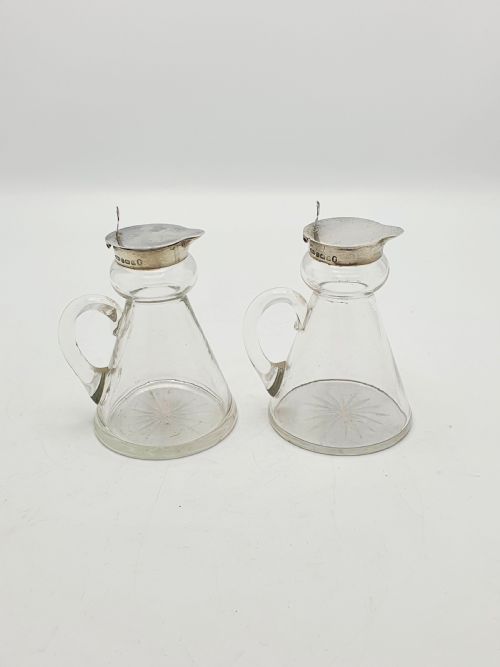
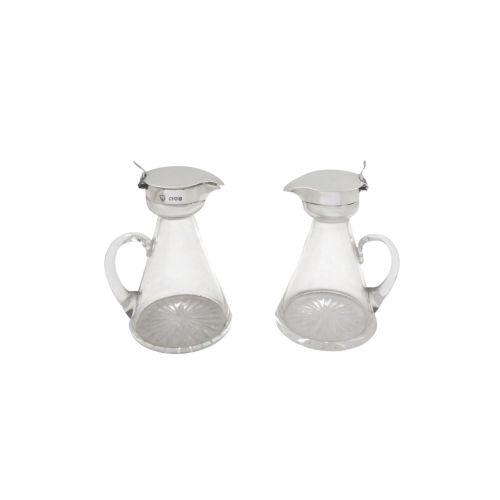
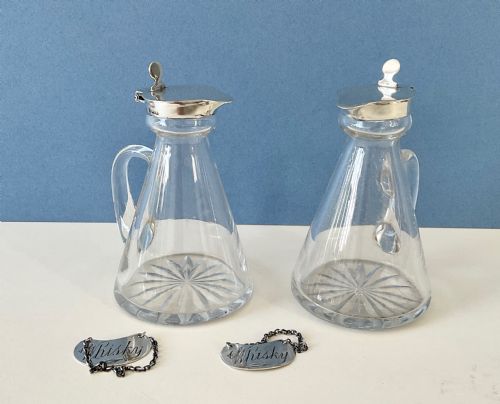
A pair of glass jugs encompasses matched sets designed for beverages, appearing most frequently in the evidence as claret jugs and whisky noggins from the nineteenth and early twentieth centuries.
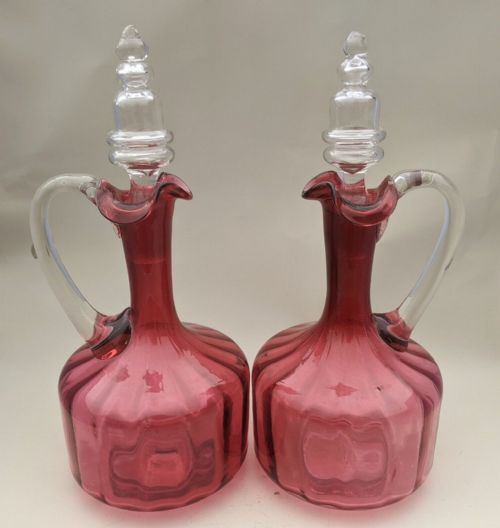
The forms range from cut glass water jugs and cranberry or ruby red glass vessels to intricate claret jugs fitted with silver plated or sterling silver mounts.
Makers from the Edwardian era and Victorian periods produced these matched pairs for formal dining, utilising styles that span from French Rococo Revival and Art Nouveau to simple cut crystal.
Materials and construction methods
The manufacture of these pieces combines glassblowing and crystal cutting with metalwork, utilising clear glass, cut glass, and coloured glass such as green or ruby varieties.
Mounts and handles in sterling silver, silver plate, pewter, and ormolu are secured to the glass bodies, occasionally featuring detailed cast elements like serpent handles or face spouts.
Listings feature items from the 1870s through the 1930s, encompassing Victorian, Edwardian, and Art Deco design periods.
Distinctions in quality and execution
Quality rests upon the clarity and depth of the glass cutting, the weight of the crystal, and the substance of the metal mounts whether solid sterling silver or silver plate.
Superior examples display crisp wheel engraving on the glass, balanced proportions in the matched pair, and maker marks that denote reputable silversmiths or workshops.
Hukin and Heath·Asprey
The Pair of Glass Jugs Glossary
- Claret jug
- A tall vessel specifically designed for serving red wine, typically featuring a pouring spout and a hinged metal lid with a handle. They often combine cut glass bodies with silver plated or sterling silver mounts.
- Whisky noggin
- A small single-serving jug used for whisky, usually holding a quarter pint and often fitted with a silver collar and a star-cut base. These small vessels frequently appear from the Edwardian period onwards.
- Ewer
- A large jug with a wide spout and a decorative handle, historically used for water or wine. Victorian and nineteenth-century examples often incorporate ornate metal mounts.
- Cut glass
- Glass decorated by grinding facets or patterns into the surface using a rotating wheel. This technique creates sparkling geometric designs seen on many nineteenth-century decanters and jugs.
- Silver plate
- A base metal such as copper or Britannia metal coated with a thin layer of silver. This material provided the decorative mounts for many Edwardian and Victorian drinkware items without the cost of solid silver.
Pair of Glass Jugs: Frequently Asked Questions
What were glass claret jugs used for?
These vessels served claret and other red wines at the dining table, allowing hosts to decant wine from bottles before pouring.
The hinged lids and spouts helped control the flow and kept sediment back during service.
How do I identify a whisky noggin?
Whisky noggins are smaller than standard water jugs, usually holding a modest measure suited for individual spirits.
They commonly feature a silver rim or collar around the neck and a star-cut bottom.
What is the difference between crystal and glass?
Crystal contains lead oxide which increases the weight, brilliance, and clarity of the material compared to standard glass.
This composition allowed makers to cut deeper, sharper facets into the surface.
How do I date an antique glass jug?
Dating relies on the style of the metal mounts, hallmarks on the silver components, and the manufacturing technique of the glass body.
Victorian pieces often display heavier cutting and ornate revival styles, while Edwardian examples tend towards sleeker profiles.