


Clear Engraved Glass Jug
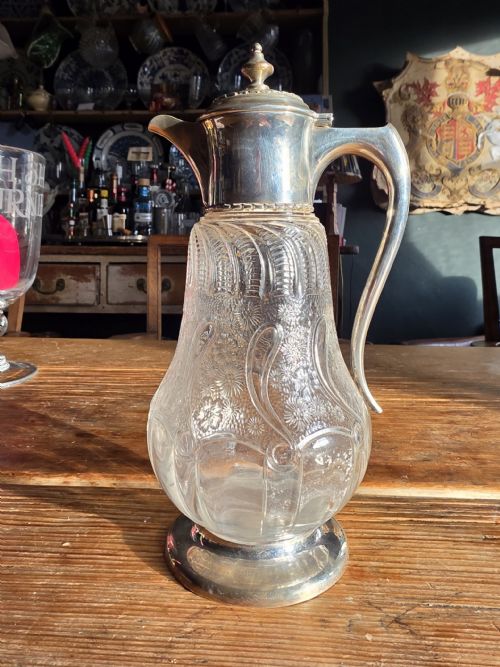
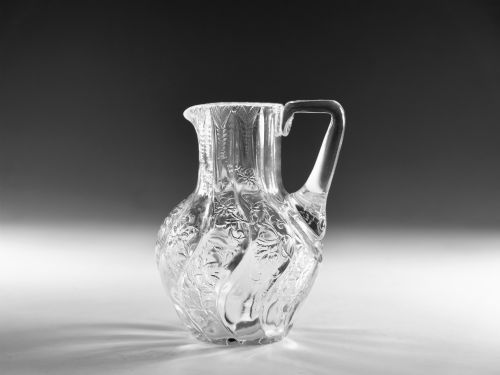
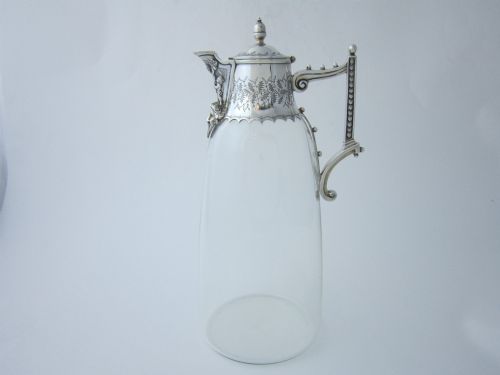
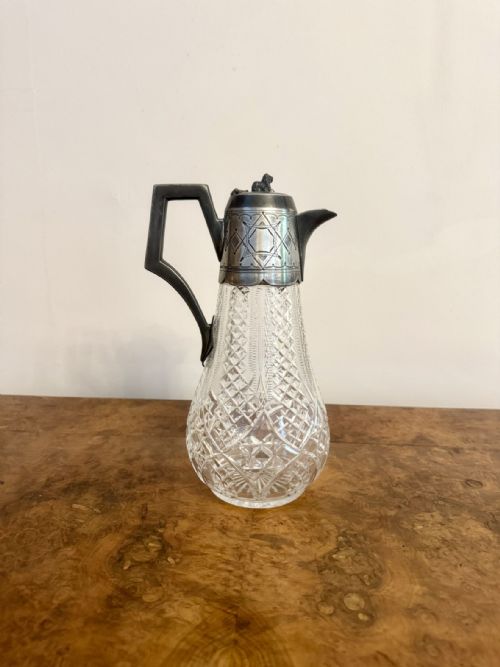
A clear engraved glass jug brings functional grace to the table, combining translucent crystal or glass with detailed wheel-cut or etched ornament.
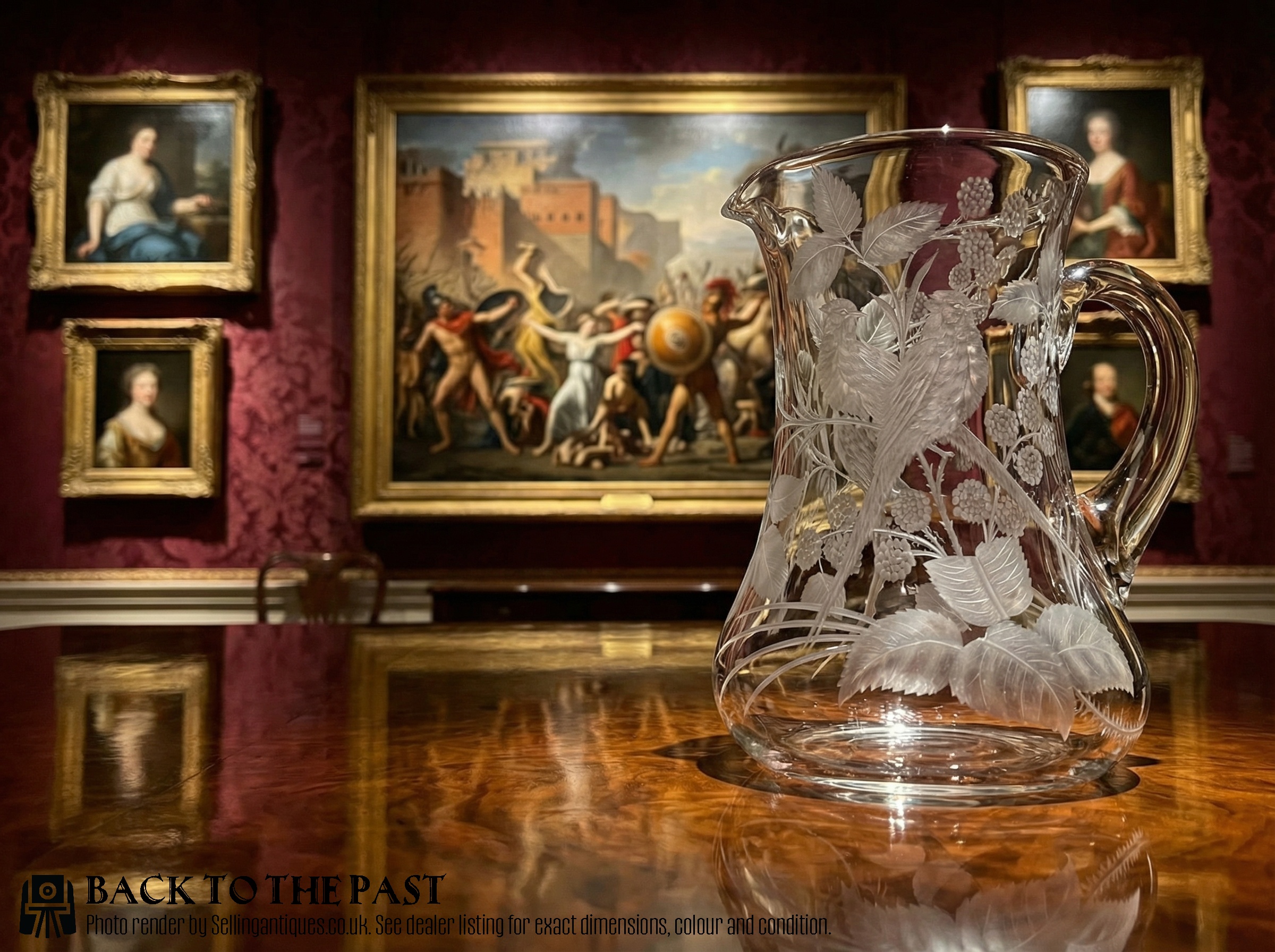
Clear Engraved Glass Jug
A clear engraved glass jug is primarily designed for serving wine, claret, lemonade, or water, emerging in various forms from claret jugs to pitchers and ewers. When searching for a clear engraved glass jug, buyers encounter pieces spanning the nineteenth century through the Edwardian period, with strong representation from Victorian and late Victorian workshops.
The vessels range from substantial lead crystal bodies mounted in sterling silver or silver plate to slender glass ewers adorned with etched birds, dolphins, or floral motifs. English makers from Stourbridge and Birmingham feature prominently alongside continental German designs, often incorporating star patterns, crests, or intaglio work.
Most examples date between the mid-nineteenth century and 1910, reflecting the periods when table glassware reached high levels of decorative refinement. Buyers will find that these serving vessels combine utilitarian capacity with intricate surface ornamentation executed by skilled glass artisans.
Materials and construction
The bodies are formed from clear glass, crystal glass, or lead crystal, providing a transparent canvas for decoration. Artisans shaped these vessels by blowing and cutting the glass before applying surface embellishments such as hand wheel engraving, intaglio, or etching.
Mounts, handles, and collars executed in sterling silver or silver plate complement the glass bodies. Makers such as William Comyns and William Davenport integrated solid silver hardware with cut and engraved glass, securing hinged lids and mounts directly to the vessels.
Some nineteenth-century tables required jugs engraved with dolphins or lemonade birds to keep guests appropriately refreshed and amused.
Markers of distinction
Quality rests upon the crispness of the glass cutting and the depth of the wheel engraving, where sharp, deliberate lines distinguish superior craftsmanship from simpler etched decoration. The clarity of the lead crystal or glass body also plays a role in the overall execution.
The integration between the glass vessel and its metal mounts separates standard production from finer pieces. Hallmark details, heavy-gauge sterling silver rather than silver plate, and signed maker attributions elevate the standing of an individual jug.
William Comyns·Stevens & Williams·Webb Corbett·Richardsons·William Davenport
The Clear Engraved Glass Jug Glossary
- Claret jug
- A specialised vessel designed for serving red wine, typically featuring a pouring spout, a handle, and a hinged metal lid.
- Intaglio
- A technique where the design is carved into the surface of the glass rather than raised above it, creating a sunken relief effect.
- Stourbridge
- An English town renowned for its glassmaking industry and skilled artisans who produced intricate wheel-engraved pieces during the nineteenth century.
- Silver plate
- A layer of silver fused to a base metal, commonly utilised for the mounts, handles, and collars of Victorian and Edwardian serving jugs.
- Rock crystal
- A term used in the nineteenth century to describe highly transparent, flawless colourless quartz or high-purity lead glass shaped with deep cutting and polishing.
Clear Engraved Glass Jug: Frequently Asked Questions
What is a clear engraved glass jug used for?
These vessels were originally manufactured to serve beverages such as claret, dessert wine, lemonade, and champagne at the dining table. Their decorative engraving and precious metal mounts also allowed them to function as display pieces in domestic interiors.
Today, they continue to serve drinks at formal dinners or function as decorative accents when displayed on sideboards and in cabinets.
How do I date a Victorian glass jug?
Dating relies on stylistic markers, cut glass patterns, and any associated metal mounts or hallmarks. Pieces produced during the Victorian and Edwardian periods often exhibit specific decorative trends, such as Art Nouveau influences or Victorian Rococo Revival curves.
Makers' marks, sterling silver hallmarks, and registration numbers stamped on the silver-plated or silver mounts provide precise manufacturing years for many English pieces.
Are the mounts sterling silver or silver plate?
The listings include both solid sterling silver and silver-plated mounts attached to the glass bodies. Makers stamped hallmarks onto sterling silver components to indicate the metal standard, assay office, and year of production.
Silver-plated mounts provide the same decorative function and visual contrast against the clear glass but utilise a base metal core beneath a thin silver coating.
What subjects appear in the glass engraving?
Engraved motifs on these vessels include naturalistic elements such as birds, branches, dolphins, and floral arrangements. Some pieces feature heraldic crests, stars, or national emblems like the flowers of the union.
Specialised commissions might also incorporate specific heraldry, such as the Prince of Wales Feathers seen on important royal decanters from the period.