


Late Victorian Glass Pitcher
A late victorian glass pitcher brings heavy cut crystal, etched detail and silver mounts to the dining table.
Late Victorian Glass Pitcher
A late victorian glass pitcher spans practical water jugs, lemonade vessels, wine servers and claret jugs dating from the nineteenth century. These forms appear alongside footed ewers and ornamental lamps created during the same period.
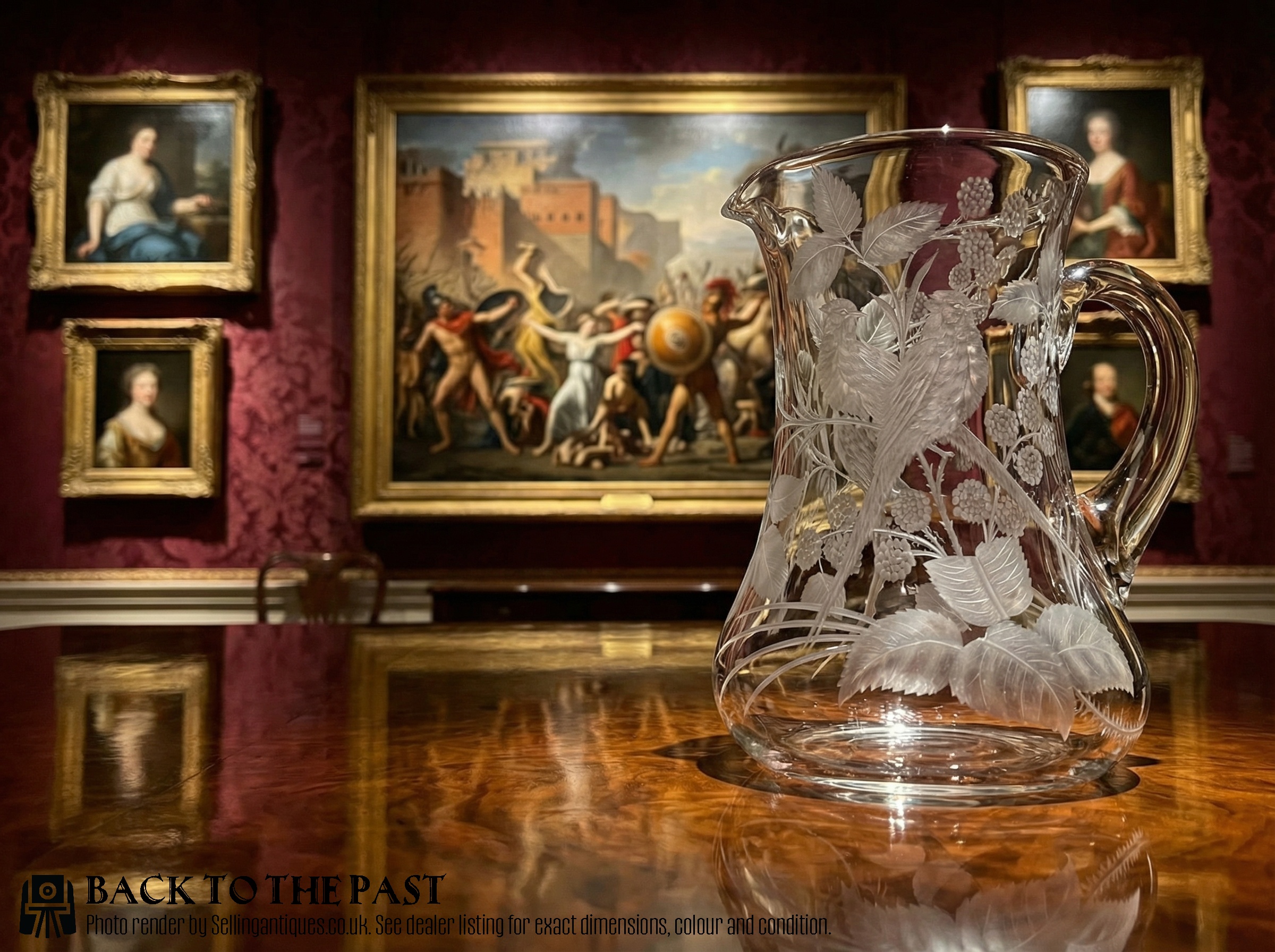
Buyers encounter clear glass, blue glass and overshot surfaces decorated with etched birds, branches and grape motifs. The selection centres on nineteenth-century craftsmanship designed for serving wine or water.
How they were made
Makers shaped vessels using hand-blown glass techniques, forming clear and coloured bodies before applying decorative motifs. Artisans added surface detail through hand wheel engraving, hobnail cutting and delicate etching.
Silver mounts, hinged lids and handles in silver plate or sterling silver were fastened securely to the glass necks. Gilded rims and gold leaf additions finished the upper edges of selected water jugs and pitchers.
Listings feature nineteenth-century glass pitchers and claret jugs incorporating cut crystal, silver plate, sterling silver and hand-blown glass.
What varies in quality
The distinction lies in the depth of the glass cutting and the crispness of the wheel engraving. Deep hobnail cuts and precisely etched bird or vine motifs demonstrate a higher standard of hand work.
The metalwork also defines the piece, where hallmarked sterling silver mounts carry more weight than standard silver plate. Integrated mounts that fit the glass contour smoothly indicate superior manufacturing.
Hukin & Heath
The Late Victorian Glass Pitcher Glossary
- Claret jug
- A vessel specifically formed for serving red wine at the table. These pieces typically combine a glass body with a hinged silver or plated mount and handle.
- Ewer
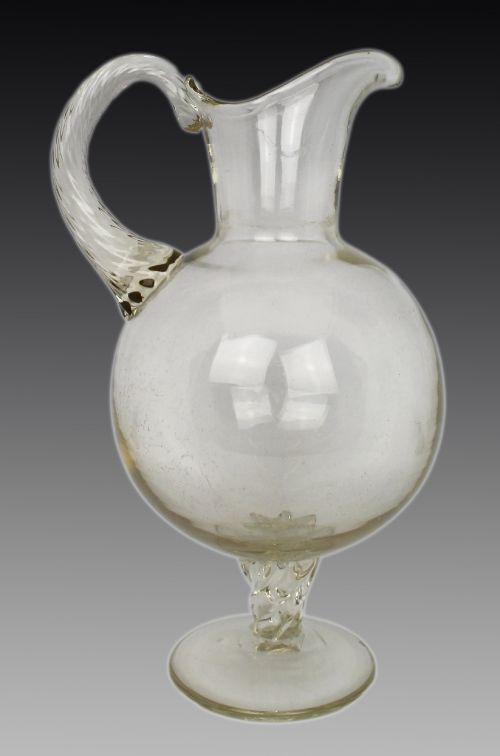
- A large jug with a wide spout and a curved handle, often standing on a footed base. This form draws on classical shapes adapted for ornamental or serving use.
- Overshot glass
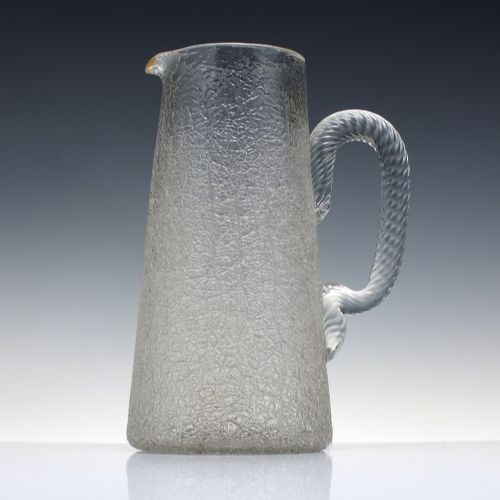
- A glass surface technique creating a textured, frosted effect resembling thin threads or ice across the body. This finish appears on nineteenth-century water jugs.
- Hobnail cut
- A raised geometric pattern cut into crystal glass, creating rows of small pyramid facets that catch the light. It adds tactile weight to the vessel.
- Silver plate
- A layer of silver fused to a base metal foundation, utilised for the mounts, collars and lids of nineteenth-century jugs. It provided the appearance of solid silver at a lower cost.
Late Victorian Glass Pitcher: Frequently Asked Questions
What is a claret jug used for?
A claret jug served wine at the nineteenth-century dining table, allowing hosts to pour claret from a decorative vessel rather than a standard bottle. The hinged lid kept the contents covered between pours.
These jugs often featured glass bodies that showed the colour of the wine, paired with silver or plated mounts that matched other tableware.
How do I date a late victorian pitcher?
Dating relies on stylistic clues, hallmarks and manufacturing techniques recorded in the piece. Silver mounts frequently carry London hallmarks and specific date letters that pinpoint the exact year of production.
Etched motifs, cut crystal patterns and the presence of silver plate versus sterling silver also help place the object within the nineteenth-century timeline.
Are these pitchers suitable for daily use?
While robustly constructed from thick glass and metal mounts, these pieces function primarily as decorative objects or occasional serving vessels. Hand washing protects the delicate etched motifs and gilded rims from wear.
Silver-plated and sterling silver mounts require gentle cleaning to maintain their finish without damaging the adjoining glass surfaces.