

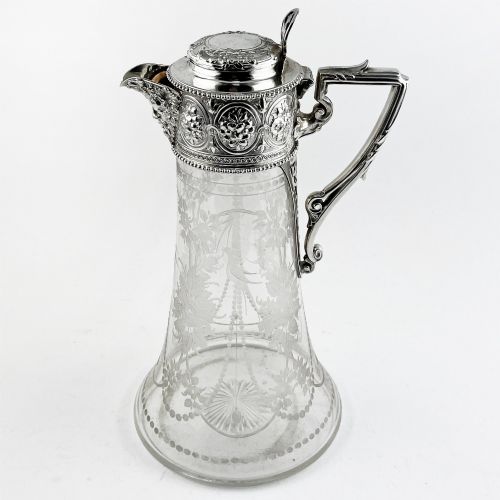
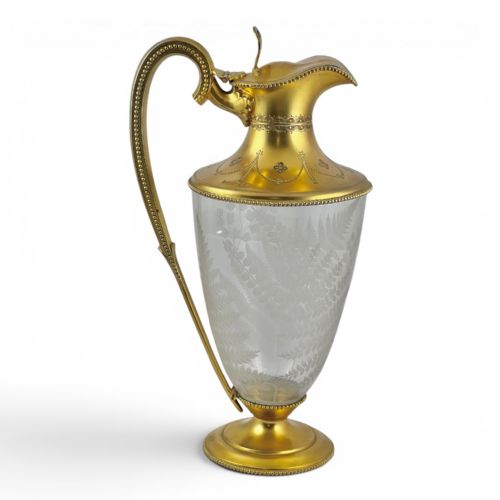


Victorian Etched Glass Pitcher
A victorian etched glass pitcher brings substantial nineteenth-century weight and delicate surface ornamentation to the table, serving as both a functional vessel and a decorative centrepiece.
Victorian Etched Glass Pitcher
A victorian etched glass pitcher encompasses various forms designed for serving wine and water, most frequently appearing in listings as claret jugs, decanters, ewers, and wine jugs. These pieces date predominantly from the nineteenth century, including specific decades such as the eighteen-eighties and eighteen-nineties alongside the broader Victorian era.
The objects combine glass bodies with metal components, frequently incorporating silver plate, sterling silver, or silver gilt mounts. Makers across England, France, Bohemia, and Germany produced these vessels, utilising styles ranging from French Rococo Revival and Neoclassical Revival to Art Nouveau.
Materials and Techniques
Vessels are constructed from clear glass, cut glass, lead crystal, or overlaid glass, such as clear glass overlaid with green glass or cranberry glass. Artisans applied surface decoration through acid-etching, hand wheel engraving, or floral engraving to create detailed botanical and figurative motifs like birds and branches or grape and vine designs.
Mounts and hardware utilise silver, sterling silver, silver plate, and silver gilt, often shaped into specific forms like bacchus masks or fitted with hinged lids. Workshops combined glassblowing and cutting techniques with metal smithing to secure handles, collars, and spouts.
Some pieces incorporate tiny sculpted bacchus masks glaring out from the handle to remind drinkers of ancient revelry.
Judging Quality and Execution
Quality rests upon the crispness and depth of the glass engraving or etching, where finer pieces display intricate detail in motifs like birds, branches, and grapevines. The weight and clarity of the glass body, whether clear, coloured, or layered, distinguish standard production from superior examples.
The execution and material of the metal mounts contribute significantly to the overall standard of the piece. Substantial silver work, intricate casting such as bacchus masks, and secure integration with the glass body elevate the status of the vessel.
Asprey and Co. Ltd·Elkington·WEBB and Son
The Victorian Etched Glass Pitcher Glossary
- Etched glass
- Glass decorated by applying acid to eat away exposed areas, creating detailed surface patterns. This technique allows for fine pictorial designs such as foliage and birds.
- Claret jug
- A specialised pouring vessel intended for serving red wine at the dining table. These typically feature a glass body with a metal handle, collar, and hinged lid.
- Ewer
- A large pitcher with a wide spout and ornate handle, traditionally used for holding water or wine. Antique examples often incorporate decorative silver mounts.
- Silver plate
- A base metal coated with a thin layer of silver through electroplating or older manufacturing methods. This provided the appearance of solid silver at a lower cost.
- Lead crystal
- Glass containing a proportion of lead oxide, which increases brilliance, weight, and clarity. It allows for deep, sharp cutting by artisans.
Victorian Etched Glass Pitcher: Frequently Asked Questions
What were these pitchers used for?
These vessels served primarily at the dining table for pouring claret, wine, lemonade, and water during meals and gatherings.
They functioned both as practical pouring implements and as decorative display items intended to catch the light on a sideboard.
How do I identify a Victorian piece?
Look for stylistic indicators such as Revival ornamentation, specific manufacturing materials like silver plate combined with heavy glass, and characteristic nineteenth-century forms.
Documentation, hallmarks on silver mounts, and registration marks often assist in narrowing down the date of manufacture to the Victorian period.
How should I clean etched glass?
Wash the glass gently by hand using warm water and mild detergent, avoiding harsh scrubbing brushes that might scratch the surface.
Take particular care around silver mounts and hinged lids, drying the metal promptly to prevent water spots or tarnishing.
What is the difference between etching and cutting?
Etching uses acid or hand tools to create shallow, fine surface designs like birds and botanical motifs directly onto the glass.
Cutting involves grinding deep geometric patterns into thick glass blanks using rotating wheels, resulting in faceted surfaces and heavy weight.