


19th Century Engraved Glass
19th century engraved glass brings together heavy lead crystal, ruby glass and amber tones adorned with hops, barley and armorial crests.
19th Century Engraved Glass
When searching for 19th century engraved glass, buyers encounter a diverse selection of tableware and display items spanning the Georgian, Regency and Victorian periods. The inventory on this page ranges from large serving rummers and flip glasses to decanters, claret jugs and delicate wine glasses.
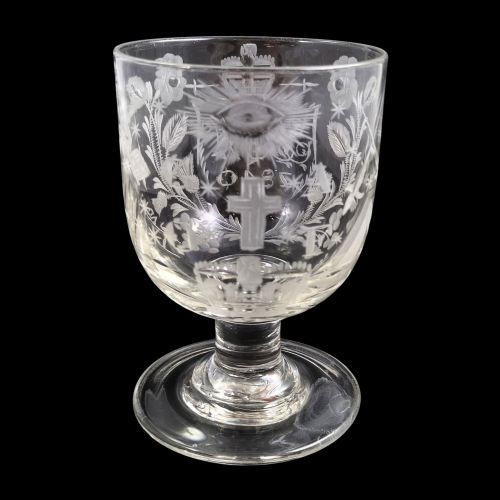
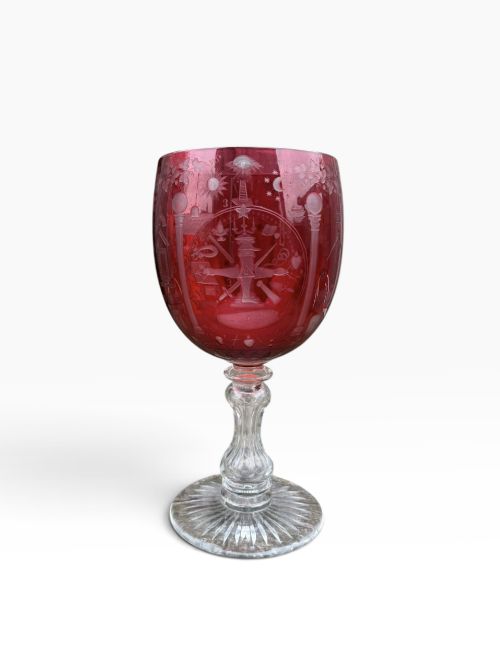
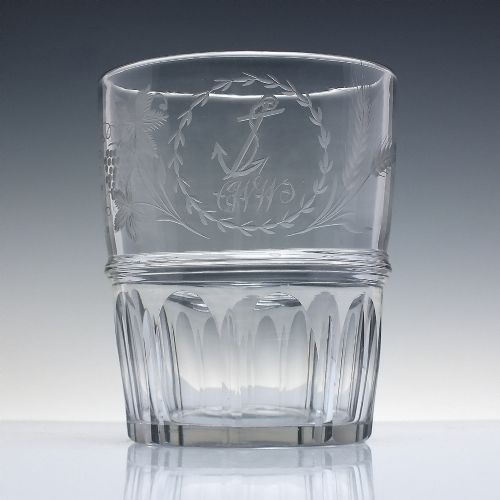
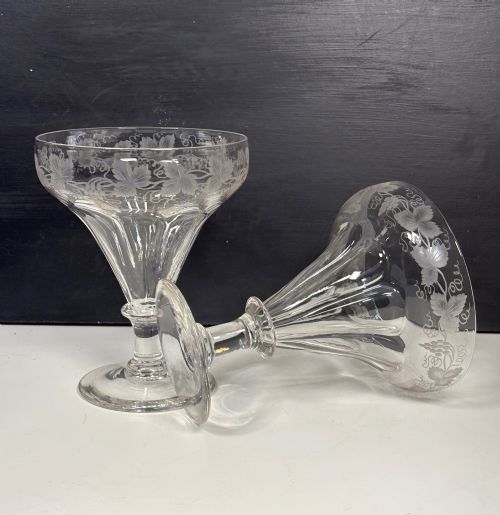
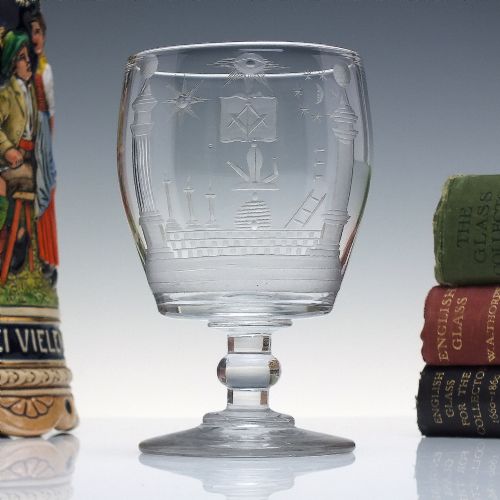
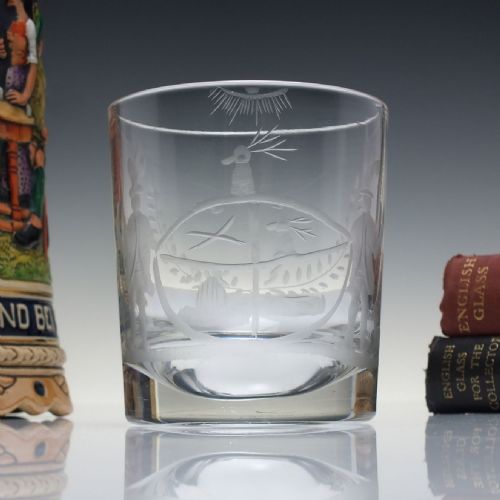
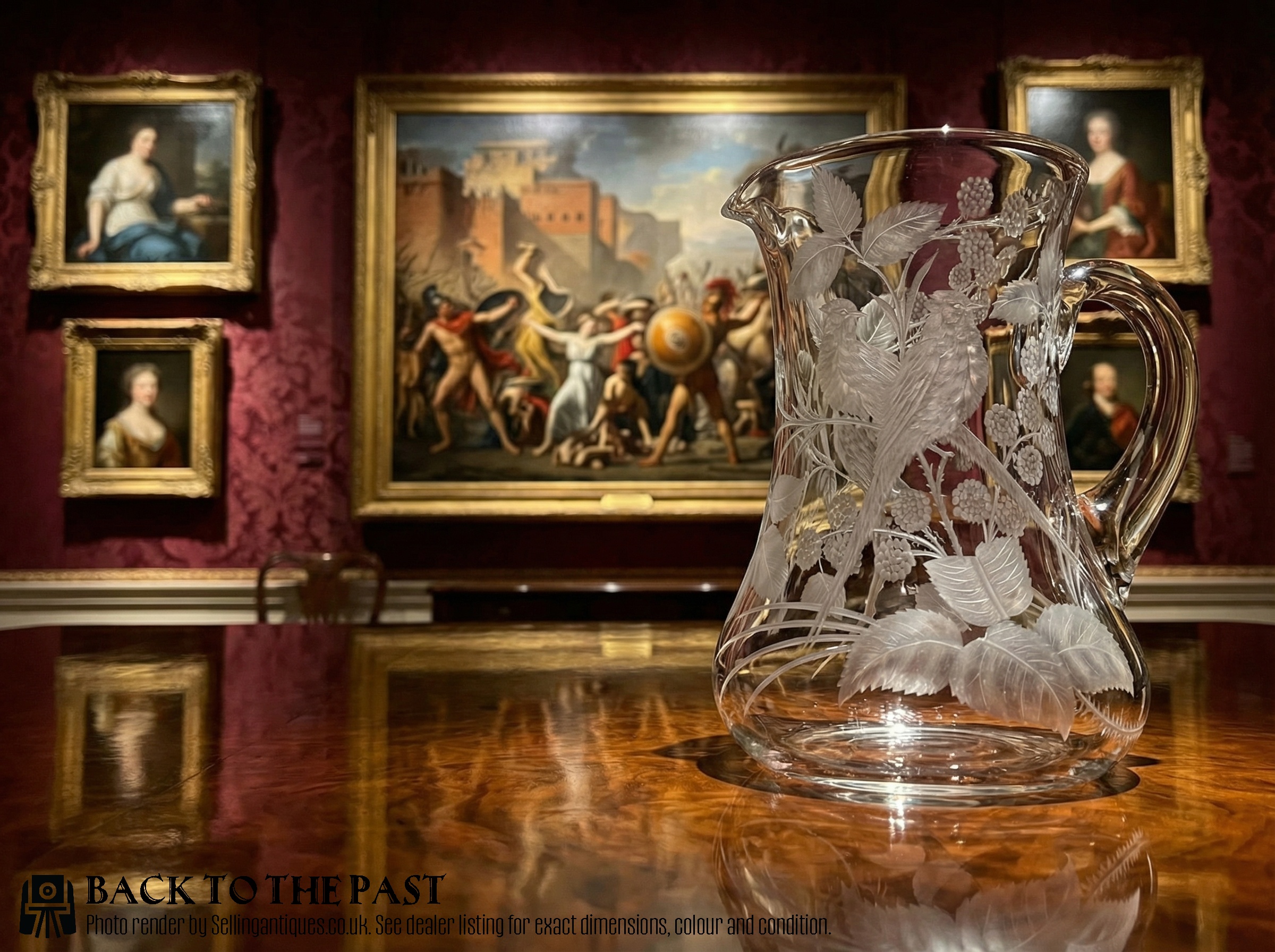
Vessels often feature regional English, Anglo-Irish, French Baccarat or Bohemian origins. Many bear commemorative motifs such as Masonic symbols, the Order of Odd Fellows, or botanical themes like fruiting vines and hops.
Drinking vessels dominate the selection, particularly heavy lead-glass rummers designed for ale, wine or spirits. Collectors also find scent bottles, vases and decanters displaying wheel-cut and intaglio decoration.
How they were made
Makers utilised lead glass, crystal, ruby glass and amethyst glass, often blowing vessels into moulds or forming them by hand before applying decorative work. Some pieces incorporate flash overlays, where a thin layer of coloured glass sits over a clear crystal body.
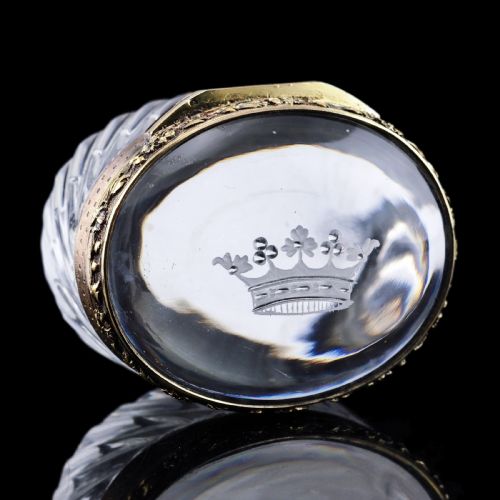
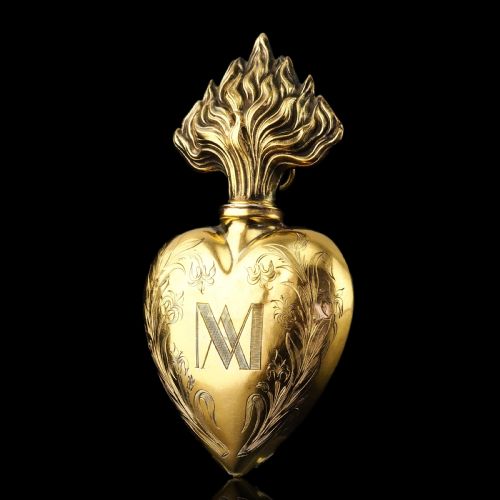
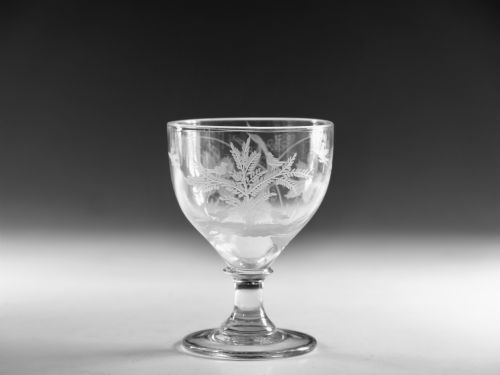
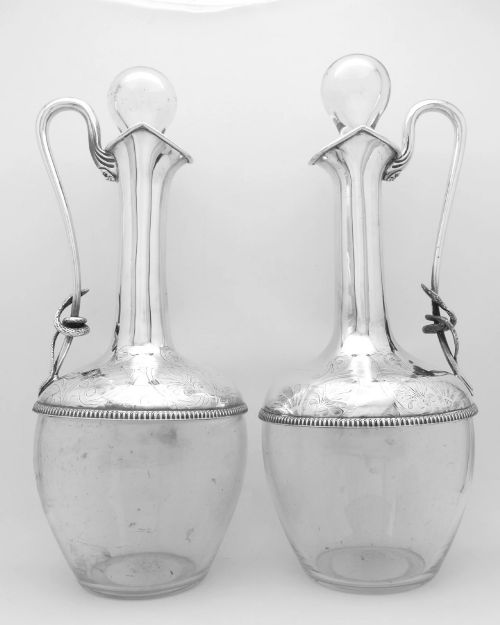
Engraving was executed using rotating stone or copper wheels to cut intricate motifs such as foliage, crests and figures into the surface. Finishing touches frequently included gilt highlights or mounts in sterling silver, silver gilt and brass.
Several rummer glasses proudly display patriotic bulldogs standing steadfastly upon Union Jacks.
What varies in quality
The standard of 19th century engraved glass depends primarily on the depth and precision of the wheel-cut work. Crisp, finely detailed intaglio cutting and clear, heavy metal distinguish superior examples from simpler, shallower decoration.
The weight and clarity of the crystal, alongside the integration of precious metal mounts like silver gilt or fine silver handles, elevate the status of individual pieces. Attributable works from notable glasshouses command greater attention from collectors.
Richardson Stourbridge Glass·Joseph Keller·Delépine-Barrois·Ganthony of London·Dent
The 19th Century Engraved Glass Glossary
- Rummer
- A large, heavy drinking glass popular in the Georgian and Victorian periods, typically used for ale or wine. These vessels often feature sturdy stems and engraved botanical or armorial motifs.
- Intaglio
- A technique where the design is sunk below the surface of the glass rather than raised. This method requires considerable skill with a rotating engraving wheel to achieve subtle shading.
- Cranberry glass
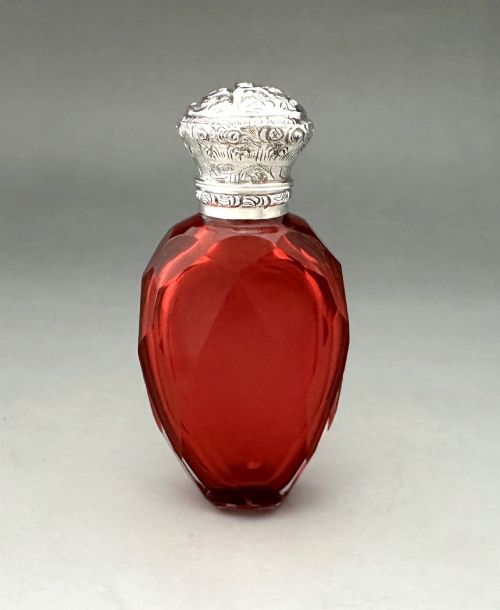
- A rich red transparent glass coloured with gold chloride, widely produced during the Victorian era. It frequently appears on wine glasses, decanters and scent bottles.
- Flip glass
- A tall, cylindrical drinking vessel lacking a stem, common in the late Georgian era. They often display detailed wheel-engraved decoration around the upper body.
- Lead crystal
- Glass containing a high proportion of lead oxide, which increases brilliance, weight and workability. This material forms the base for the finest engraved tableware of the century.
19th Century Engraved Glass: Frequently Asked Questions
What were rummer glasses used for?
Rummers served as substantial drinking vessels for ale, cider, punch or wine during communal gatherings and domestic meals. Their heavy weight and sturdy bases helped prevent tipping on tavern tables and dining boards.
Over the decades, these glasses became popular canvases for fraternal associations, commemorative events and armorial displays, featuring custom engravings of local bridges, political emblems and family crests.
How do I identify a Georgian piece?
Georgian glassware typically exhibits thicker, heavier lead metal with deep pontil marks on the underside and simple, sturdy stems. The engraving styles lean toward naturalistic hops, barley, and straightforward armorial designs.
Later Victorian pieces often introduce brighter coloured glass, such as ruby, amethyst and cranberry, alongside more complex wheel-cut patterns and machine-assisted precision.
Are these items safe to use?
While these vessels were originally made for dining and drinking, modern owners generally treat them as display pieces or handle them with care during special occasions. Older lead glass can be sensitive to sudden temperature changes and harsh dishwashing chemicals.
Hand washing in lukewarm water with mild soap protects the delicate surface engraving and any subtle gilding from accidental wear or chemical damage.
What is the difference between cut and engraved glass?
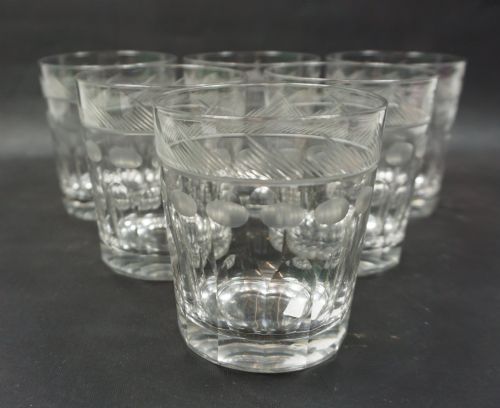
Cut glass involves removing substantial amounts of glass to create geometric facets, deep flutes and prismatic patterns using coarse grinding wheels. This method prioritises sparkling light refraction across heavy surfaces.
Engraved glass utilises smaller wheels to carve fine pictorial details, lettering, foliage and crests into the smooth exterior. Many pieces on this page successfully combine both techniques on a single vessel.