

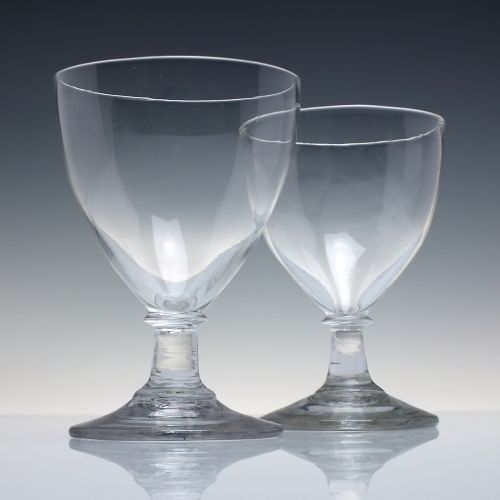


Pair Glass Rummers
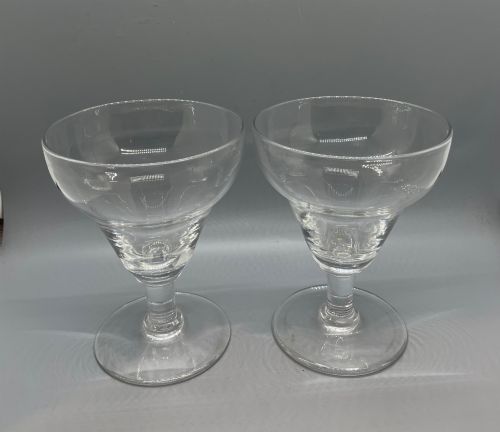
A pair glass rummers brings heavy lead metal and capacious bowls to the table, designed for robust toasts and evening ales.
Pair Glass Rummers
A pair glass rummers comprises matching drinking vessels designed during the Georgian and Victorian periods for substantial measures of wine, spirits, or ale. These sturdy glasses were built for daily use rather than delicate sipping, carrying significant weight in the hand.
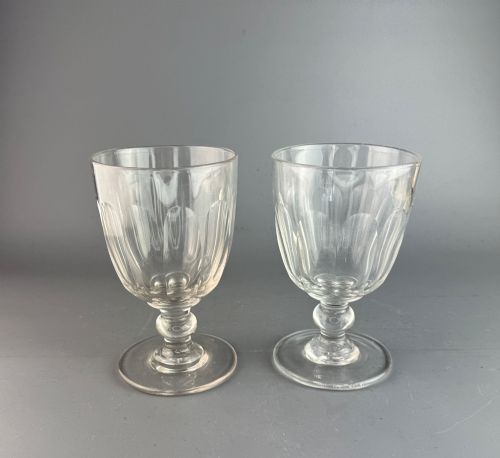
The most frequent examples found here stem from the Georgian era and the nineteenth century, often taking bucket, ogee, or ovoid bowl forms. Buyers encounter both plain-walled utilitarian shapes and heavily ornamented drinking vessels produced across English glasshouses.
Materials and construction
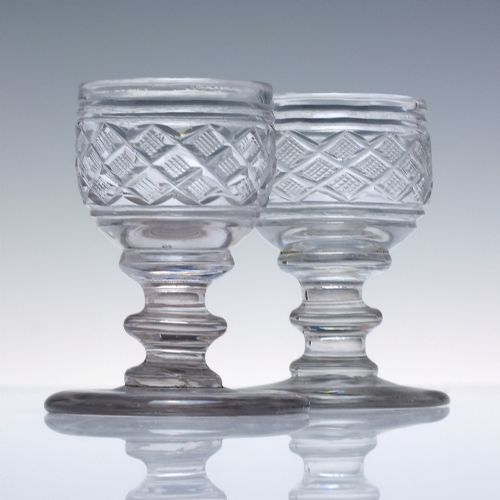
Craftsmen utilised lead crystal, flint glass, and clear glass to achieve both heavy substance and brilliant clarity. The high lead content in these materials allowed glassmakers to cut deep facets without compromising structural integrity.
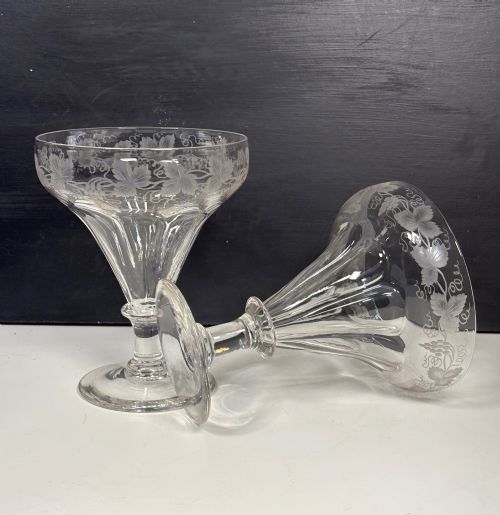
Makers shaped the heavy metal by blowing into moulds or free-blowing before applying techniques such as wheel-cutting, acid etching, and hand engraving. Many pieces display faceted stems and sturdy foot rings designed to anchor the heavy bowl above.
Listings demonstrate materials including lead crystal, flint glass, and clear glass across Georgian and Victorian periods.
Distinctions in quality
Quality rests upon the crispness of the cutting, the depth of the engraving, and the purity of the metal itself. Superior examples maintain sharp facets and clear ring when struck, while lesser pieces show softer contours or duller glass.
The degree of matching within a pair dictates much of its standing, as hand-blown items naturally exhibit slight variations in height, bowl capacity, and thickness. Pairs that share identical weight and precise decorative alignment represent the upper tier of the range.
Absolon Factory
The Pair Glass Rummers Glossary
- Rummer
- A large, heavy drinking glass popular from the late eighteenth century onwards, used primarily for wine, grog, and ale. These vessels typically sit on a short stem with a substantial foot.
- Flint glass
- A heavy, clear glass containing lead oxide that increased refractive index and made deep facet-cutting possible. English glasshouses utilised this dense material extensively for Georgian drinkware.
- Ogee bowl
- A curved drinking vessel profile that sweeps outward at the rim and pinches inward toward the base, resembling a double-curved arch. This shape directed aromas toward the drinker.
- Bucket bowl
- A straight-sided glass form tapering slightly toward the bottom, reminiscent of a wooden bucket. This robust profile provided stable walls for heavy wheel-cutting.
- Anglo-Irish
- Pertaining to glass manufactured in Ireland during the late eighteenth and early nineteenth centuries under fiscal laws that encouraged heavy cutting. These pieces are recognised by their dark metal and deep prismatic facets.
Pair Glass Rummers: Frequently Asked Questions
What were rummers used for?
These large vessels served robust drinks such as ale, spirits, and punch during communal dining and tavern gatherings. Their generous capacity suited the heavier potations favored in Georgian and Victorian households.
Unlike delicate wine flutes, they were built to circulate down a dining table or rest firmly on wooden sideboards without tipping.
How do I date a rummer?
Dating relies on bowl shape, stem construction, and the presence of pontil marks on the underside of the foot. Georgian examples often display thick, heavy lead metal with bucket or ogee profiles, while Victorian pieces frequently incorporate elaborate acid etching or pan cuts.
Changes in glass technology and decorative fashion over the nineteenth century shifted the weight and silhouette of the drinking vessels.
Are these glasses safe for daily use?
Historic lead glass requires careful hand washing in warm water to preserve the surface finish and prevent thermal shock. Modern dishwashers and harsh detergents will cloud the clear metal and dull hand-cut facets.
With gentle maintenance, sturdy rummers can be used for dinner parties or quiet evenings just as they were centuries ago.
Why do the two glasses differ slightly?
Hand-blown glassware from the eighteenth and nineteenth centuries was shaped individually at the furnace rather than stamped by automated machinery. Small variations in height, thickness, and bubble formation naturally occur across matched pairs.
These minor discrepancies confirm the traditional manufacture and distinguish authentic antique pairs from modern reproductions.