


Vintage Crystal Stemware Pair
These vintage crystal stemware pair selections bring traditional craft to the table, offering matched drinking vessels shaped by glassmakers across European workshops.
Vintage Crystal Stemware Pair
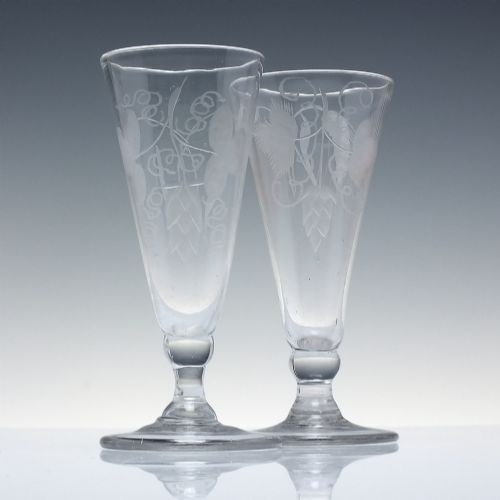
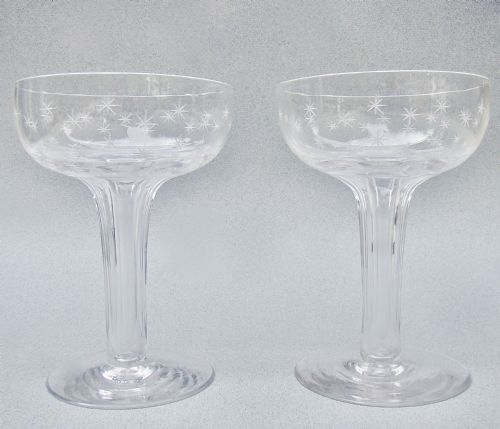
A vintage crystal stemware pair encompasses matched drinking vessels and serving pieces created across the Georgian, Victorian, Edwardian, and early twentieth-century periods. The selections span specific forms such as wine glasses, champagne coupes, hock glasses, champagne flutes, beer and ale glasses, and decorative vases.
Buyers encountering this search phrase find pieces originating from English, German, and Bohemian makers. The forms range from hollow stem champagne glasses and cut glass champagne bowls to brightly coloured cased vessels.
The objects reflect distinct design movements including Victorian ornamentation, Edwardian refinement, Jugendstil, Vienna Secession, and Art Deco lines. Each matched duo provides a glimpse into historical dining traditions and table service.
How they were made
Glassmakers shaped lead crystal, flint glass, and lead glass through hot-working techniques before applying cold-working methods. Artisans utilised wheels and cutting tools to carve geometric motifs directly into the material.
Cased glass and overlay techniques involved fusing layers of coloured glass over a clear crystal base. Craftsmen then cut through the exterior colour layer to reveal the clear crystal beneath, creating sharp contrast.
Surface ornamentation involved acid-etching, star-etching, enamel decoration, and hand engraving. Artisans meticulously rendered floral motifs, convolvulus, and fruiting vines across bowls, stems, and feet.
Listings feature lead crystal, cased glass, and flint glass across periods from Georgian through Art Deco.
What varies in quality
The clarity and weight of the glass material establish the baseline quality of each vessel. High-grade lead crystal provides superior brilliance and a resonant ring when struck, distinguishing it from standard soda-lime glass.
The precision and depth of the wheel-cutting demonstrate the skill of the original workshop. Crisp facets, balanced proportions, and deeply carved patterns require steady control by master cutters.
The complexity of surface decoration, such as layered cased colours combined with detailed engraving or enamel work, separates standard production from elevated workshop output.
Stevens & Williams·Theresienthal·Moser·Baccarat
The Vintage Crystal Stemware Pair Glossary
- Lead Crystal
- Glass containing a high percentage of lead oxide, which increases weight, refractive index, and clarity. This heavy material allows for deep, sharp wheel-cutting.
- Cased Glass
- Glass composed of two or more distinct layers of different colours fused together during formation. Cutting through the outer layer reveals the contrasting colour underneath.
- Hock Glass
- A traditional tall-stemmed wine glass traditionally used for German white wines. These glasses frequently feature coloured bowls or elaborate stems.
- Champagne Coupe
- A shallow, broad-bowled stemmed glass designed for sparkling wine. This historical form gained popularity during the Victorian and Edwardian eras.
- Flint Glass
- A historical term for clear, heavy glass that mimics the optical properties of rock crystal. It served as the precursor to modern lead crystal.
Vintage Crystal Stemware Pair: Frequently Asked Questions
How do I clean vintage crystal stemware?
Wash each piece by hand using warm water and mild detergent. Avoid abrasive sponges or dishwasher cycles to protect the delicate surface engraving and lead crystal composition.
Dry the glass immediately with a lint-free linen cloth to prevent water spots and maintain the polished clarity of the facets.
Can I use these glasses for modern dining?
These matched pairs function well for serving wine and champagne during special occasions. Handled with care, they bring historical character to contemporary table settings.
Ensure guests handle the stemmed vessels gently, keeping in mind the age and delicate nature of cut glass bowls and historical lead crystal.
What is cased glass?
Cased glass consists of a clear crystal body covered by one or more thin layers of coloured glass. Artisans blow the fused layers together before shaping the vessel.
During the cutting process, craftsmen remove portions of the outer coloured layer to expose the clear crystal beneath, creating striking two-tone patterns.