

Cut Lead Crystal Glasses
Cut lead crystal glasses bring weight and brilliance to the table, spanning heavy Georgian rummers to Edwardian tumblers.
Cut Lead Crystal Glasses
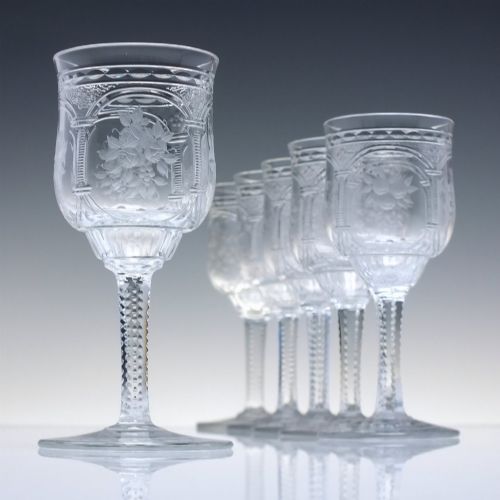
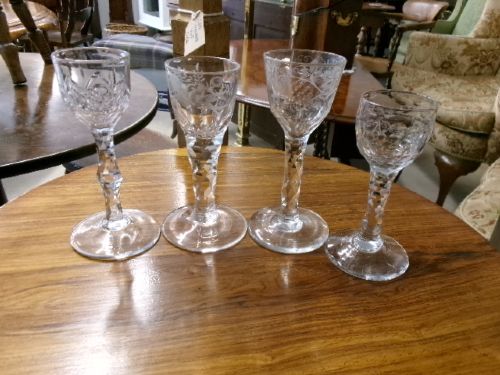
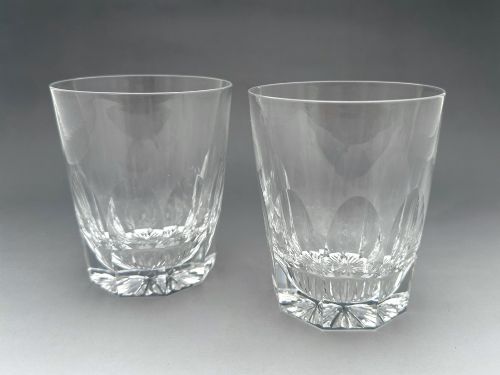
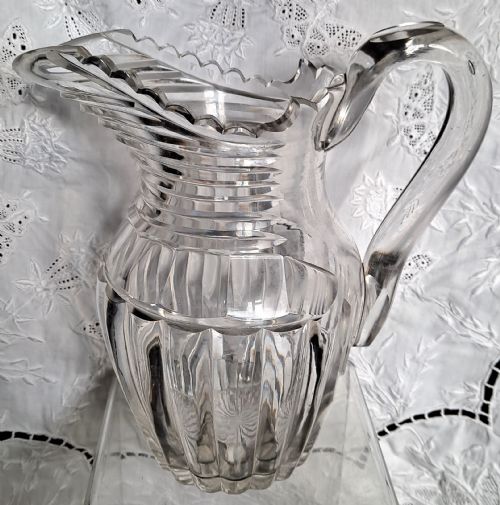
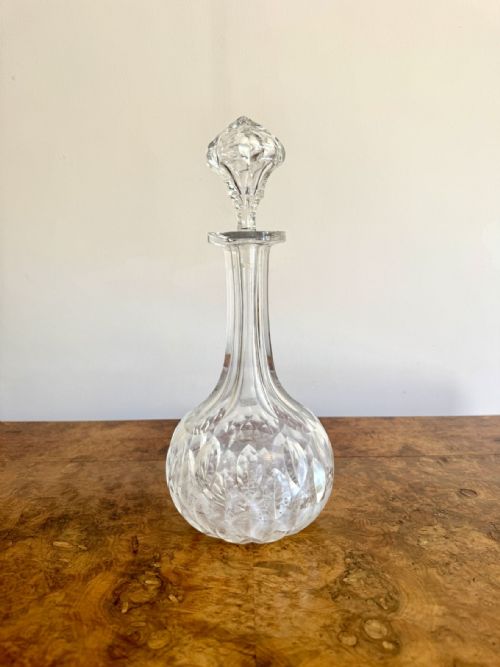
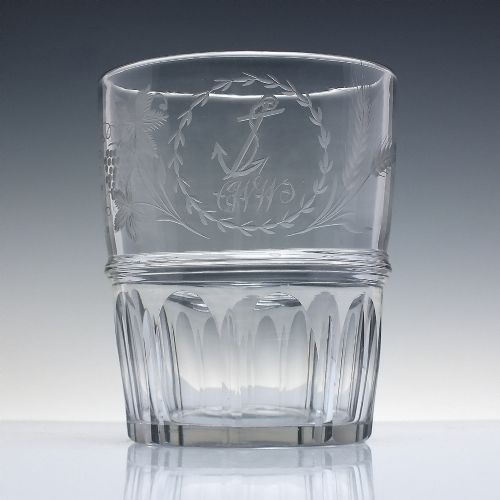
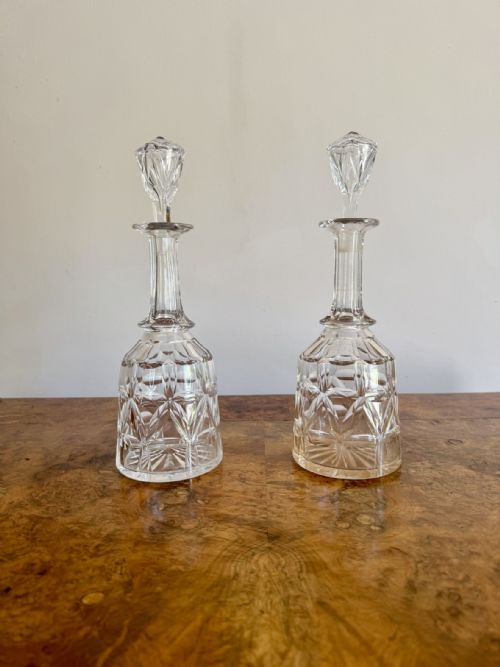
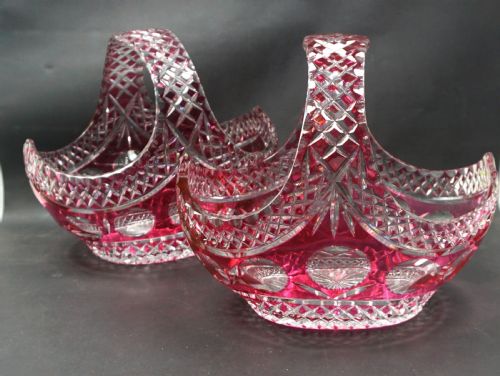
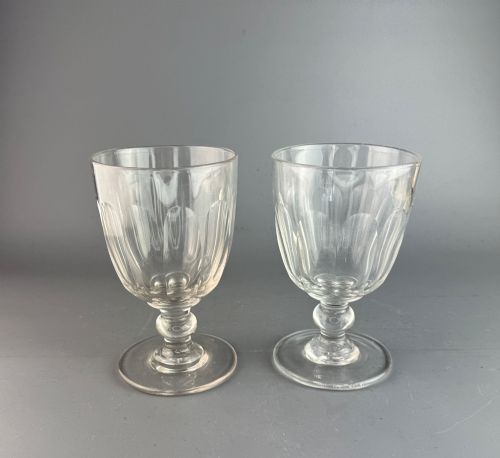
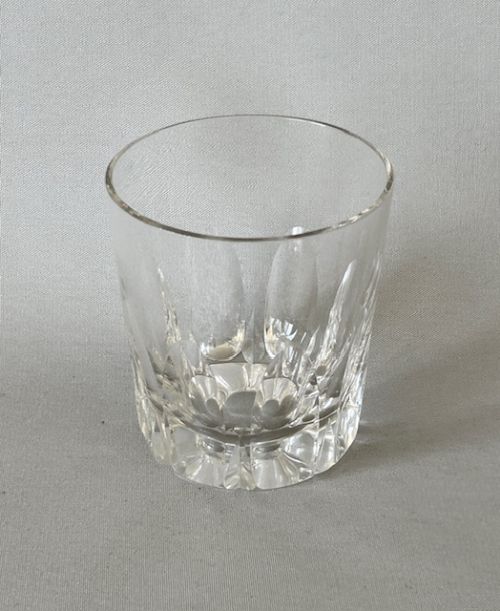
Cut lead crystal glasses comprise drinking vessels, decanters, jugs, and tablewares shaped from heavy, high-refractive-index glass. When people search for cut lead crystal glasses, they encounter heavy-bottomed tumblers, stemmed wine glasses, and matching sets intended for spirits and cordials. The selection on this page draws heavily from Victorian and Edwardian periods, alongside Georgian and Regency drinking vessels.
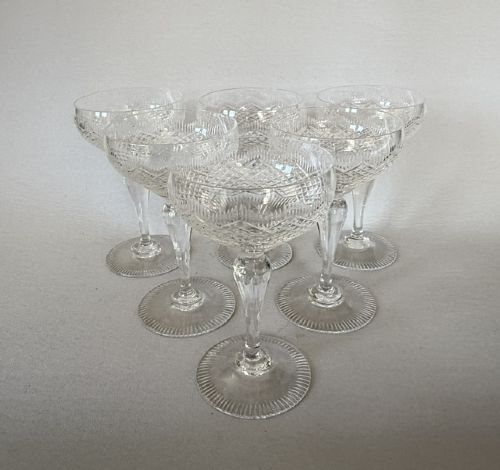
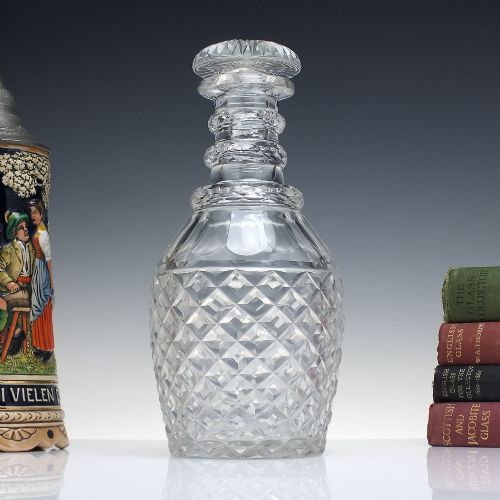
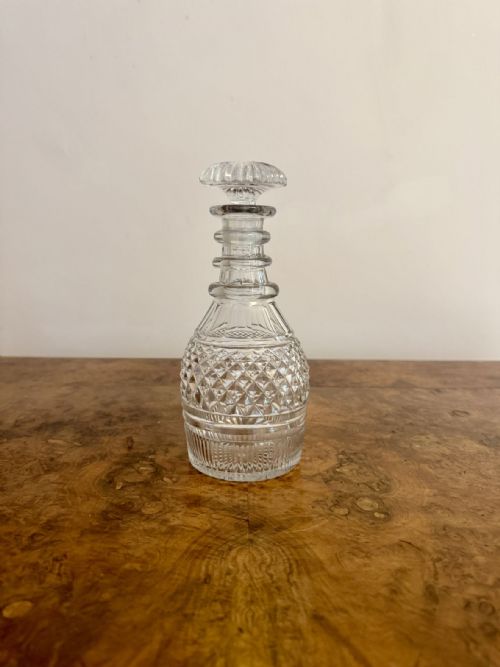
Drinking glasses dominate the forms, alongside sets of champagne coupes, rummers, and whiskey tumblers. Decanters and water jugs appear frequently, often paired with matching salts or butter dishes. Most items originate from English or Irish workshops, though continental pieces such as Belgian vases and lamps also occur.
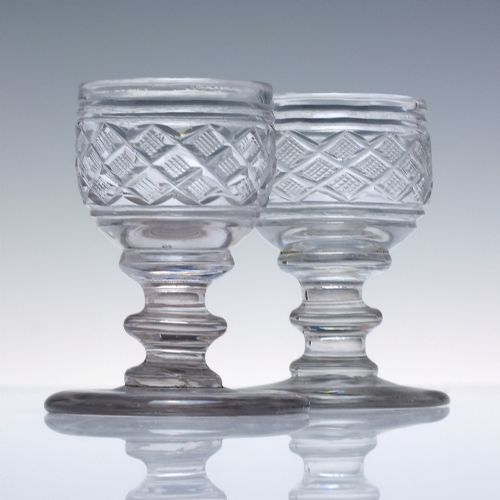
Buyers find everything from single dram glasses to matched sets of six or eight drinking vessels. Earlier examples lean towards deep pillar cutting and hobnail motifs, while later twentieth-century items display finer facet work and acid-etched details.
Materials and technique
The manufacture of these objects relies on heavy lead glass compositions, which allow deeper cutting without fracturing the material. Artisans shaped the hot metal by blowing or pressing, then applied wheel-cutting to carve geometric facets, flutes, and diamond patterns into the thick walls.
Finishing involved polishing the cut surfaces either by hand with acid or wheels to restore the high gloss and transparent brilliance characteristic of lead crystal. Many pieces combine plain blown sections with heavily faceted bases or stems to catch the light.
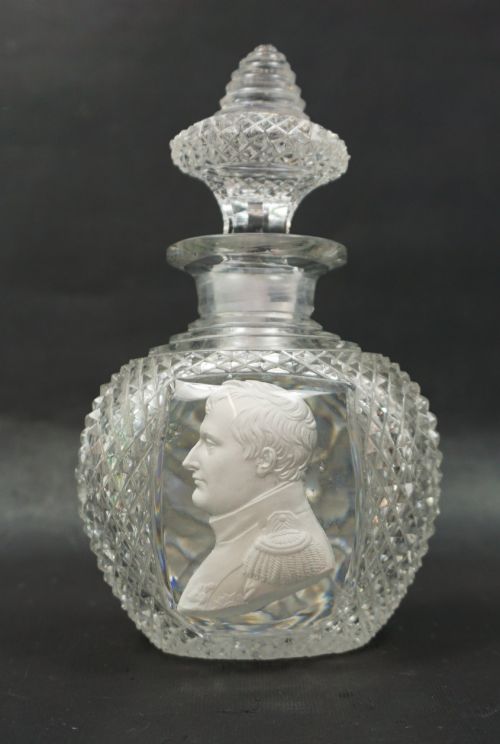
Napoleon Bonaparte watches sternly over the parlor from inside a solid crystal scent bottle.
Quality factors
Weight and wall thickness dictate the tactile presence of a glass, with heavier lead content providing a clearer ring and deeper refraction. The precision of the wheel-cutting separates ordinary production from superior examples, where facets align perfectly and edges remain crisp without blurring.
Clarity of the material itself matters greatly; superior items show no internal bubbles or cloudiness in the glass matrix. The proportion between the cut decoration and the smooth bowl dictates the overall aesthetic balance of each vessel.
Val St Lambert·Stuart Crystal
The Cut Lead Crystal Glasses Glossary
- Lead glass
- Glass containing a significant proportion of lead oxide, which increases the weight, clarity, and refractive index. This composition makes the material softer and easier to cut deeply.
- Rummer
- A large, sturdy drinking glass popular in the eighteenth and nineteenth centuries, used primarily for beer, wine, or punch. They typically feature a short stem and a capacious bowl.
- Hobnail cut
- A raised, faceted surface pattern resembling the iron nails used on heavy boots. It creates intense light refraction across the body of the glass.
- Pillar and prism
- A decorative cutting style featuring vertical flutes or raised pillars that break the light into spectral bands. It appears frequently on Georgian and Regency decanters and jugs.
- Faceting
- The process of grinding flat planes into the surface of the glass at precise angles. This technique maximises sparkle and gives the vessel a geometric texture.
Cut Lead Crystal Glasses: Frequently Asked Questions
How do I clean antique crystal?
Wash these pieces by hand in warm water using mild detergent, avoiding sudden temperature changes that can crack the old lead metal. Place a cloth at the bottom of the sink to cushion heavy bases during washing.
Dry them immediately with a lint-free linen cloth to maintain their clarity and prevent water spots from forming on the faceted surfaces.
Are these glasses safe for daily use?
Many people use nineteenth-century tumblers and rummers for casual dining, provided the glass shows no structural fractures. Hand washing preserves the polished surfaces and prevents any degradation from modern detergents.
Older lead crystal can leach trace amounts of lead if acidic liquids sit in the vessel for extended periods. Keep everyday use brief and avoid storing drinks in decanters overnight.
How do I distinguish Georgian from Victorian glass?
Georgian drinking vessels often display heavier kick-up bases, darker metal tones, and hand-polished pontil marks on the underside. The cutting tends to be broader and less uniform than later production.
Victorian pieces frequently utilise heavier lead crystal with brighter clarity and more mechanical, precise facet cutting. Pontoons are often ground flat and polished completely smooth on mid-to-late nineteenth-century examples.
What is a rummer used for?
Rummers served as versatile drinking vessels for ale, porter, punch, and wine during the Georgian and Victorian eras. Their generous bowl capacity suited hearty domestic and tavern use.
The sturdy stem and thick foot made them resilient enough for communal toasts and frequent passing around the dining table.