

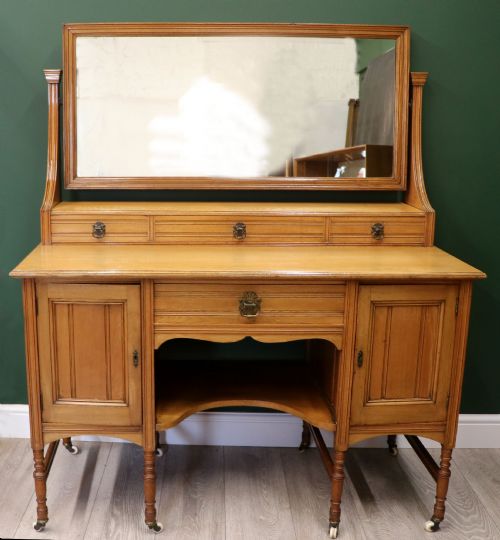


Victorian Walnut Dressing Mirror
When you search for a victorian walnut dressing mirror, you are looking for a table or cheval glass designed to sit upon a surface or stand independently in a bedroom.
Victorian Walnut Dressing Mirror
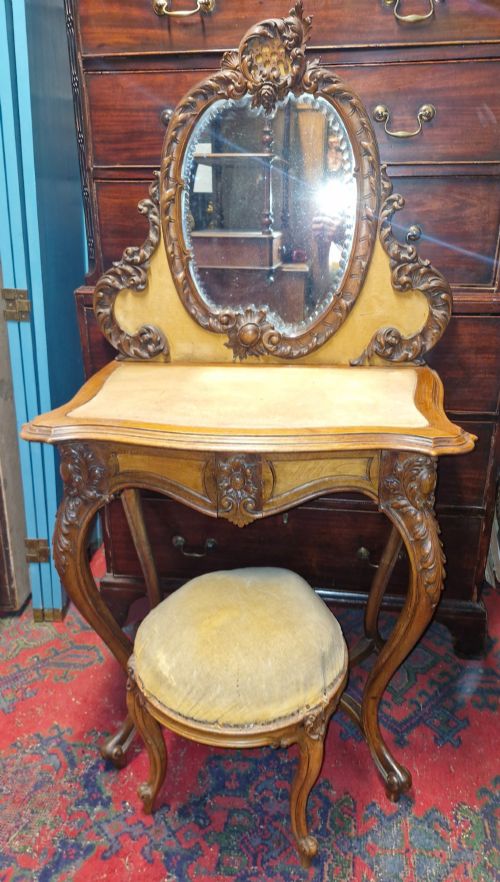
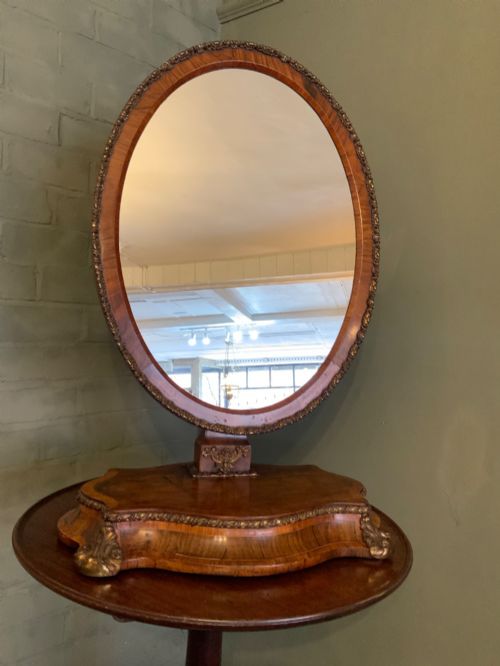
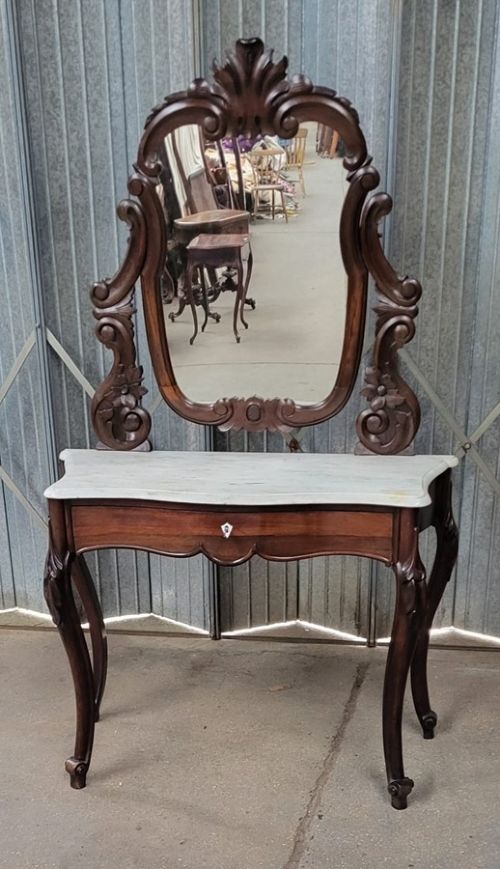
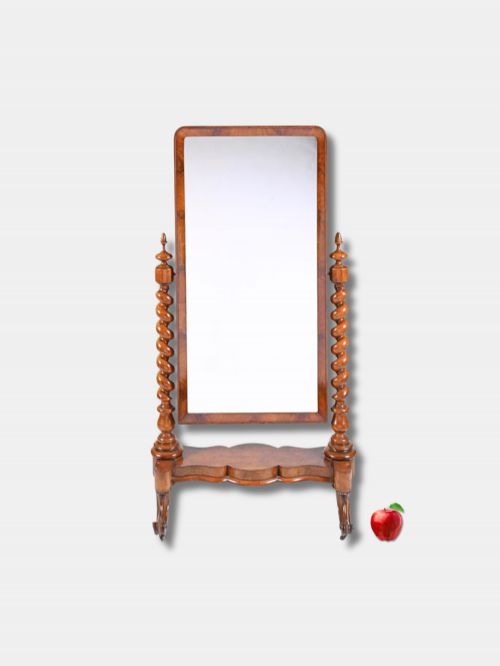
A victorian walnut dressing mirror is typically encountered as a swing glass mounted on scrolling supports, a table-top toilet glass above small trinket drawers, or a larger cheval mirror designed for full-length reflection.
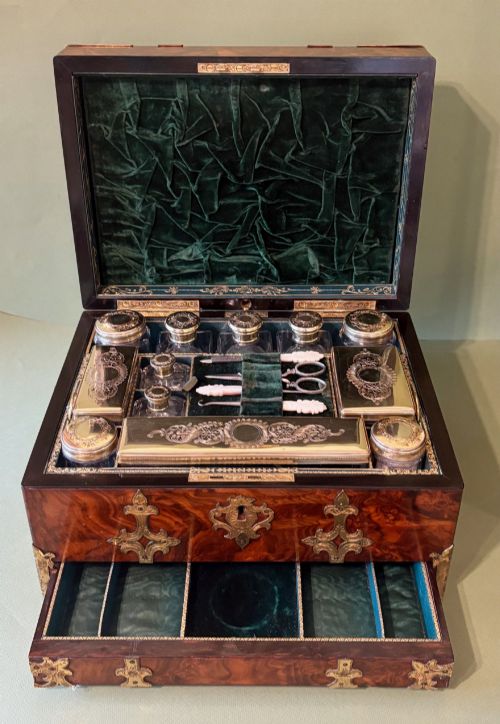
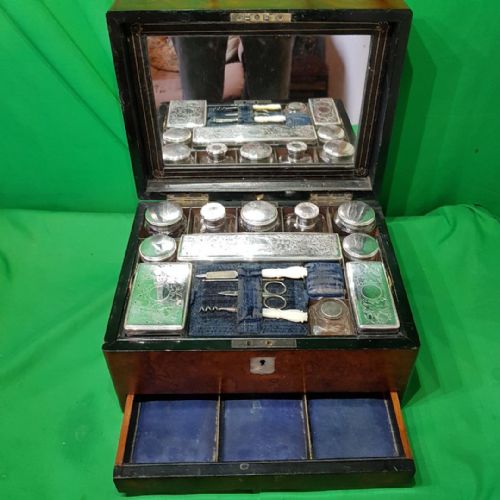
The materials span plain walnut and richly figured burr walnut veneers, often accompanied by brass fittings, silver details, and glass plates that pivot between upright standards.
Makers and cabinet makers of the period produced these mirrors in various styles ranging from straightforward Victorian utility to elaborate Rococo Revival and Aesthetic Movement interpretations.
Materials and Construction
Cabinet makers utilised solid walnut and decorative burr walnut veneers applied to secondary timbers, building sturdy frames that supported pivoting glass plates.
Brass and ormolu hardware, including adjustable screws, brackets, and handles, provided both mechanical function and decorative contrast to the dark timber.
Interior fittings frequently incorporated velvet or fabric linings within fitted compartments for jewellery and personal items, while glass plates relied on traditional silvering techniques.
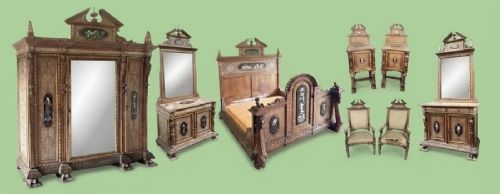
Object forms range from table-top toilet mirrors and bureau fitments to full-height cheval mirrors and complete bedroom suites.
Assessing Craftsmanship
The fineness of the burr walnut figuring across the primary surfaces distinguishes standard utility pieces from high-end expressions of the cabinet maker's art.
Carved details show varying degrees of hand execution, where crisp, deep mouldings and harmonious proportions indicate superior workshop standards.
The integrity of the pivoting mechanism and the weight of the supporting standards determine how well a mirror holds its adjusted angle over time.
Waring & Gillows
The Victorian Walnut Dressing Mirror Glossary
- Burr walnut
- A decorative timber veneer taken from the gnarled growths of the walnut tree, prized for its swirling, highly figured grain patterns. It forms the primary visual appeal on many nineteenth-century bedroom furnishings.
- Cheval mirror
- A tall standing mirror mounted on a frame with side pivots that allow the entire glass to tilt. These pieces rest directly on the floor rather than standing on a table.
- Trinket drawers
- Small storage compartments built into the base or plinth of a dressing mirror for jewellery and small personal items. They often sit beneath the pivoting glass frame.
- Aesthetic movement
- A late nineteenth-century design style focusing on visual beauty rather than narrative meaning. Pieces from this movement often incorporate ebonised details and simpler geometric lines.
- Ormolu
- Gilded bronze or brass mounts applied to furniture for decorative effect. It provides metallic warmth against dark walnut timbers.
Victorian Walnut Dressing Mirror: Frequently Asked Questions
How do I use a dressing mirror?
These mirrors sit upon a dressing table, chest, or directly on the floor to provide a reflective surface for grooming and dressing. The pivoting frame allows the user to adjust the angle of the glass.
Smaller table versions often incorporate trinket drawers at the base for holding jewellery and personal effects. Cheval and standing formats offer full-length reflection for bedrooms.
What is burr walnut?
Burr walnut is a specialised wood veneer cut from the growths or burls on walnut trees. It displays intricate, swirling grain patterns that were highly favored by Victorian cabinet makers.
Because of its decorative nature, it typically appears on the primary display surfaces of better-quality dressing mirrors and tables.
Are these mirrors adjustable?
Many examples feature side screws or pivot pins that let you tilt the glass forward or backward. This mechanism allows the user to set the exact viewing angle needed.
Original brass hardware on these pivots is a key feature to examine when identifying period pieces.