

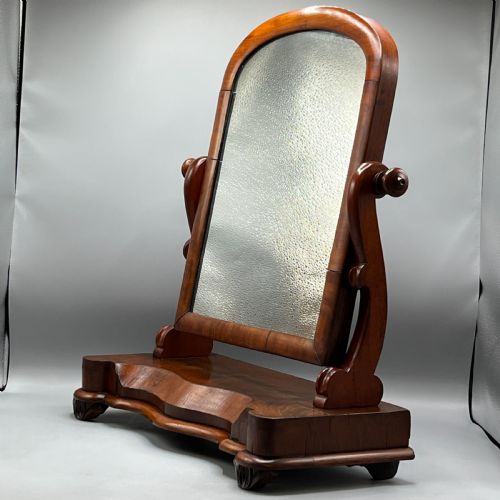


Victorian Swivel Vanity Mirror
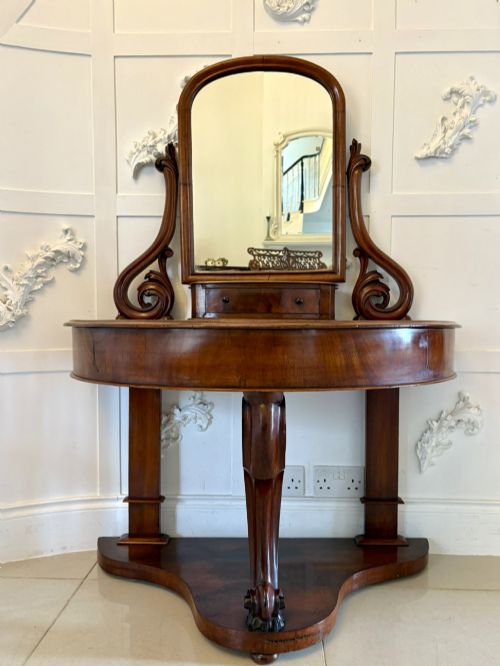
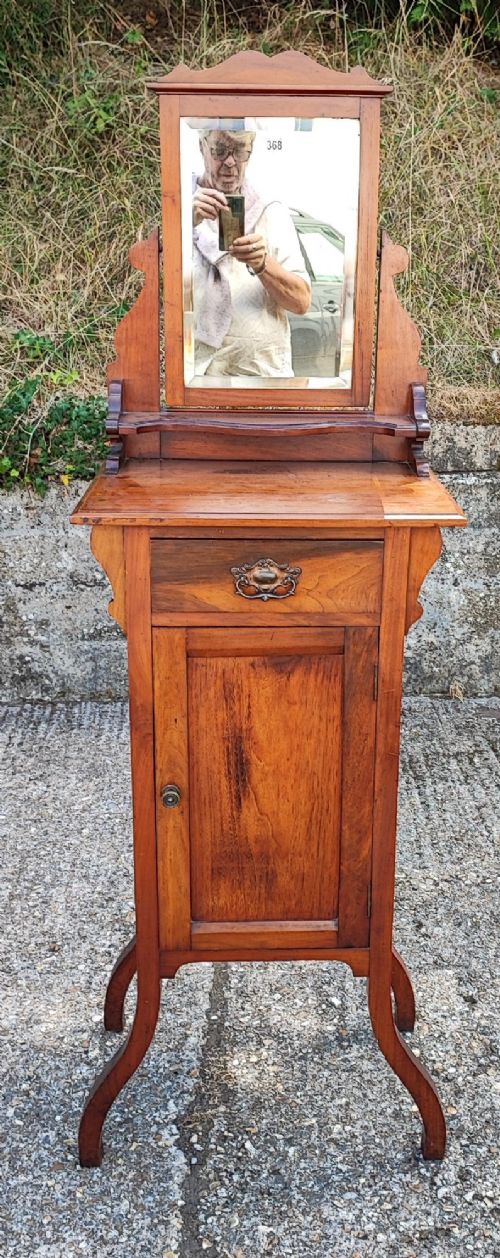
A victorian swivel vanity mirror sits on a chest or table to catch the morning light, offering a tilting glass framed in timber or metal.
Victorian Swivel Vanity Mirror
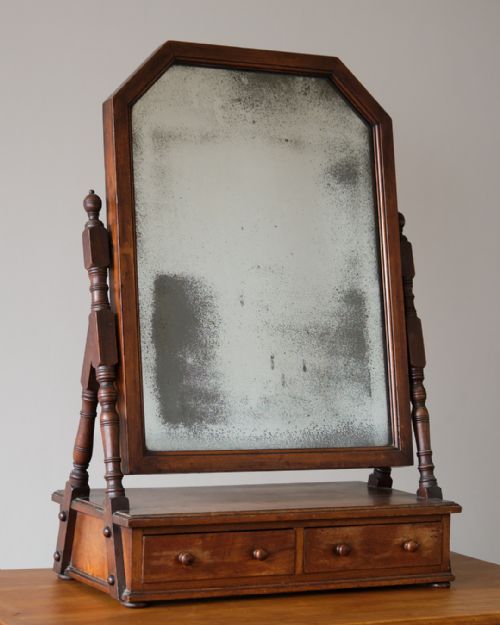
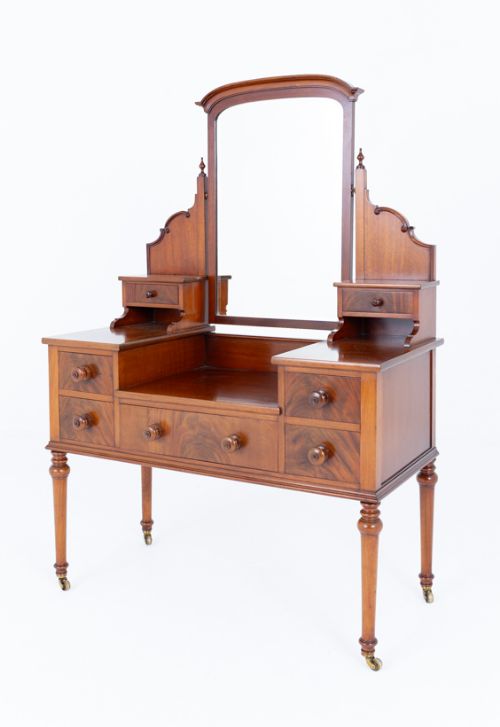
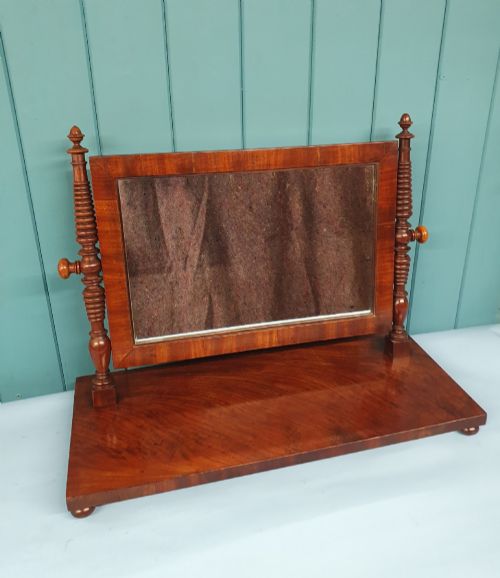
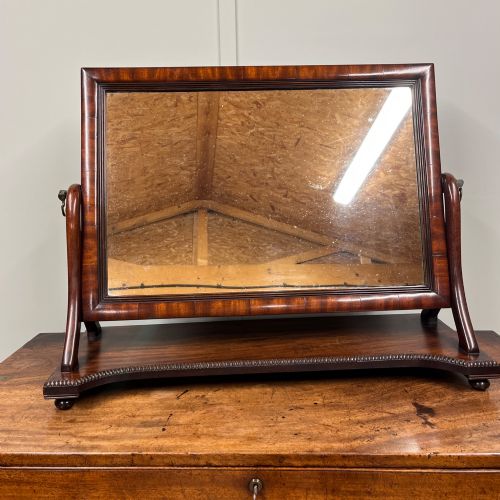
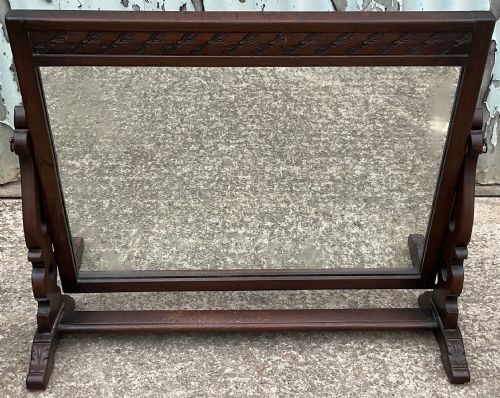
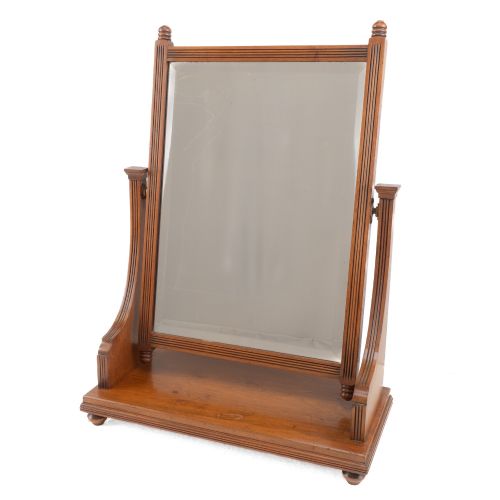
A victorian swivel vanity mirror takes the form of a table-top dressing glass mounted on upright pivots, allowing the plate to tilt back and forth. The pieces found here span the nineteenth century, including items from the eighteen fifties, sixties, and eighties, alongside a few pieces carrying Regency or Edwardian influences.
Most examples appear as compact toilet mirrors designed to sit upon a chest of drawers or a dedicated dressing table. The form ranges from simple mahogany swing frames to larger architectural desk mirrors fitted with small drawers in the base box.
Makers and retailers represented across the period include names such as Heal and Sons, Harrods, and Thomas Rubergall, showing that these items were produced both as standard household furnishings and as specialist scientific or luxury goods.
Judging quality and proportion
Quality rests upon the selection of timber figure, such as the rich grain of burr walnut or the dark warmth of figured mahogany, balanced against the crispness of the turned support pillars. The weight and stability of the base box dictate how firmly the glass holds its angle when adjusted.
Fine examples show careful hand-joining in the base drawers and well-fitted brass tension screws at the pivot points. Poorer specimens rely on heavy machine cuts or lack the proportion needed to balance the weight of the mirror glass.
The listings span the nineteenth century, featuring woods such as mahogany, burr walnut, satinwood, and oak alongside marble-topped variants.
Heal and Sons·Thomas Rubergall
The Victorian Swivel Vanity Mirror Glossary
- Swing mirror
- A glass plate suspended within a frame that rotates on horizontal pivots between two upright supports. This mechanism allows the user to alter the angle of reflection.
- Toilet mirror
- A smaller desk-top glass traditionally kept on a washstand or dressing chest for grooming. These often include a set of small drawers built into the lower plinth.
- Cheval mirror
- A full-length standing dressing glass supported by a heavy frame and four feet. Unlike a table vanity mirror, it stands directly upon the floor.
- Burr walnut
- A prized timber harvested from walnut tree growths that produces intricate, swirling grain patterns. Cabinetmakers used burr veneers on high-status Victorian dressing furniture.
- Pivots
- The metal pins or screws set into the sides of the mirror frame that connect to the upright arms. They provide the friction needed to hold the glass in position.
Victorian Swivel Vanity Mirror: Frequently Asked Questions
Where should I place a swivel mirror?
These mirrors suit dressing tables, chests of drawers, or sturdy sideboards where they can catch indirect daylight.
Ensure the surface is level and deep enough to support the weight of the base box without tipping.
How do the pivot screws work?
The side pivots use threaded metal screws or pins that pass through the upright arms into the mirror frame. Tightening them increases the grip so the glass stays angled.
If the glass droops, check the inner washers or gently adjust the tension hardware.
Can the mirror glass be replaced?
Original mirror glass often shows foxing, light spotting, or silver loss due to age. Many collectors prefer this authentic patina.
If replacement is necessary, a glazier can cut new silvered glass to fit the original rebate without altering the timber frame.
How do I date a Victorian dressing mirror?
Examine the timber species, joinery methods in the base drawers, and the style of the upright supports. Earlier nineteenth-century pieces often feature simpler mahogany frames.
Later Victorian and Edwardian examples may display heavier carved details or alternative woods like satin birch and oak.