

Vintage Tabletop Swing Mirror
A vintage tabletop swing mirror brings polished timber frames and pivoting glass to a chest or dresser, offering adjustable angles for daily grooming.
Vintage Tabletop Swing Mirror
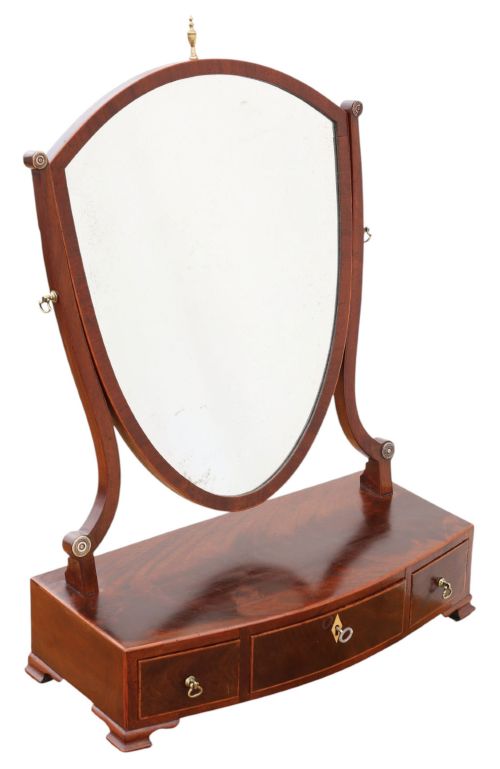
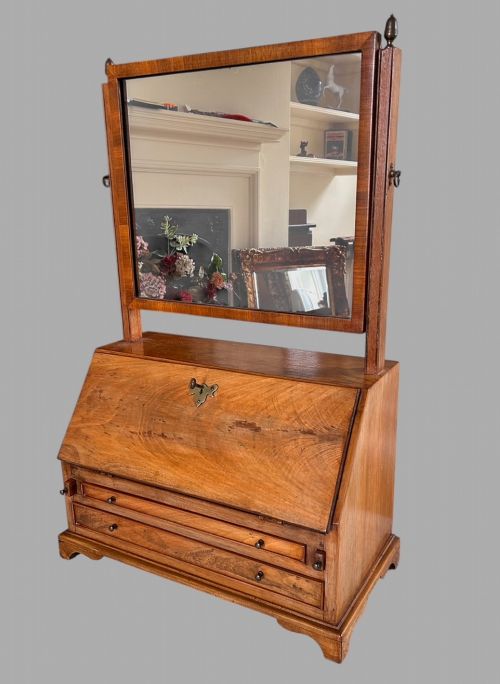
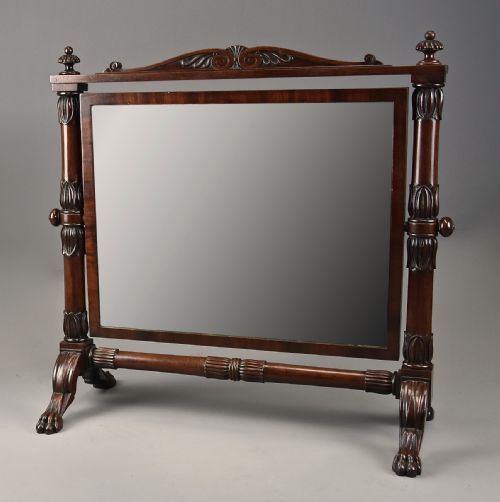
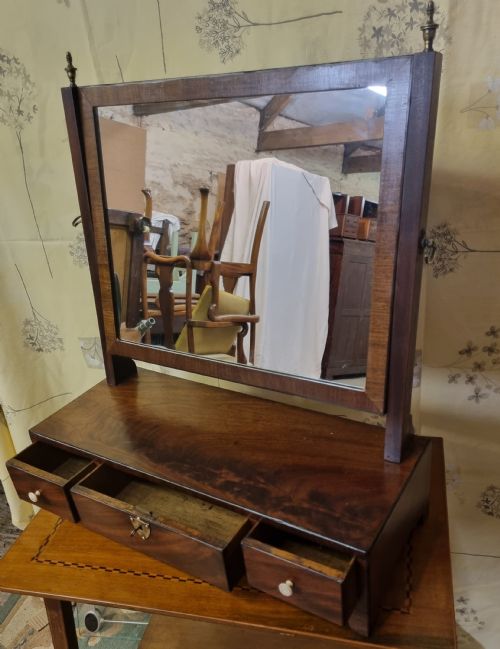
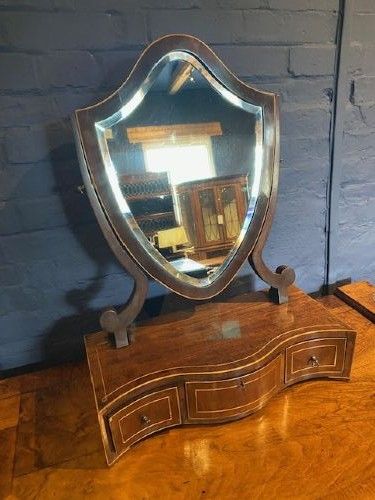
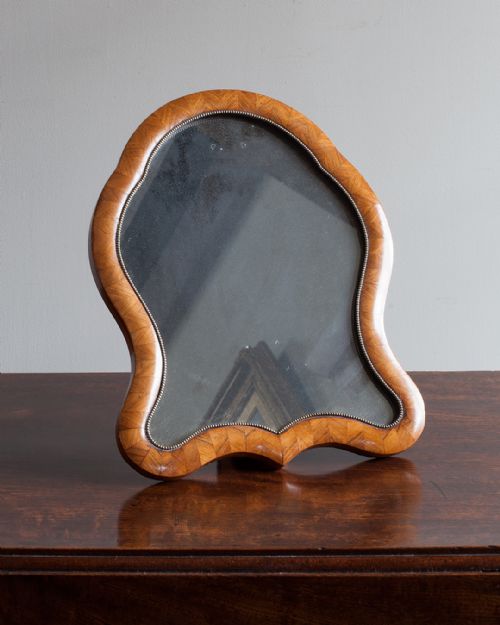
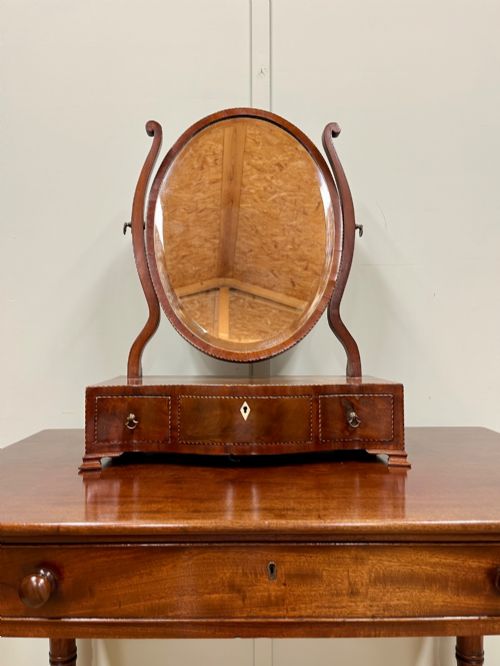
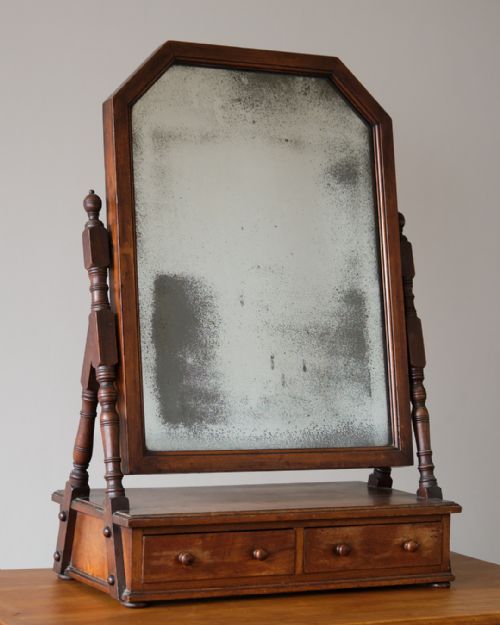
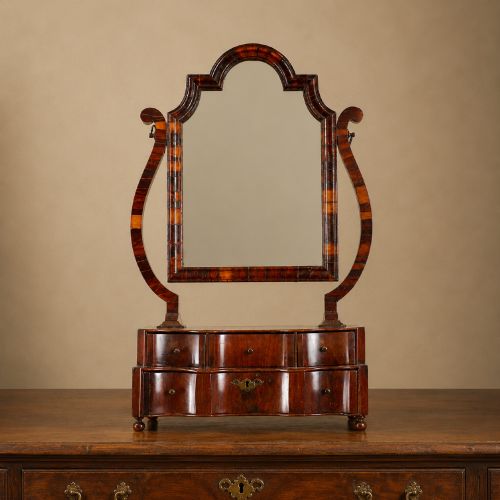
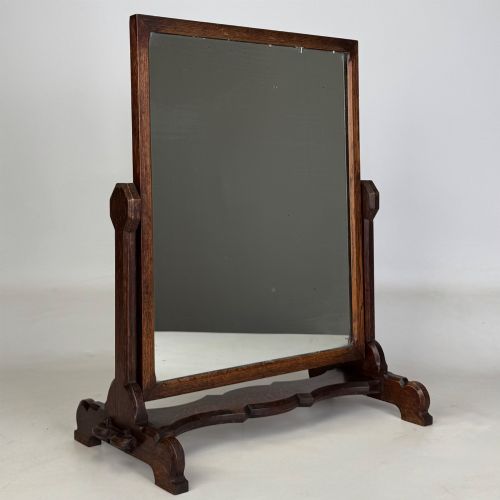
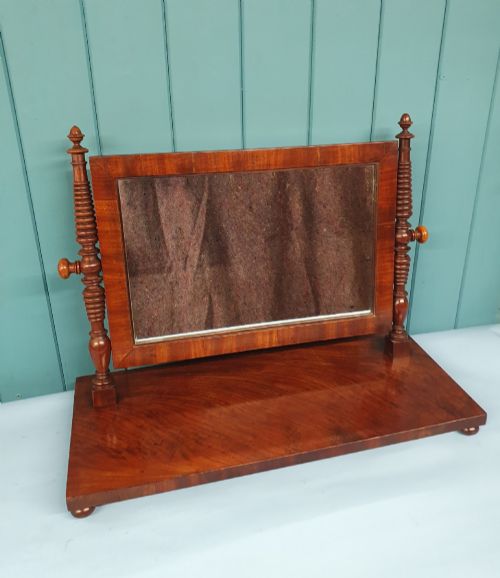
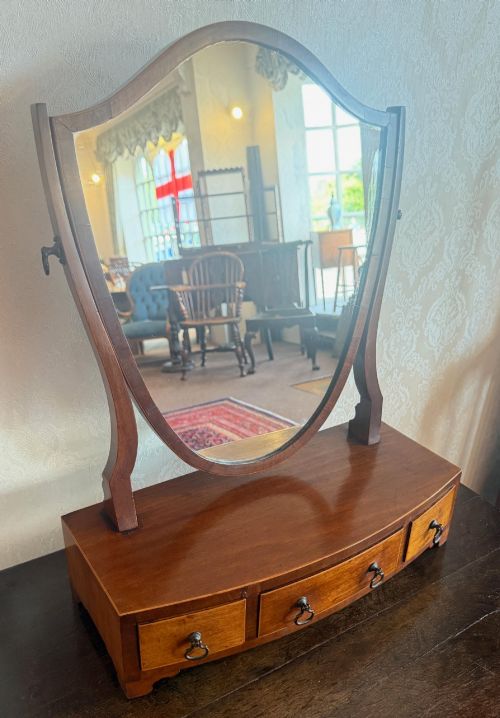
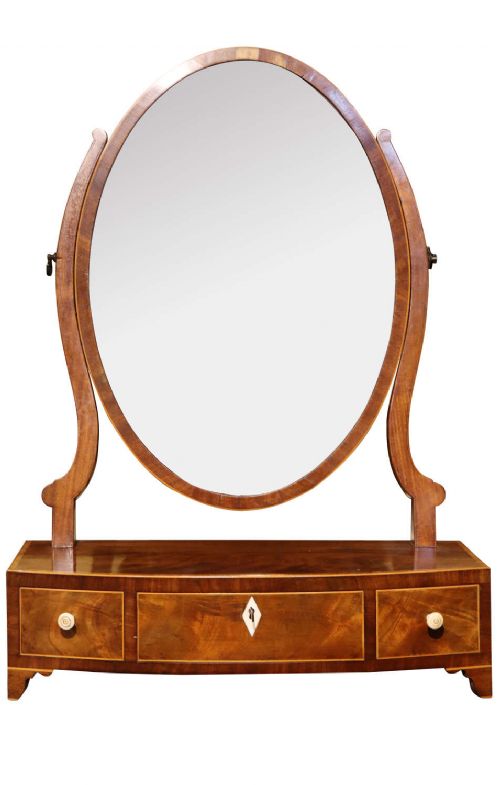
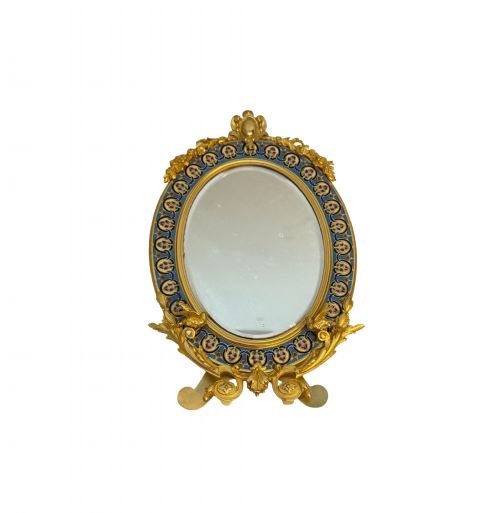
A vintage tabletop swing mirror sits on a chest of drawers or a dressing table, held by upright arms that allow the glass to tilt. These pieces appear in numerous forms across this selection, including dressing mirrors, toilet mirrors, and vanity mirrors.
Most examples found here date from the eighteenth, nineteenth, and early twentieth centuries. The selection spans periods from George II and Queen Anne through to Victorian, Edwardian, and Arts and Crafts styles.
Mahogany frames dominate the inventory, accompanied by walnut, satinwood, and oak. Many incorporate small drawer bases designed to hold trinkets or small personal items.
Materials and Technique
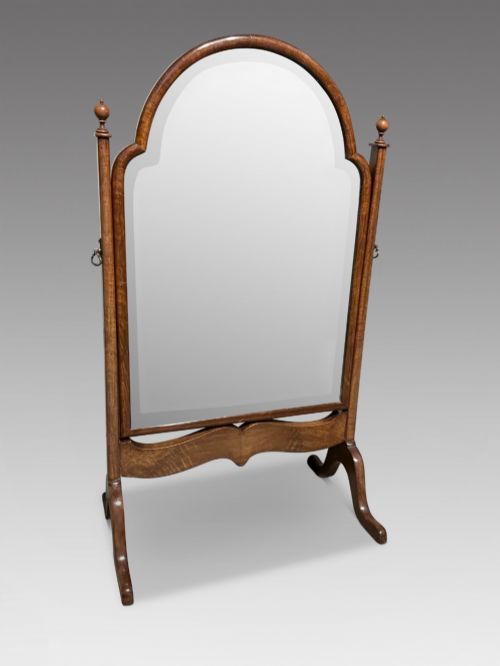
Cabinetmakers constructed the frames primarily from solid timbers like mahogany, walnut, and oak, frequently adding crossbanding or marquetry details. Satinwood and kingwood also appear, showing varied grain patterns across the standing supports and box bases.
The pivoting mechanism relies on side screw pins or brass mounts set into upright arms, allowing the mirror plate to tilt smoothly. Glass plates are fitted within rebated wooden frames, sometimes backed by original pine panels.
Tiny drawer bases often retain historic ink stains from long-forgotten notes written during morning toilette routines.
Assessing Quality
The refinement of the woodwork dictates much of the distinction, visible in the tightness of dovetails on the base drawers and the delicacy of shaped shields or ovals. Finely figured mahogany veneers and subtle crossbanding separate standard utility pieces from more ambitious workshop productions.
Proportion between the plate and the base defines the visual balance of the object. Heavier brass fittings and secondary timbers of matching quality indicate careful manufacture.
Heal And Sons·P And MA Nicholson
The Vintage Tabletop Swing Mirror Glossary
- Swing mirror
- A glass plate mounted in a frame that pivots between two upright posts. This allows the user to adjust the angle of reflection.
- Toilet mirror
- A smaller dressing mirror designed to sit on a tabletop or commode. They frequently incorporate box bases fitted with small drawers.
- Crossbanding
- A border of veneer laid around the perimeter of a panel so the grain runs perpendicular to the centre. It provides a decorative frame to mahogany or walnut surfaces.
- Cheval mirror
- A full-length standing mirror, though the term occasionally applies to larger tabletop swivelling versions supported on frame pillars.
- Parcel-gilt
- Partially gilded woodwork where thin layers of gold leaf highlight carved details or mouldings against a dark timber background.
Vintage Tabletop Swing Mirror: Frequently Asked Questions
What is a tabletop swing mirror?
A tabletop swing mirror is a portable dressing glass mounted on vertical pivots between two upright supports. It sits on top of a chest, desk, or dressing table.
Most versions include a small box base containing one or more drawers for storage.
How were these mirrors used historically?
These pieces served as personal grooming aids in bedrooms and dressing rooms before built-in wardrobe mirrors became common. The pivoting frame allowed users to adjust the angle for lighting.
Drawer bases kept small accessories, cosmetics, and jewellery close at hand.
How do I date a mahogany swing mirror?
Dating relies on timber choice, construction methods, and overall outline style. Eighteenth-century examples often feature fine walnut or figured mahogany with serpentine drawer bases.
Later nineteenth-century pieces display heavier proportions, machine-cut dovetails, or revival styling.
How do I place one in a modern room?
These mirrors fit naturally on top of modern chests of drawers, sideboards, or dressing tables. Their compact footprints provide functional reflection without requiring wall installation.
The warm tones of mahogany, walnut, and oak complement both traditional and contemporary interiors.