



Victorian Walnut Desk Box
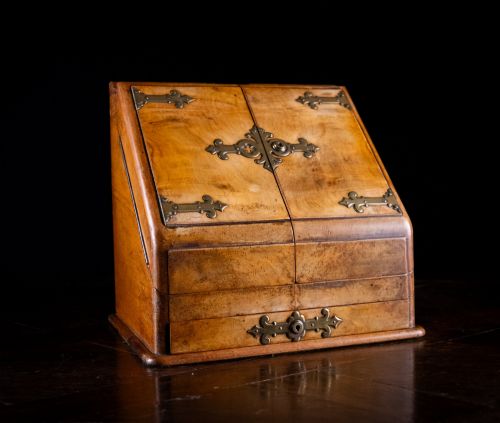
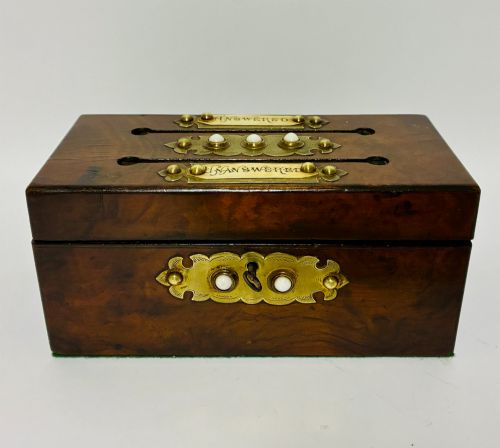
A victorian walnut desk box offers a handsome way to keep correspondence and small treasures, uniting rich timber grain with solid brass work.
Victorian Walnut Desk Box
When you search for a victorian walnut desk box, you encounter items designed for portable writing and desktop organisation. Writing slopes, stationery boxes, and correspondence chests dominate the pieces available.
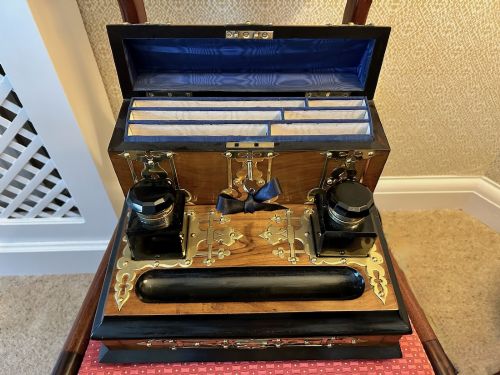
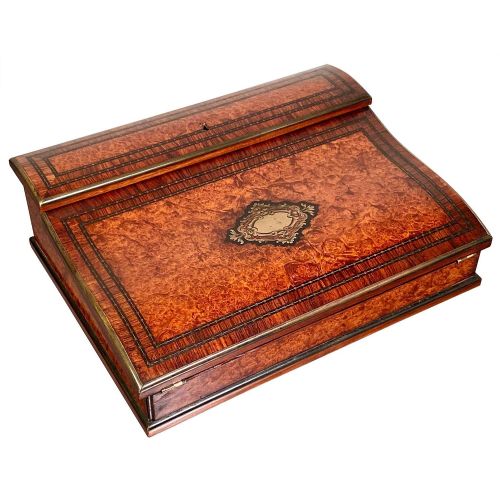
Makers shaped these timber containers into writing desks that fold open into sloping surfaces, alongside upright cabinets meant for letters and documents. Interiors often hold secret drawers, pen trays, and fitted compartments for inkwells.
Versions span compact travelling lap desks to large stationery cabinets built for the library desk. The selection bridges utilitarian office furniture and decorative items meant for the parlour.
Materials and Construction
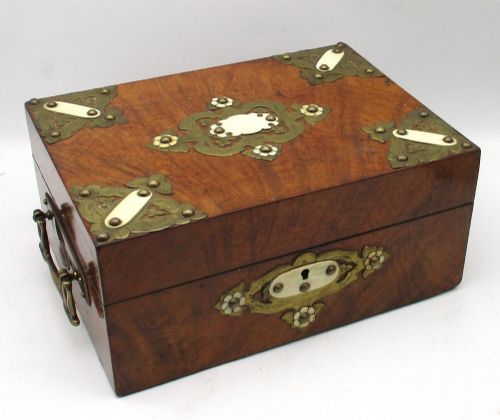
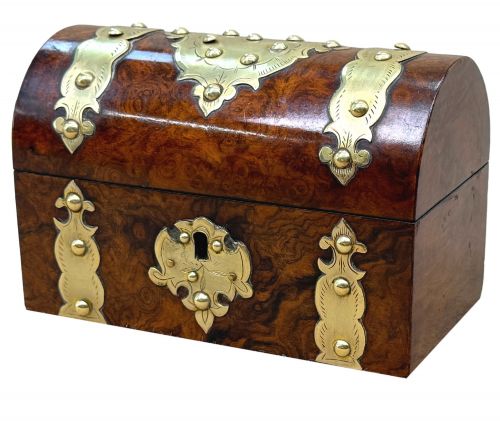
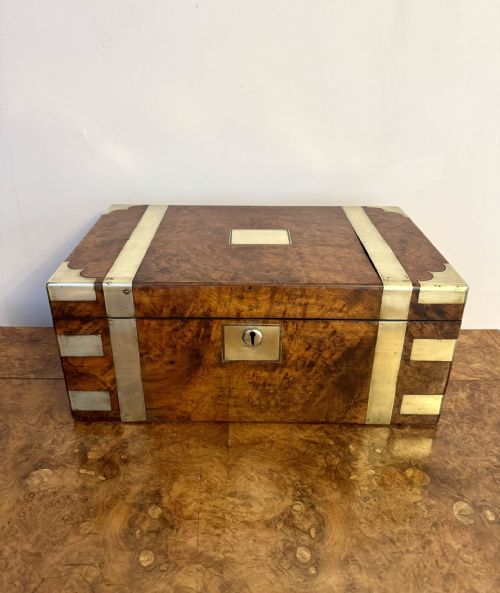
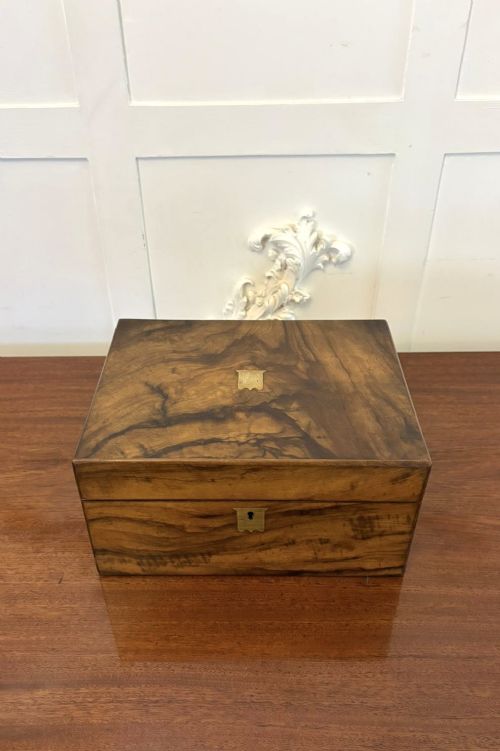
Craftsmen used walnut as the primary timber, often selecting burr walnut or figured walnut veneers to display swirling grain patterns across the exterior. Boxwood and marquetry inlay added contrasting detail to select surfaces.
Corner mounts, strapwork, and escutcheons in brass reinforce the timber joints and protect the edges during travel. High-grade pieces incorporate secure locks by makers such as Bramah to safeguard private papers.
Some stationery boxes include compartments specifically sized for calling cards and postage stamps.
Evaluating Quality
Quality rests in the selection of the timber veneer and the precision of the brass mountings. Matched burr walnut grain flowing seamlessly across the lid and sides signals superior cabinet work.
Interior fittings dictate overall standard, separating basic boxes from those with secret drawers, velvet-lined writing surfaces, and functioning locks with matching keys.
Edmund Nye
The Victorian Walnut Desk Box Glossary
- Burr Walnut
- A timber harvested from the wart-like growths on walnut trees, yielding complex and highly decorative grain patterns. Cabinet makers prized this wood for the exterior veneers of luxury boxes.
- Writing Slope
- A portable desk featuring a hinged lid that opens to reveal an angled surface for writing. These boxes fold flat for travel and contain internal compartments for stationery.
- Stationery Box
- An upright desktop cabinet designed to hold letters, envelopes, and paper. Interiors typically feature tiered partitions rather than a sloping writing surface.
- Bramah Lock
- A high-security cylindrical lock patented by Joseph Bramah in the eighteenth century. These mechanisms offer robust security and appear on better quality nineteenth-century boxes.
- Tunbridge Ware
- Small wooden objects decorated with intricate mosaic patterns made from tiny wood blocks of various natural colours. This technique creates geometric or pictorial designs on the lid.
Victorian Walnut Desk Box: Frequently Asked Questions
What is the difference between a writing slope and a stationery box?
A writing slope opens to provide an angled surface lined with leather or velvet for writing letters, containing internal spaces for pens and ink.
A stationery box stands upright on the desk to store paper, envelopes, and correspondence rather than providing a surface to write upon.
How do I care for a walnut desk box?
Keep the timber away from direct sunlight and heat sources to prevent the burr walnut veneer from drying and cracking over time.
Apply a light application of traditional beeswax occasionally to nourish the wood and maintain the natural sheen of the polish.
Are keys usually included with these boxes?
Many surviving pieces retain their original keys, particularly those fitted with secure locks by makers like Bramah.
When a key is present, it is noted in the description, though many locks remain functional even if a replacement key is used.
What are secret drawers?
Secret drawers are concealed compartments built into the interior of writing slopes, usually accessed by lifting a false floor or sliding out a partition.
Victorian owners used these hidden spaces to store valuable papers, jewellery, or personal money.