
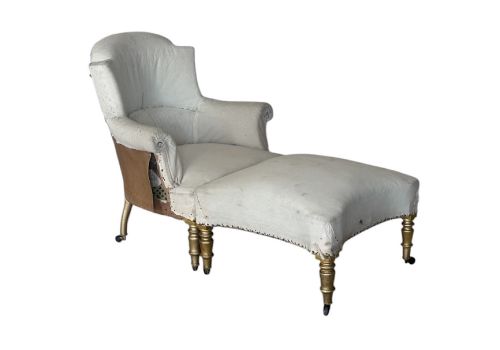
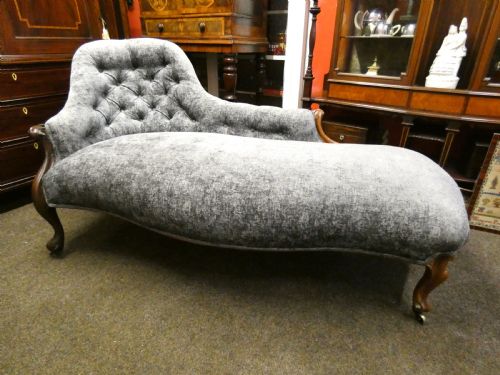
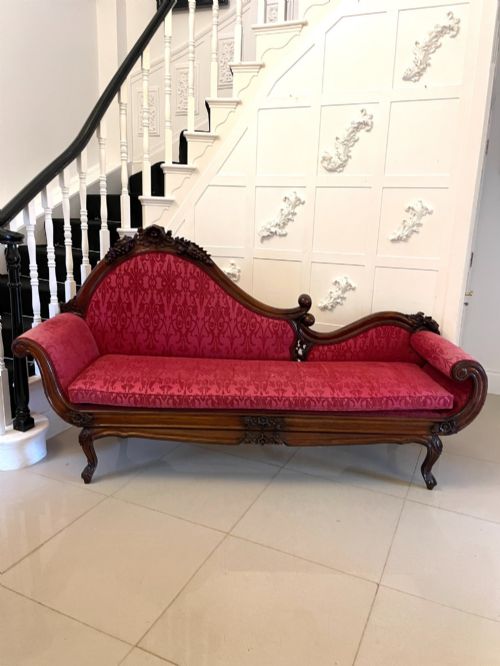
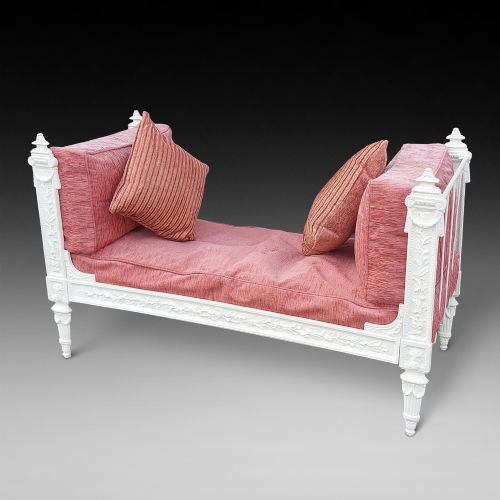
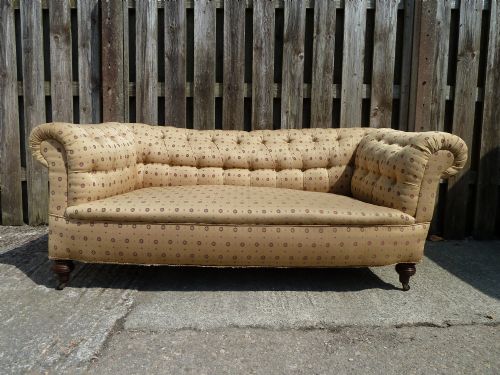
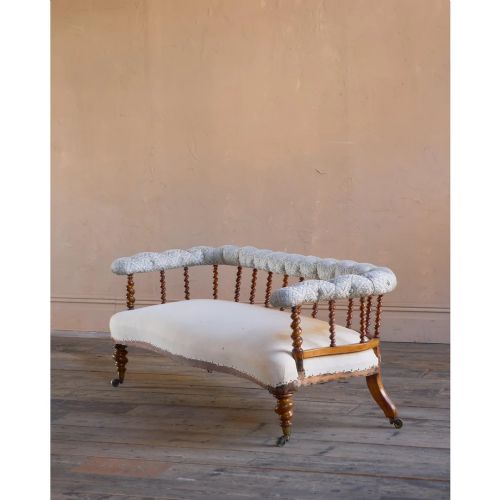
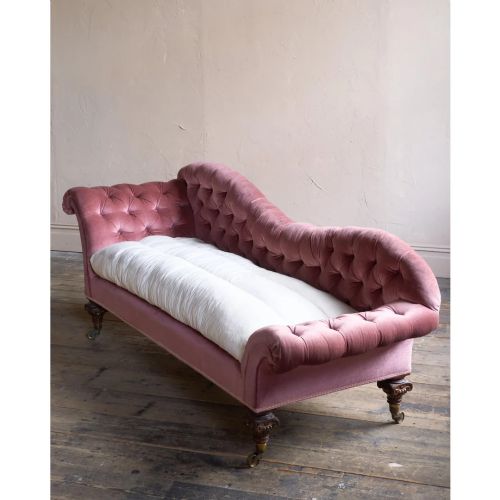
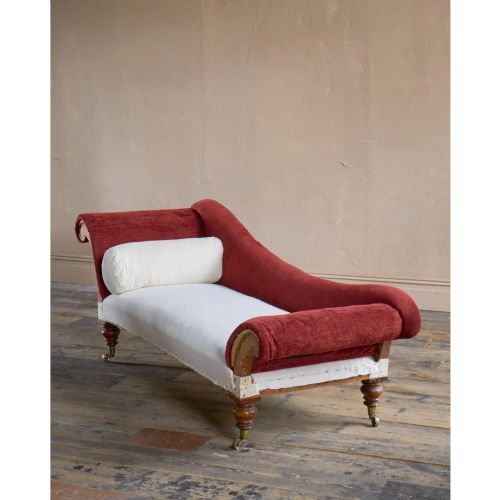
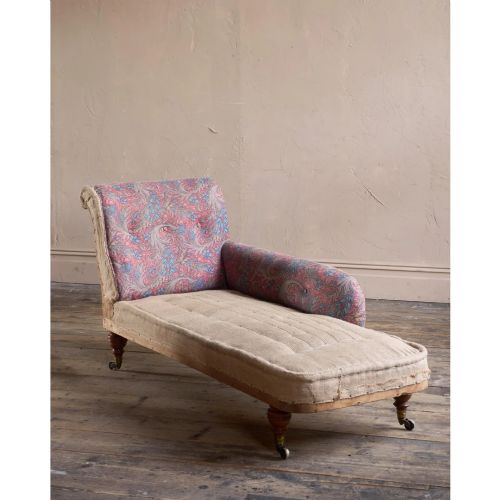
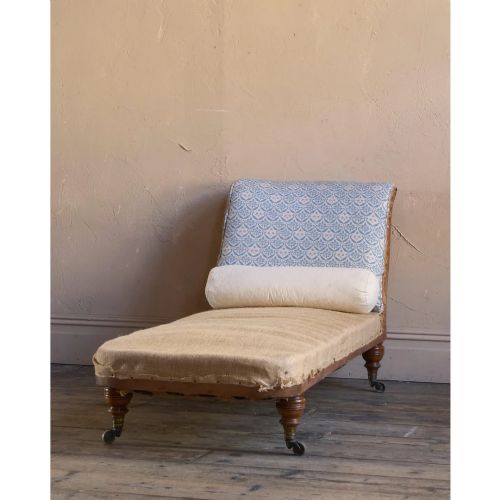
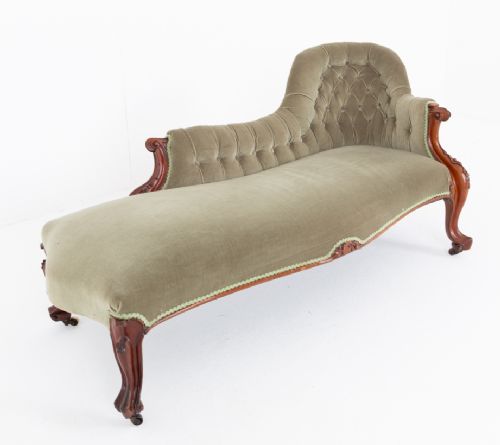
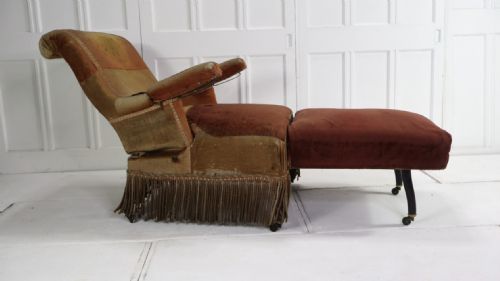
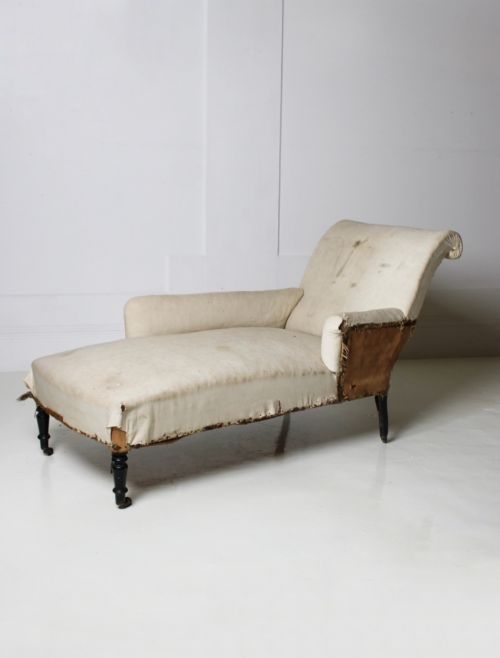
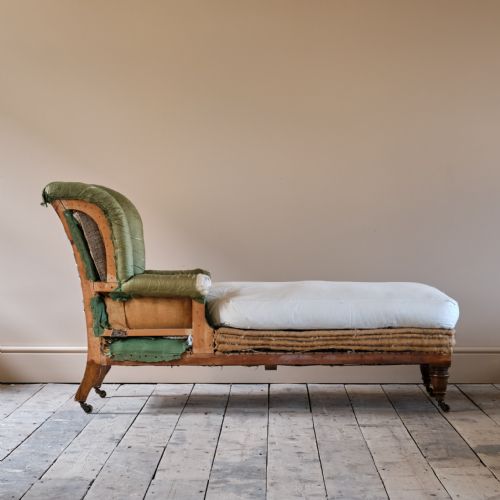
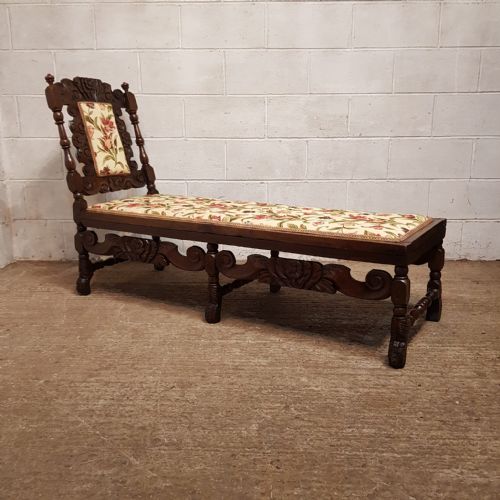
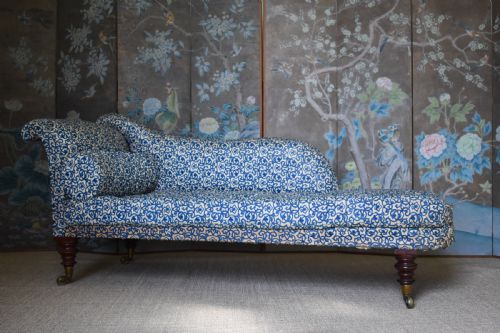
Victorian Upholstered Daybed
A victorian upholstered daybed offers a gracious place to recline, combining timber frames with soft fabric in forms that span the nineteenth century.
Victorian Upholstered Daybed
A victorian upholstered daybed encompasses nineteenth-century resting furniture, most commonly found as chaise longues, daybeds, and salon sofas. The pieces originate across the decades from eighteen fifty to nineteen hundred, reflecting evolving domestic comforts.
The selections on this page range from modest country house examples to elaborately carved seating. Buyers encounter walnut, mahogany, and rosewood frames upholstered in velvet, calico, or damask.
Materials and Construction
Makers constructed these frames from hardwoods including mahogany, walnut, rosewood, and oak, alongside occasional cast iron elements. Structural support relied on turned timber legs, sometimes fitted with castors for mobility.
Upholstery techniques involved horsehair and springs beneath outer coverings of fabric, velvet, damask, or calico. Carved woodwork, scroll arms, and ionic column details decorated the wooden chassis.
Victorian Upholstered Daybed Retail Price Guide 2026
Typical asking prices for victorian upholstered daybed among the pieces listed under this phrase on Sellingantiques today, from the lower quarter to the upper quarter. They describe what is for sale here now, not the wider market.
Frames utilise mahogany, walnut, rosewood, oak, and cast iron, paired with velvet, damask, calico, and general fabric upholstery.
Evaluating the Pieces
Quality rests upon the crispness of the timber carving and the integrity of the wooden frame. Pieces attributed to notable workshops demonstrate superior joinery and refined proportions compared to standard vernacular output.
The survival of original upholstery materials, supportive internal webbing, and unaltered turned legs distinguish better examples. Finer specimens retain cohesive design details, from scroll ends to carved mahogany ornament.
C. Hindley and Sons·Holland and Sons·Howard and Sons·H. Goodall and Sons of Newcastle·Jas Shoolbred
The Victorian Upholstered Daybed Glossary
- Chaise Longue
- An upholstered long chair designed for reclining, combining a seat with a single raised backrest at one end. They appear frequently among nineteenth-century seating.
- Calico
- A plain-woven textile used as an inner upholstery layer or a base for decorative covers. It frequently appears beneath outer fabrics on period furniture.
- Damask
- A reversible figured fabric woven on a jacquard loom, often utilised for upholstery on formal nineteenth-century couches. The patterns create a subtle contrast in texture.
- Scroll Arm
- A curved armrest resembling a rolled scroll, seen on mahogany and rosewood sofas. This stylistic flourish characterises many Victorian seating forms.
- Castor
- A small wheel mounted in a swivel frame, attached to the base of furniture legs for ease of movement. Many nineteenth-century daybeds retain their original examples.
Victorian Upholstered Daybed: Frequently Asked Questions
What is a Victorian upholstered daybed?
A victorian upholstered daybed is a nineteenth-century reclining seat designed for domestic relaxation, combining a wooden timber frame with sprung upholstery.
These pieces include chaise longues, scroll-end sofas, and day beds fashioned from mahogany, walnut, and rosewood.
How do I identify the period?
Dating relies on stylistic clues such as wood selection, leg turning, and upholstery style, spanning the decades from eighteen fifty to nineteen hundred.
Earlier pieces often employ mahogany and rosewood with carved details, while later examples incorporate cast iron or simpler turned supports.
Where were they used?
These daybeds served in drawing rooms, master bedrooms, and country house reception spaces as places for daytime rest.
Their elongated forms accommodated reclining while maintaining a formal appearance suitable for Victorian domestic interiors.
How do I care for the upholstery?
Preserving the fabric requires gentle vacuuming with a soft brush attachment and protection from direct sunlight to prevent fading.
Professional conservation helps maintain antique textiles, horsehair stuffing, and internal spring systems without altering the original structure.