


Deep Buttoned Chaise
These deep buttoned chaise listings present nineteenth-century and early twentieth-century daybeds and settees upholstered in leather, velvet, and fabric.
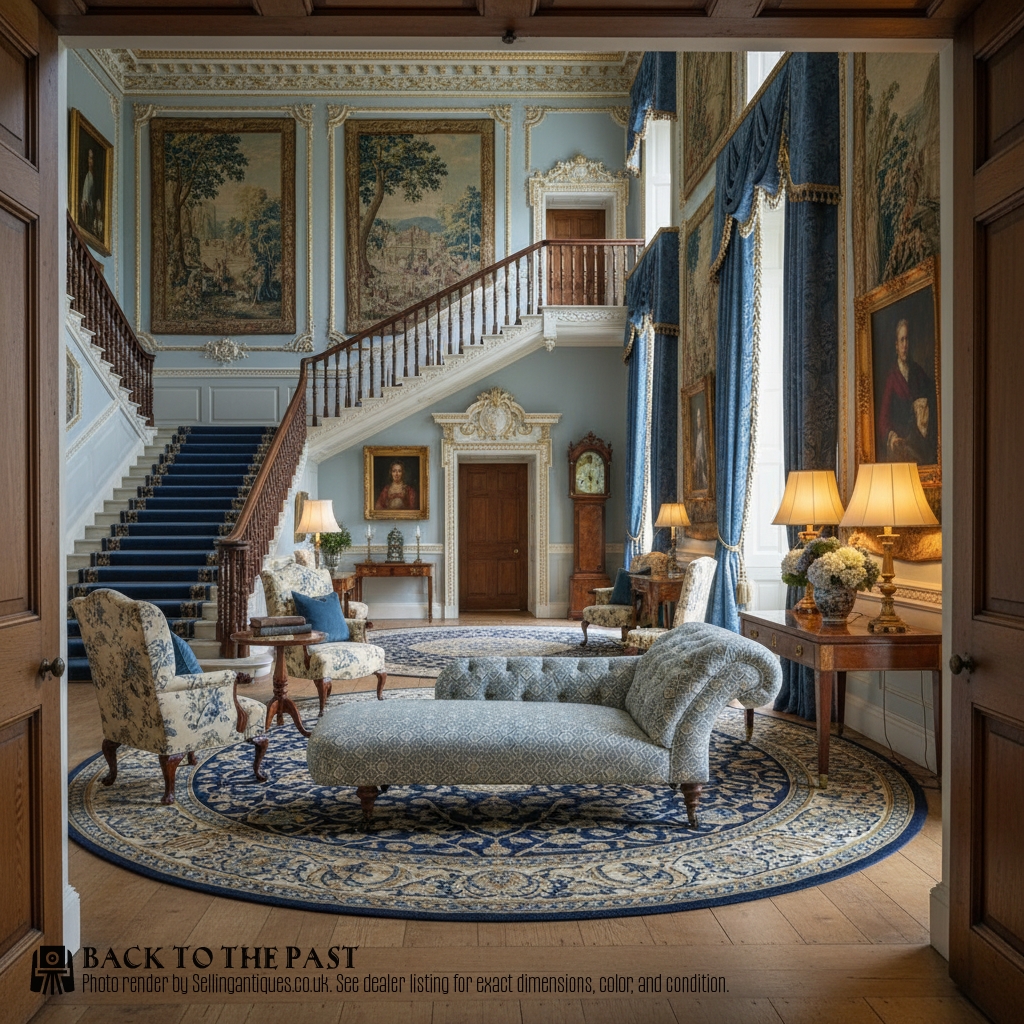
Deep Buttoned Chaise
When you search for a deep buttoned chaise, you are looking at nineteenth-century and early twentieth-century daybeds, settees, and double-ended sofas designed for reclining. The pieces on this page span the Victorian period, Regency style, and Victorian Rococo Revival, alongside related forms like armchairs and footstools.
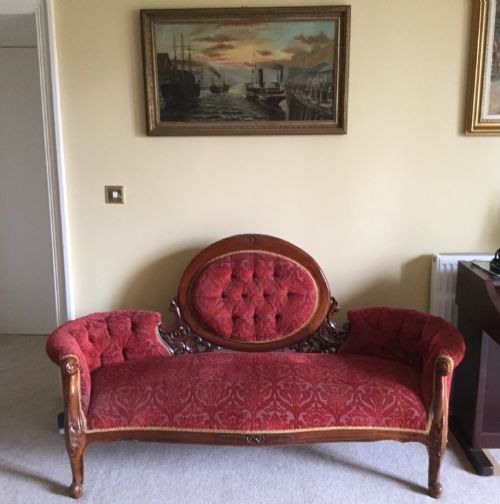
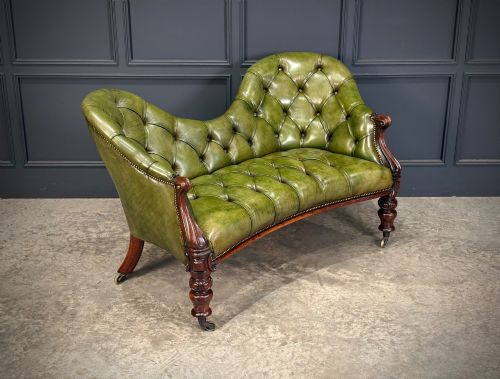
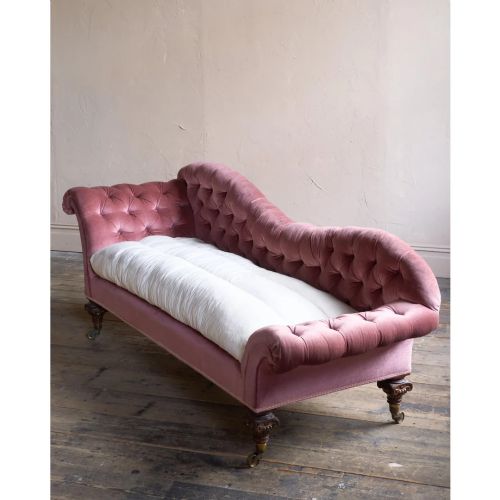
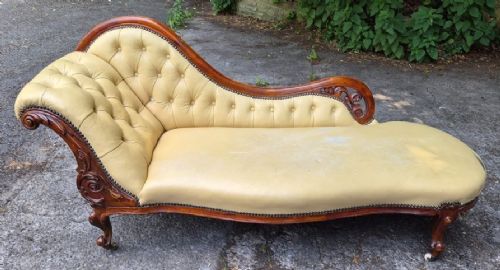
The version you are most likely to meet is the Victorian chaise longue with a carved wooden frame in mahogany or walnut. These pieces often feature scrolling ends, sprung settees, and characteristic buttoned upholstery in leather, velvet, or damask.
How they were made
Makers constructed the structural frames of these pieces using solid timbers such as mahogany, walnut, and other hardwoods. Wood framing was frequently carved or polished, whilst brass mounts appeared on select Regency examples.
Upholstery techniques combined traditional sprung bases with deep buttoning, securing layers of padding through the fabric cover to create the distinctive tufted surface. Outer coverings relied on durable leathers, rich velvets, and woven brocades or damasks.
Deep Buttoned Chaise Retail Price Guide 2026
Typical asking prices for deep buttoned chaise among the pieces listed under this phrase on Sellingantiques today, from the lower quarter to the upper quarter. They describe what is for sale here now, not the wider market.
Listings feature pieces spanning the nineteenth century up to nineteen twenty, utilising materials including mahogany, walnut, brass, leather, velvet, and various upholstery fabrics.
What varies in quality
The distinction between standard and superior pieces rests on the precision of the timber framing and the depth of the cabinetmaker's carving. Finer examples display crisply turned or carved legs, such as Ionic columns, and robust internal framing that retains its structural integrity.
Quality also shows in the execution of the upholstery and the choice of covering material. Hand-finished leather and dense velvet or brocade upholstery reflect higher standards of original craftsmanship and subsequent restoration work.
Howard and Sons·Jas Shoolbred
The Deep Buttoned Chaise Glossary
- Chaise Longue
- An upholstered long chair or daybed designed for reclining, typically featuring a raised headrest at one end. This form evolved through the nineteenth century in various revival styles.
- Deep Buttoning
- An upholstery technique where buttons are pulled through the padding at regular intervals to create a diamond pattern of tufts. It secures the internal stuffing and gives the piece its textured surface.
- Double-Ended Settee
- A sofa or settee with raised backs or scrolls at both ends, allowing a person to recline facing either direction. These pieces often utilise sprung bases for added comfort.
- Regency
- A British architectural and decorative style spanning the early nineteenth century, noted for classical restraint and classical revival motifs. Pieces from this era often incorporate brass mounts and fine mahogany.
Deep Buttoned Chaise: Frequently Asked Questions
What is a deep buttoned chaise?
A deep buttoned chaise is a nineteenth-century daybed or sofa featuring tufted upholstery secured with buttons across leather, velvet, or fabric. These pieces were designed for reclining in domestic drawing rooms and parlours.
They combine a timber frame, often in mahogany or walnut, with a sprung base and a raised end rest. The style ranges from Regency examples to Victorian Rococo Revival designs.
How do I date a chaise longue?
Dating relies on stylistic clues such as timber choices, leg designs, and framing details. Regency pieces often feature brass mounts and classical lines, whilst Victorian examples frequently show heavier mahogany frames and carved ornamentation.
Later pieces from around nineteen hundred often adopt simpler forms or heavier brocade upholstery. Comparing the construction methods of the frame helps narrow down the decade.
Were these pieces used for sleeping?
These daybeds and settees served primarily for daytime lounging, reading, and resting rather than full night-time sleeping. The raised end supported the head whilst sitting or semi-recumbent.
Their form accommodated the heavy clothing of the nineteenth century, allowing comfortable daytime relaxation in formal rooms.
How do I care for leather upholstery?
Leather upholstery requires regular dusting and occasional conditioning to prevent the hide from drying out. Keeping the leather away from direct heat sources preserves its suppleness and colour.
Gentle cleaning with appropriate leather care products maintains the historic surface finish without stripping the natural oils.