


Button Tufted Daybed
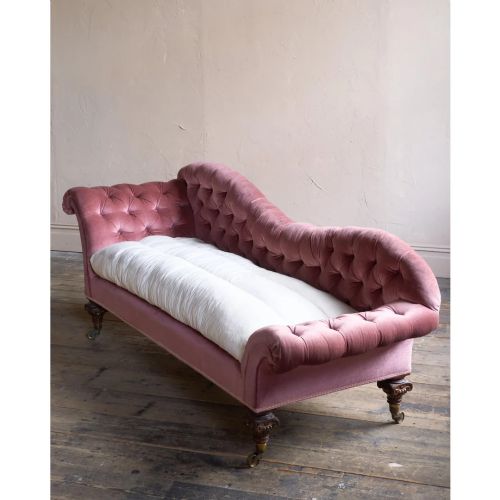
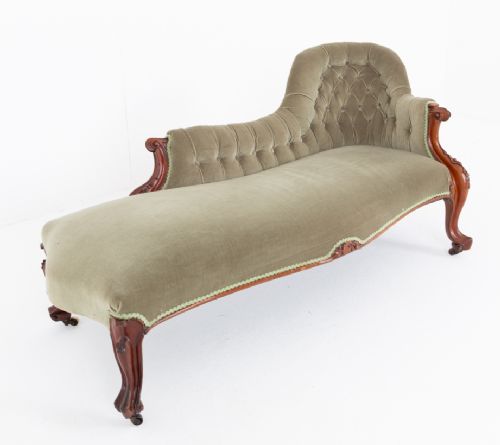
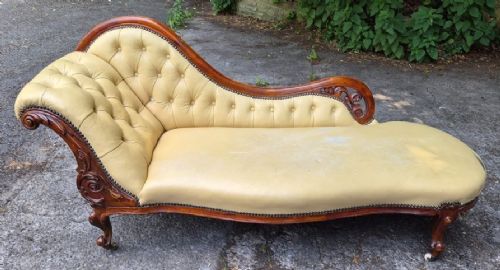
These button tufted daybed pieces offer nineteenth-century lounging comfort, combining carved timber frames with deep upholstery for traditional interiors.
Button Tufted Daybed
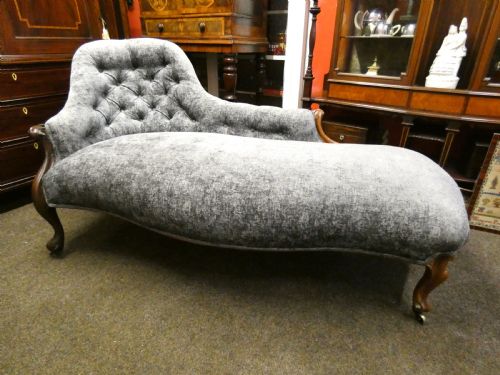
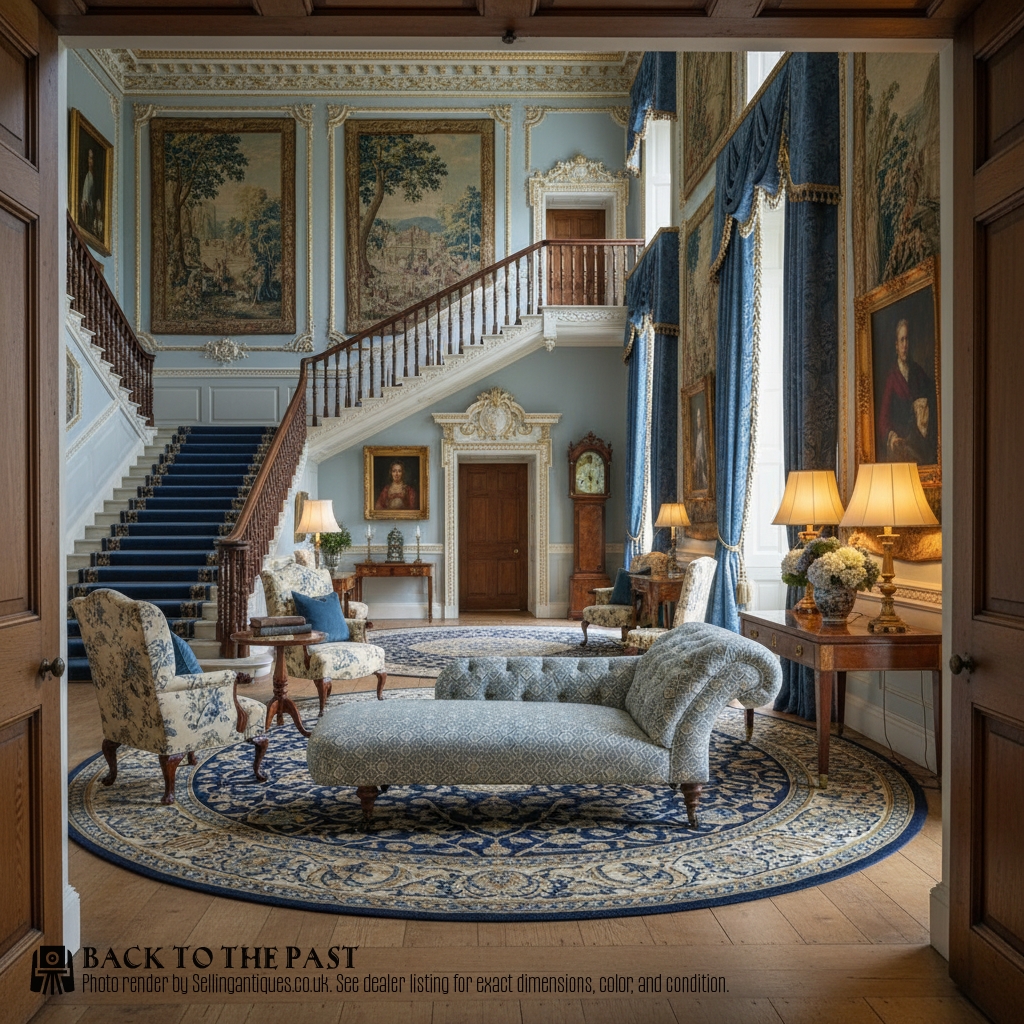
A button tufted daybed encompasses nineteenth-century chaise longues, daybeds, and scroll end settees designed for reclining. These forms span Victorian, Regency, and Louis XVI Revival styles produced across the eighteen-fifties through the nineteen-hundreds.
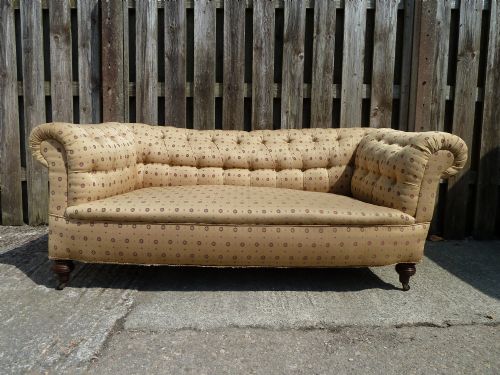
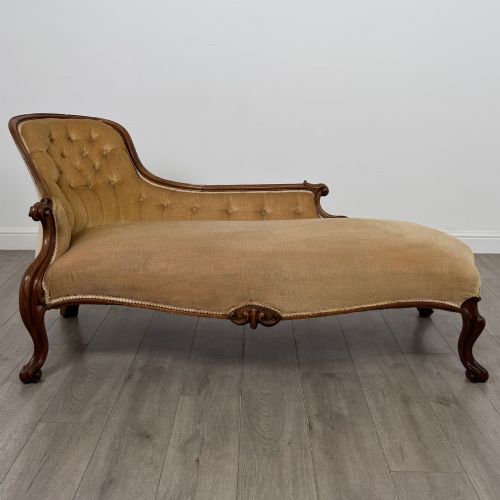
The version most commonly met on this page is the Victorian mahogany or rosewood framed chaise longue, often featuring a carved scroll end and upholstered seating. Pieces also appear in walnut, brass, and gilt decoration alongside variations like the double spoonback and Chesterfield sofa.
Originating as versatile seating for parlours and drawing rooms, these items combine timber frames with sprung bases and fabric, velvet, leather, or damask coverings. Makers such as Howard and Sons and Holland and Sons contributed to this tradition of nineteenth-century seating.
What varies in quality
Timber selection and carving intricacy define the upper tiers of these pieces, where solid mahogany or rosewood frames display detailed mouldings and substantial joinery. Lesser examples utilise simpler turned supports or plainer wood surfaces.
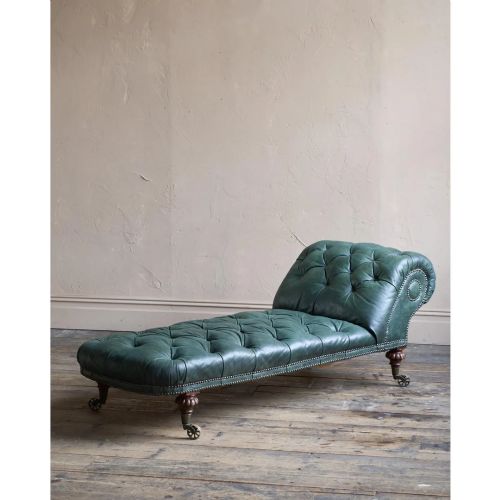
Upholstery execution separates standard production from exceptional work, particularly in the precision of the button tufting and the choice of leather, silk damask, or heavy velvet. Pieces attributed to notable makers demonstrate superior structural balance and refined framing proportions.
The inventory records multiple daybed forms, including chaises longues, Chesterfield sofas, and open-arm settees.
Howard and Sons·H Goodall and Sons·Holland and Sons·Jas Shoolbred·Miles and Edwards
The Button Tufted Daybed Glossary
- Chaise longue
- An upholstered long chair or couch for reclining, combining the characteristics of a chair and a sofa. These pieces dominate nineteenth-century listings.
- Button tufted
- An upholstery method where strings or twine pass through padding and are secured with buttons to create a deep, geometric diamond pattern. This technique secures internal stuffing while providing decorative texture.
- Scroll end
- A sweeping, curved wooden terminal on a daybed or settee that forms the headrest or arm. It reflects Regency and Victorian design preferences.
- Double spoonback
- A chair or daybed backrest shaped to resemble two vertical spoon bowls, providing lumbar support within a wooden frame. This outline appears frequently on Victorian seating.
- Regency
- An English design style spanning the early nineteenth century, characterised by classical motifs, mahogany construction, and refined proportions.
Button Tufted Daybed: Frequently Asked Questions
What is a button tufted daybed?
A button tufted daybed is a nineteenth-century reclining seat, such as a chaise longue or settee, featuring deep buttoned upholstery over a timber frame.
These pieces combine extended seating surfaces with padded backrests designed for daytime resting in Victorian and Regency interiors.
Where were daybeds placed originally?
These items stood in drawing rooms, parlours, and bedrooms of nineteenth-century homes for resting during the day without retiring to a bed.
Their decorative timber frames and upholstered backs allowed them to sit prominently against walls or within living spaces.
How do I identify a Victorian daybed?
Victorian daybeds typically feature dark timbers like mahogany or rosewood, carved scroll ends, and sprung upholstered cushions with button tufting.
Many examples incorporate specific Victorian forms such as double spoonbacks or low side rails designed for reclining.
What materials are used in these pieces?
Construction relies on solid woods including mahogany, rosewood, walnut, and general timber for the structural frames and carved legs.
Upholstery materials span leather, velvet, damask, and standard fabric, often complemented by brass details or gilt decoration.