


Victorian Twin Pedestal Table
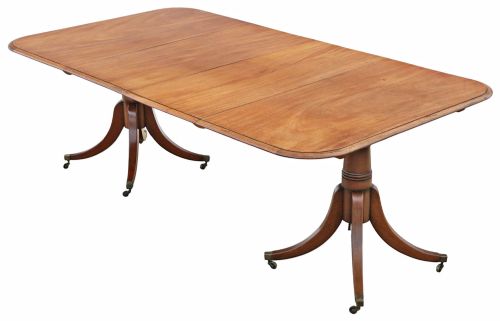
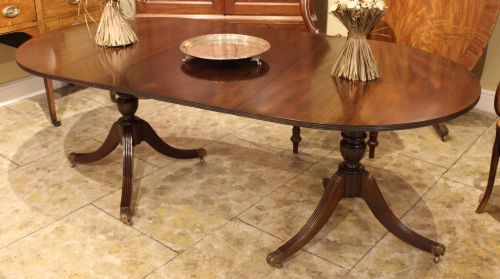
A victorian twin pedestal table brings sturdy architectural presence and generous workspace to a study, built from rich timber with two distinct supporting pillars.
Victorian Twin Pedestal Table
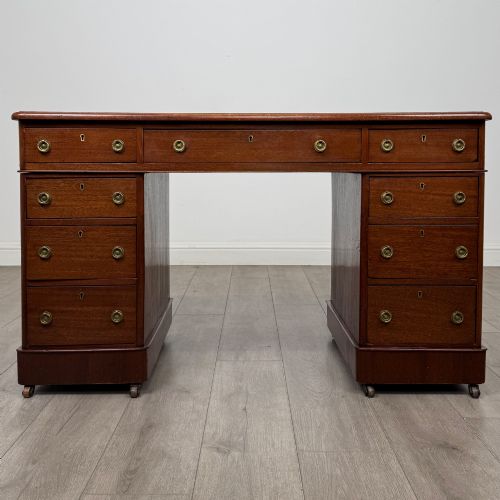
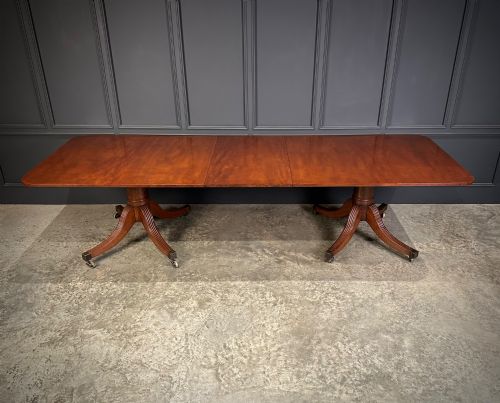
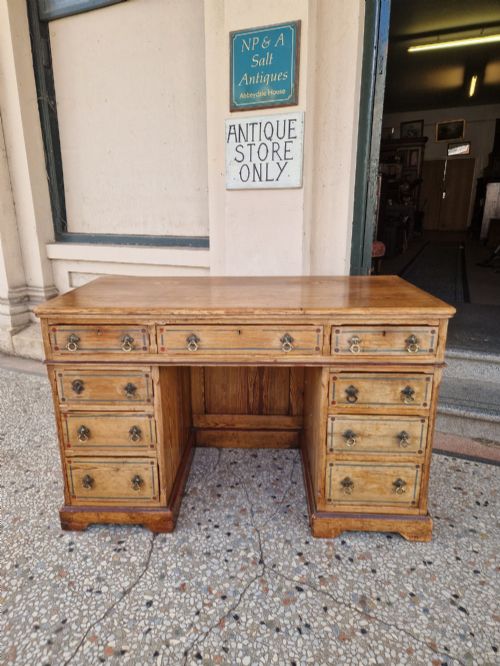
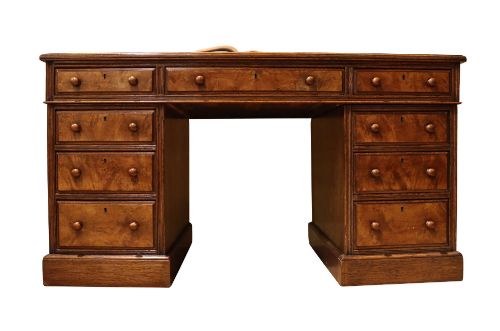
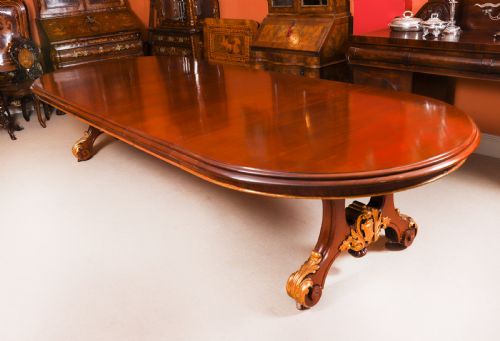
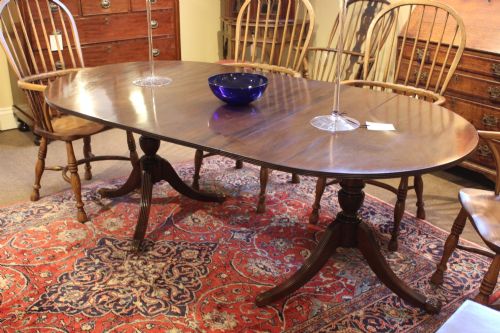
A victorian twin pedestal table typically takes the form of a robust partner desk, writing table, or extending dining table supported by two separate column bases or pedestals. These pieces originate across the nineteenth century, ranging from early examples around eighteen-forty through to the turn of the twentieth century.
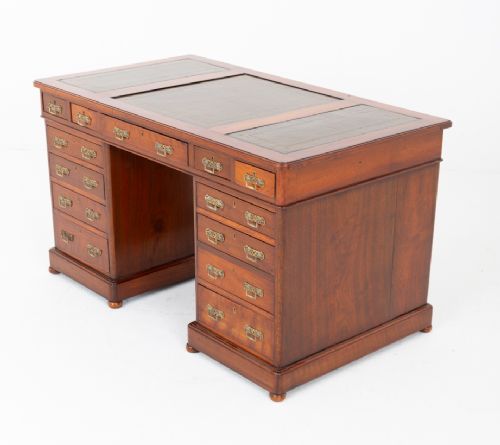
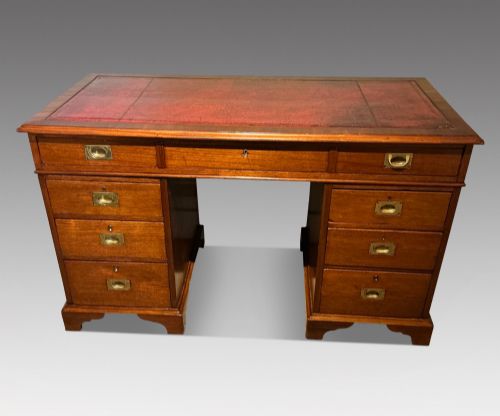
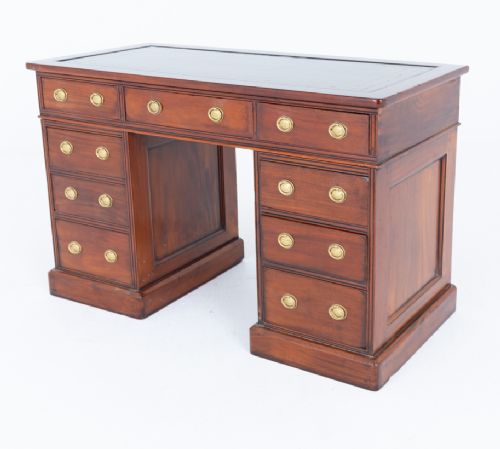
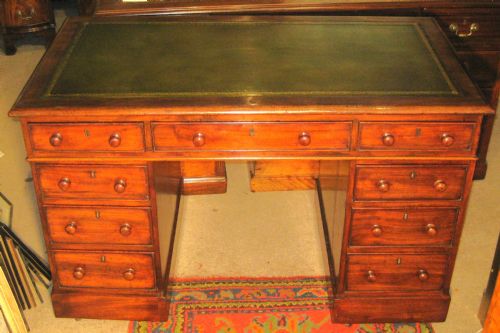
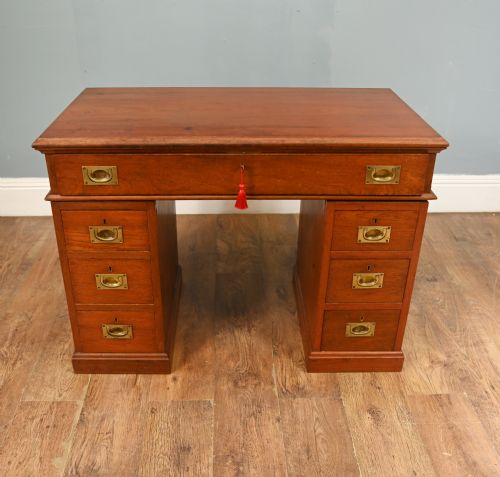
The version most commonly met on this page is the pedestal desk constructed from mahogany, walnut, or oak, often featuring inset leather writing surfaces and multiple functional drawers. Dining tables employing two pillars with extending mechanisms also appear frequently among the listings.
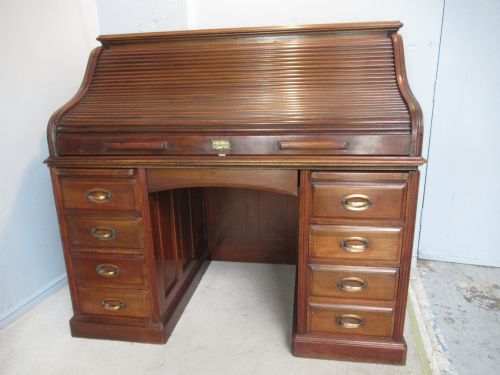
Desks and writing tables dominate the selection, built to serve demanding administrative tasks with large timber surfaces and compartmented storage. Sideboards, dressing tables, and occasional tables also utilise the twin pedestal design principle.
Materials and Construction
Makers constructed these tables predominantly using solid timbers such as mahogany and oak for structural rigidity, frequently applying burr walnut or satin birch veneers for decorative effect. Secondary woods like pine appear within internal drawer linings and hidden framing.
Traditional joinery methods, including dovetail joints for drawers and mortise and tenon frames, ensure the structural integrity of the pedestals and top surfaces. Brass fittings, leather inserts, and occasionally ormolu mounts complete the assembly of finer examples.
Some nineteenth-century pedestal desks incorporate hidden secret compartments within the central drawer banks for securing private correspondence.
Distinctions in Execution
The selection of timber grain and veneer symmetry marks the distinction between standard utilitarian office furniture and high-status library pieces. Matched burr walnut or curl mahogany veneers demonstrate deliberate visual planning by the cabinet maker.
Subtleties in carved detailing, superior drawer construction with hand-cut dovetails, and original hardware elevate certain pedestal tables above mass-produced workshop output.
Wylie and Lochead
The Victorian Twin Pedestal Table Glossary
- Pedestal desk
- A flat-topped writing table supported by two vertical banks of drawers rather than four legs. This arrangement maximises internal storage while maintaining knee clearance.
- Partners desk
- A large pedestal desk designed with drawers and cupboards on both sides so two people can work opposite each other. These pieces often feature full leather skivers.
- Extending dining table
- A table incorporating a central mechanism and removable leaves to lengthen the top surface. Twin pillar versions use two heavy central supports for stability.
- Skiver
- A panel of leather inset into the top of a desk to provide a smooth writing surface. They are frequently tooled with gold leaf borders.
- Dovetail
- A traditional interlocking joint used to connect drawer sides to drawer fronts. Hand-cut variations indicate earlier period craftsmanship.
Victorian Twin Pedestal Table: Frequently Asked Questions
What is a twin pedestal table?
A twin pedestal table is a heavy furniture form supported by two distinct vertical columns or drawer stacks rather than four conventional legs. This architectural layout provides balanced weight distribution and substantial structural support for large timber tops.
Such tables function primarily as desks, writing tables, or dining surfaces across the nineteenth century. The twin base design allows for integrated storage compartments within the pedestals while maintaining comfortable seating space in the centre.
How do I identify a Victorian desk?
Victorian desks are identified through characteristic nineteenth-century timber choices, structural proportions, and specific historical design motifs. Solid mahogany, walnut, and oak dominate these pieces, often combined with hand-tooled leather writing inserts.
Construction details such as hand-cut dovetailing in the drawer boxes and traditional cabinet maker assembly methods confirm the period origin. Cabinet styles range from plain utilitarian office pieces to ornate burr walnut variations featuring decorative brass hardware.
How were partners desks used?
Partners desks were built specifically to accommodate two individuals working face-to-face in professional offices, libraries, or administrative rooms. The double-sided configuration provides matching sets of drawers and cupboards accessible from both ends of the table.
These large pieces occupied prominent central positions within a room rather than sitting against a wall. Their expansive surface area and dual storage compartments made them essential furniture for solicitors, merchants, and estate managers.
How do I care for a mahogany desk?
Caring for a nineteenth-century mahogany desk involves protecting the timber and leather surfaces from excessive moisture, direct sunlight, and heat sources. Regular dusting with a dry, soft cloth maintains the natural lustre of the polished wood without building up heavy wax residues.
Leather skivers require occasional gentle cleaning and conditioning to prevent the material from drying and cracking over time. Maintaining stable room humidity prevents the solid timber and veneers from expanding or contracting excessively.