

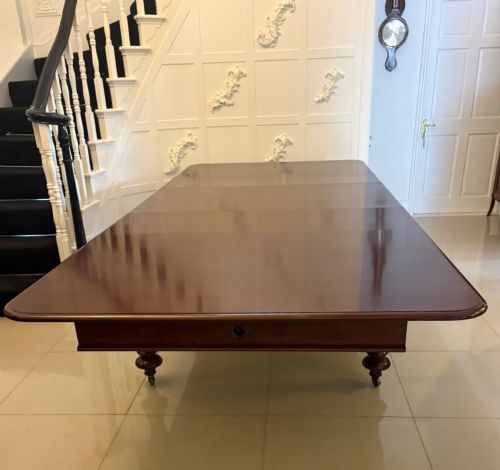
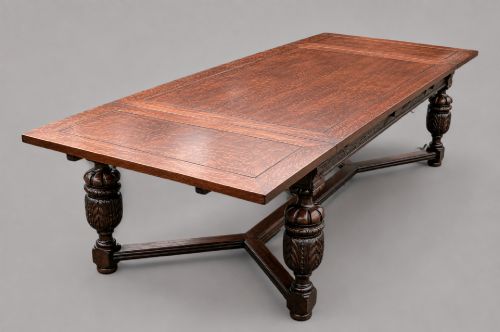
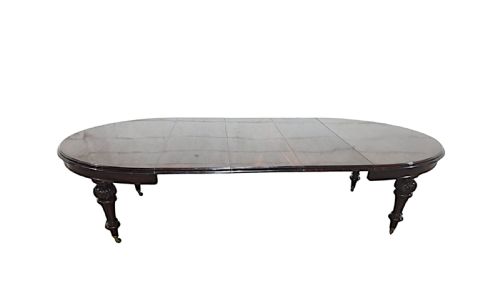
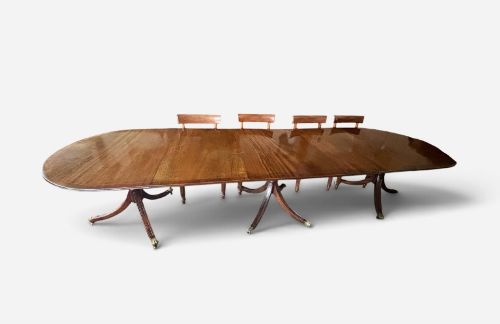
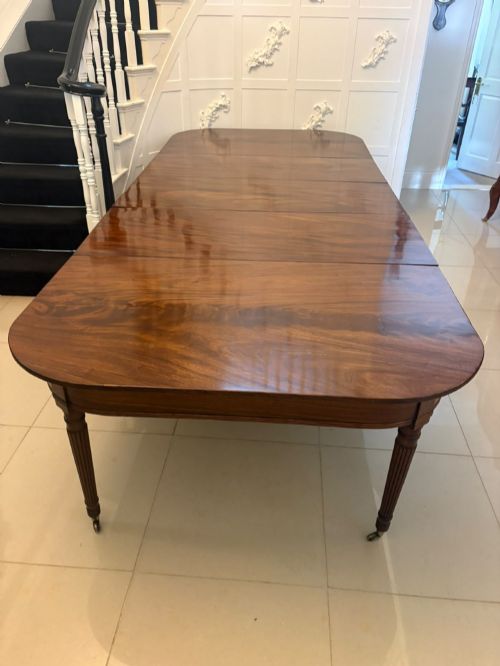
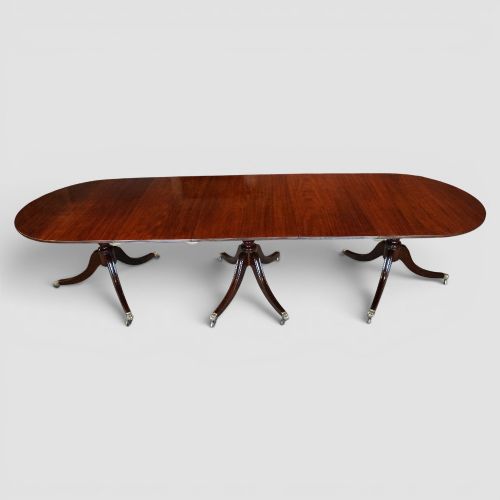
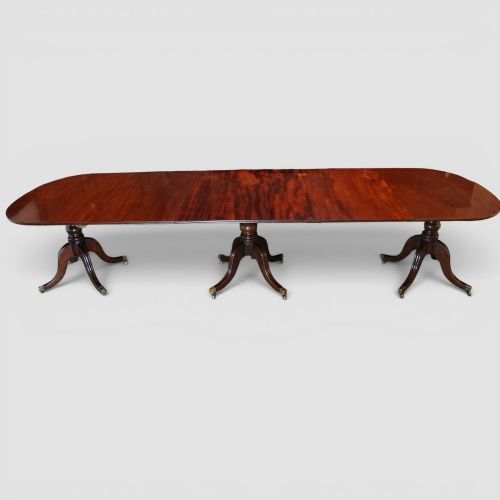
Traditional Banquet Table
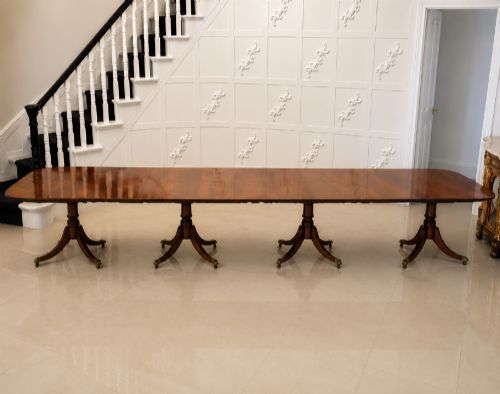
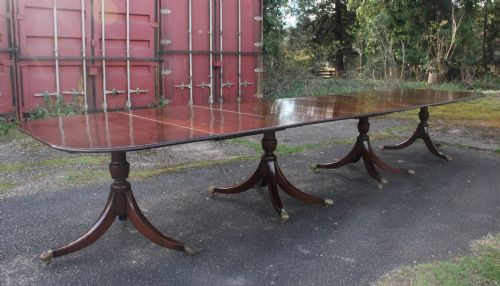
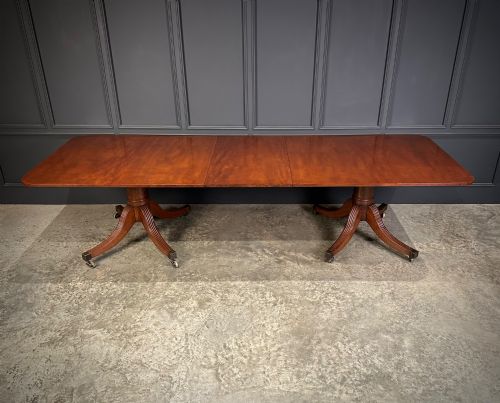
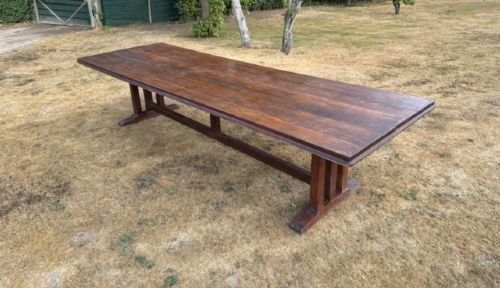
A traditional banquet table brings scale and substance to a dining room, offering multiple pedestals or refectory framing to seat large gatherings.
Traditional Banquet Table
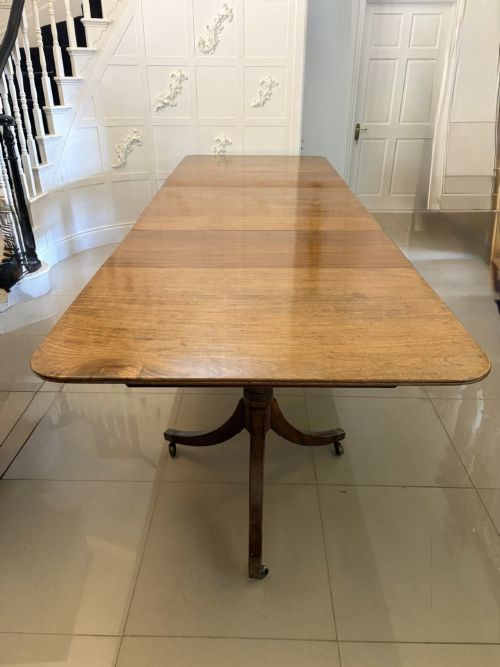
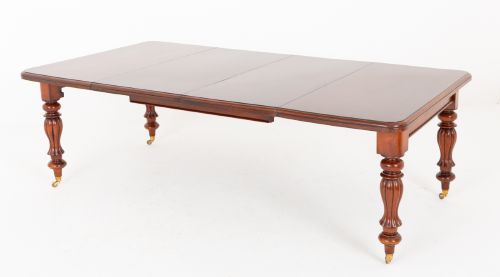
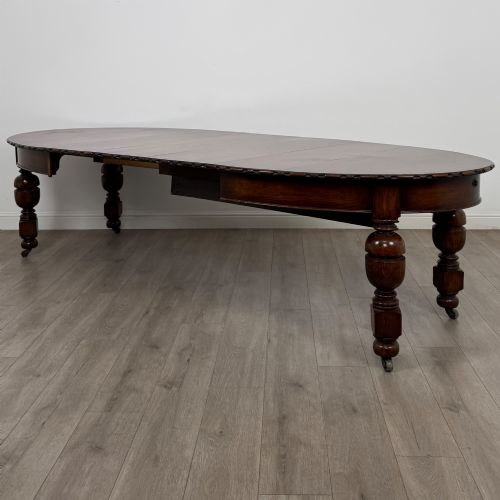
When searching for a traditional banquet table, buyers encounter substantial dining furniture designed to accommodate large dinner parties across multiple leaves and pedestals. The options span the nineteenth century and the early twentieth century, incorporating Georgian, Regency, William IV, and Edwardian aesthetic influences.
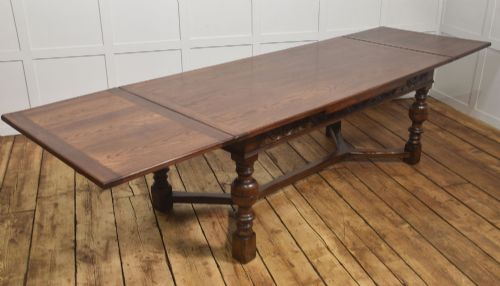
Mahogany forms the predominant choice among the listings, frequently paired with multiple pillars and extending mechanisms to seat upwards of twenty people. Oak and walnut also appear in refectory and draw-leaf formats, connecting these large tables to earlier revival styles.
How They Were Made
Cabinet makers utilised dense hardwoods, predominantly mahogany, oak, walnut, and pollard oak, selecting figured grain patterns for the main boards and pedestals. Brass castors and hardware frequently support the heavier pillar bases on multi-leave extending models.
Extension systems rely on robust timber runners and drop-in leaves that allow the central frame to expand safely. Joinery methods include traditional pegging for refectory styles and solid pillar assemblies bolted to sturdy foot platforms.
Listings feature mahogany, oak, walnut, and pollard oak spanning the nineteenth and early twentieth centuries.
What Varies in Quality
The standard of timber selection dictates the visual impact, particularly where figured mahogany or pollard oak exhibits complex grain movement across multiple matching leaves. Tables built by documented cabinet makers demonstrate superior precision in the turning of pedestals and the crispness of reeded legs.
Structural integrity depends on the original engineering of the extension mechanism and the weight capacity of the pillar supports. Examples possessing balanced proportions across four or more pedestals maintain stability when fully extended to maximum seating capacity.
Gillows Lancaster·Maple and Co
The Traditional Banquet Table Glossary
- Pedestal
- A central support pillar, often tripod or quadruped in design, used to hold up the top of an extending dining table.
- Draw-leaf
- An extending table mechanism where end leaves slide out from beneath the main top to increase the surface area.
- Refectory
- A long, narrow dining table design historically used in communal halls and re-popularised in later revival periods using solid oak.
- Reeded
- A decorative moulding comprising parallel convex curves carved directly into table legs or pillar supports.
Traditional Banquet Table: Frequently Asked Questions
How do I know how many people can sit?
Tables are typically categorised by their total length and the number of extra leaves they possess, which dictates how many chairs fit comfortably along the sides and ends.
Larger multi-pillar formats often accommodate upwards of twenty guests when fully expanded.
What is the difference between pillar and refectory styles?
Pillar tables use vertical columns resting on foot bases to hold up sections of the top, allowing the frame to pull apart for leaves.
Refectory tables rely on trestle or four-leg frames with fixed or draw-leaf tops rooted in earlier centuries.
Are leaves easy to remove?
Most extending tables use a winding mechanism or simple sliding runners that allow the central sections to separate.
Extra leaves drop into the gap and secure with brass pins or clips underneath.
How do I care for a polished mahogany surface?
Regular dusting with a soft cloth keeps the timber finish clean without buildup.
Applying natural wax periodically maintains the sheen and protects the grain of the wood.