


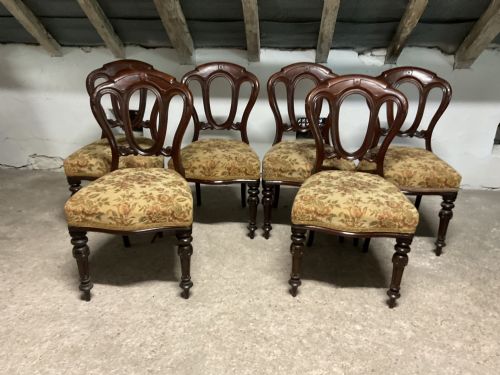
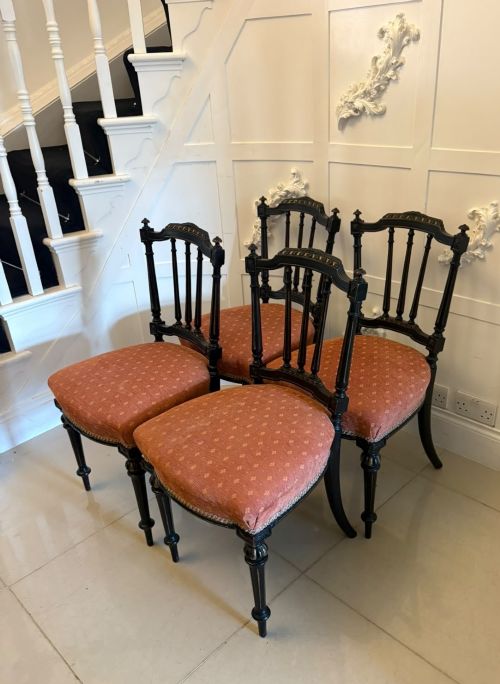
Victorian Turned Wood Chair
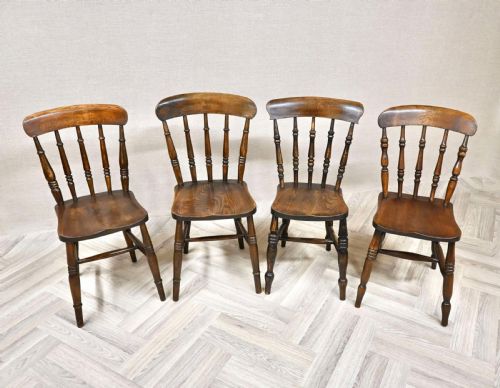
A victorian turned wood chair brings tactile warmth and sturdy craftsmanship into a room.
Victorian Turned Wood Chair
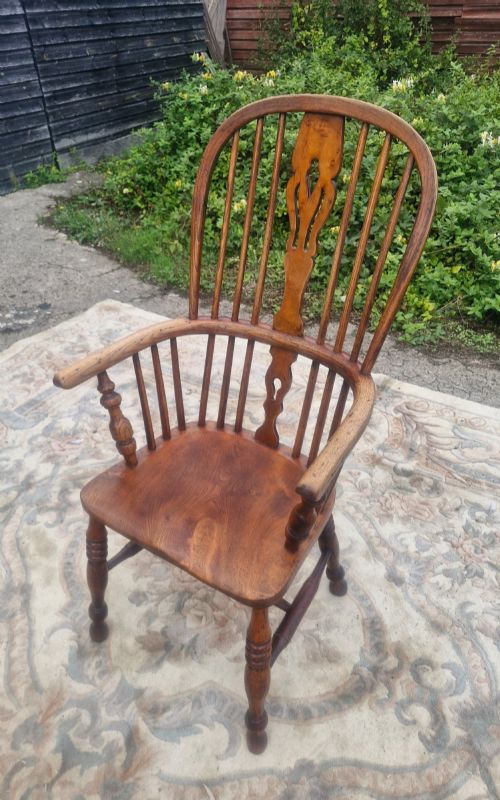
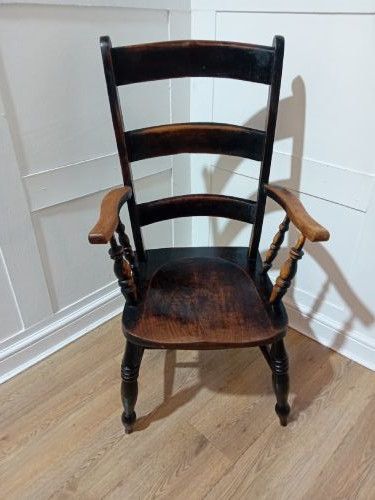
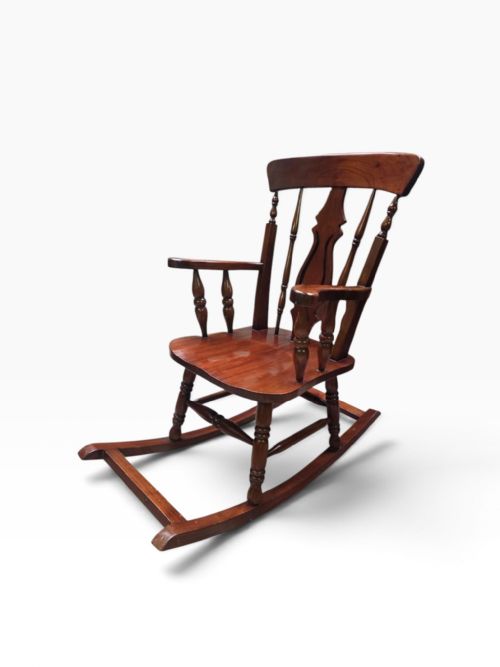
A victorian turned wood chair encompasses robust seating forms designed for daily utility and domestic comfort throughout the nineteenth century. Buyers encounter robust Windsor armchairs, Captain's chairs, and rocking chairs built for longevity in kitchens, parlours, and country houses.
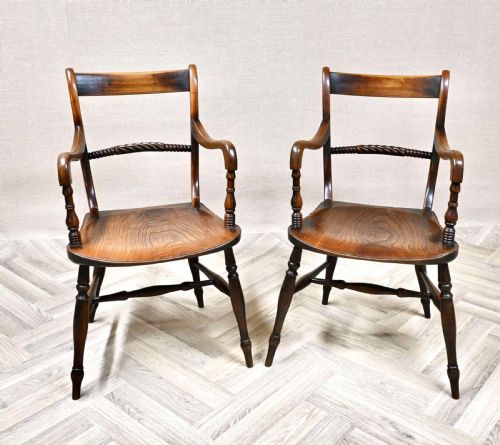
Makers utilised regional English designs like the Thames Valley Oxford chair, alongside Scottish country house seating and bobbin-framed bedroom chairs. These pieces reflect a rich heritage of domestic woodworking traditions adapted for varied rooms.
How they were made
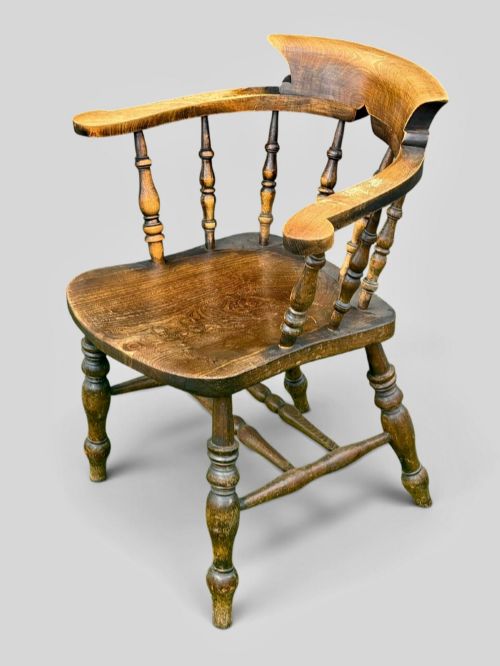
Carpenters and turners employed lathe-turned spindles, bobbin frames, and ropetwist details to shape structural supports and backs. Solid timbers including elm and ash provided the necessary strength for high-stress components like bow backs and legs.
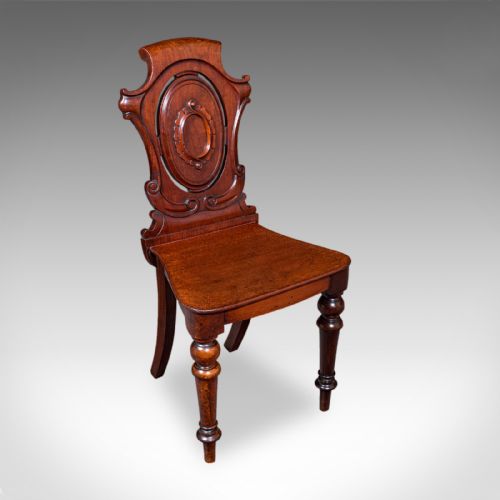
Traditional joinery techniques combined steam-bent wood with wedged tenon joints to secure seats to undercarriages without metal fasteners. Beech and mahogany frames received careful shaping, occasionally incorporating ebonised finishes or brass fittings for refined interiors.
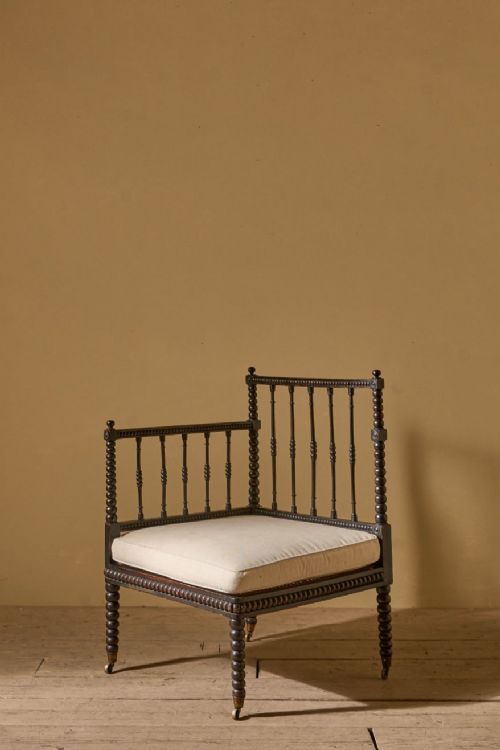
Bobbin chairs turn humble sewing spools into furniture, proving that even a thread holder deserves a starring role.
What varies in quality
Quality rests in the integrity of the timber selection, such as figured yew or well-grained elm, and the precision of the lathe turning. Finer examples display crisp detail in spindle profiles, balanced proportions, and original surface finishes.
Structural stability depends on the tightness of the joints and the preservation of the original wood components rather than later replacements. Pieces retaining their original finish and patination command greater appreciation among collectors.
J Spencer·Philip Webb·Mellier and Co·C Hindley and Sons
The Victorian Turned Wood Chair Glossary
- Windsor chair
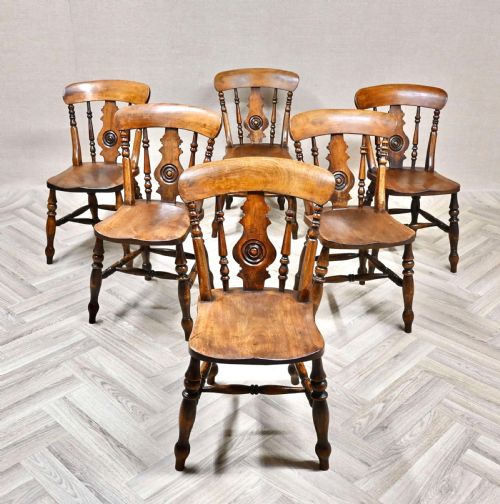
- A wooden chair built with a solid sculpted seat into which the legs and back spindles are directly inserted. This form provides robust support through a combination of bentwood bows and turned components.
- Bobbin framing
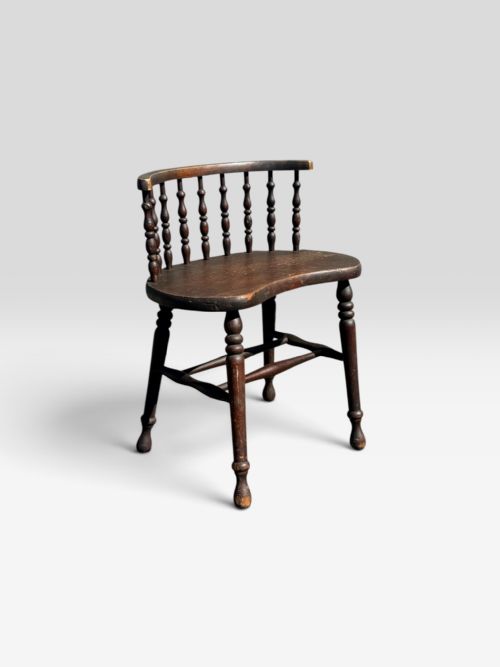
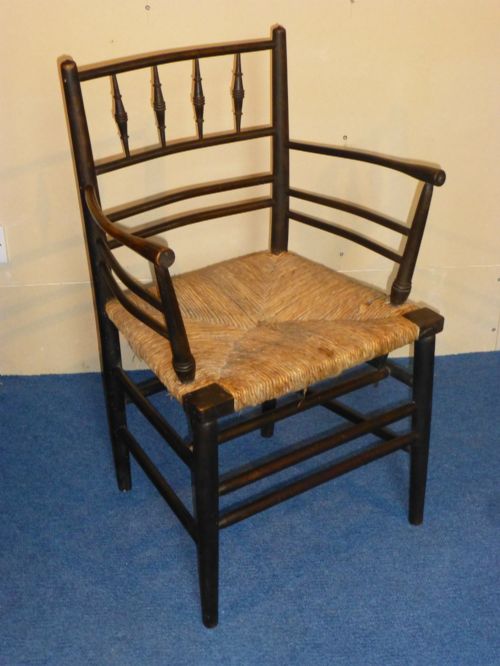
- A style of furniture turning that creates a series of rounded wooden spheres resembling bobbins or spools along the legs and stretchers. It became popular during the nineteenth century for decorative occasional chairs.
- Captain's chair
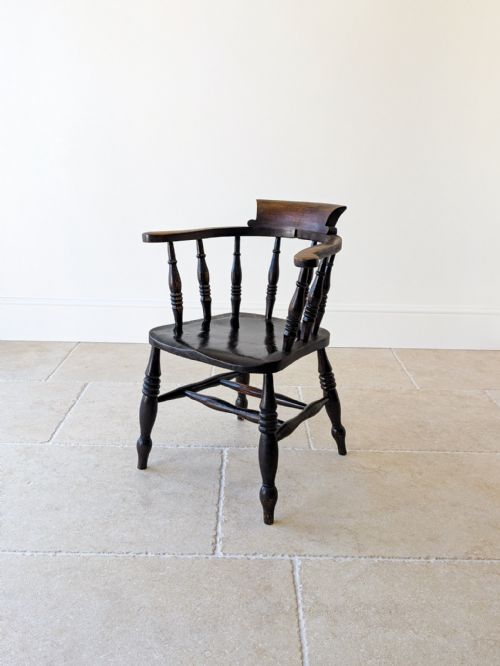
- A low-backed wooden armchair designed with a continuous curved armrest supported by turned spindles. These seats often served functional roles in offices, studies, and ships.
- Barback
- A chair design featuring a horizontal wooden splat shaped like the top rail of a horse bridle across the backrest. This detail appears frequently on nineteenth-century dining and side chairs.
- Rush seat
- A seating surface woven from dried marsh rushes in a traditional square or envelope pattern. This organic material offers a resilient and flexible texture suited to country furniture.
Victorian Turned Wood Chair: Frequently Asked Questions
How do I identify a Windsor chair?
A Windsor chair is distinguished by its thick wooden seat into which the legs and back spindles are tenoned directly. This construction method creates a sturdy, unified frame without traditional side rails.
Look for a bowed top rail or a high back supported by turned spindles and a central splat. These chairs often feature elm seats combined with ash or beech framing.
Where were these chairs used originally?
These chairs served varied roles throughout nineteenth-century homes, from farmhouse kitchens to formal libraries and bedrooms. Kitchens and country houses utilised robust elm and ash models for daily dining.
More refined reception rooms and studies housed mahogany or rosewood versions with upholstery or carved details. Bobbin-turned chairs frequently furnished bedrooms and parlours as decorative occasional seating.
Are bobbin-turned chairs comfortable?
Bobbin-turned chairs are primarily designed for upright posture in bedrooms, halls, or occasional seating areas. Their turned frames offer sturdy support while maintaining a visually light profile.
Some low seat examples work well as bedroom or corner chairs rather than for long periods of relaxation. Pairing them with small cushions can enhance comfort during extended sitting.