



Brown Wooden Nursing Chair
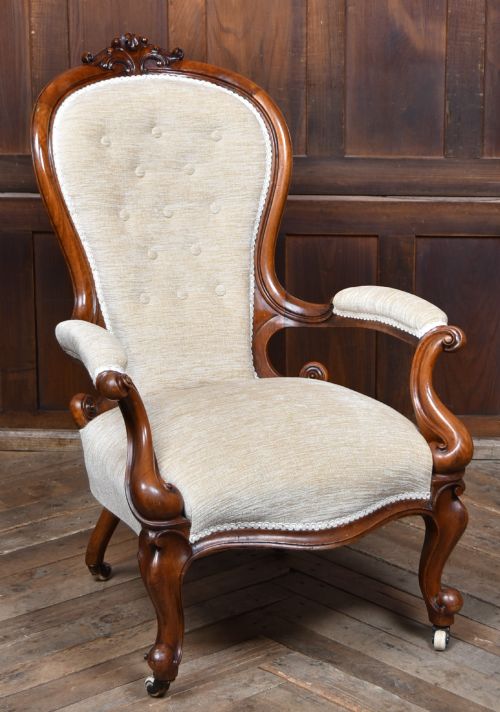
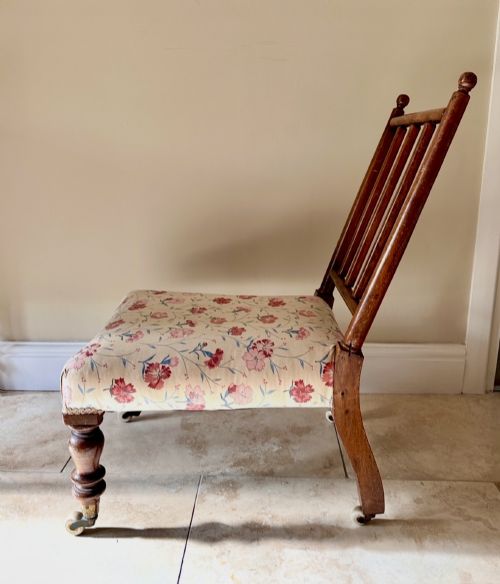
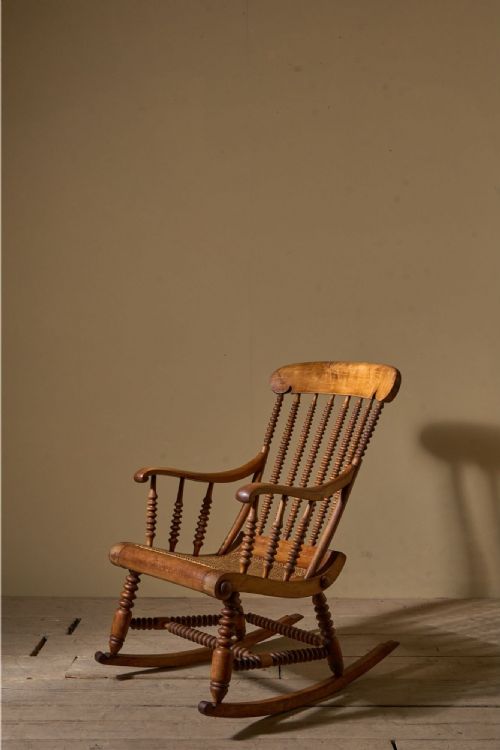
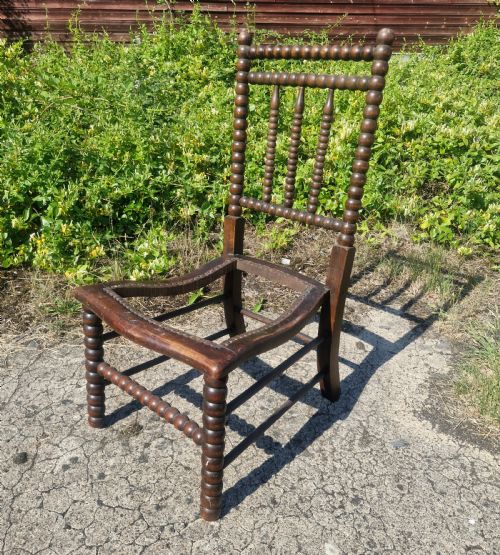
A brown wooden nursing chair brings low seating and turned woodwork into a Victorian or Edwardian interior.
Brown Wooden Nursing Chair
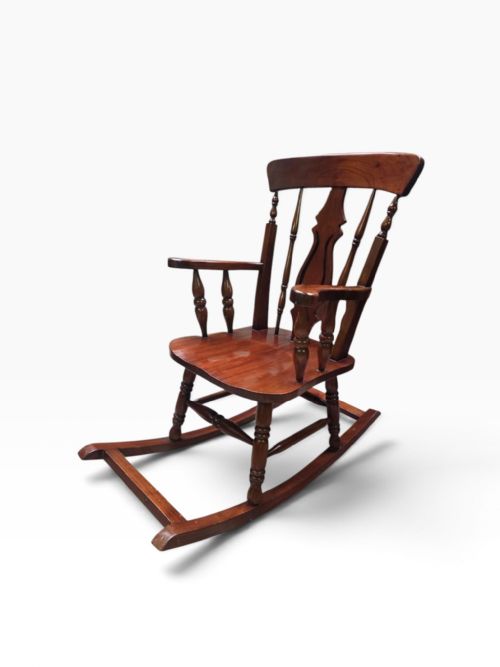
A brown wooden nursing chair sits low to the floor for comfort and ease of movement during daily tasks. These pieces appear across Victorian and Edwardian periods, taking forms such as rocking chairs, bedroom chairs, and low occasional seats.
Makers shaped these chairs from timbers like mahogany, oak, beech, and assorted hardwoods. Their profiles range from simple turned frames to refined Aesthetic Movement designs and inlaid mahogany models.
The evidence shows diverse seating materials including fabric upholstery, leather, cane, and new geometric textiles. Buyers encounter both rocking bases and static legs fitted with castors.
How they were made
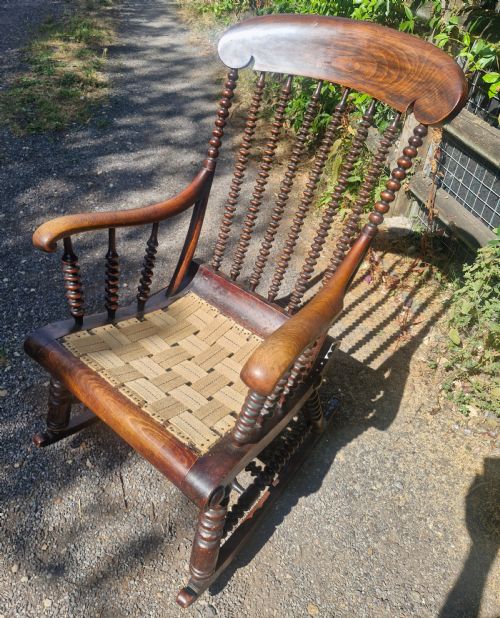
Craftsmen utilised solid hardwoods such as mahogany, oak, and beech to construct sturdy frames. Turned elements like bobbin frames and front legs display detailed spindle work and framing techniques.
Seating areas relied on integrated cane panels, traditional upholstery, or tensioned leather inserts. Inlaid details and turned spindles define the decorative character of Edwardian and Aesthetic examples.
Brown Wooden Nursing Chair Retail Price Guide 2026
Typical asking prices for brown wooden nursing chair among the pieces listed under this phrase on Sellingantiques today, from the lower quarter to the upper quarter. They describe what is for sale here now, not the wider market.
The available forms include rocking chairs, gossip chairs, and low bedroom seating.
What varies in quality
The refinement of the timber and the complexity of the turning dictate the grade of each piece. Simple beech frames differ markedly from figured mahogany or sophisticated inlaid Edwardian structures.
Intricacy in the woodwork, such as bobbin turning or stylistic references to the Aesthetic Movement, separates standard utilitarian seating from finer parlour examples.
Wheeler Of Arncroach
The Brown Wooden Nursing Chair Glossary
- Bobbin turned
- A style of woodwork featuring cylindrical segments resembling bobbins or spools turned on a lathe. This technique appears frequently on nineteenth-century frames.
- Aesthetic Movement
- A late nineteenth-century design style emphasising artistic visual qualities over heavy historical revivalism. Pieces in this style often feature clean lines and refined proportions.
- Nursing chair
- A low-seated chair historically designed for feeding infants or general bedroom use. The low height allows the sitter to remain comfortable while close to the floor.
- Cane seated
- A seat woven from split rattan or similar plant material to form an open, flexible mesh. This technique provides a light, breathable surface for wooden chairs.
Brown Wooden Nursing Chair: Frequently Asked Questions
What is a brown wooden nursing chair?
A brown wooden nursing chair is a low-seated nineteenth or early twentieth-century chair designed for comfort in bedrooms or parlours. They often feature turned wooden frames and upholstered or cane seats.
These pieces reflect the stylistic shifts from heavy Victorian forms to lighter Edwardian and Aesthetic Movement designs.
How do I date a nursing chair?
Dating relies on identifying materials, turning styles, and construction methods recorded in the period evidence. Victorian examples often show heavier mahogany or bobbin framing, while Edwardian pieces introduce lighter inlaid woods.
Castors and upholstery styles also offer clues to the decade of manufacture between eighteen sixty and nineteen hundred.
Were all these chairs used for nursing?
Many low-seated chairs served multiple domestic functions including bedroom seating, fireside relaxation, and general occasional use. The low profile made them practical for various household tasks.
Contemporary listings group these under nursing chairs, bedroom chairs, and gossip chairs depending on their specific form.
What woods were used for these chairs?
Makers utilised a variety of hardwoods including mahogany, oak, beech, and general hardwoods depending on the regional workshop and period. Mahogany and oak provided sturdy frames for elaborate turning and inlay.
Beech frequently served as a reliable timber for turned rocking chairs and occasional bedroom seating.