




Victorian Trunk Clock
A victorian trunk clock brings dependable timekeeping and striking timber presence to a hallway or study.
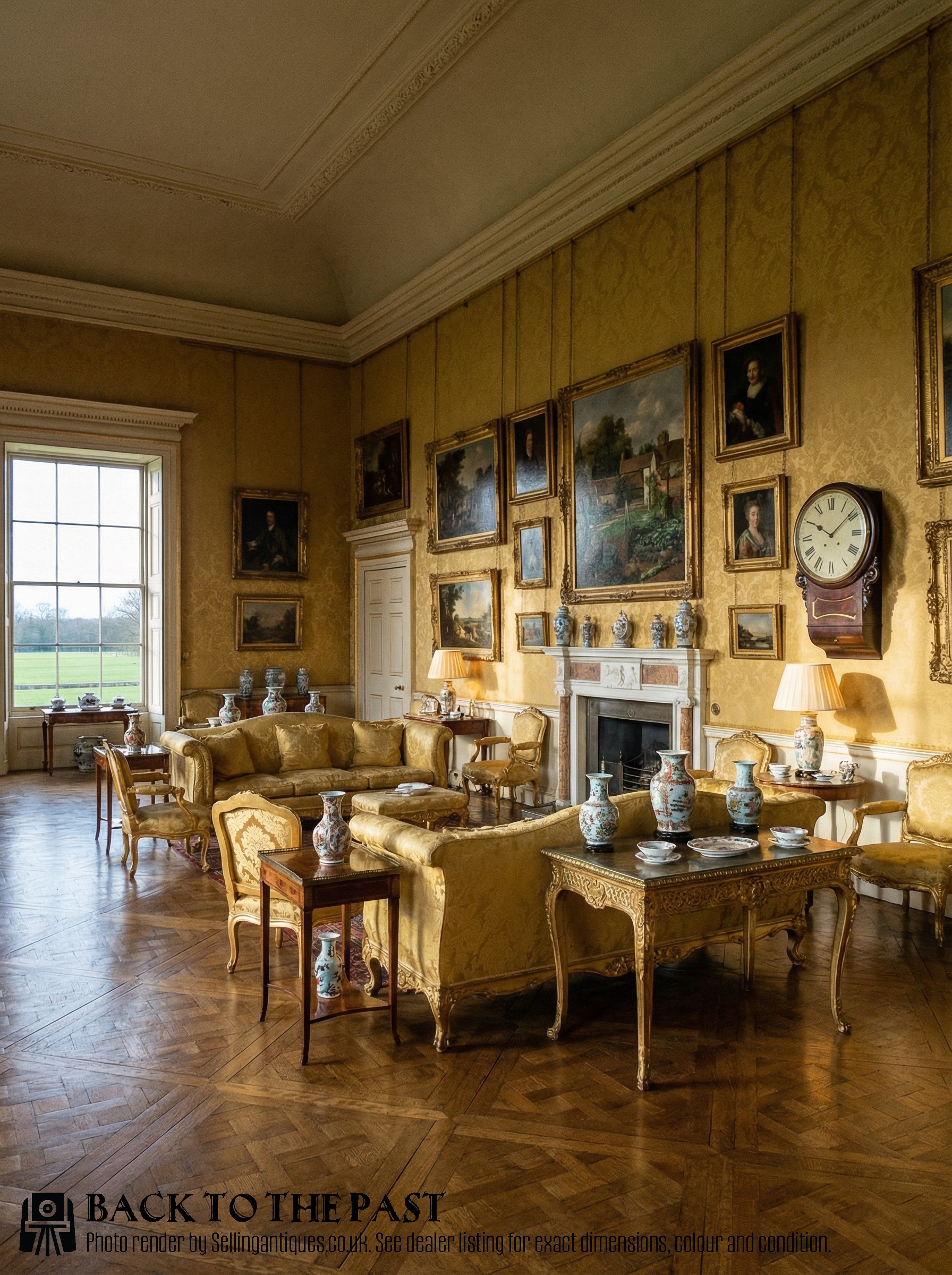
Victorian Trunk Clock
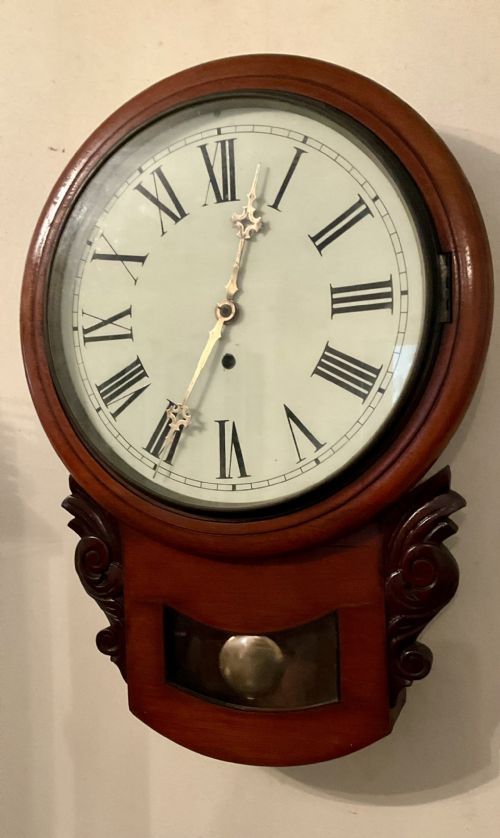
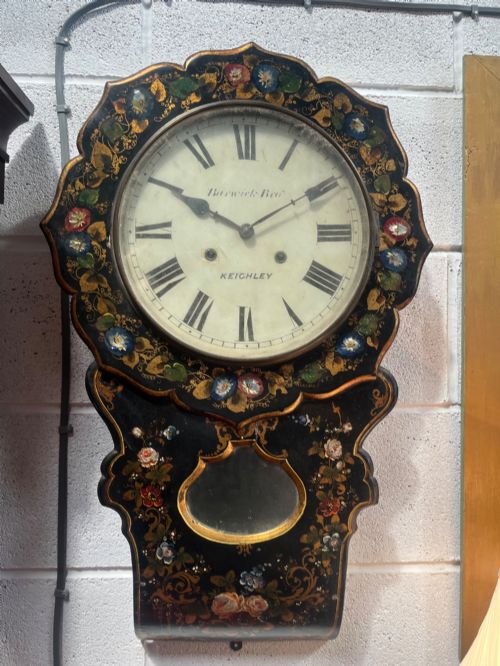
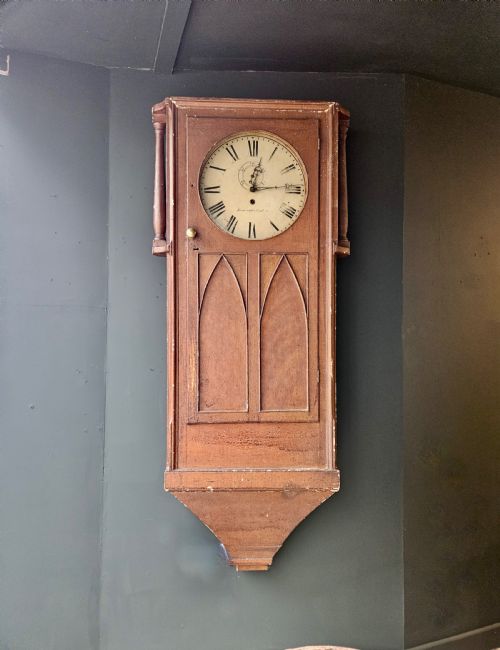
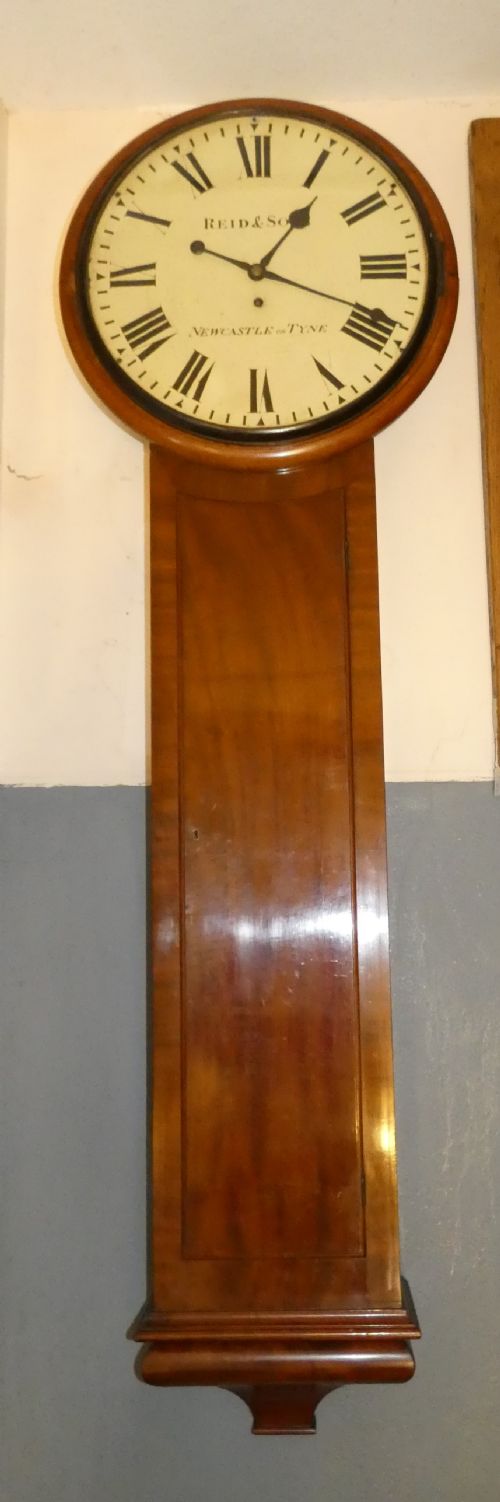
When searching for a victorian trunk clock, you are looking at substantial timepieces designed for domestic and public spaces during the nineteenth century. These items typically manifest as drop dial wall clocks or longcase clocks, featuring distinctive wooden trunk bodies that house the pendulum and weight systems.
The most common versions met on this page are mahogany and rosewood drop dial wall clocks dating from the middle to late nineteenth century. These pieces combine compact wall-hanging upper cases with shorter trunk drops below, often housing fusee movements for precise timekeeping.
Alongside wall-mounted trunk designs, the selection includes floor-standing longcase clocks and tavern clocks spanning the Victorian, Regency, and earlier nineteenth-century periods. These originate from both London makers and regional provincial workshops across England and Scotland.
How they were made
Cabinetmakers constructed the main cases predominantly using solid mahogany and rosewood, frequently incorporating brass bezels, glass dial covers, and mother-of-pearl inlay details. Timber selection prioritized rich grain patterns and durability, housing heavy iron or brass clock mechanisms securely within the wooden trunk.
Horologists fitted mechanical fusee movements or double-fusee striking systems to maintain consistent driving force as the mainspring wound down. Painted enamel or metal dials, often protected behind hinged brass rims, provided clear legibility for daily use.
Listings feature mahogany, rosewood, and pine woods alongside brass, iron, and mother-of-pearl materials.
What varies in quality
The sophistication of the internal movement separates standard timepieces from exhibition-grade regulators, particularly the inclusion of twin fusee systems or striking capabilities. Heavy brass plates, clean gear cutting, and signed dial faces indicate superior workshop production.
Cabinetry execution dictates overall visual appeal, where finely figured mahogany or rosewood veneers, inlaid mother-of-pearl, and original painted decoration reflect higher craftsmanship. Retaining original case components and untouched dial paint preserves the historic integrity of the piece.
Halliday & Rich·Joseph Mansfield·John Walker·R. Roberts·J.W. Enock·C. Coleman·Mark Bartley·Aitchison of Glasgow·Frederick Rowe·Sam Robson
The Victorian Trunk Clock Glossary
- Fusee
- A conical pulley used in mechanical clocks to equalize the diminishing power of the mainspring as it unwinds. This mechanism ensures consistent torque is delivered to the gear train.
- Drop dial
- A clock design featuring a circular dial mounted above an extended wooden trunk case. The lower drop accommodates the downward swing of the pendulum.
- Regulator
- A precision pendulum clock designed for high accuracy. These movements often feature deadbeat escapements and separate dials for hours, minutes, and seconds.
- Tavern clock
- A large, weight-driven wall clock with a prominent circular dial and a long trunk, historically hung in public houses and coaching inns for general use.
Victorian Trunk Clock: Frequently Asked Questions
Where should I hang a trunk wall clock?
These clocks require a structurally solid interior wall capable of supporting substantial timber weight and daily pendulum vibrations.
Position the dial at eye level in a hallway, drawing room, or study where the chime and mechanical movement can be easily appreciated.
How do fusee movements work?
A fusee uses a spiral-grooved cone connected to the mainspring via a fine chain or cord to regulate tension.
This clever mechanical device compensates for the dropping power of the spring as it uncoils, maintaining steady force to the escapement.
How do I wind my clock?
Use the correct winding key on the dial arbors according to the specific instructions for single or twin fusee movements.
Take care not to overwind the mechanism, stopping firmly when resistance indicates the spring is fully tensioned.
How do I tell a Regency clock from a Victorian one?
Regency pieces typically display restrained classical proportions influenced by earlier Georgian design traditions and clean architectural lines.
Victorian examples frequently introduce richer timber veneers, mother-of-pearl inlay, and more robust decorative casework.