



Inlaid Mahogany Wall Clock
An inlaid mahogany wall clock brings architectural presence to a room, combining warm timber with precise mechanical timekeeping.
Inlaid Mahogany Wall Clock
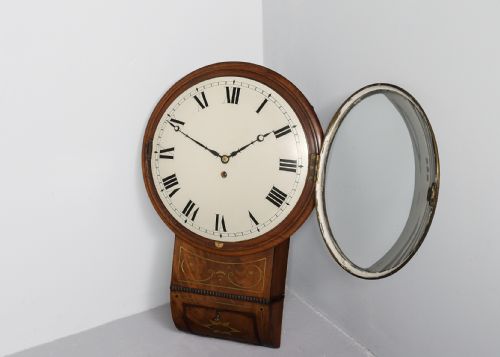
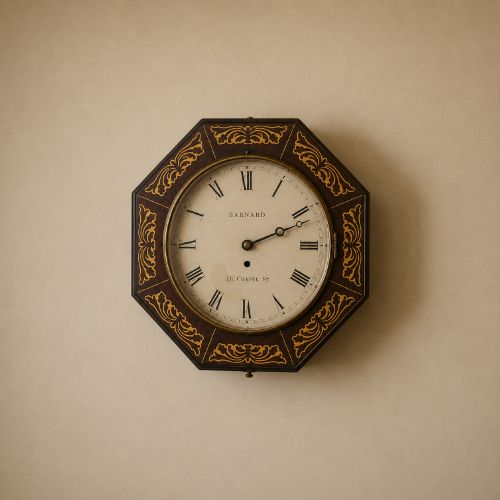
An inlaid mahogany wall clock is a functional timepiece designed to mount securely on a wall, typically housing a mechanical movement within a rich timber housing. The pieces seen here span periods from the Georgian and Regency eras through to the Victorian period and the mid-twentieth century.
Materials and construction
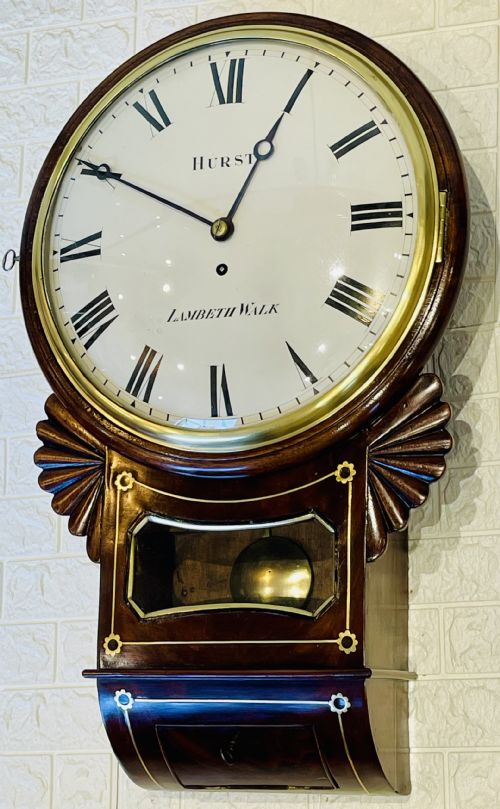
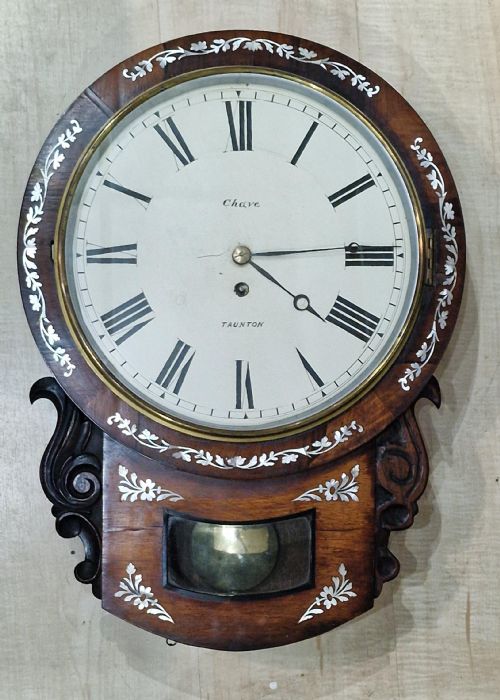
Makers utilised solid mahogany for structural stability and visual depth, shaping the timber into circular, octagonal, or trunk dial cases. Brass featured extensively both for delicate stringing and inlay upon the wood and for the mechanical plates, gears, and bezels.
Faces were formed from painted iron or enamel, protected behind curved or flat glass within a hinged bezel. Movements relied on fusee or twin-fusee mechanisms driven by cords or chains to maintain steady power to the escapement.
The listings show dial variations including convex white painted iron faces alongside flat enamel and silvered metal options.
Distinguishing finer examples
The refinement of the brass inlay work and the crispness of the mahogany case carving distinguish the finer examples from standard production. Master makers invested heavily in the precision of the fusee movement, ensuring smooth power delivery and accurate timekeeping across eight-day runs.
The legibility and original condition of the painted or convex dial also dictate the standing of a piece, alongside the integrity of the timber housing and the presence of signed dial plates from recognised provincial or London makers.
Barnard·Samuel Chave Taunton·Cording of London·Joseph Mansfield·Thomas Connold of Alysham·Ganthony of London·Kleyser of London·Haley and Milner·Mark Bartley·Sansom·Halliday and Rich·Thomas Lindey of Bristol
The Inlaid Mahogany Wall Clock Glossary
- Fusee
- A conical pulley used in mechanical clocks to maintain an even pull on the movement as the mainspring unwinds. This device compensates for the decreasing tension of the spring.
- Drop dial
- A clock case featuring a circular dial section at the top above an extended lower trunk. This lower section often accommodates a longer pendulum.
- Bracket clock
- A portable timepiece designed originally to sit on a bracket or shelf. Many examples in mahogany crossed over into wall-mounting contexts.
- Convex dial
- A clock face that curves outward toward the viewer. This shape reduced glare from windows and gas lighting in domestic interiors.
Inlaid Mahogany Wall Clock: Frequently Asked Questions
How do I wind an antique fusee wall clock?
Use the designated winding key on the dial face to turn the mechanism clockwise until resistance is felt. Care must be taken not to overwind the mainspring.
Ensure the pendulum is stationary before moving the clock to prevent damage to the suspension spring and escapement components.
Where should I hang a heavy mahogany clock?
Mount the clock directly onto a solid wall stud or masonry using appropriate fixings rated for the weight of the timber case and movement. Avoid placing it near exterior doors where constant vibration could disturb the beat.
Keep the timepiece away from direct sunlight and heat sources to protect the mahogany finish and prevent timber splitting.
Why does my wall clock stop running?
Stopping often results from the clock being slightly out of beat, which can be adjusted by listening to the regularity of the tick and shifting the crutch wire gently. Dust accumulation within the movement can also halt the gear train over time.
If basic adjustments fail, a professional service by a horologist is required to clean and lubricate the brass pivots and wheels.
How do I identify a Regency period clock?
Regency pieces often display restrained classical proportions combined with precise brass inlay or stringing on the mahogany case. The dial signatures and overall aesthetic reflect the design sensibilities of the early nineteenth century.
Examining the internal movement and backplate construction will often confirm the period alongside timber characteristics.