


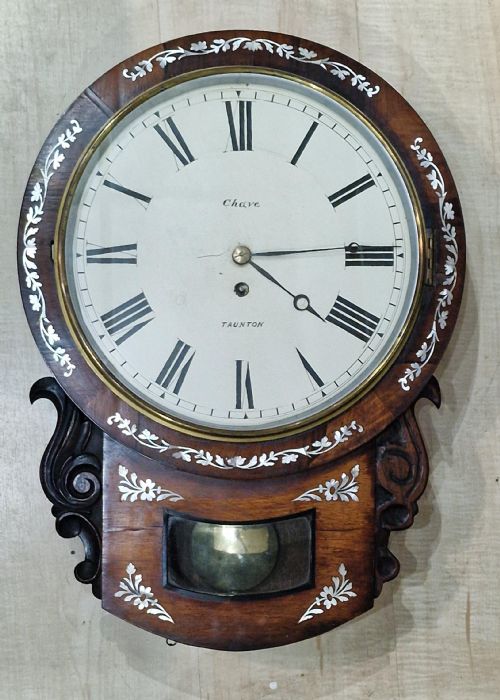


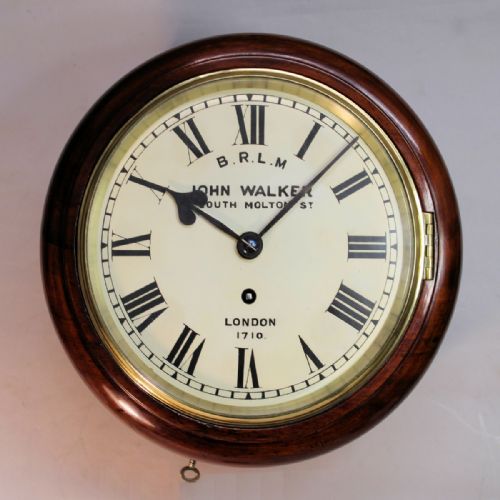

Fusee Movement Wall Clock
These fusee movement wall clock examples combine precise timekeeping mechanics with robust timber cases suited for everyday interiors.
Fusee Movement Wall Clock
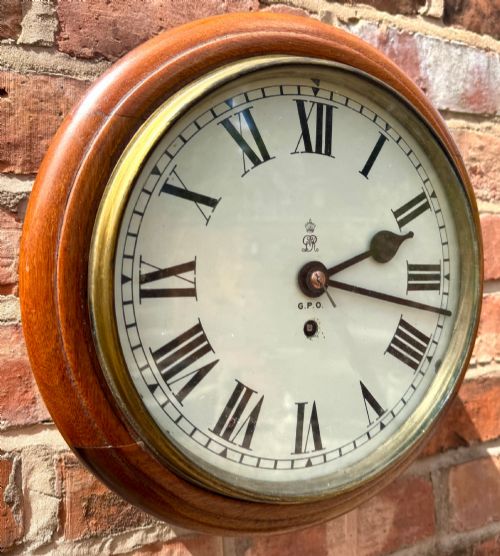
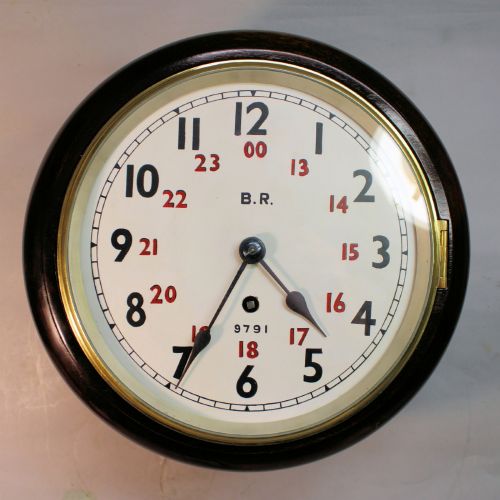
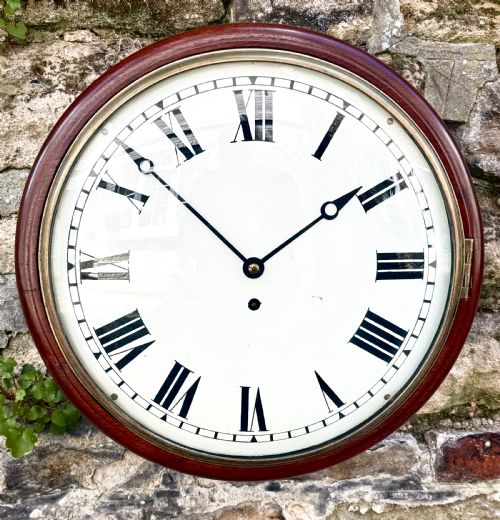
A fusee movement wall clock is a timekeeping device driven by a spring and regulated by a conical pulley that equalises the power delivery as the mainspring unwinds. Buyers searching for a fusee movement wall clock encounter sturdy dial clocks, drop-dial variants, and railway timepieces originating across the Georgian, Victorian, and early twentieth century periods. The version most commonly met on this page is the round mahogany or oak dial clock, often associated with railways, shipping companies, or public institutions.
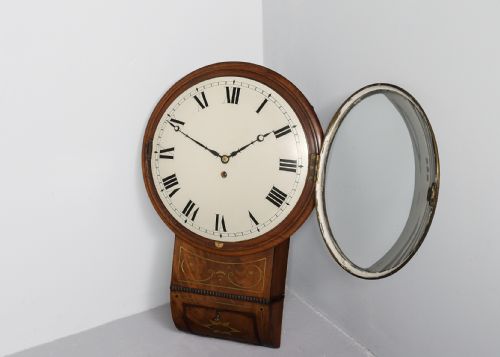
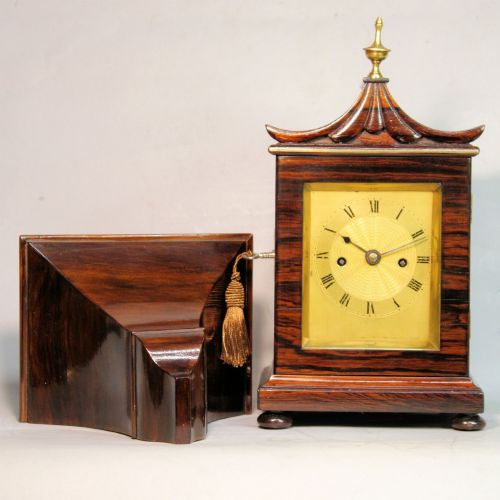
The material palette of a fusee movement wall clock typically centres on dark timber cases of mahogany, rosewood, or oak, enclosing brass movements and protected by glass dial covers. Styles range from plain utilitarian railway models to decorative drop-dial and tavern clocks featuring mother of pearl or brass inlay. These pieces hung in station offices, ships, and domestic hallways alike, serving practical timekeeping needs before the widespread adoption of electric clocks.
How they were made
Makers constructed the housing of a fusee movement wall clock from solid timber planks, frequently turning mahogany or oak for the circular bezels and framing drop-dial trunk cases with hinged side doors. The wood was joined, polished, and fitted with glass bezels to protect the painted or wooden dials from dust and damage.
The internal mechanics rely on a brass movement driven by a chain or cord connecting the spring barrel to the spiral-grooved fusee cone. Steel components form the arbors, pinions, and verge or lever escapements that translate the controlled power into steady pendulum swings.
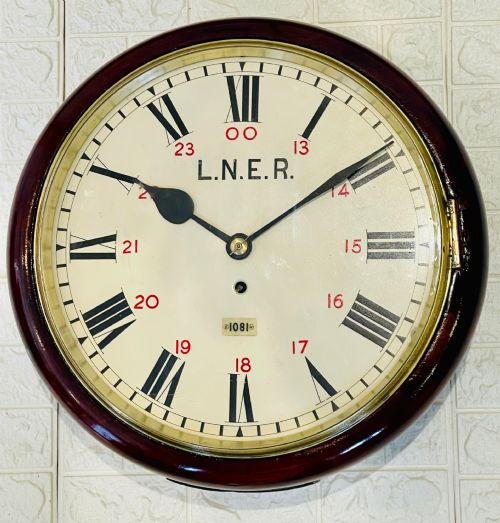
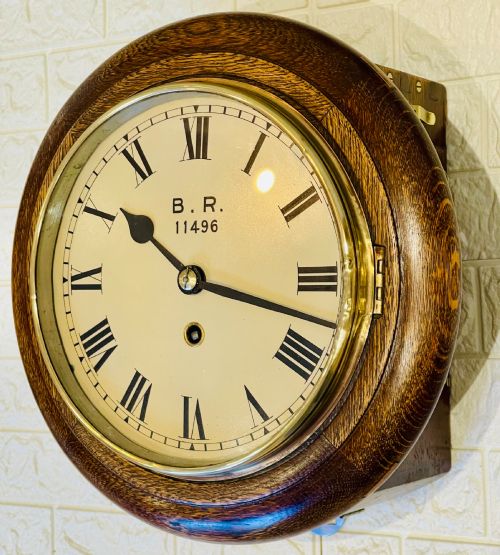
Clocks stamped by railway companies like the L.N.E.R and G.W.R kept station staff on time while enduring decades of locomotive vibrations and steam.
What varies in quality
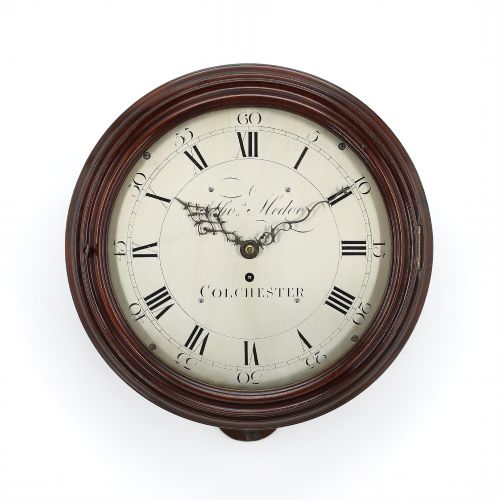
The quality of a fusee movement wall clock rests upon the crispness of the movement cutting, the precision of the fusee cone grooving, and the original maker's reputation for mechanical reliability. Finer examples display meticulous engraving on the dial, well-figured timber grain on the case, and signed backplates or dials from established provincial and London clockmakers.
Lesser items exhibit replaced cases, repainted dial faces, or worn brass teeth within the gear train that disrupt the steady transmission of power from the mainspring. The integrity of the dial signwriting and the matching numbers stamped on the case and movement separate standard utility clocks from workshop-signed masterworks.
Thomas Hedge of Colchester·Chave Taunton·Samuel Chave Taunton·John Walker·Halliday and Rich Bridgwater·Prescot Clock Co·Kelvin White and Hutton London·Butt Co Ltd Chester·Sly Weymouth·Webb of Frome·Thwaites·Edwin Fisher·Elliot
The Fusee Movement Wall Clock Glossary
- Fusee
- A conical pulley with a spiral groove that houses a chain or cord connected to the mainspring barrel. This mechanism ensures even tension is delivered to the gear train as the spring winds down.
- Drop-dial
- A clock case featuring a circular dial at the top above an extended lower trunk used to house a longer pendulum. This form became popular in public buildings and offices during the nineteenth century.
- Tavern clock
- A large dial clock with an elongated drop-dial case, often originating in the Georgian period. They hung in public houses and coaching inns for general public viewing.
- Verge escapement
- An early type of clock escapement using a crown wheel and a rod with pallets to control the rotation of the gear train. It permits a wide swing of the pendulum.
- Chain fusee
- A fusee mechanism utilising a fine articulated steel chain rather than catgut or wire. The chain offers greater strength and durability under the tension of the mainspring.
Fusee Movement Wall Clock: Frequently Asked Questions
How often should a fusee wall clock be wound?
Most single fusee wall clocks are designed to run for eight days on a single winding. Regular winding at consistent intervals maintains optimal tension on the chain and fusee cone.
Allowing the clock to run completely down before rewinding places unnecessary strain on the mechanism and can disturb the delicate balance of the beat.
Why do some railway clocks have wooden dials?
Wooden dials were utilised on specific railway and station wall clocks to prevent shattering from vibration caused by passing trains and heavy machinery. Painted mahogany provided a stable, durable alternative to glass-covered paper or iron faces.
These wooden dial variants are particularly sought after by collectors for their authentic industrial character and survival rate in harsh operational environments.
How do I hang a fusee wall clock safely?
A fusee wall clock requires a secure fixing directly into a wall stud or masonry using an appropriate screw and heavy-duty plug. The heavy timber case and brass movement demand firm support to prevent any shifting that stops the pendulum.
Ensure the clock hangs completely vertical so the pendulum beats evenly, avoiding a lopsided tick that will cause the movement to stop within a short time.
What is the difference between single and twin fusee movements?
A single fusee movement drives the timekeeping train alone, while a twin fusee movement incorporates a second barrel and gear train to power a striking mechanism on a bell or gong. Twin fusee clocks are consequently wider and heavier to accommodate the extra mechanics.
Clocks featuring twin fusee setups were generally placed in prominent rooms or offices where audibly striking the hours was required.