

Victorian Tilt Top Breakfast Table
A victorian tilt top breakfast table brings the ingenuity of nineteenth-century dining rooms into modern spaces.
Victorian Tilt Top Breakfast Table
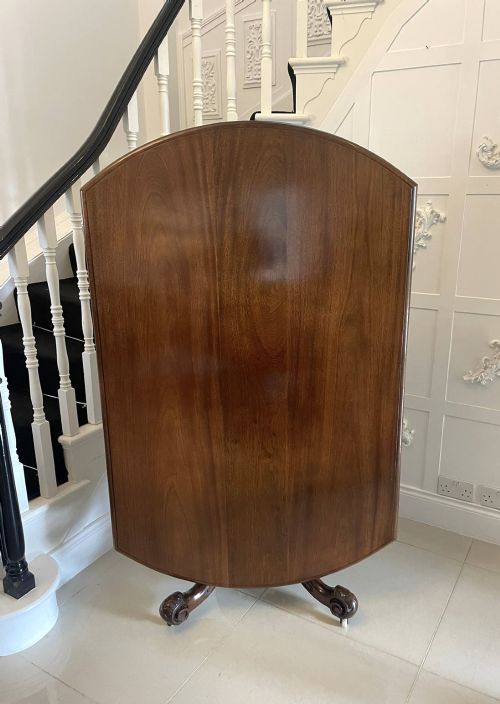
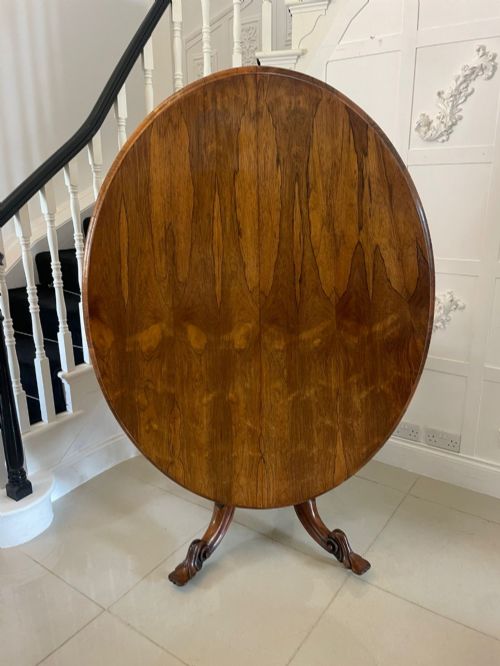
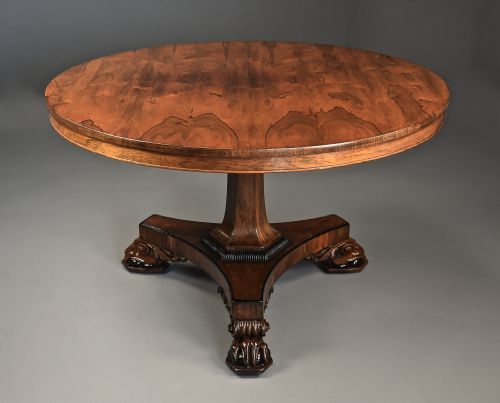
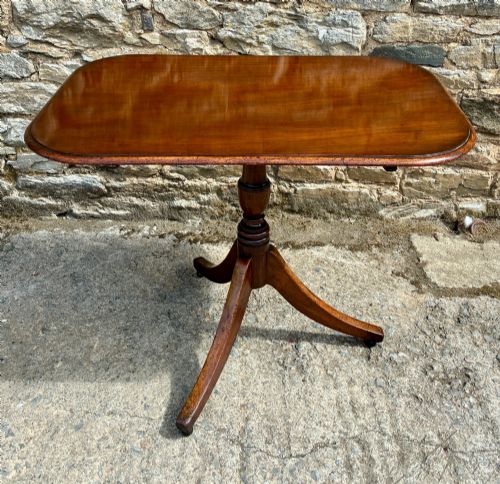
A victorian tilt top breakfast table combines a large circular or oval surface with a clever mechanism that allows the top to fold vertically when not in use. These pieces date predominantly from the nineteenth century, spanning periods from William IV through mid-Victorian decades.
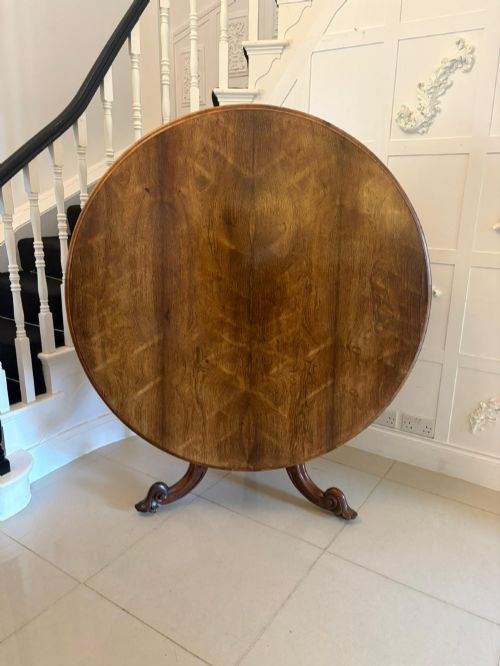
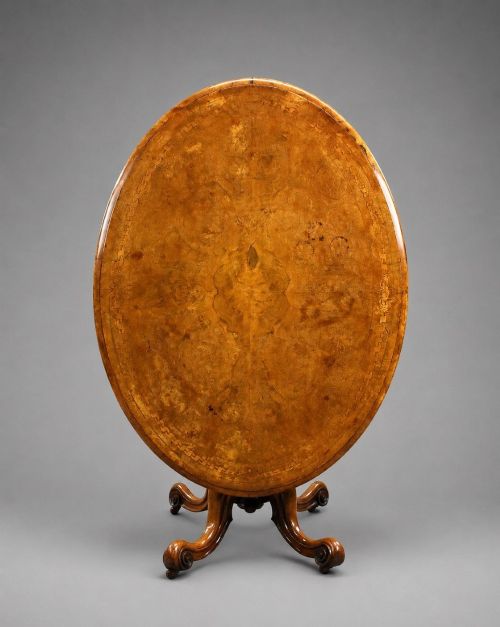
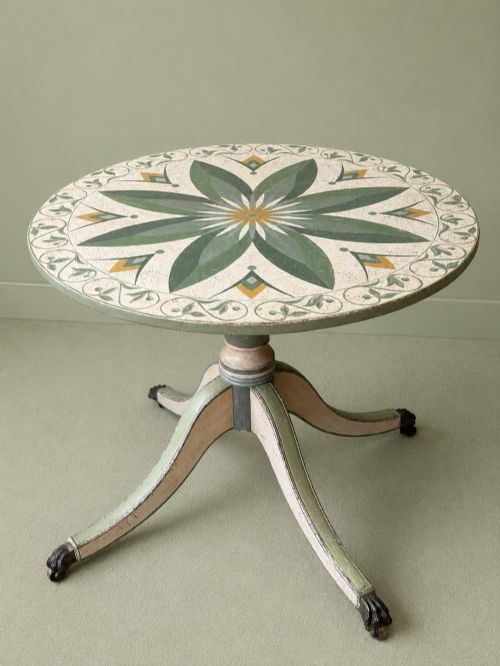
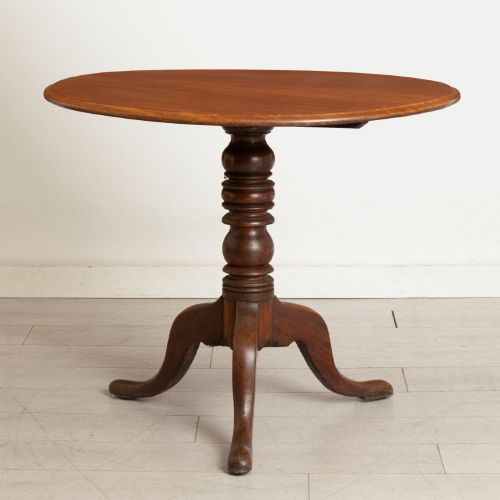
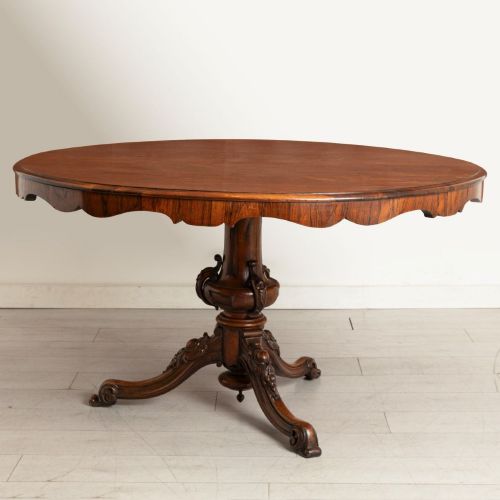
Buyers encounter circular and oval formats most frequently, often supported on central pedestals with tripod, quadrapod, or triform bases. Many double as loo tables or centre tables, reflecting the versatile domestic habits of the era.
The evidence shows origins in Victorian workshops alongside earlier William IV and Regency influences, with occasional Anglo-Indian interpretations appearing among the standard mahogany, walnut, and rosewood examples.
Materials and Technique
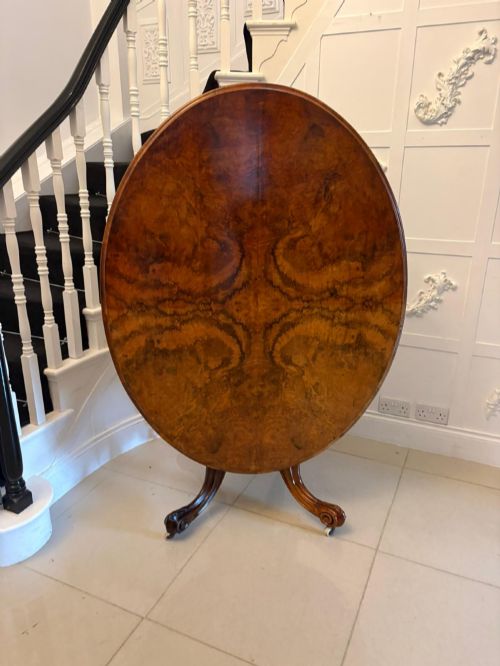
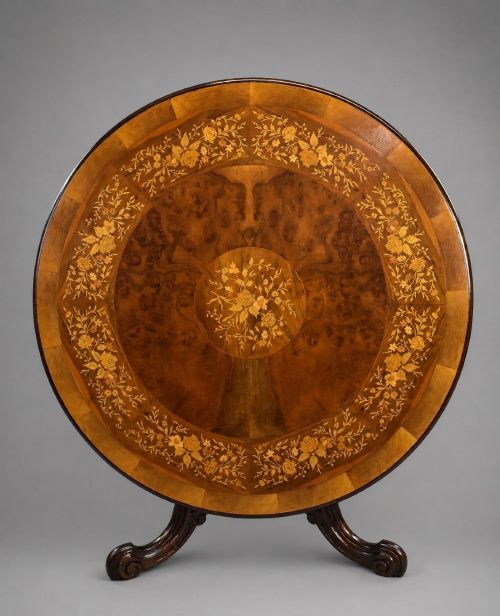
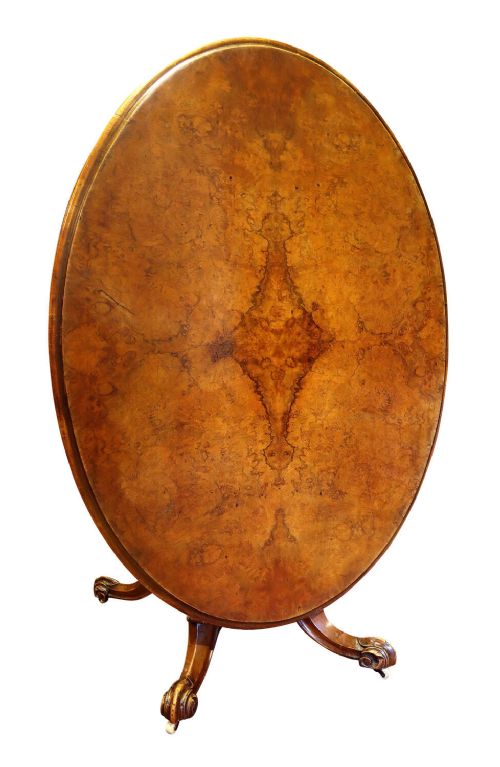
Cabinetmakers relied on dense hardwoods such as mahogany and rosewood for structural integrity, alongside highly figured burr walnut veneers selected for decorative impact. Solid timbers formed the turned and carved pedestals, while boxwood inlay and marquetry added linear contrast to tabletops.
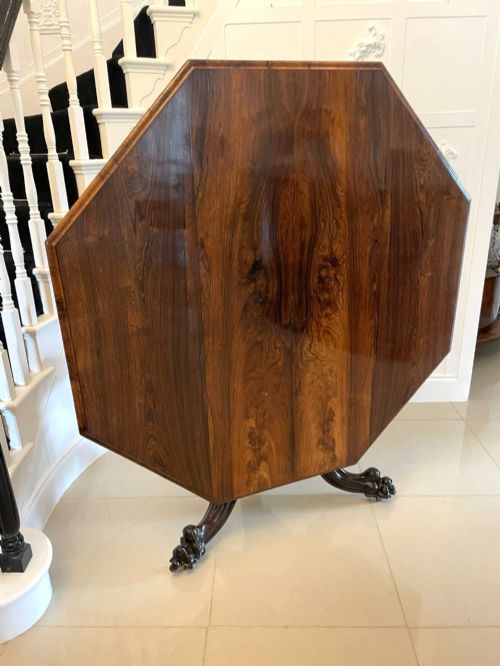
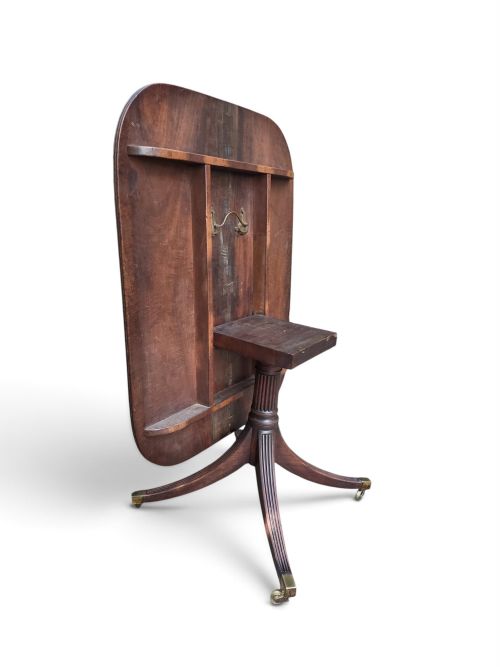
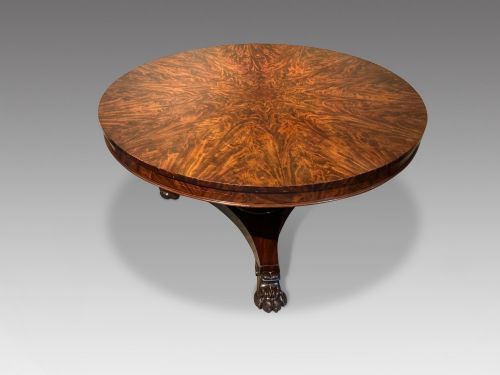
The defining mechanical feature relies on a brass or iron snap-top catch and pivot block, allowing the heavy timber top to release, tilt, and lock securely. Pedestals frequently feature intricate hand-carved foliage, scrollwork, or lion paw feet terminating the base.
Listings feature woods spanning solid mahogany, rosewood, burr walnut, and pollard oak, alongside occasional painted and inlaid variants.
Distinctions in Execution
Quality rests primarily in the selection of veneer and the crispness of the cabinetmaker's carving. Finely figured burr walnut or flame mahogany tops display book-matched grain patterns that require immense skill to lay without fault.
The stability of the tilt mechanism and the mass of the central pillar dictate daily usability. Heavy carved quadrapod or tripod bases provide the necessary weight to balance large circular leaves securely.
Gillows
The Victorian Tilt Top Breakfast Table Glossary
- Tilt top
- A table mechanism featuring a hinged block that allows the horizontal surface to fold into a vertical position for storage or movement. This ingenious design saved valuable floor space in nineteenth-century homes.
- Loo table
- A large Victorian round or oval table designed for evening card games such as loo, which frequently shared the tilt top mechanism. These surfaces showcase elaborate marquetry and burr walnut veneers.
- Quadrapod
- A four-legged pedestal base providing substantial weight and stability to large dining surfaces. They frequently terminate in carved feet or castors.
- Marquetry
- The art of applying decorative veneer pieces in geometric or floral patterns onto a core surface. Cabinetmakers utilised contrasting woods like boxwood to create intricate borders.
- Triform
- A three-sided pedestal base supporting the central column of a table. This configuration appears commonly on nineteenth-century pillar furniture.
Victorian Tilt Top Breakfast Table: Frequently Asked Questions
How do you operate the tilt mechanism?
A brass or iron catch beneath the tabletop releases the lock, allowing the heavy wooden surface to pivot smoothly on its central axis. This enables the table to fold flat against a wall when floor space is needed.
Care should be taken to support the weight of the leaf with both hands while engaging or releasing the catch to protect the pivot block from sudden strain.
Were these tables used only for breakfast?
Despite the traditional name, these versatile pieces served multiple functions throughout the nineteenth-century day, including card playing, sewing, and formal dining. Their generous proportions made them suitable social hubs for country houses and town residences alike.
By evening, many were tilted away to clear the room for dancing or entertaining guests.
How do I care for a burr walnut top?
Burr walnut veneer requires protection from direct sunlight and excessive heat fluctuations to prevent the delicate grain from drying or cracking over time. Regular dusting with a soft, dry cloth preserves the polished finish.
Applying a traditional beeswax occasionally nourishes the timber and maintains the natural depth of the figured grain.
What is the difference between a breakfast table and a loo table?
While both share the characteristic tilt top mechanism and circular or oval silhouette, loo tables gained popularity specifically for evening parlor games. Breakfast tables tend to emphasise sturdy dining utility with heavier pedestal supports.
In practice, nineteenth-century households often used the terms interchangeably depending on the room and the hour.