




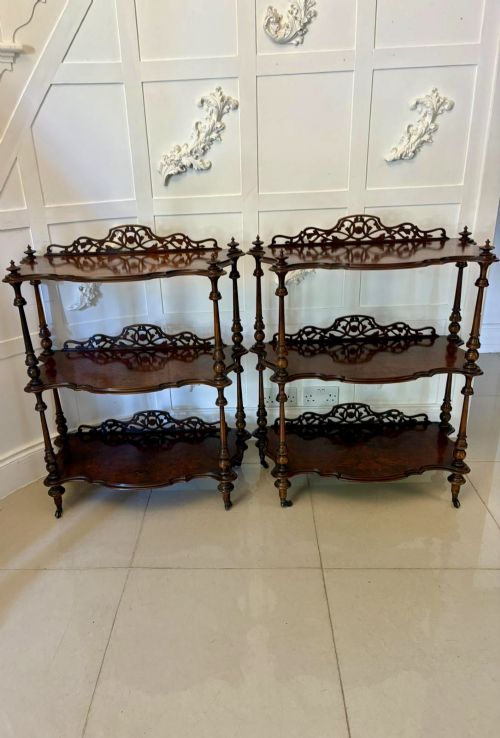
Victorian Tiered Shelf
A victorian tiered shelf brings multiple levels of display space to a room, combining practical storage with the rich wood grains typical of the period.
Victorian Tiered Shelf
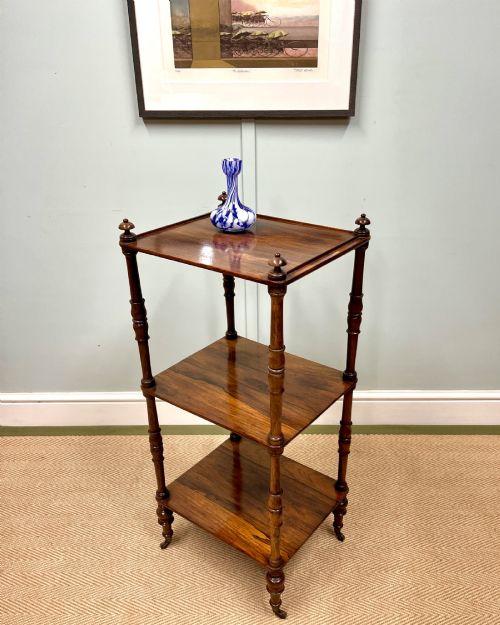
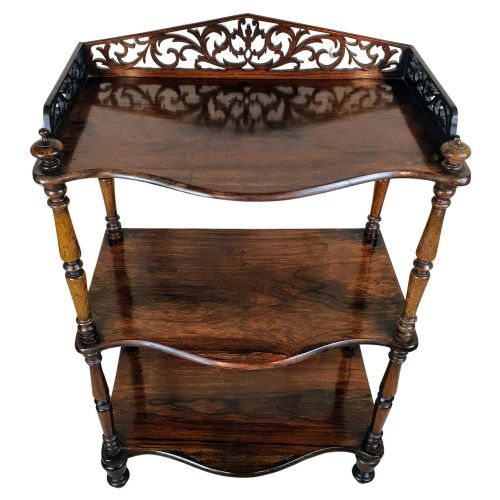
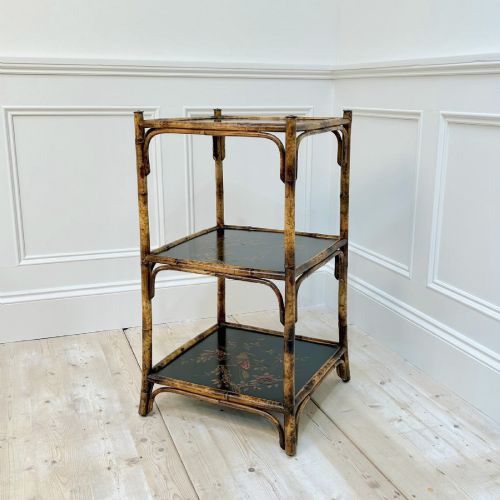
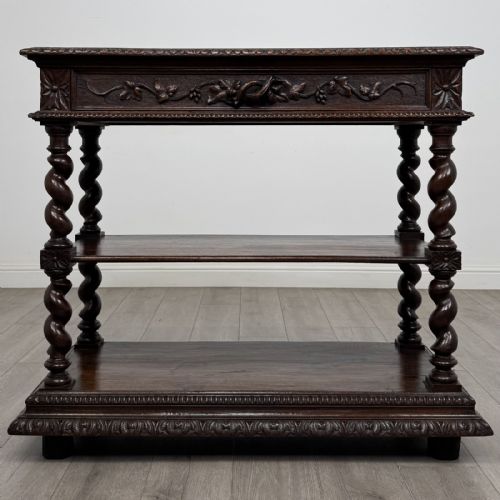
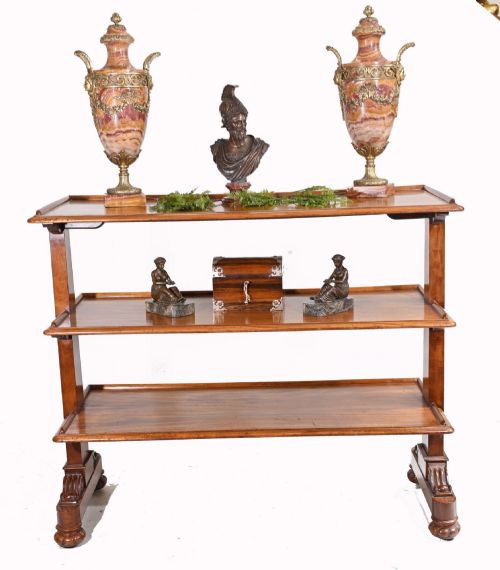
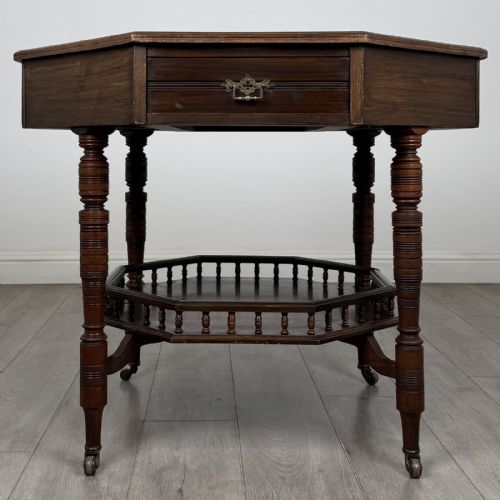
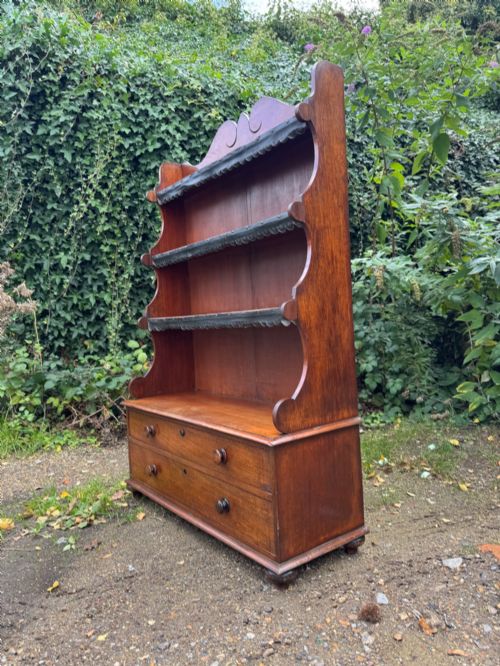
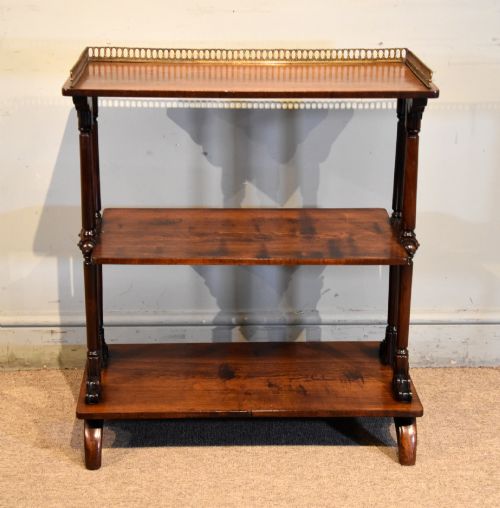
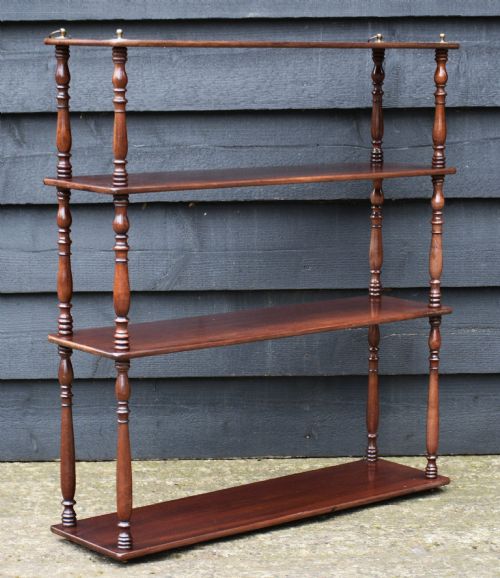
A victorian tiered shelf encompasses various multi-level display pieces such as whatnots, etageres, and wall-hanging shelves originating from the nineteenth century. These items were designed to hold books, ornaments, and display objects across several horizontal surfaces supported by upright columns or brackets.
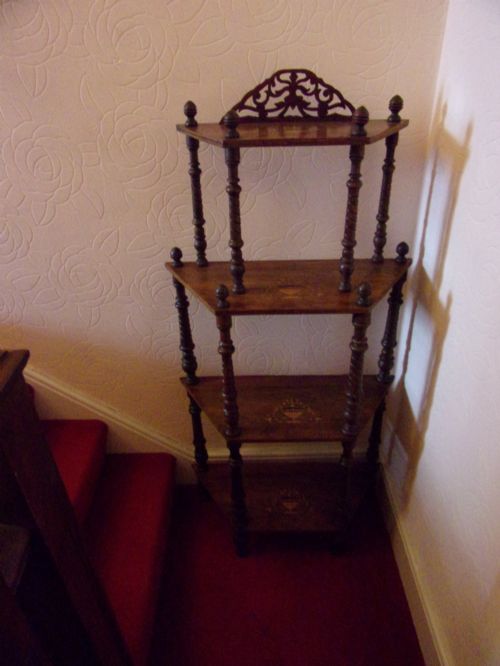
The most common formats found here include mahogany and burr walnut corner whatnots, alongside rosewood and ebonised wall shelves dating from the mid to late nineteenth century. Makers of the period produced both freestanding multi-tiered units and space-saving wall-mounted versions to suit different domestic interiors.
Alternative forms span revolving bookcases, canterburys, and open buffets that share the characteristic tiered arrangement of surfaces. These pieces reflect the Victorian preference for organised display and utility within the home.
Materials and Construction
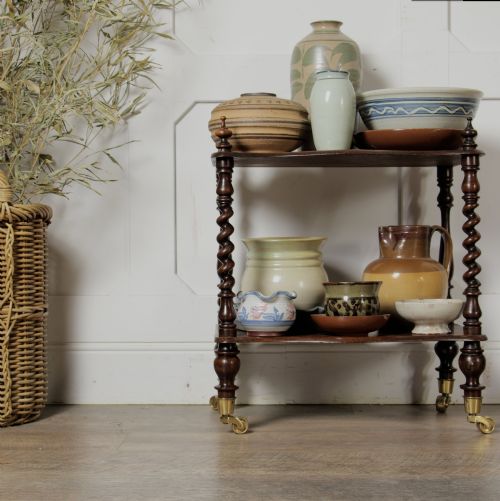
Cabinet makers utilised dense hardwoods including mahogany, walnut, burr walnut, and rosewood, often applying ebonised finishes or parcel gilding to achieve darker, contrasting surface tones. Selected pieces integrate brass hardware, turned columns, or barley twist supports to connect the individual tiers securely.
Construction techniques relied on solid timber framing combined with finely figured veneers on prominent display surfaces, particularly on burr walnut models. Wall-hanging variations incorporated robust structural joints to support the weight of books and ceramic objects safely.
Victorian Tiered Shelf Retail Price Guide 2026
Typical asking prices for victorian tiered shelf among the pieces listed under this phrase on Sellingantiques today, from the lower quarter to the upper quarter. They describe what is for sale here now, not the wider market.
Listings feature pieces spanning the nineteenth century, utilising woods such as mahogany, walnut, burr walnut, rosewood, oak, and pine.
Assessing Quality and Execution
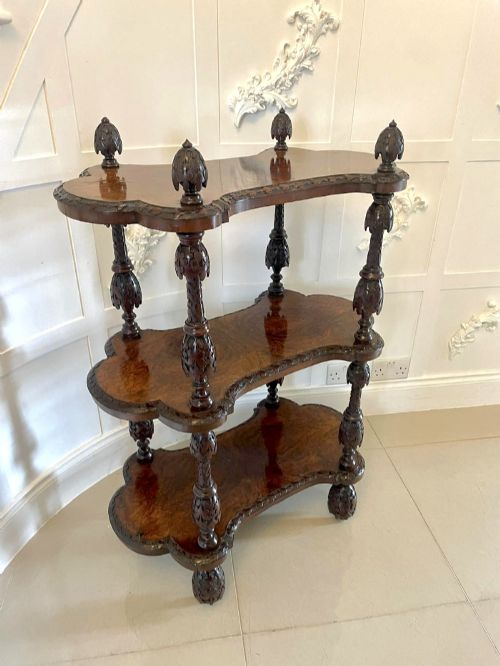
Quality rests upon the selection of timber veneers and the crispness of turned or carved supports like barley twists and pillars. Finer examples display symmetrical grain patterns in burr walnut or rosewood across every shelf tier.
Joinery execution distinguishes standard production from superior workshops, visible in the tight fitting of uprights into shelves and the stability of freestanding whatnots. Secondary woods and finishing details on concealed surfaces further indicate the standard of original craftsmanship.
The Victorian Tiered Shelf Glossary
- Étagère
- A French term for a piece of furniture consisting of a set of open shelves for holding small objects or ornaments. These often appeared in ebonised wood or rosewood during the nineteenth century.
- Barley Twist
- A type of turning shaped like a spiral or rope twist used on the upright supports of stands and whatnots. This decorative technique added movement to nineteenth-century furniture.
- Burr Walnut
- Wood taken from the warted growth on a walnut tree, yielding highly figured and intricate grain patterns. Cabinet makers prized this material for veneering the top surfaces of quality Victorian furniture.
- Canterbury
- A low stand fitted with partitions for holding sheet music, books, or portfolios, often integrated beneath a tiered shelf or table top. It frequently incorporated carrying handles and turned legs.
Victorian Tiered Shelf: Frequently Asked Questions
What is the difference between a whatnot and an etagere?
A whatnot is a traditional English term for a multi-tiered shelving unit used to hold ornaments and books. An etagere often implies a slightly more decorative French-influenced display piece, though both terms describe tiered wooden shelving.
In practical use across nineteenth-century interiors, the distinction blurred as makers adopted both styles for parlour and drawing-room display.
How were tiered shelves used in Victorian homes?
These shelves held everyday items like books, writing portfolios, and decorative ceramics in sitting rooms and studies. Freestanding models stood in corners or beside seating, while wall-hanging versions saved floor space.
Their open construction allowed homeowners to showcase prized collections of glassware and small sculptures where guests could admire them easily.
Are these shelves sturdy enough for heavy books?
Freestanding mahogany and oak bookcases or heavy three-tier buffets handle substantial book collections securely. Lighter wall-hanging shelves and delicate rosewood etageres suit lighter decorative objects and display items better.
Checking the wall fixings or the rigidity of the upright columns helps determine the appropriate weight capacity for each specific piece.
How do I identify a mid-Victorian piece?
Mid-nineteenth-century items frequently feature rich mahogany or burr walnut timbers, often accented with turned barley twist supports. Stylistic clues include the heavy, figured grain and traditional joinery methods standard before mass production took over.
Comparing the secondary timbers at the back or underneath provides further confirmation of the manufacturing period.